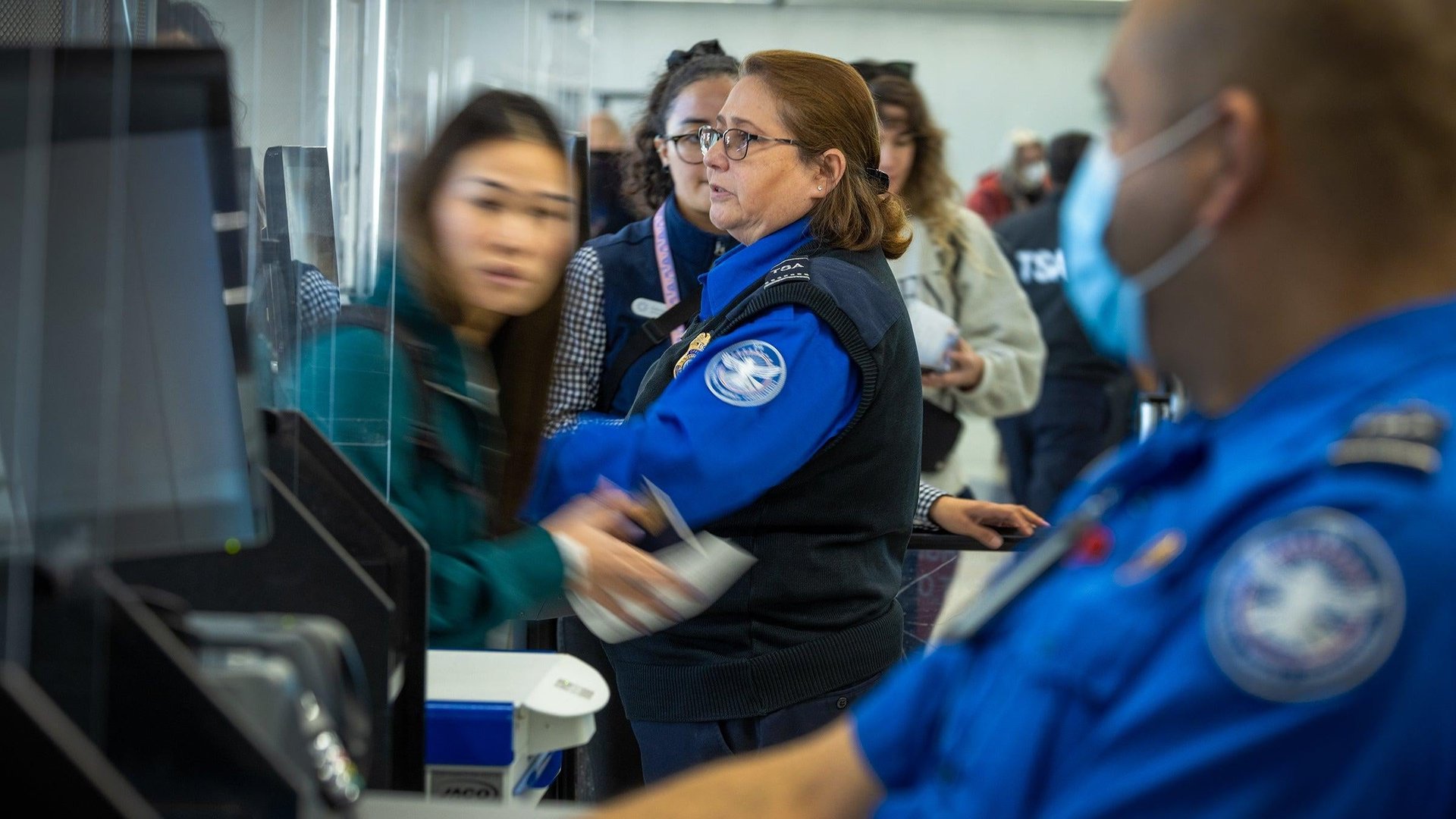
Buolamwini argued that airport face recognition is a way of acclimating the public to having more and more sensitive information taken. “I see this on a longer trajectory,” she said. “And they’ve shown you the trajectory.”
She was referring to a roadmap released in 2018 by the TSA. It distinguishes between two types of facial recognition: There’s one-to-one matching, where the TSA compares the photo in your passport with the photo they take of you at the airport, to make sure that the photos match. (If you ever use your face to unlock your iPhone, this is the kind of facial recognition you’re using.)
Buolamwini pointed out that one-to-one matching could be the start of a slide to one-to-many matching, where your photo to compared against an entire database. Live biometrics is the most dystopic form of one-to-many matching where people captured on surveillance cameras could be checked against a database in real-time. Any notice of privacy from the government would evaporate completely.