
10 underrated U.S. destinations you should visit in 2026
America's most underrated destinations, from a West Virginia gorge rivaling the Smokies to a Montana lake in Glacier's shadow
bmswanson / Getty Images
The most visited places in the U.S. are popular for good reason — Yellowstone’s geothermal spectacle, the Grand Canyon’s geological drama, and the Smokies’ accessible mountain scenery all deliver on their reputations. But popularity carries its own costs. The crowds that validate a destination’s fame also diminish the experience of being there. Trails require timed-entry permits months in advance. Parking lots fill by 7 a.m. Viewpoints overflow with people jockeying for an unobstructed photograph. The traveler who discovers a lesser-known alternative — one that offers comparable natural drama, historical depth, or landscape variety — arrives at a genuinely different kind of vacation: quieter, more exploratory, and often cheaper.
Finding those alternatives requires resisting the gravitational pull of the familiar. Most travelers default to the same list of destinations because the marketing budget promoting a famous park or a celebrity city dwarfs the one supporting a quieter equivalent. New River Gorge opened in 2020 without the institutional recognition that Yellowstone had accumulated over 150 years. Great Basin National Park is far enough from Nevada’s cities that it never developed a tourism infrastructure to compete with the state’s more famous attractions. These destinations exist in a kind of visibility gap — too good to ignore once discovered, but not yet prominent enough to attract the audience they deserve.
The 10 destinations below come from U.S. News & World Report’s ranking of the best underrated travel destinations in the U.S., which considered user votes, editorial judgment, and factors including crowd levels and the range of available activities at each location to identify the country’s most overlooked places worth visiting. The list covers national parks and forests, small towns, mountain regions, and coastal destinations across a broad geographic range, from Maine and New Hampshire in the Northeast to Texas and Montana in the West.
1 / 10
1. New River Gorge became the 63rd U.S. national park
Mark C Stevens / Getty Images
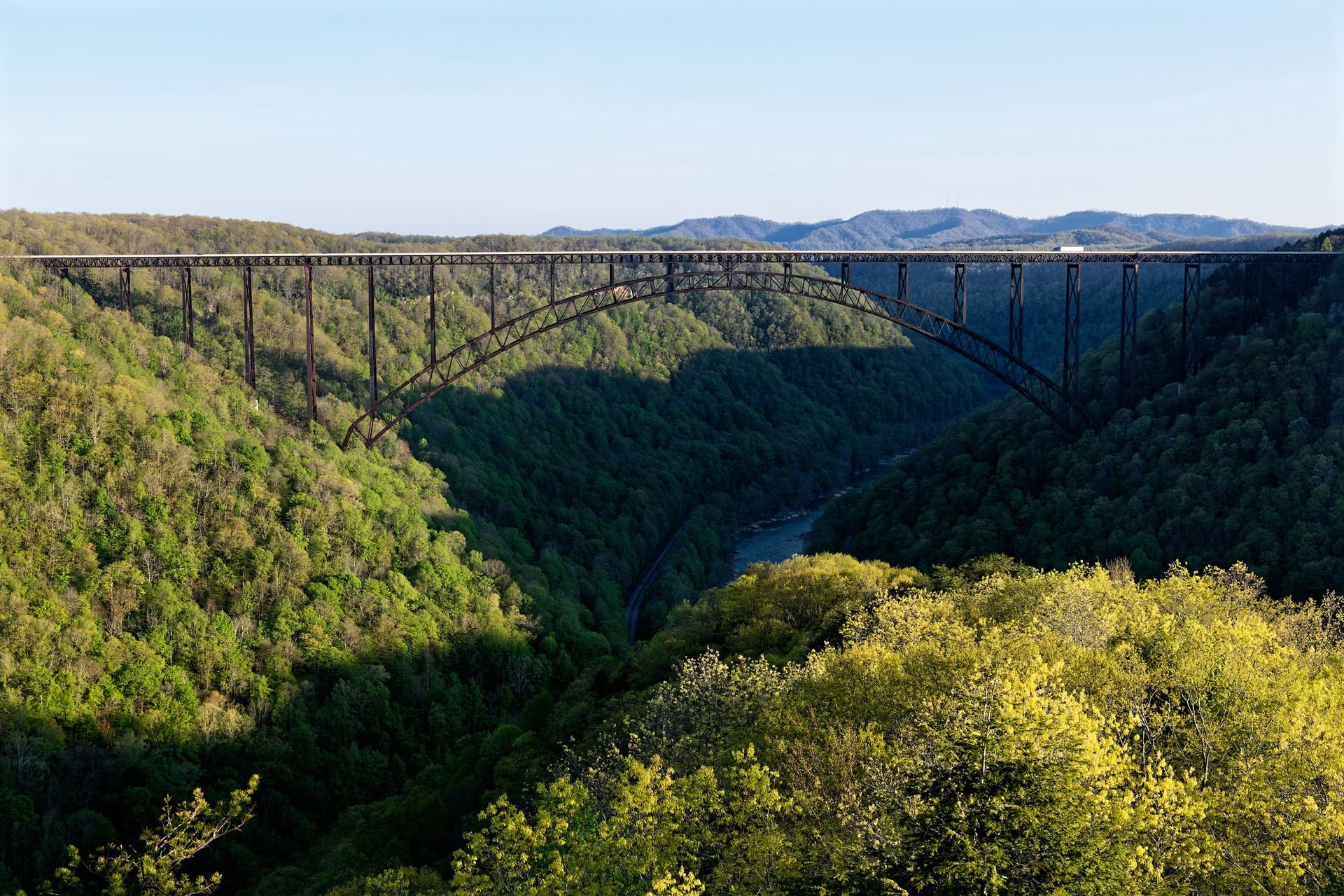
New River Gorge National Park & Preserve in West Virginia became the 63rd U.S. national park in 2020, receiving its designation after decades of existing as a national river. The upgrade in status gave the park a profile it had not previously held, though its crowds still run far below those of its Appalachian neighbor, the Smoky Mountains. The source draws a direct comparison: New River Gorge shares the forested hills and deep canyon character of the Smokies but offers shorter peaks, a more compact footprint, and dramatically smaller visitor numbers. The physical similarities without the accompanying congestion give New River Gorge a strong claim on travelers who love the Smokies but dislike their weekend traffic.
The park’s physical centerpiece is the New River Gorge Bridge, which rises 876 feet above the water and makes the river below accessible for world-class whitewater rafting. Adrenaline-focused travelers treat the section beneath the bridge as a primary destination in its own right, while hikers seeking something less technical can take the Endless Wall Trail for views from above the gorge. The trail perspective gives a different register of the landscape — broad and aerial, not enclosed and wet — and suits visitors who want a strenuous day without committing to a river experience.
The park’s historical layer adds a dimension that purely scenic destinations often lack. Abandoned coal-mining towns are scattered throughout the gorge, and the National Park Service app offers a guided audio tour of these sites, providing visitors with an interpretive framework for walking through the remnants of Appalachian industrial history. The coal economy that once ran through the gorge left a specific physical and cultural landscape that the park preserves alongside its natural features. New River Gorge’s status as the country’s newest national park, its proximity to the Smoky Mountains in terms of scenic character, and its much lower visitor pressure together make it a strong argument for travelers looking for Appalachian beauty with room to breathe.
2 / 10
2. Great Basin National Park rewards with a 13,063-foot peak
John Elk II / Getty Images
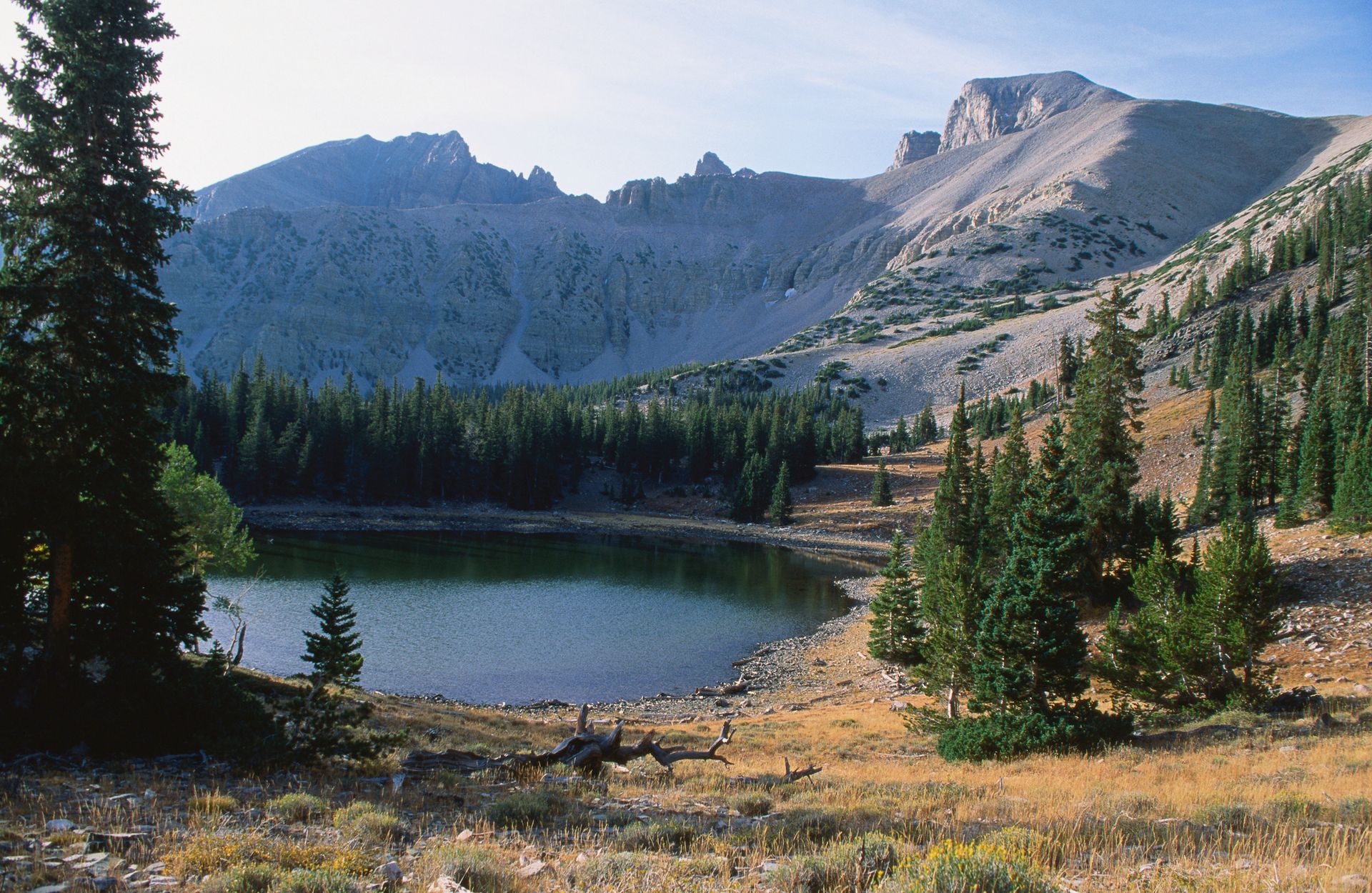
Great Basin National Park in Nevada sits far from the state’s neon-lit cities, and the source credits this remote location as the primary reason it rarely appears on top national park lists. The hard-to-reach position also guarantees a low-crowd experience for travelers willing to make the journey. The park’s signature natural feature is Wheeler Peak, which reaches 13,063 feet and offers summit views across the Snake Range. The source acknowledges the physical demands of reaching the summit on foot while providing a direct alternative: Wheeler Peak Scenic Drive, a 12-mile road that delivers overlook access without the strenuous climb.
The scenic drive serves as a practical introduction to the park’s landscape transition, where the desert terrain below gives way to pine-covered mountain slopes. The shift is visually striking precisely because the two environments exist in such close proximity, and the drive’s overlooks capture the contrast without requiring visitors to commit to a multi-hour hike to observe it. This accessibility is a genuine strength of Great Basin National Park for travelers who want a dramatic western landscape without the physical demands of other Nevada and Utah desert parks.
Two additional attractions give the park depth beyond its peak. Lehman Caves, accessible by guided tour, brings visitors into an underground marble cave system with cave formations that took millions of years to develop. Wheeler Bristlecone Grove contains some of the oldest living organisms on Earth: ancient bristlecone pine trees that survive in the thin air above 10,000 feet and can live more than 4,000 years. The source specifically frames the visit as a walk among some of the oldest organisms on Earth, imbuing the grove with an almost philosophical dimension. A traveler who drives the scenic route, tours the caves, and walks among the bristlecones covers three genuinely distinct experiences in a single park visit. Great Basin’s triple offering of summit access, underground caves, and ancient trees gives it a density of distinct natural features that its low visitor count and hard-to-reach location have kept largely undiscovered by national park audiences.
3 / 10
3. Baxter State Park admits fewer than 70,000 visitors
Katie Dobies / Getty Images
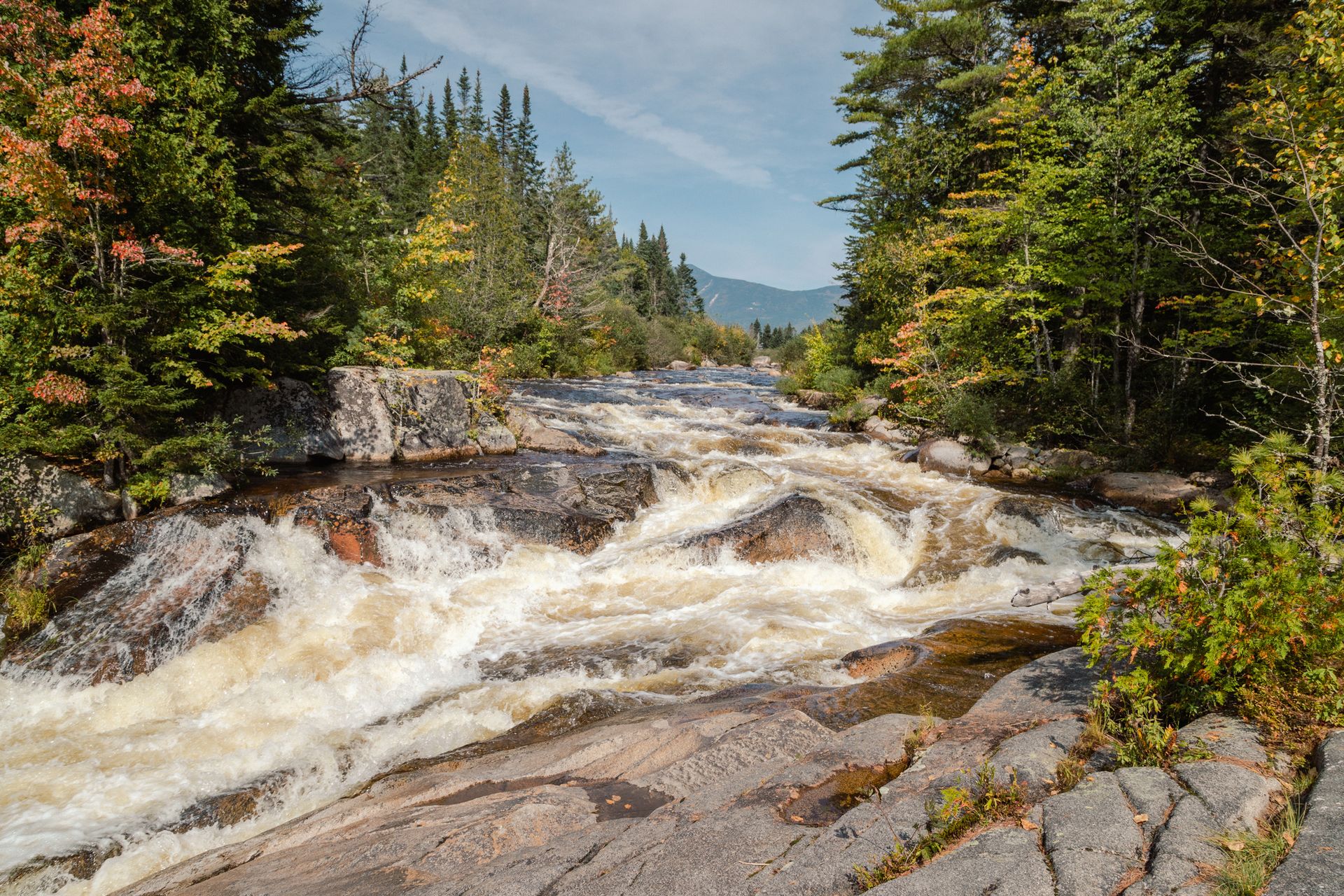
Baxter State Park in north-central Maine receives fewer than 70,000 visitors per year — a stark contrast with Acadia National Park, which draws roughly 4 million annual visitors to the same state. The source frames this disparity as evidence of the park’s character: no electricity, no paved roads, and no cell service make Baxter inhospitable to mass tourism, and the park does not attempt to compensate for these absences. The wilderness it offers is genuine and demanding, and the visitor numbers it attracts reflect the self-selecting nature of that proposition.
The park’s landscape delivers the serene lakes, tumbling waterfalls, and dense evergreen forests that define Maine’s north-country character. Moose sightings are common around the lakes, which gives wildlife observation a realistic expectation — not a lucky bonus — for most visitors who spend extended time near the water. Mount Katahdin, Maine’s highest peak, dominates the park’s identity. It holds the distinction of being the northern terminus of the Appalachian Trail, which gives it meaning beyond its elevation: for through-hikers who walk the trail’s full 2,190-plus miles from Georgia, Katahdin is the finish line.
For visitors who want a Baxter experience without summiting Katahdin, the source identifies Little Abol Falls and Sandy Stream Pond as approachable alternatives. Both trails deliver the park’s essential character — water, forest, remoteness — without the technical demands and extended exposure of the summit. The low visitor count, the genuine wilderness character, and the Appalachian Trail terminus together make Baxter State Park the most uncompromisingly wild destination on this list. Travelers $TRV who arrive expecting Acadia’s amenities will struggle; those who arrive expecting pure Maine backcountry will find exactly what they came for. The Appalachian Trail terminus at Katahdin gives Baxter a specific ceremonial weight for hikers who have completed the full trail — and for those who have not, a summit with meaning that extends far beyond its views.
4 / 10
4. Black Hills National Forest spans over 1 million acres
Mike Kline (notkalvin) / Getty Images
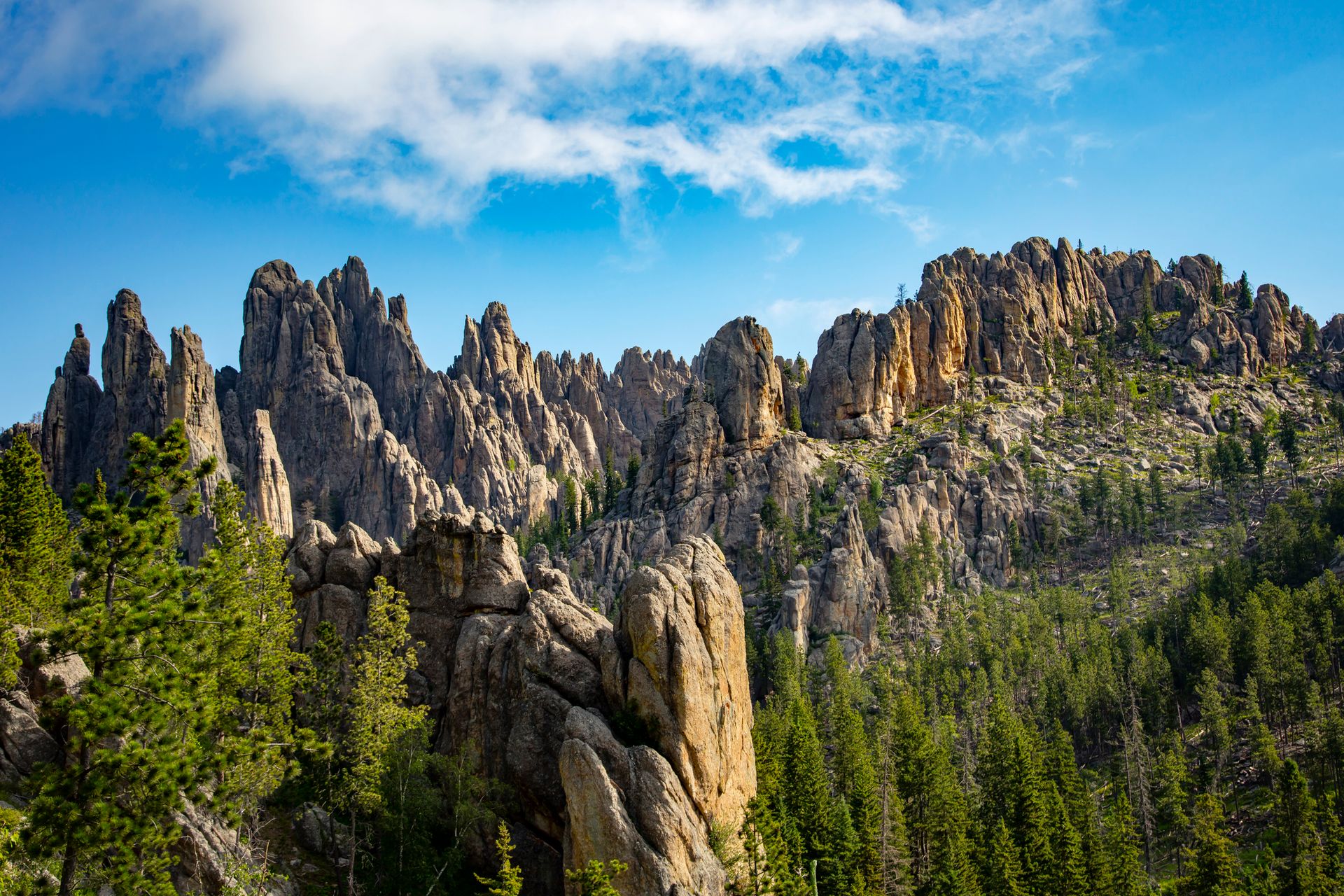
Black Hills National Forest, straddling the South Dakota-Wyoming border, covers more than 1 million acres and consistently plays second fiddle to its most famous attraction: Mount Rushmore, the rock-carved monument that draws visitors who then largely leave without exploring the surrounding landscape. The source makes a direct case against this tunnel-vision approach, arguing that the forest offers substantial natural and scenic interest independent of its proximity to the monument. The million-acre scale alone suggests a geographic range that a single presidential sculpture cannot account for.
The forest’s geological character gives it specific and distinctive sights. Black Elk Peak, the highest point in the Midwest, provides a summit experience with regional significance beyond its elevation. Devils Tower, a volcanic rock column rising from the Wyoming grasslands near the forest’s western edge, holds special significance as a sacred site for numerous Indigenous Nations and as one of the most visually striking geological formations in the American West. Both features are accessible to visitors who dedicate time to exploring the forest, not just to those driving between Mount Rushmore and their next scheduled stop.
Custer State Park, within the broader Black Hills region, adds two scenic drives that make the landscape accessible without extensive hiking. The Iron Mountain Road and the Needles Highway both pass through the forest’s most photogenic terrain, offering vistas of granite spires, wooded valleys, and open meadows that reward the unhurried driver. The source presents these drives as the ideal way to experience the park’s scenery. Black Hills National Forest’s million-acre scale, its collection of geological landmarks, and its scenic drive network together make it the broadest and most geographically varied destination on this list. The Devils Tower side trip in particular extends the experience across the state line into Wyoming, giving the region a geographic reach that few other national forest visits naturally include. For travelers who arrive at Mount Rushmore and feel the pull to explore beyond the monument, the forest’s million acres and two scenic drives provide a day of continued discovery that the monument itself cannot sustain on its own.
5 / 10
5. The Catskills shelters ski trails and storied music
VAIBHAV JAIN / Getty Images
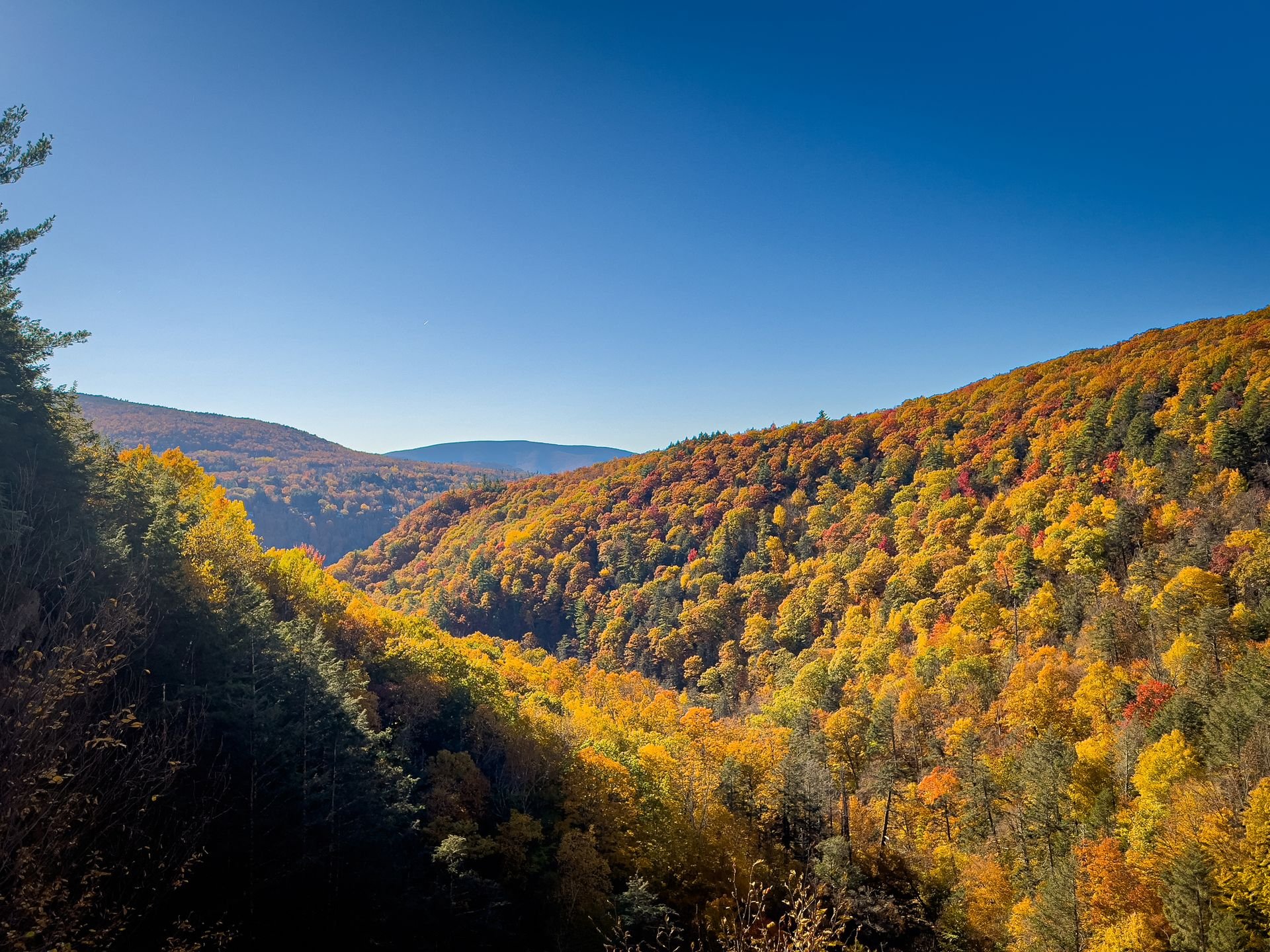
The Catskills, the mountainous region in southeastern New York, reached its tourism peak in the mid-20th century, when summer resort culture drew Jewish New Yorkers primarily to sprawling properties that functioned as the predecessors to today’s all-inclusive resort concept. The source notes that the heyday of this resort era has passed, but the Catskills’ appeal has not dissolved with it. The region’s rounded mountains remain ideal for skiing and hiking, and the small towns that anchor the valleys carry their own historical weight.
Catskill, the town on the Hudson River for which the region is named, and Bethel, the site of the 1969 Woodstock Music & Art Fair, both appear in the source as worth exploring. Bethel’s connection to Woodstock gives it a particular historical resonance for anyone interested in American music and counterculture. The mountains themselves have attracted landscape painters for centuries, which means the visual character of the rounded peaks has been interpreted and documented across a long artistic tradition — an aspect of the Catskills’ identity that the region’s better-known resorts rarely emphasize.
The source highlights the variety of lodging available in the Catskills as a specific virtue of the destination: secluded cabins, iconic motor lodges, and modern casinos all exist within the same region, giving travelers with different preferences and budgets a practical range of accommodation options. The mix of skiing and hiking terrain, the Hudson Valley cultural context, the Woodstock historical site, and the variety of lodging together give the Catskills a more layered identity than a single-note resort destination. For New York City residents in particular, the Catskills’ relative proximity and road accessibility make it an unusually versatile long-weekend option. The Bethel Woodstock connection gives the destination a specific cultural pilgrimage quality that the ski mountains and Hudson River towns alone would not generate. And the lodging range from secluded cabin to modern casino ensures that travelers with genuinely different preferences can both find what they came for within the same regional footprint.
6 / 10
6. Flagstaff holds 25 Pueblo cliff dwellings near the canyon
DenisTangneyJr / Getty Images
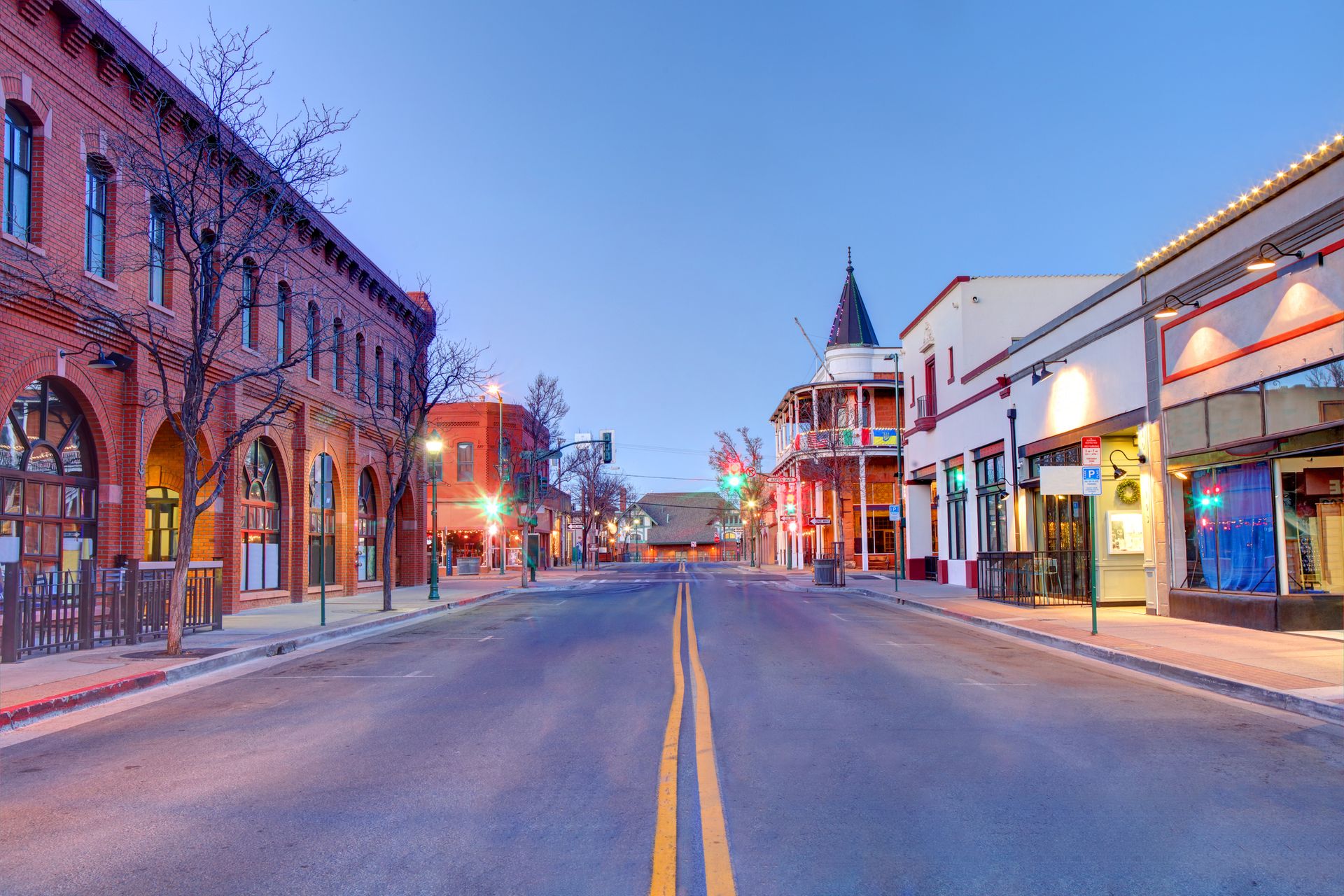
Flagstaff, Arizona, sits on Route 66 between Sedona and the Grand Canyon and functions primarily in the public imagination as a waypoint between those more famous destinations. The source directly challenges this characterization, arguing that Flagstaff has enough of its own natural and cultural identity to justify a dedicated visit. The Route 66 positioning gives the city access to nostalgic establishments like Miz Zip’s Cafe, a neon-lit diner that represents the highway’s mid-century road-trip culture in a form that the Interstate system largely eliminated elsewhere.
Walnut Canyon National Monument, just east of the city, contains 25 preserved Pueblo cliff dwellings built into the canyon walls by the Sinagua people roughly 800 years ago. The site adds a pre-Columbian archaeological dimension to Flagstaff that few other stops on the Sedona-to-Grand Canyon tourist corridor include in their itineraries. Oak Creek Vista in Coconino National Forest provides a sweeping overlook of a pine-lined canyon that demonstrates the forest landscape surrounding the city — evidence that Flagstaff’s outdoor character extends well beyond its famous neighbors.
The source adds a specific recommendation that gives the overnight stay at Flagstaff a purpose: Lowell Observatory, where visitors can observe the night sky through telescopes in conditions that the city’s high elevation and dark-sky designation make exceptional. The observatory also carries historical significance as the institution where the dwarf planet Pluto was discovered in 1930. Flagstaff’s position on Route 66, its Pueblo cliff dwellings, its forest viewpoints, and the observatory together offer a visitor who spends a night in the city more distinct experiences than many travelers have time to find. The observatory’s historical connection to Pluto’s discovery in 1930 gives the stargazing visit a scientific narrative that elevates it above a simple scenic attraction. Flagstaff’s claim on Pluto — the planet discovered here and later reclassified — gives the city a place in the history of astronomy that Route 66 nostalgia and Pueblo archaeology alone would not provide.
7 / 10
7. Big Bend National Park draws 600,000 to remote west Texas
Dean Fikar / Getty Images
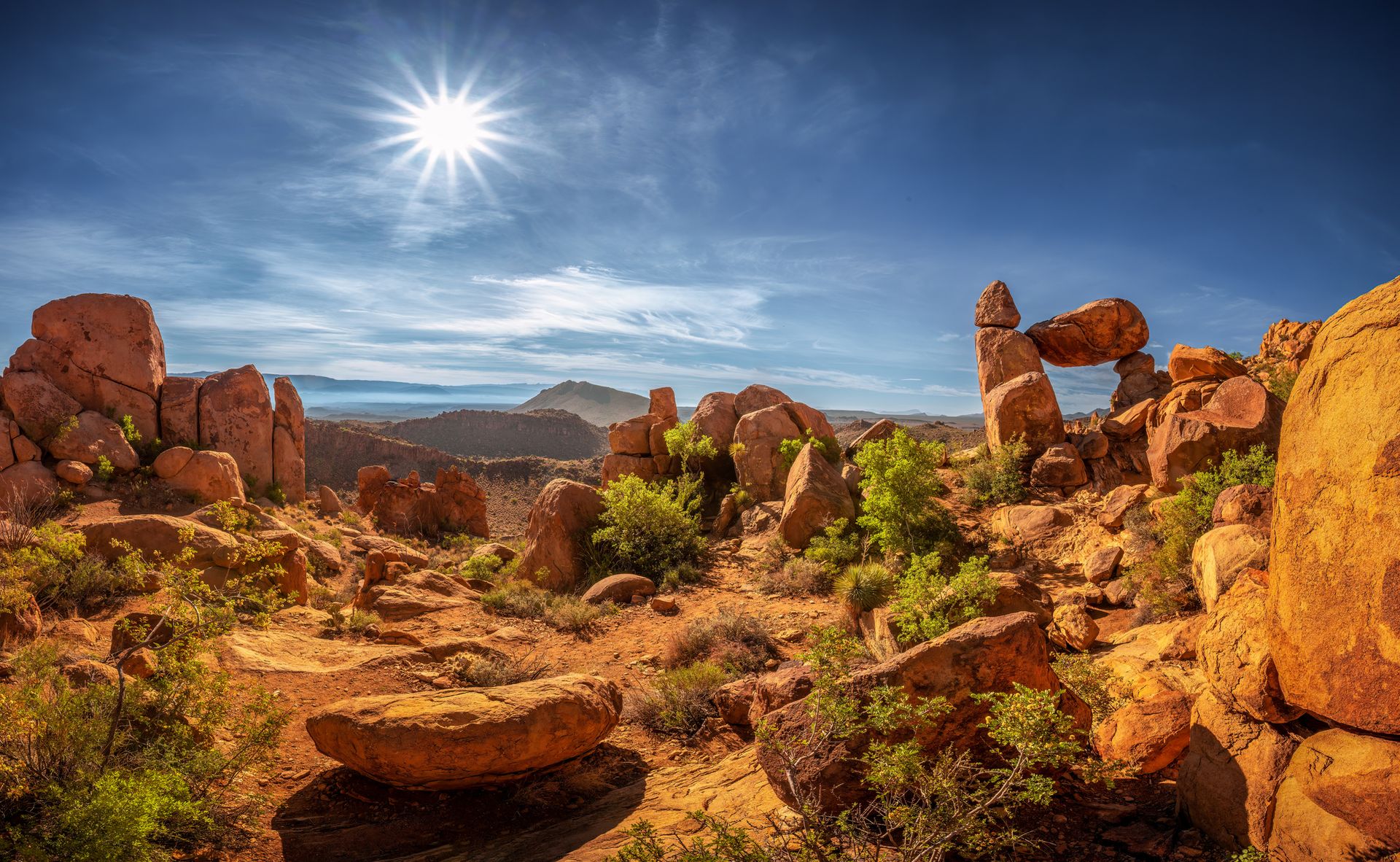
Big Bend National Park in southwestern Texas receives approximately 600,000 visitors annually, which the source frames correctly as a large absolute number that is nonetheless small relative to the millions who crowd the country’s most-visited parks. The comparison puts Big Bend’s visitor count in its proper context: in absolute terms, it draws substantial traffic, but in relative terms, it offers solitude that parks like Zion or Arches cannot. The remote location in the Chihuahuan Desert of west Texas — far from any major metropolitan area — acts as a natural filter, ensuring that visitors who arrive have deliberately chosen the park.
The landscape the park protects is geographically and visually specific. The Chisos Mountains rise from the surrounding desert, forming an isolated uplift that creates a dramatically different climate and vegetation zone within the larger desert. Ross Maxwell Scenic Drive passes the park’s most photogenic rock formations, including the Mule Ears Peaks and Santa Elena Canyon, a river gorge where the Rio Grande runs between walls rising 1,500 feet. The source specifically recommends rafting or canoeing through Santa Elena Canyon, which gives the canyon an active use and distinguishes the experience from the typical viewpoint stop.
A practical note shapes planning: the source warns that portions of the Chisos Basin will remain closed through 2028 for construction projects, affecting access to some of the park’s most popular trails and facilities. Visitors who plan trips to Big Bend before 2028 should confirm current access conditions before finalizing their itinerary. Despite the temporary closure, the Ross Maxwell Scenic Drive and Santa Elena Canyon remain open and accessible. Big Bend’s extreme remoteness, Chihuahuan Desert landscape, and river canyon experiences together make it the most geographically and climatically distinctive destination on this list. The Chisos Basin closure through 2028 reduces available trail access but does not eliminate the park’s core value, since the scenic drive and Santa Elena Canyon remain accessible and represent the experiences most visitors travel to Big Bend to have.
8 / 10
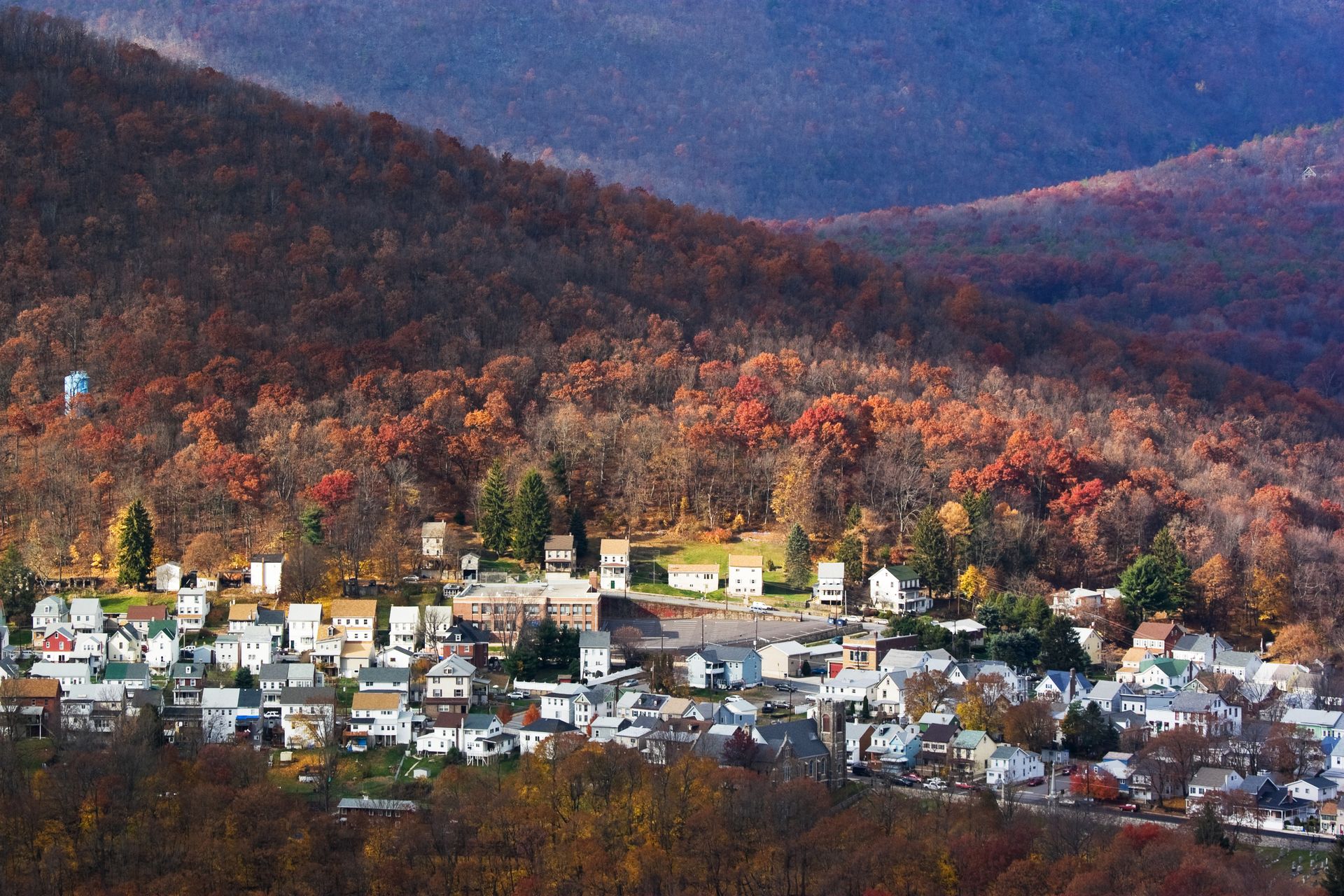
8. Jim Thorpe earned the nickname of Little Switzerland
Alex Potemkin / Getty Images
Jim Thorpe, a small town tucked into the Poconos of eastern Pennsylvania, carries the nickname “Little Switzerland” for a set of physical and architectural features that the source describes as genuinely reminiscent of alpine villages: European-style buildings, a scenic railway, a stately church, and steep topography that rises sharply from the valley floor. The comparison is not hyperbolic marketing but a specific description of the town’s visual character, which earned it the designation long before the tourism industry began promoting the region as a destination.
The outdoor recreation options in the surrounding Lehigh Gorge State Park give Jim Thorpe a physical adventure context alongside its architectural charm. Hiking and rafting in the gorge offer activities for travelers who want more than a historic walking tour. The source frames outdoor recreation as something to exhaust oneself with before shifting to arts venues, suggesting a town where the schedule can include both a challenging river run and a museum visit without requiring a second day.
The Stabin Museum and the Mauch Chunk Opera House represent Jim Thorpe’s cultural offerings beyond the outdoor activities and historical streetscape. The town’s October peak for leaf-peepers gives it a specific seasonal reputation, but the source emphasizes that Jim Thorpe functions as a “delightfully subdued weekend getaway option” for the rest of the year — meaning the crowd pressure that transforms it in October drops to a level that allows the town’s everyday character to reassert itself for the other 11 months. Jim Thorpe’s alpine nickname, its gorge recreation, and its year-round accessibility make it the most compact and charming destination on this list for a quick weekend escape from a northeastern metro. The Mauch Chunk Opera House’s continued operation gives a town of Jim Thorpe’s size a cultural anchor that most comparably sized Pocono communities do not maintain. The October leaf-peeper crowd is a reliable measure of the town’s visual appeal, but the quieter months reveal the more sustainable character of Jim Thorpe — a destination built around its architecture and landscape, not its seasonal peak.
9 / 10
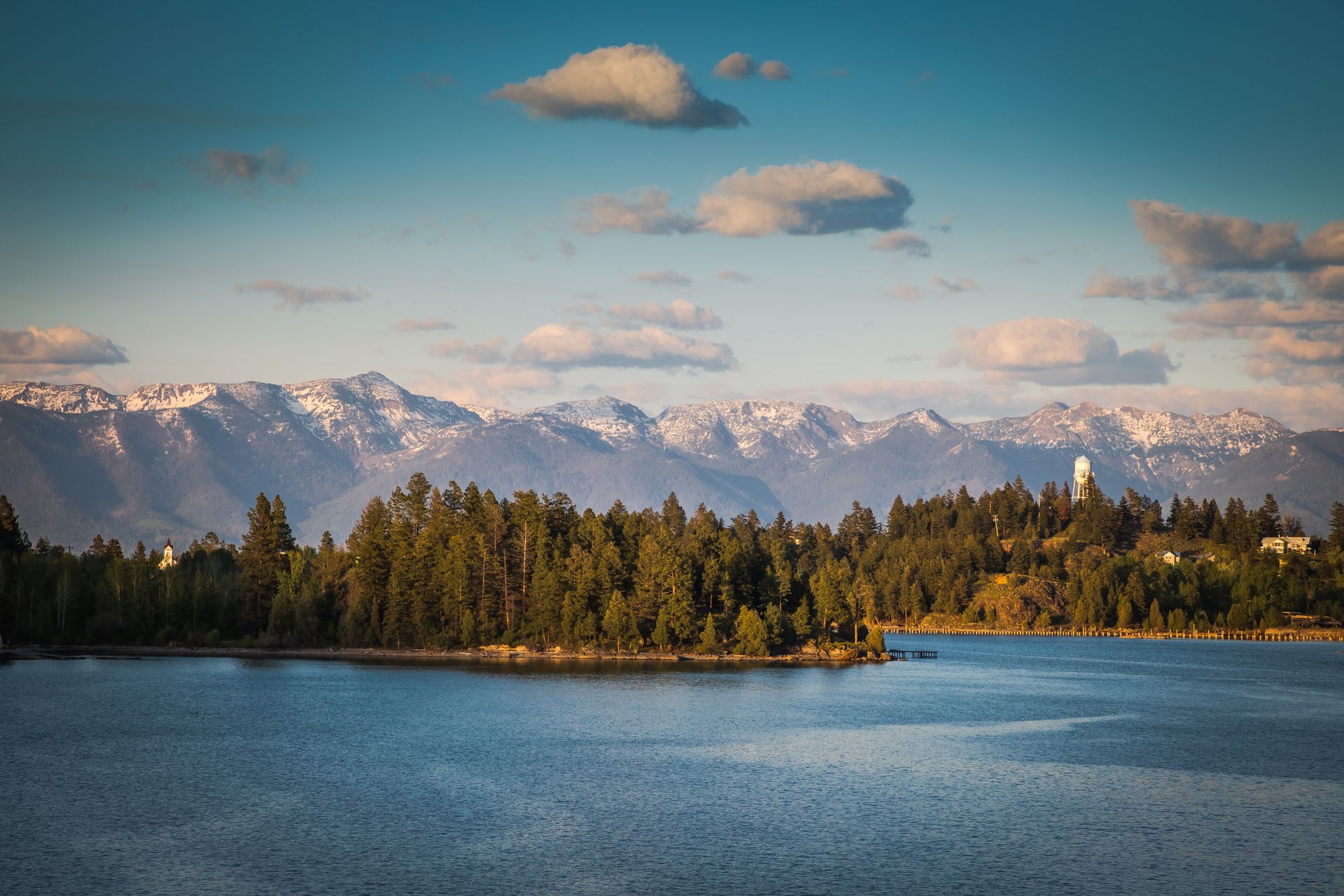
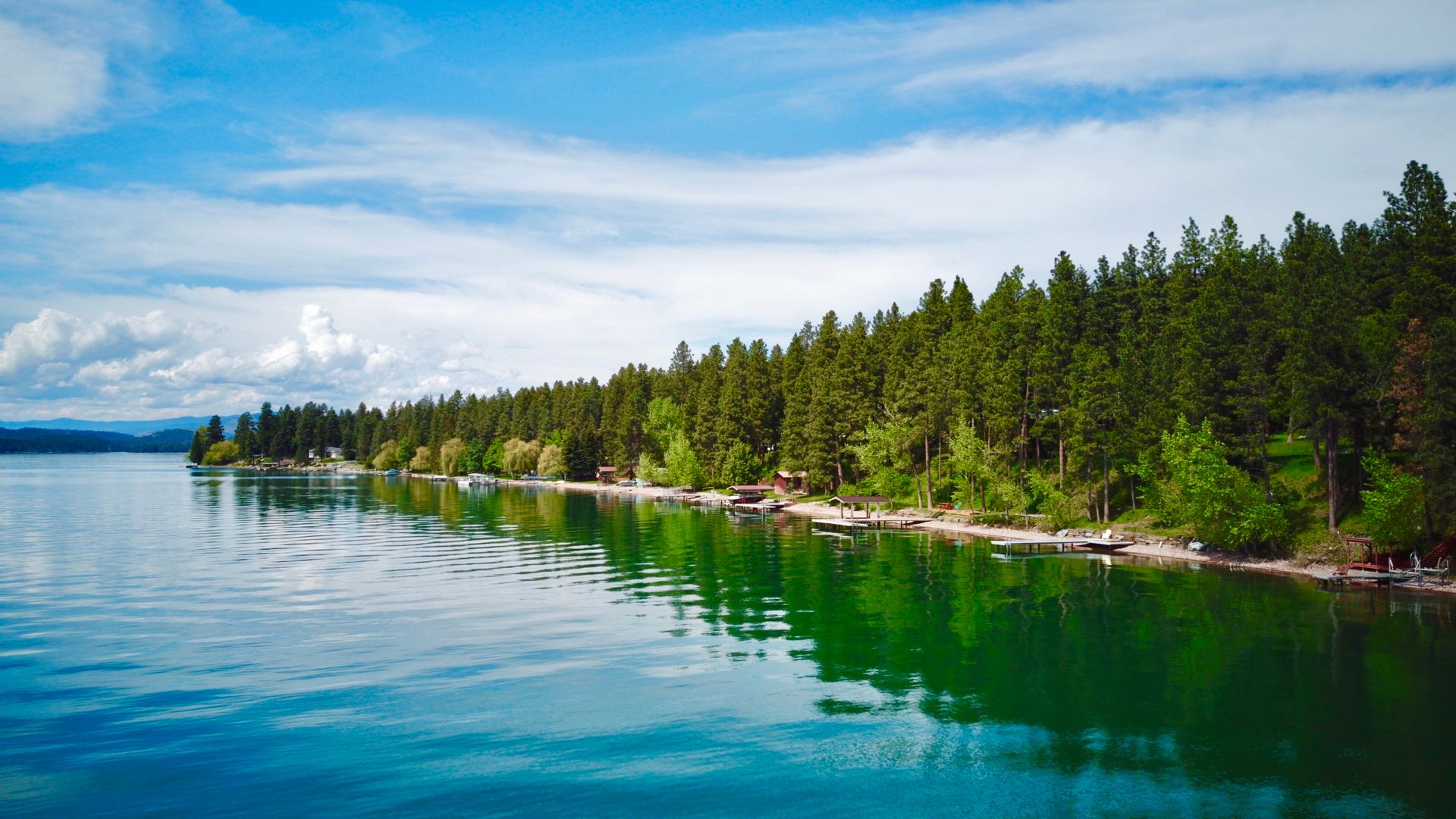
9. Flathead Lake encompasses 6 state park units in Montana
Brent Burland / Getty Images
Flathead Lake in Montana encompasses six state park units across its shoreline, including Wild Horse Island State Park, which is accessible only by boat and serves as one of the lake’s most popular kayaking destinations. The lake sits 40 miles southwest of Glacier National Park, which draws visitors in enormous numbers, and the source frames Flathead as offering more breathing room than its famous neighbor while sharing the same mountain and pine landscape context. The Swan Range and Mission Mountains form the distant backdrop of the lake’s setting. The source describes the pine-lined shores and mountain ranges backdrop as undoubtedly picturesque.
The lake’s scale gives it a physical presence that smaller Montana lakes cannot match: it is large enough to sustain six separate state park units with distinct characters, from the boat-access wilderness of Wild Horse Island to shoreline parks with swimming and fishing access. Water-based activities at Flathead include fishing in the clear water, swimming, and lake cruises. The source adds a whimsical dimension with a mention of Flessie, the Flathead Lake Monster. This local legend adds a playful regional mythology to the lake alongside its outdoor recreation credentials.
Glacier National Park’s fame operates at a level that overwhelms visitor infrastructure during peak season, with timed-entry permits, crowded shuttle buses, and months-in-advance campsite bookings creating logistical pressure for travelers who arrive without exhaustive planning. Flathead Lake’s proximity to Glacier — 40 miles — makes it a realistic base for exploring the region or a complementary destination that adds lake recreation to a Glacier-focused trip. The six state park units, the boat-access kayaking destination, the mountain backdrop, and the proximity to one of America’s most popular parks make Flathead Lake the strongest alternative to a famous neighbor option on this list. The Flessie legend, while not a serious draw in itself, reflects the local affection for the lake that generations of Montanans have developed. National park visitors rarely form that kind of attachment with the infrastructure-heavy destinations they visit on permit-based schedules.
10 / 10
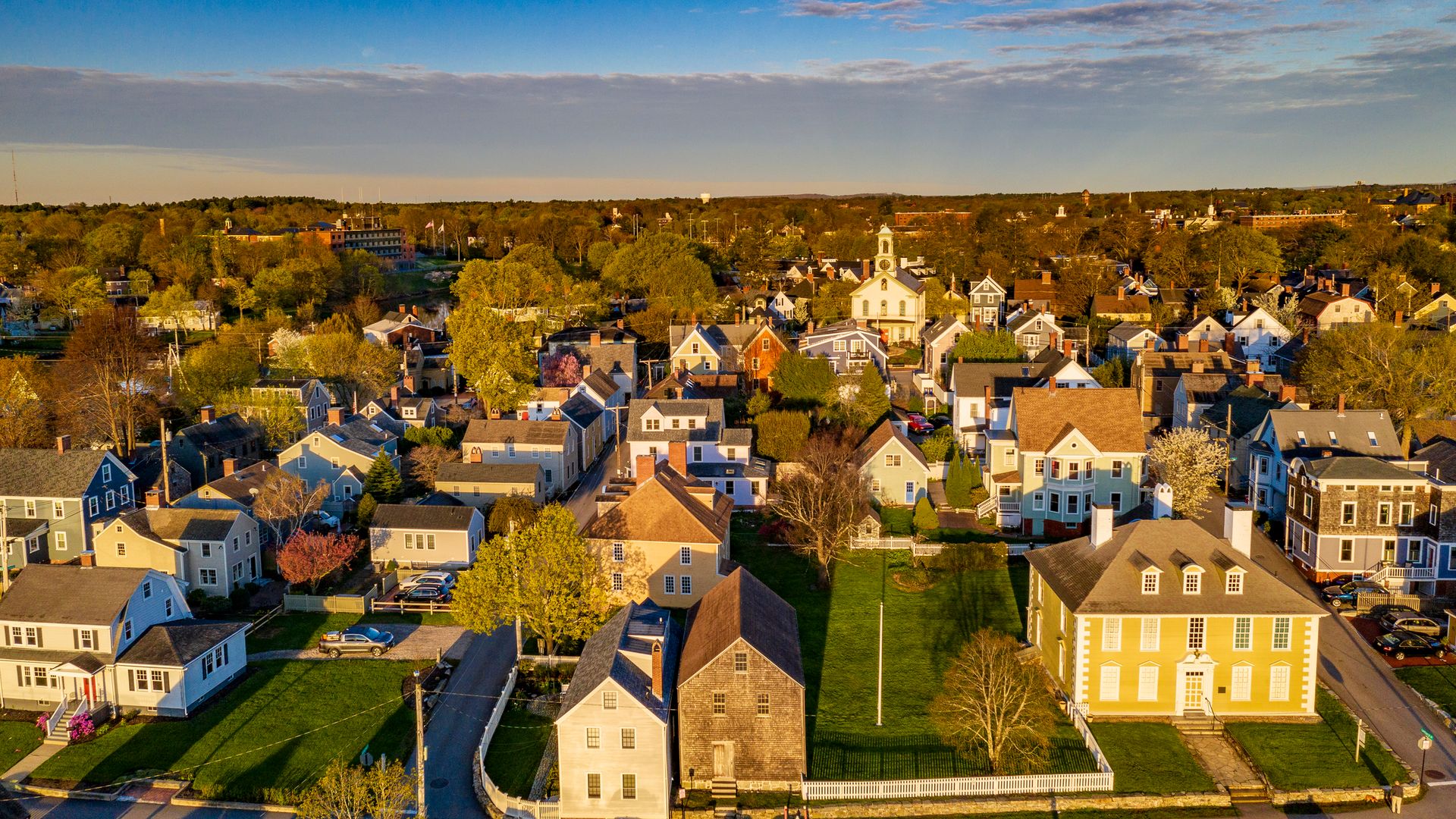
10. Portsmouth harbors one of the country’s oldest ports
Thomas H. Mitchell / Getty Images
Portsmouth, New Hampshire, sits in the context of New England’s abundant historic towns, and the source argues that it attracts less attention than its preservation and historical depth deserve. The city is home to one of the oldest working ports in the country, and the source describes it as well-preserved and underhyped. The editors’ direct endorsement places Portsmouth among the few entries in the list that receive explicit advocacy for more attention. The waterfront and the 18th-century homes that line the city’s streets give Portsmouth a built environment that reads as continuous with its colonial and maritime past, not as a staged recreation of it.
The Strawbery Banke Museum gives visitors a structured introduction to roughly four centuries of local history across a ten-acre outdoor museum campus in the city’s South End. The Gundalow Company operates wooden cargo barge replica sailings on the Piscataqua River, which give tourists a water-based engagement with the port’s working history over a purely land-based museum visit. Prescott Park’s waterfront gardens provide a quieter outdoor space for the transition between historic site visits.
The Seacoast Repertory Theatre, mentioned in the source as a venue for high-caliber performances, adds to Portsmouth's arts and cultural life, extending the visit beyond historical sightseeing alone. New England’s smaller cities often carry a historical gravity that their visitor numbers do not reflect, and Portsmouth fits this description more fully than most: four centuries of port history, a preserved colonial streetscape, river sailing on a historic vessel, and a working theater. For travelers who want a New England historic city experience without the crowd levels of Salem or Newport, Portsmouth offers the most complete and least discovered version of that experience on this list. Four centuries of working port history, a preserved colonial streetscape, river sailing on a historic vessel, and a high-caliber theater constitute a depth of destination that most New England towns of its size cannot match at any point in the tourist calendar.