
Speaking to Reuters, United Airlines CEO Scott Kirby ruled out chasing a large-scale merger while signaling the airline could still move to pick up airport slots, gates, or other assets should fuel cost pressures drive weaker competitors to sell.
Scott Kirby said consolidation is now a "low probability" for United but left open the possibility of acquiring slots, gates, or other airline assets
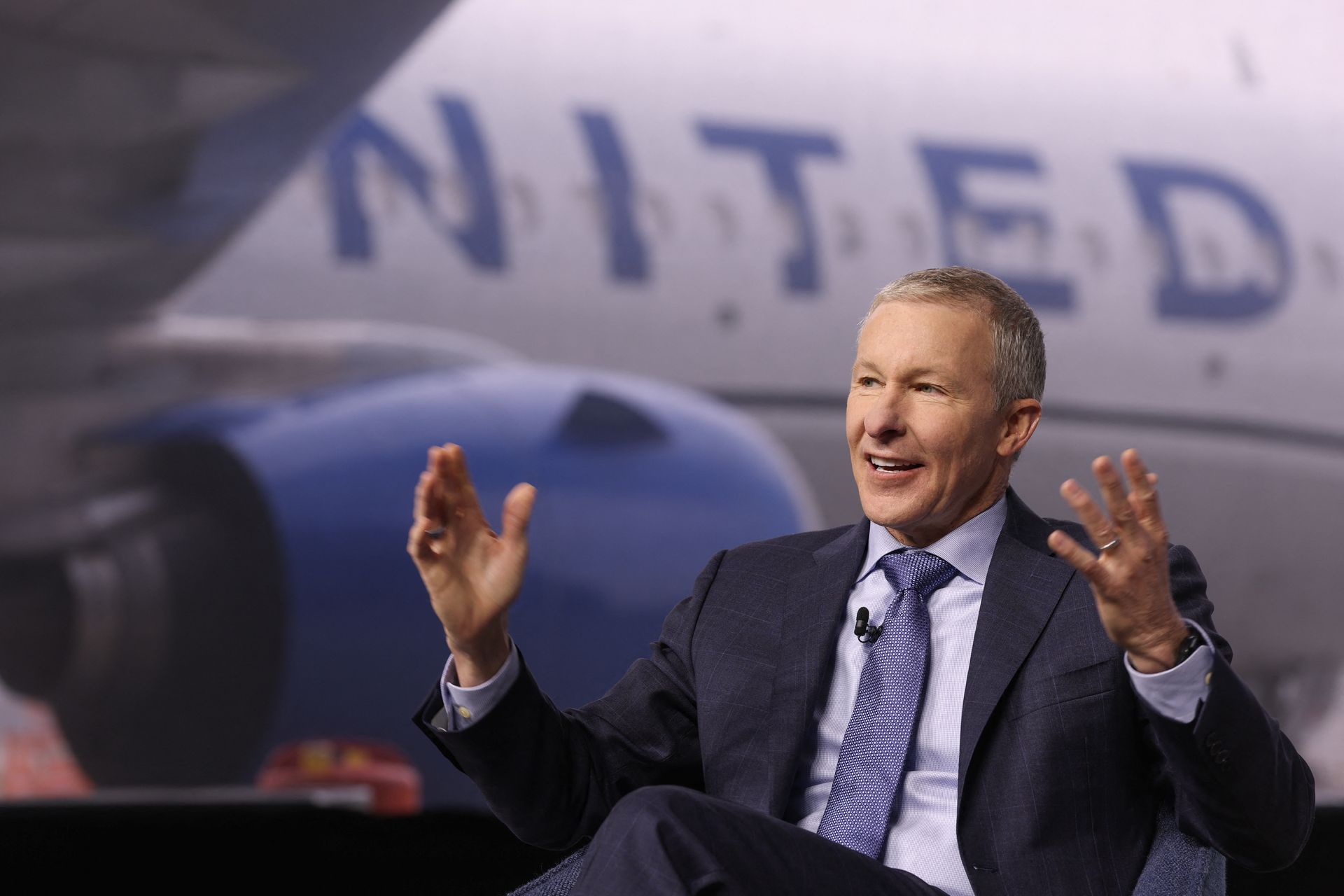
PATRICK T. FALLON / Getty Images
Speaking to Reuters, United Airlines CEO Scott Kirby ruled out chasing a large-scale merger while signaling the airline could still move to pick up airport slots, gates, or other assets should fuel cost pressures drive weaker competitors to sell.
"I think consolidation is unlikely for United," Kirby told Reuters on the sidelines of the International Air Transport Association's annual meeting in Rio de Janeiro on Sunday. "That doesn't mean we won't still be in the market to buy assets, but consolidation is a low probability."
Laying out the obstacles to any deal, Kirby said a transaction of that magnitude depended on alignment across every major stakeholder group — labor, passengers, investors, government authorities, and the leadership of any prospective partner. "We don't have that, clearly, so we can't get it done without them," he told reporters, according to CNBC.
When the conversation turned to JetBlue Airways, Kirby expressed doubt that the carrier would end up in bankruptcy protection, pointing to its available cash and assets free of liens as reasons for that assessment.
The comments come after Kirby's attempt to pursue a combination with American Airlines collapsed earlier this year. Kirby confirmed in April that he had approached American about a potential merger and that American had declined to engage. Robert Isom, American's CEO, publicly opposed the combination, describing it as harmful to consumers and anticompetitive. Kirby said Sunday that a deal of that scale simply could not proceed without management support. "You can't have the management team on record publicly saying it was anti-competitive," he said.
The merger concept first surfaced during a late-February White House meeting between Kirby and President Donald Trump, though Trump said he opposed the idea. Kirby later argued that a combined airline would have focused on growth rather than cost-cutting, and would have helped U.S. carriers compete against foreign airlines.
At a Bernstein investor conference last month, Kirby went further in dismissing consolidation prospects, saying United would not participate in any combination "for any time I can see in the foreseeable future." He also called the idea of pivoting to a smaller acquisition "idiotic," and argued that closing the margin gap with JetBlue would be "mathematically close to impossible."
Zooming out to the industry as a whole, Kirby argued that elevated fuel costs are functioning as a stress test, exposing the vulnerability of airlines whose business model rests on low fares rather than brand attachment — and he added that fare increases should be sufficient to offset United's fuel cost burden by year's end.
Join 500,000+ readers who start their day with Quartz.
By subscribing, you agree to our Terms of Service and Privacy Policy.