Home sale returns fell in most markets in early 2026. ATTOM tracked profit margins for 128 metro areas in Q1 2026 to identify who gained and who lost

enedek / Getty Images
Selling a home has been one of the more reliable wealth-building moves an American homeowner could make for the past several years. Pandemic-era price surges handed sellers returns that looked less like real estate transactions and more like venture exits. But those conditions are fading, and they are not fading evenly. Some markets are still posting gains that dwarf what sellers saw even at the height of the boom, while others have watched years of accumulated profit evaporate inside a single calendar year.
The geographic split is sharper than the national headline suggests. Overall, profit margins declined in more than four-fifths of the metro areas measured in the first quarter of 2026, yet a cluster of Midwest industrial cities is moving against that trend. Markets that never participated fully in the Sun Belt frenzy are now outperforming precisely because they were not overvalued to begin with. Sellers in those cities face steady demand without the correction risk that has hammered peers in warmer-weather states. Florida points the other direction. Several of the state's mid-sized markets built margins on a foundation of pandemic migration, remote-work relocation, and speculative buying that has since unwound. Those who timed their exits well walked away with extraordinary returns. Homeowners still holding are absorbing an adjustment that has stripped more equity in a year than most people anywhere else in the country have ever accumulated.
ATTOM analyzed profit margins on single-family home and condo sales across 128 metro areas in the first quarter of 2026, measuring the difference between what sellers originally paid for their properties and what they collected at closing. The report covers metro areas with more than 1,000 home sales in the period and sufficient data to analyze. What it found ranges from markets where sellers are walking away with returns that rival the best years of the pandemic boom to markets where accumulated gains have collapsed in a matter of months.

Brett Carlsen / Getty Images
Flint, Mich., a housing market long associated with economic distress, recorded the largest year-over-year improvement in home seller profit margins of any metro in the ATTOM dataset, with margins rising from 65.5% to 81.8%. The 16.3-percentage-point climb reflects a market where years of low prices and suppressed valuations are finally correcting upward, not because of speculation, but because underlying demand has outpaced the city's limited supply.
Flint's turnaround is rooted in affordability. Buyers priced out of larger Michigan metros such as Detroit, Ann Arbor, and Grand Rapids have pushed into secondary cities where entry-level homes still carry values within reach of first-time buyers. That demand pressure has been steady and not speculative, lifting home values without creating the overhang that eventually reverses gains elsewhere.
The scale of Flint's current margins is notable in absolute terms. An 81.8% gain means that a seller who paid $100,000 for a property has pocketed roughly $81,800 above the original purchase price. Flint still ranks among the highest-performing markets in the entire dataset despite the city's per-capita income and economic profile sitting far below the national average. The gap between the city's economic standing and its seller margins reflects how dramatically purchase prices once diverged from actual property values during decades of population decline.
National data sharpens this picture. Across all 128 metro areas ATTOM analyzed, profit margins fell in 82.8% of markets over the prior 12 months. The typical profit margin nationwide in the first quarter of 2026 was 44.1%, down from 50.2% in the same period of 2025. Flint's 81.8% is nearly double that figure. The median sales price across the country held at $360,000, while Flint serves buyers at a fraction of that level, an affordability gap that insulates it from the rate sensitivity squeezing higher-cost metros.
Sellers in Flint are also benefiting from the relative stability of Midwest housing economics. The region's markets were slower to climb during the pandemic surge and have been correspondingly late to correct. Flint's gains reflect actual transactions at actual prices, not a hangover from temporary population flows or investor activity that has since reversed. The city's improving margin trend is consistent across multiple quarters, pointing to a genuine shift in market fundamentals and not a statistical artifact of a single period.

Michael Godek / Getty Images
Evansville, Ind., started the year-over-year comparison period with a profit margin of 40.9% — a figure that placed it below the national average at the time — and ended Q1 2026 at 53.5%, the second-largest annual gain among the metros ATTOM analyzed. The 12.6-percentage-point increase is notable not just for its size but for what it represents structurally: sellers in Evansville now collect more than half the original purchase price as profit, a threshold that most markets have been falling away from, not toward.
The move above 50% is meaningful in context. Nationally, only 37.5% of the 128 metro areas in the dataset — 48 metros — posted profit margins above 50% in the first quarter of 2026. Evansville joined that group during a quarter in which the typical direction of travel was downward. The fact that the market crossed the threshold while the broader trend was deteriorating reflects the degree to which local supply and demand conditions have diverged from the national pattern.
Evansville sits on the Indiana-Kentucky border in a region that has attracted light manufacturing and logistics investment in recent years. That economic activity has drawn workers into a housing market where prices remain far below coastal and Sun Belt levels. Growing employment and limited new construction push existing home values higher without the inventory overhang that weighs on larger markets.
The city's starting margin is also informative. Among the three top-gaining metros, Evansville had the lowest base, which makes the percentage-point gain more significant than it might appear. The metro was not simply rebounding from a temporary dip. Sellers were climbing out of a position where returns had already fallen below what most areas were seeing. The improvement reflects a genuine change in local conditions, not a normalization following an outlier quarter.
Context matters here. The typical home sale nationwide generated $110,100 in raw gain in the first quarter of 2026, a figure down 5% from the prior quarter and 6% from the same period a year earlier. Evansville's raw dollar gains are well below that figure given the metro's lower purchase floor. Returns express themselves as percentages because underlying purchase costs in Evansville are low enough that even a large proportional gain represents a modest absolute dollar amount. That structure — high return on a low base — is the defining feature of secondary Midwest metros where sellers are now outperforming.

benedek / Getty Images
Lansing, Mich., posted the third-largest annual gain in home seller profit margins among the metros ATTOM analyzed, with margins climbing from 48% to 57.8% year-over-year. The 9.8-percentage-point increase places Lansing alongside Flint as the second Michigan market in the top three gainers, a concentration that confirms the Midwest pattern and not an isolated case.
The capital city has characteristics that distinguish it from Flint even while the two share a broader regional story. Lansing's economy is anchored by government employment, Michigan State University, and the automotive supply chain. Those sectors generate relatively stable incomes and consistent housing demand across business cycles, creating a different kind of upward pressure on seller returns than the pure affordability-driven migration seen in Flint.
Lansing also crossed the 50% margin threshold on the strength of this annual improvement, joining Evansville in a group of markets that are moving toward higher seller returns while the national average contracts. At 57.8%, the city's margin now sits above the national figure of 44.1% by a comfortable amount, a position it did not hold as recently as one year ago.
The 57.8% figure means that sellers who bought their homes at the area's typical cost are recovering the original purchase amount plus more than half again in profit. In a metro where values have historically been modest compared to coastal peers, that return signals how tightly supply has contracted relative to demand. Michigan's secondary cities are absorbing buyers who have been priced out of the state's more expensive corners, and Lansing has benefited as much as any in the region.
Michigan's broader performance — two of the top three annual gainers in the ATTOM dataset — reflects a structural advantage. Unlike Florida and parts of the Mountain West, Michigan's markets did not experience a speculative buying surge during the pandemic years. Prices climbed, but not at the rate that would create the correction conditions now hammering Sun Belt sellers. The Lansing and Flint improvements build on a foundation that was never overextended, suggesting they have staying power that pandemic-era gains elsewhere lacked.
Michael Warren / Getty Images
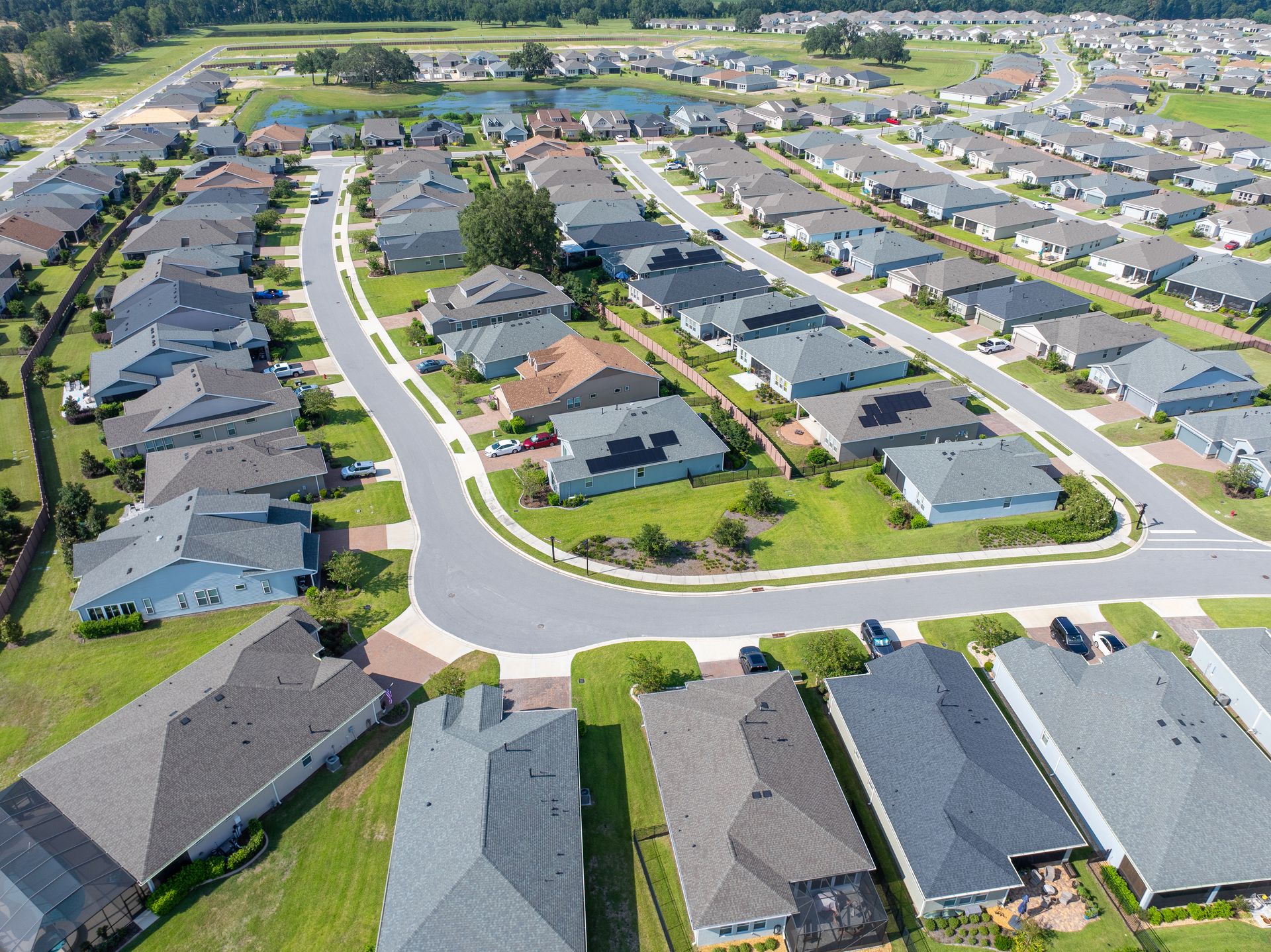
Ocala, Fla., suffered the most severe annual decline in home seller profit margins of any metro in ATTOM's dataset, with margins falling from 119.4% to 58.1%, a collapse of 61.3 percentage points in 12 months. The scale of that drop has no parallel in the data and reflects the degree to which Ocala's market was built on conditions that have since reversed entirely.
That extraordinary margin meant that sellers in the first quarter of 2025 were collecting more than double what they originally paid for their homes. No such margin is sustainable in a city that lacks the income base, employment density, or long-term population growth to support it. Ocala attracted buyers during the pandemic years as an affordable alternative to larger Florida cities such as Orlando and Jacksonville, and prices rose sharply in a market with limited supply and a sudden surge of remote-work relocators. When that migration slowed and mortgage rates climbed, demand retreated, and so did prices.
At 58.1%, Ocala's profit margin remains above the national average of 44.1%. But the direction of travel is what matters to sellers making decisions now. A market that loses more than 60 percentage points of profit margin in a year is signaling that the peak has passed and that waiting for a recovery is a bet against the current trend.
The median home sales price in Ocala fell 7.2% on an annual basis, one of the five largest declines among the metros ATTOM measured. A falling median price is significant in isolation, but in combination with a collapsing profit margin, it creates a double compression: sellers receive less for their homes and retain a smaller share of that lower figure relative to what they originally paid. The two forces compound each other.
Ocala's situation also reflects broader dynamics in Florida's mid-sized metros. Homes sold by banks or other lenders accounted for 1.6% of all sales nationally in Q1 2026, a share that climbed from 1.3% the prior quarter. Areas under financial pressure tend to see lender-owned sales concentrate where price declines have left owners unable to service debt. Ocala's dramatic profit margin decline suggests it is among the metros most exposed to that risk as conditions tighten further.
felixmizioznikov / Getty Images
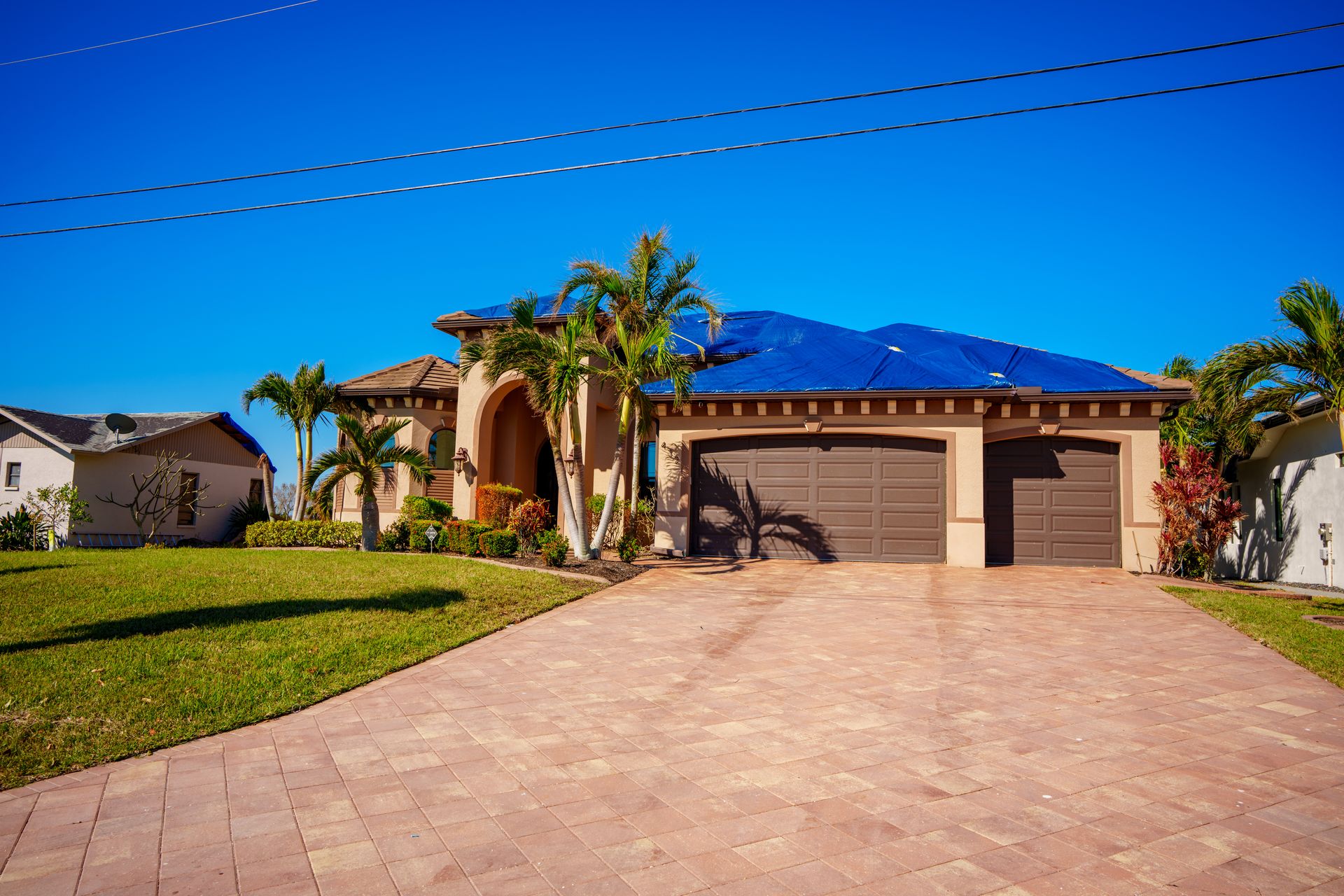
Punta Gorda, Fla., saw profit margins fall from 78.9% to 54.3% year-over-year, the second-largest annual decline among the metros ATTOM analyzed. The 24.6-percentage-point drop reflects a market where pandemic-driven price appreciation has met correction pressure, producing losses that are severe enough to rank among the worst in the country but not yet steep enough to pull the market below the 50% margin threshold.
A small market on Florida's Gulf Coast, Punta Gorda is defined largely by retirement demographics and proximity to Charlotte Harbor. Its appeal during the pandemic years was genuine: the climate was warm, density was low, and prices sat far below those of Naples and Fort Myers to the south. Those qualities drew buyers from colder states, and surging demand in a market with constrained inventory sent values well above prior levels. A seller return above 50% in the first quarter of 2025 reflects the height of that premium.
The retreat from that level reflects two overlapping pressures. First, the pool of buyers willing to pay inflated prices for Punta Gorda's limited amenities has contracted as remote work norms normalize and relocators return to urban metros. Second, hurricane exposure along Florida's Gulf has become a more visible risk factor. Insurance costs in those counties have climbed steeply in the years following major storm activity, and those costs affect both affordability calculations and buyer willingness to pay a premium for shoreline or near-shoreline properties.
At 54.3%, Punta Gorda's current margin still places it above the national figure of 44.1%. Sellers still walk away with meaningful returns. But the speed and scale of the decline — nearly 25 percentage points lost in 12 months — means that homeowners who delayed listing by a year paid a steep price for the wait. The market's trajectory does not yet point to a floor, leaving sellers currently weighing timing with the same question their counterparts in Ocala faced: whether to list now or risk further compression.
The Punta Gorda decline is part of a broader pattern along Florida's Gulf Coast. North Port-Sarasota, immediately to the north, fell from 57.9% to 35.5% over the same period. That consecutive geographic pattern of falling margins along the coast is not coincidental. Common exposure to the insurance cost surge, a collective dependence on migration-driven demand, and parallel vulnerability to the same correction forces all converge in the regional market simultaneously.

Sean Pavone / Getty Images
Lakeland, Fla., registered a year-over-year profit margin decline from 62.2% to 38%, the third-largest annual drop among ATTOM's metro-level dataset. The 24.2-percentage-point decline is significant not only for its size but for where it leaves the city: at 38%, Lakeland now sits below the national profit average of 44.1%, making it one of the few Florida metros to have fully surrendered its pandemic-era advantage over the broader U.S. average.
Lakeland occupies the I-4 corridor between Tampa and Orlando, which made it a logical landing point for buyers priced out of both metros during the pandemic. Its central location, relative affordability, and access to two major job markets drove demand sharply higher between 2020 and 2023. Sellers who purchased before that surge and listed during the peak period enjoyed returns that reflected the compression of a decade's worth of price appreciation into roughly three years.
The market that created those conditions no longer exists in the same form. Tampa and Orlando have both experienced their own price corrections, reducing the competitive pressure that was forcing buyers toward Lakeland as a value alternative. Purchasers who might have settled for it as a second choice now find more options within their budgets in the primary metros they originally wanted. That shift has removed a layer of demand from the city's housing stock.
Falling below 44.1% sets Lakeland apart from the other two Florida metros in the bottom three. Both Ocala and Punta Gorda retain margins above the national average despite their severe declines. Lakeland's drop below that level means sellers are now returning less than the typical American seller. Two years ago that outcome would have been unthinkable for this city.
The pattern across these three Florida cities points to a correction that is broad, deep, and still moving. The national raw profit figure of $110,100 in the first quarter of 2026 is itself already down 5% from the prior quarter and 6% from a year earlier. Florida's mid-tier metros are contracting faster than the national rate of decline, suggesting the correction in those areas is more structural than cyclical. Sellers in Lakeland, Ocala, and Punta Gorda are not experiencing a temporary dip in an otherwise intact housing stock. They are dealing with a fundamental repricing of assets that were overvalued relative to long-term demand fundamentals.
