
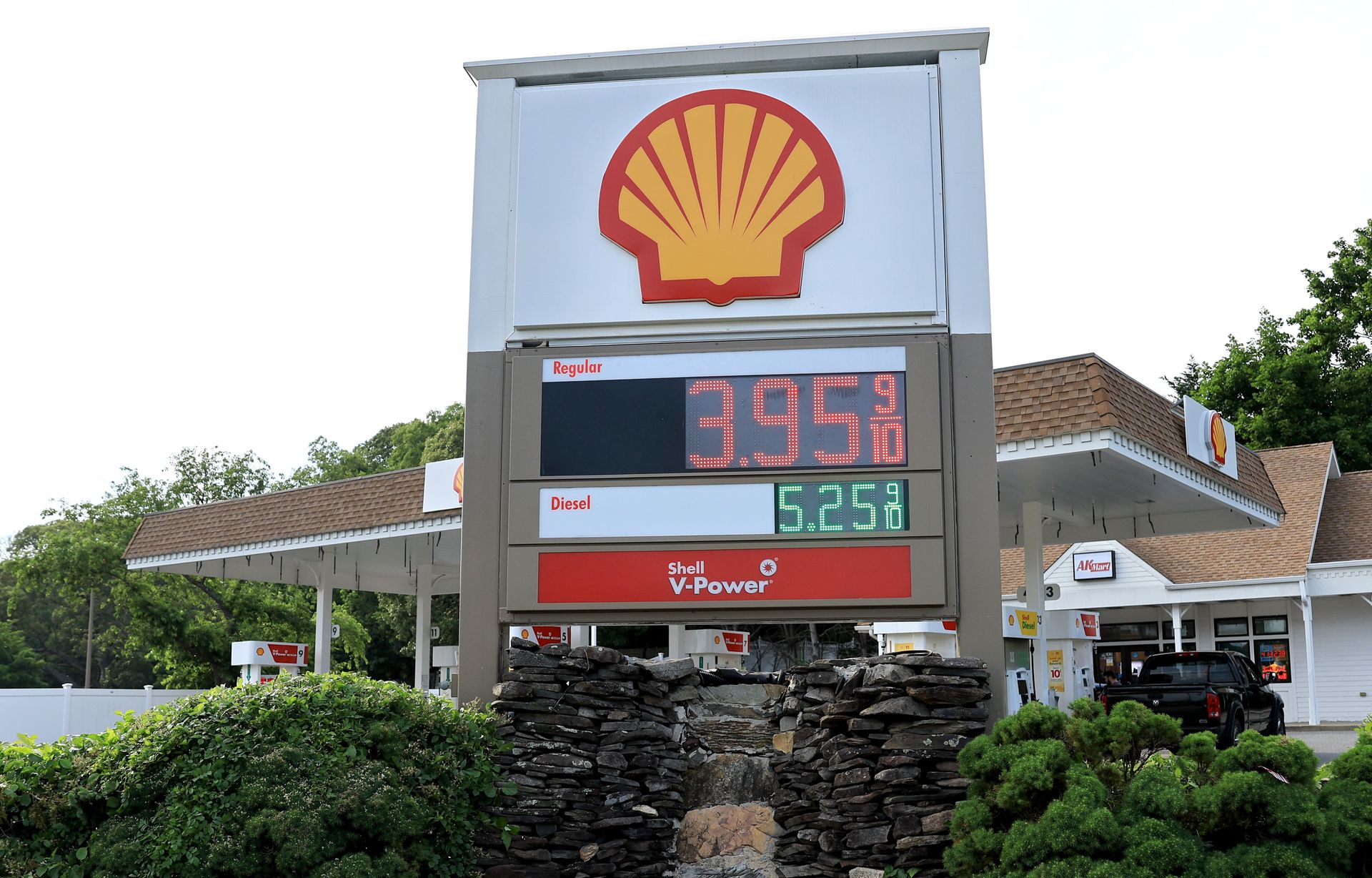
U.S. gasoline prices have fallen for a sixth consecutive week, reaching a national average of $3.85 per gallon on Monday, as diplomatic progress between the United States and Iran reduced fears about oil supply disruptions.
Compared with the same time last month, motorists are paying 67.2 cents less per gallon, a decline of 14.1 cents from just the prior week, GasBuddy reported, drawing on a dataset that spans roughly 12 million price submissions from more than 150,000 fueling locations nationwide. Diesel also cheapened considerably, with the national average shedding 19.2 cents to close at $4.99 per gallon. The weekly decline marks a roughly 15% drop from the May peak.
Cuts at the pump were widespread across the country. Among the steepest single-week moves, drivers in Colorado saved a quarter per gallon, while those in Arizona and Ohio saw prices retreat by roughly 22 cents and 21 cents, respectively. At the regional extremes, Indiana, Texas, and Oklahoma offered the country's cheapest fills — averaging $3.32, $3.37, and $3.37 per gallon — whereas California ($5.53), Hawaii ($5.44), and Washington state ($5.30) held onto the highest averages.
The relief at the pump reflects a broader retreat in crude oil prices since a U.S.-Iran framework agreement moved markets to reduce the supply risk premium that had pushed crude above $120 per barrel earlier this year. By Monday morning, WTI crude had settled around $75.88 a barrel — about $4.28 below where it stood seven days prior — and Brent crude landed at $78.57.
The outlook carries significant uncertainty, however. Despite an Iranian declaration over the weekend that the Strait of Hormuz — through which about a fifth of the world's seaborne oil moves — would be shut in retaliation for Israeli strikes on Southern Lebanon, a pair of smaller tankers were spotted completing transits on Monday. U.S.-Iran talks scheduled in Switzerland were also called off.
Patrick De Haan, who leads petroleum analysis at GasBuddy, offered a measured warning. "The outlook is far from settled," he said, adding that a deterioration in conditions could cause the risk picture for motorists to shift rapidly.
Supply risks on the domestic side also remain. Two refinery incidents added to the supply uncertainty: power outages caused by a lightning strike forced TotalEnergies to halt operations at its 238,000-barrel-per-day Port Arthur, Texas, facility last week, while Marathon $MPC Petroleum's much larger Galveston Bay Refinery in Texas City — capable of processing 631,000 barrels per day — contended with a fire on Sunday, according to Reuters. The approaching Atlantic hurricane season adds further potential pressure on prices.
Alex Hodes of StoneX welcomed the consumer benefit of cheaper fuel costs for inflation, though he warned that counting on uninterrupted energy passage through the Strait of Hormuz amounted to a "large assumption" — one that could be tested by turbulence in the period ahead.