
The U.S. Bureau of Labor Statistics said Friday that nonfarm payrolls rose by 115,000 in April, down from a revised 185,000 in March but ahead of expectations. The unemployment rate was unchanged at 4.3%.
The unemployment rate held at 4.3%, while the number of people working part time for economic reasons rose by 445,000
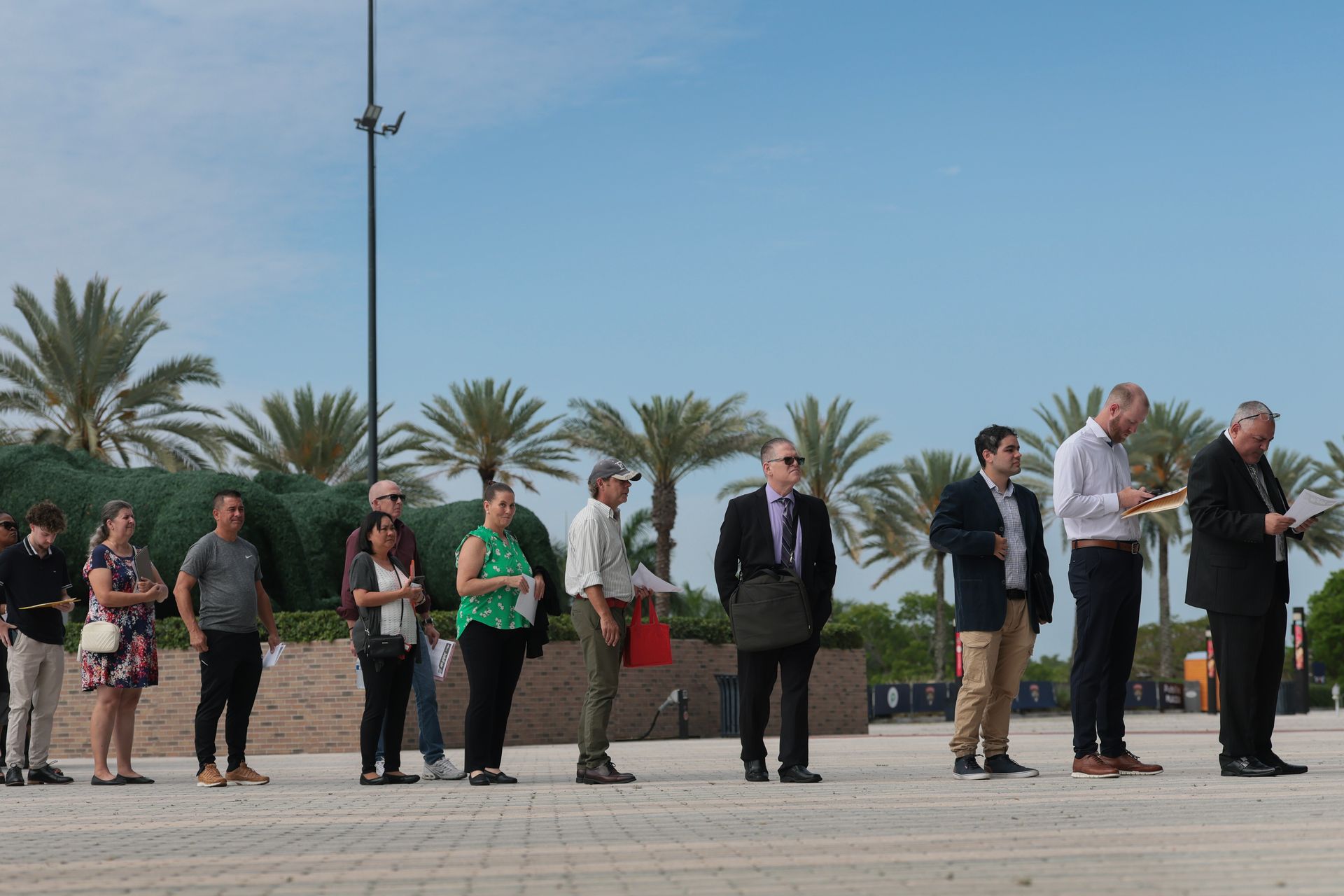
Joe Raedle / Getty Images
The U.S. Bureau of Labor Statistics said Friday that nonfarm payrolls rose by 115,000 in April, down from a revised 185,000 in March but ahead of expectations. The unemployment rate was unchanged at 4.3%.
Among industries, health care was the top gainer, adding 37,000 positions against a 12-month average of 32,000. Couriers and messengers powered a 30,000 jump in transportation and warehousing, while retail contributed 22,000 and social assistance 17,000. Information was the standout loser, cutting 13,000 jobs — a continuation of a longer slide that has stripped the sector of 342,000 positions, roughly 11% of its workforce, since a November 2022 peak, per the BLS. Federal government employment fell by 9,000 and is now down 348,000, or 11.5%, from its October 2024 peak.
Wage growth disappointed on both timescales: private-sector average hourly earnings climbed just 6 cents to $37.41, a 0.2% monthly rise, while the year-over-year rate came in at 3.6% — short of the 0.3% and 3.8% forecasts, respectively, that CNBC cited.
The BLS revised February's payroll figure down by 23,000 to -156,000, and revised March's figure up by 7,000 to 185,000. Combined, the two months were 16,000 lower than previously reported.
The number of people working part time for economic reasons — those who wanted full-time work but could not find it or had their hours cut — rose by 445,000 to 4.9 million. When discouraged workers and involuntary part-timers are folded in, the wider underemployment gauge reached 8.2%, CNBC reported.
The labor force participation rate edged down to 61.8%, and the number of people not in the labor force who said they wanted a job was little changed at 6.1 million.
Joseph Brusuelas, chief economist at RSM, offered a sanguine read of the data when speaking to Bloomberg. "Labor market demand, albeit soft by recent standards, is more than sufficient to keep the unemployment rate from rising," he said, characterizing the current environment as "an uneasy status quo best described as a low hire, low fire labor market" that "remains intact."
Join 500,000+ readers who start their day with Quartz.
By subscribing, you agree to our Terms of Service and Privacy Policy.