In 2020, interest payments on the national debt totaled $345 billion. Now that amount has just about tripled
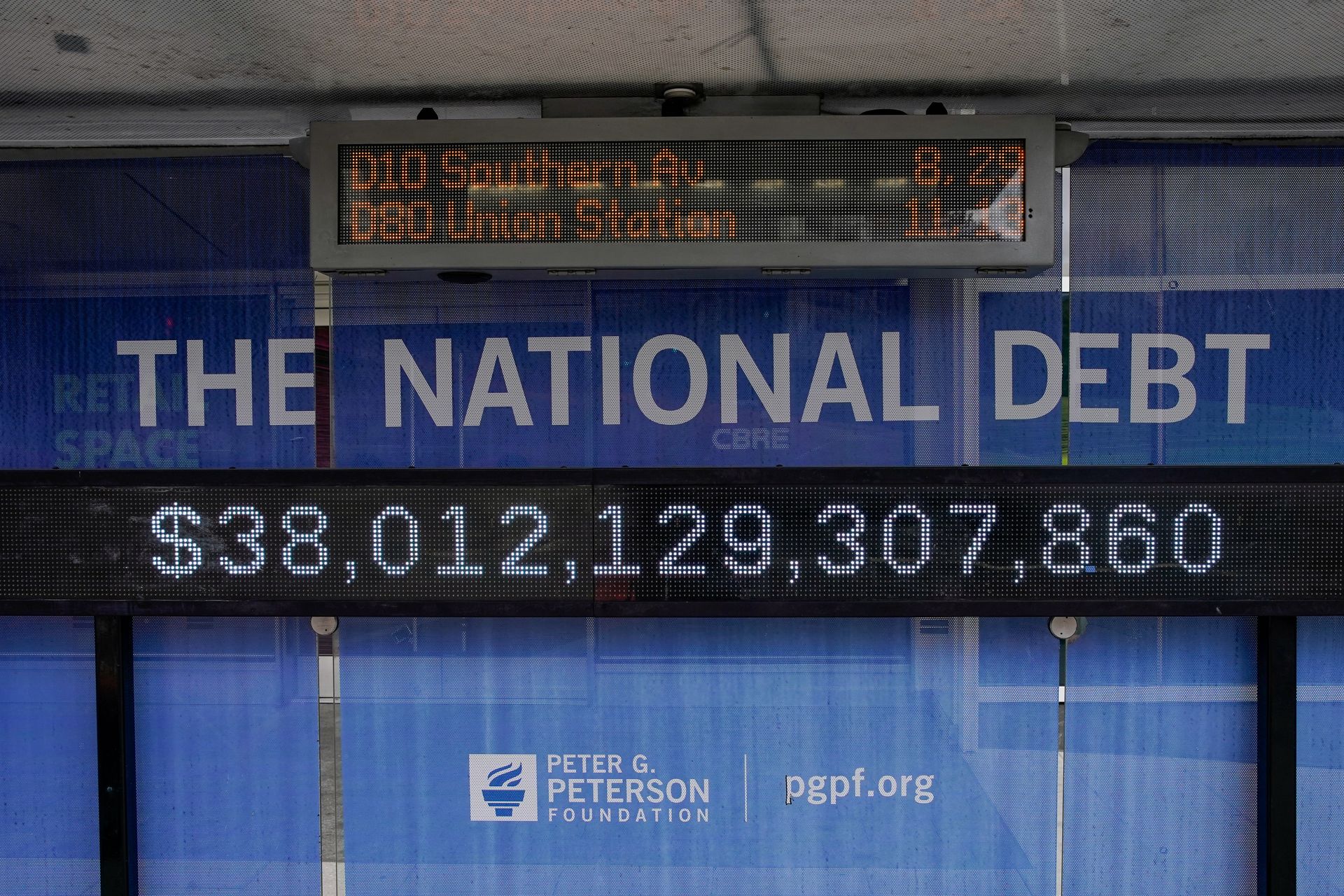
Jemal Countess/Getty Images for the Peter G. Peterson Foundation
A version of this article originally appeared in Quartz’s Washington newsletter. Sign up here to get the latest business and economic news and insights from Washington straight to your inbox.
Big numbers are more and more common in the American economy these days. Almost everything costs more, and absorbing numbers with a trail of zeroes isn’t out of the ordinary anymore. The year 2026 will see the normalization of another economic trend: Trillion-dollar interest payments for the U.S. government to pay down its debt.
Join 500,000+ readers who start their day with Quartz.
By subscribing, you agree to our Terms of Service and Privacy Policy.
It’s a remarkable threshold for the federal government to cross. In 2020, interest payments totaled $345 billion at the start of the COVID pandemic. Now that amount has just about tripled only six years later, which the nonpartisan Committee for a Responsible Federal Budget is calling “the new norm.” The U.S. owes its lenders about $38.4 trillion.
Policymakers in both parties regularly pay lip service to shrinking the debt, and 2025 was no exception. A true demonstration of the appetite for uninterrupted borrowing came from President Donald Trump’s “One Big Beautiful Bill” last summer. That tax-and-spending behemoth carried a $3.4 trillion price tag over a decade.
This won’t be a column suggesting it’s time to panic about the debt. Among the marketplace of nations, the U.S. hasn’t been dislodged from its privileged position. Sure, the dollar is a little dinged up, shedding close to 10% of its value after a year of Trump-flavored turmoil. But investors aren’t fleeing en masse from the dollar, and the U.S. can keep up spending by simply issuing more of its own currency. Kent Smetters, a prominent economist at the Penn-Wharton Budget Model I spoke to late last year, has projected that the U.S. economy’s breaking point will be a quarter-century from now if current trends hold.
But it’s worth taking stock of the trade-offs that are likelier to occur given the swelling U.S. debt. Romina Boccia of the libertarian-leaning Cato Institute raised this in a House Budget Committee hearing last month. “Excessive peace-time deficits and debt also undermine America’s ability to borrow when it matters most, in times of crisis,” she said.
In the near-future, investors in three countries stand to win from America’s larger interest payments: Japan, China, and a little surprisingly, the United Kingdom. Since foreigners hold about one-third of all U.S. debt, it means a larger chunk of U.S. income will flow overseas.
I’ll be keeping tabs on whether any notable policymaker, on the left or the right, changes their prescription on how to shrink the national debt. One figure did catch my attention last month: Mitt Romney, the 2012 Republican presidential nominee and retired Utah senator. He’s now convinced that the growing debt merits some tax increases on the ultra-rich, a position long anathema in the Republican Party.
“I believe in free enterprise, and I believe all Americans should be able to strive for financial success,” Romney said in a New York Times op-ed that was published late December. “But we have reached a point where any mix of solutions to our nation’s economic problems is going to involve having the wealthiest Americans contribute more.”
It’s a striking shift for Romney, who I covered as a senator. He’s clearly evolved on the issue, and it was noticeable at the tail-end of his Senate term. He told me in 2023 that he was skeptical of down-sizing the IRS, undercutting his party’s long-running crusade to hollow out agency staffing and tax-collecting functions.
Will there be more Mitt Romneys? Only time will tell. For now, Tokyo, Beijing, and London can rest easy knowing their bondholders can get more bang for their buck.
