Not all tax dollars work equally hard. WalletHub ranked all 50 U.S. states to find out who gets the best deal

John Elk III / Getty Images
Every April, millions of Americans write checks to governments at the federal, state, and local levels — and then largely wonder what they get for it. Around 66% of Americans think their tax rate is too high, according to WalletHub's taxpayer survey. Many of them don't see a meaningful enough improvement in the services they fund with their hard-earned money.
WalletHub measures the quality of government services a state delivers and weighs them against what residents actually pay in state and local taxes to determine the taxpayer return on investment (ROI) in each place. A state with low taxes and strong services scores well. A state where taxes are high and services disappoint scores poorly. The difference between those two outcomes, across all 50 states, turns out to be enormous.
WalletHub's analysis grades states across categories such as education, health care, and infrastructure to determine which of them return the most value to local taxpayers. The states that deliver keep taxes low, while high-tax jurisdictions struggle to justify the cost of social services. The worst performers fail on both counts, burdening residents with above-average taxes that deliver below-average results.
Here are seven factors that determine whether — and where — tax dollars actually go to work.
Tiffany Tompkins / Bradenton Herald / Tribune News Service via Getty Images
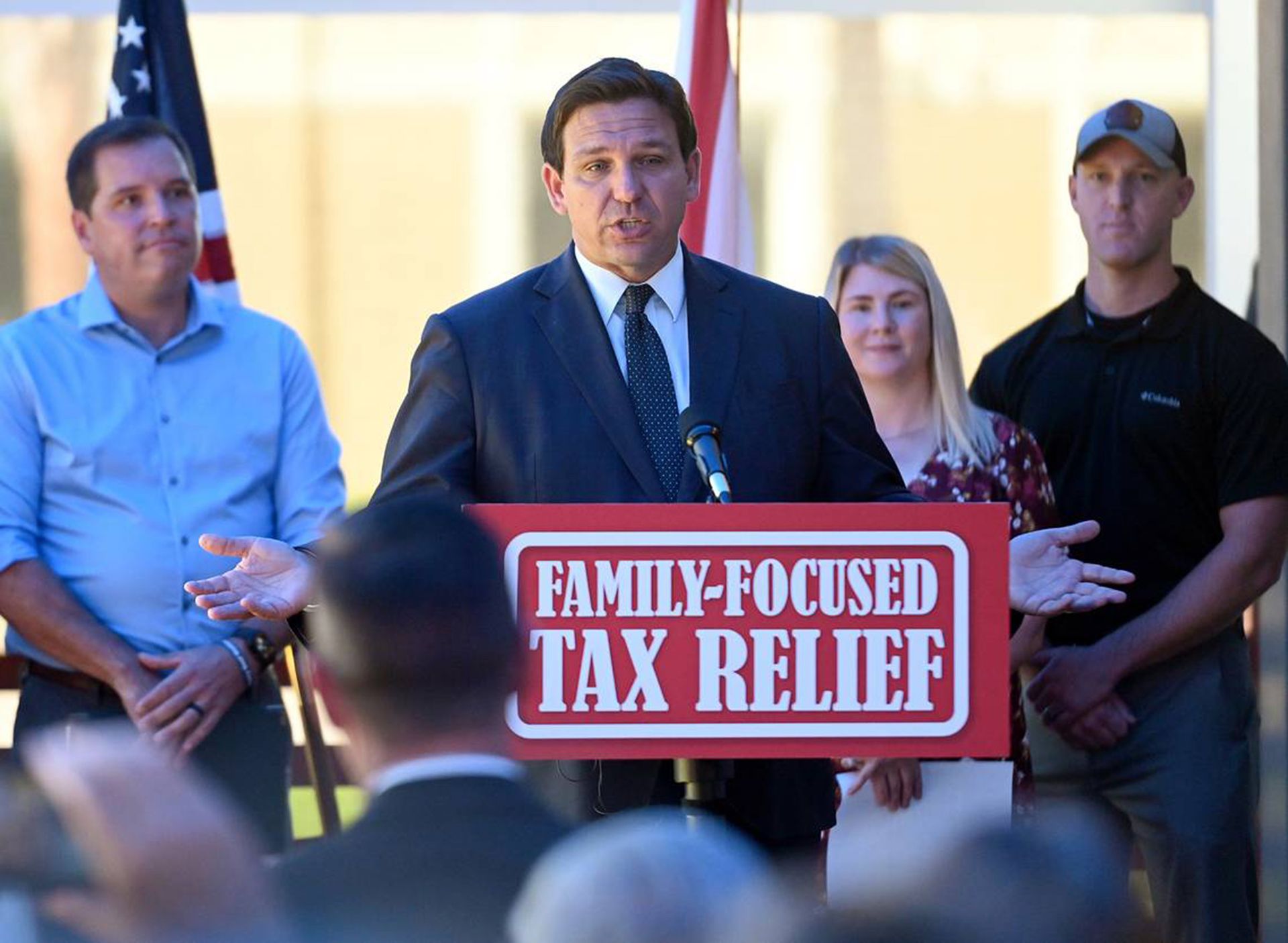
New Hampshire, Florida, and South Dakota top WalletHub's ranking largely because none of them charge a state income tax. Instead, they rely on property taxes, sales taxes, and excise taxes, keeping total per-capita tax collection lower than most states.
WalletHub's analyst Chip Lupo notes that several top ROI states "don't charge any income tax, and residents pay less at tax time while receiving good-quality — though not necessarily the best — government services." The result is a structural advantage: Residents retain more of their income while preserving access to public infrastructure that meets or exceeds the national median. For residents weighing state-by-state financial outcomes, the presence or absence of a state income tax is, in practice, the loudest signal in the data.

Pat Greenhouse / The Boston Globe via Getty Images
Public school performance is one of the most visible ways residents experience what their taxes buy. The challenge is that strong education outcomes cost money, and the states that invest most heavily in schools tend to carry tax burdens that drag down their overall ROI scores.
Massachusetts tops the education subcategory outright, and Connecticut and New Jersey follow closely, yet all three land in the bottom 12 states for overall ROI, weighed down by costs their school systems cannot offset. The sweet spot lies in states that achieve adequate education quality without a heavy tax price. South Dakota ranks 14th for overall government services but third for ROI, showing that low-tax states with competitive schools can outperform higher-spending states where residents pay dearly for education. The question for taxpayers is not simply whether their state has good schools, but whether those schools are worth what they cost.

Brad Vest / Getty Images
Safety is the heaviest-weighted category in WalletHub's model, and violent crime counts for more than property crime and traffic fatalities combined. Maine ranks first nationally in violent crime, contributing to a strong safety score even as other government services fall short. New Hampshire and Connecticut also sit in the top five for low violent crime, reinforcing their solid overall positions.
At the opposite end, Louisiana ranks 46th for violent crime, Arkansas 47th, and Tennessee 49th — outcomes that drag those states toward the bottom of the ROI ranking regardless of their tax structures. Residents who live in high-crime states pay for policing, courts, and corrections, and still experience disorder. That mismatch defines poor ROI as directly as any fiscal measure.

Dan Brouillette / Bloomberg via Getty Images
Few government services are more visible than roads and bridges, and their condition is a direct signal of how well a state converts tax revenue into results. States that invest well in infrastructure keep commute times low and maintenance costs down. Those that don't leave residents paying for deterioration they can feel every day. South Dakota ranks seventh nationally in highway spending per driver and posts the lowest average commute time in the country — outcomes that help explain its third-place overall ROI standing. Georgia and Indiana both rank in the top five for road and bridge quality and in the top 10 for overall ROI.
The contrast with high-tax states is sharp: Pennsylvania ranks last nationally for road quality, and Rhode Island ranks last for bridge quality, both with above-average tax burdens that push them toward the bottom of the ROI ranking. Vermont is the outlier. It tops the roads and bridges subcategory outright and scores highly in services, but its high tax burden keeps it from being a top ROI performer. Strong infrastructure can lift a state's ROI standing, but only when residents are not already paying too much to get there.

Stringer / AFP via Getty Images
The health category covers hospital beds per 1,000 residents, public hospital quality, life expectancy, infant mortality, health insurance premiums, and overall health care rankings. Utah ranks first nationally for hospital systems, and sits seventh overall in the ROI rankings, the strongest health-driven position in the top 10. Rhode Island ranks second for hospital quality yet only ninth for ROI due to high taxes. At the bottom, New York ranks 48th for hospital systems and 47th overall in ROI, while Hawaii ranks 49th for hospitals and 48th for ROI.
The overlap is not coincidental: States where residents pay high taxes and still receive mediocre hospital care represent the clearest cases of value destruction. Health outcomes, unlike crime or infrastructure, are easy to dismiss as lifestyle choices, but WalletHub's model treats them as a direct output of government investment decisions.

Lynsey Addario / Getty Images Reportage
ROI is not just a question of what government spends. It includes the economic environment that public policy creates.
South Dakota has the lowest unemployment and underemployment rates in the country, a labor market strength that contributes directly to its third-place overall ROI standing. New Hampshire combines one of the lowest poverty rates in the U.S. with one of the lowest unemployment rates, reinforcing its position at the top of the overall ranking. On the other side, Mississippi ranks 49th for poverty, West Virginia 47th, and New Mexico 48th, and all three land near the bottom of the overall ROI ranking. States that cultivate strong labor markets convert their tax base more effectively, generating revenue that funds services, which, in turn, sustain employment.