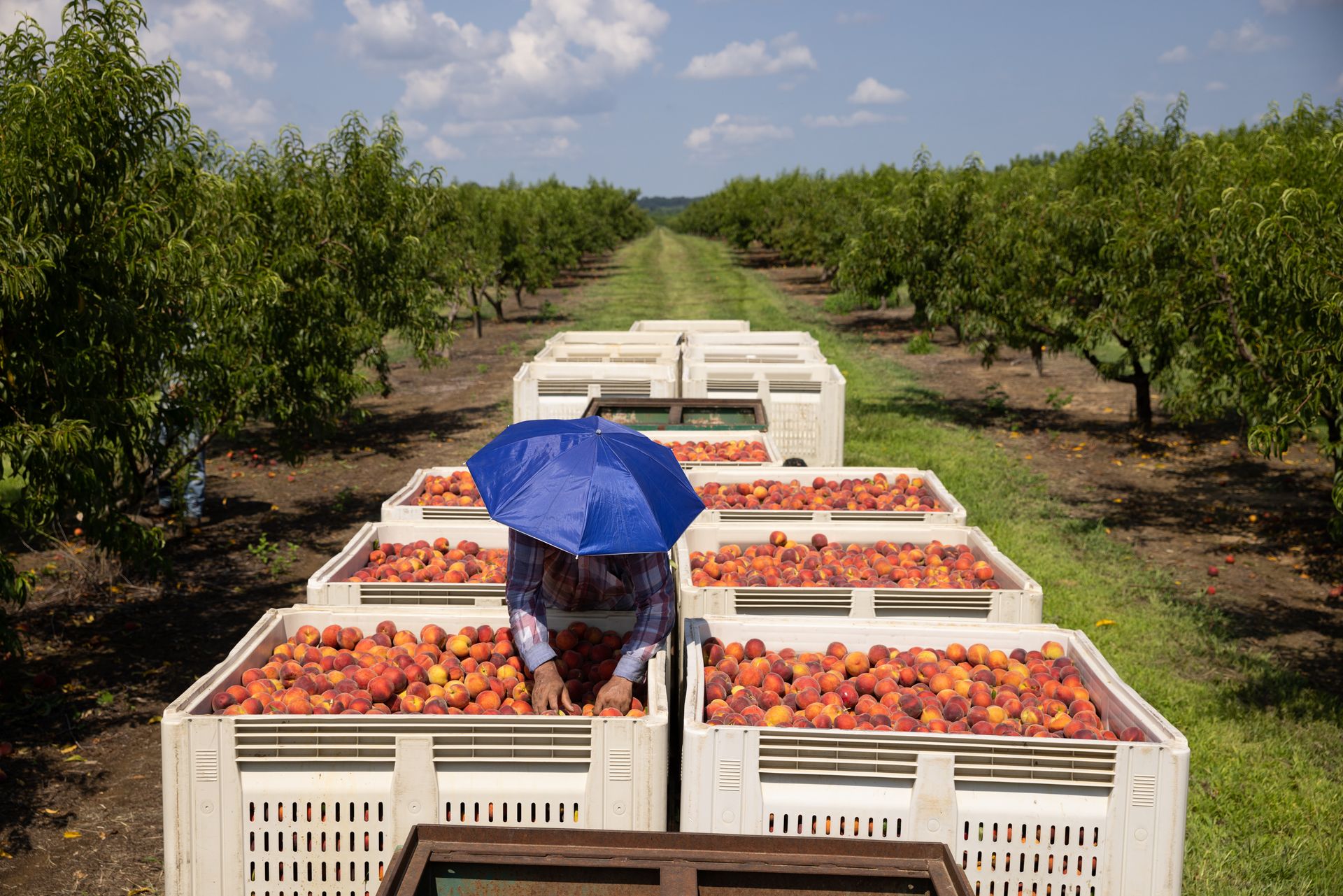
The USDA is making up to $9 million available to help California clingstone peach farmers remove about 420,000 trees — roughly 3,000 acres of orchards — after the closure of Del Monte Foods canneries eliminated the market for their crop.

Del Monte's cannery closures left growers without buyers for their crop, putting them on track for an estimated $550 million in lost contracts
Bloomberg / Getty Images
The USDA is making up to $9 million available to help California clingstone peach farmers remove about 420,000 trees — roughly 3,000 acres of orchards — after the closure of Del Monte Foods canneries eliminated the market for their crop.
Senator Adam Schiff's office said the money is intended to get trees out of the ground before next year's harvest and to give growers a path toward planting more marketable crops. According to figures cited by Schiff, a USDA analysis estimated that taking roughly 50,000 tons of peaches off the market would shield growers from about $30 million in losses they would otherwise face.
The aid follows the permanent closure of Del Monte processing facilities in Modesto and Hughson, California, which left Central Valley farmers without a processing outlet for their clingstone peaches. At its peak, the Modesto facility was responsible for processing somewhere between 30% and 35% of all cling peaches grown in California, Yahoo Finance reported. Because clingstone peach trees take years to reach productivity and have roughly 20-year lifespans, growers had structured their businesses around long-term Del Monte contracts — arrangements that, in aggregate, represented more than $550 million in anticipated revenue.
A bipartisan group of 38 congressional colleagues, led by Senator Schiff, Representative Mike Thompson, and Representative David Valadao, sent a letter to Agriculture Secretary Brooke Rollins $ROL requesting the relief. "When a processing facility closes and 55,000 acres of fruit suddenly have nowhere to go — that's not something a family farm can just absorb," Thompson said in a statement. Valadao, the lone Republican among the bill's lead sponsors, said the Modesto plant had underpinned the livelihoods of Central Valley farming families across multiple generations, describing it as a critical processing hub.
"Following our urging to the Trump administration to deliver relief to peach farmers, I am pleased that USDA is unlocking this federal funding," Schiff said in a statement.
In July 2025, the company sought Chapter 11 bankruptcy protection, a move that capped a years-long decline for one of California's oldest food brands. During the Chapter 11 proceedings, Del Monte indicated it would keep its operations running while working through a restructuring plan and exploring buyers for the business. CEO Greg Longstreet said the filing was intended to "accelerate our turnaround and create a stronger and enduring Del Monte Foods."
Declining demand for canned foods, as shoppers increasingly reached for fresh produce over shelf-stable alternatives, had eroded Del Monte's core market for years. Costs were further squeezed by tariffs applied to the imported steel the company relied on for its canning operations, Yahoo Finance reported.
Del Monte is among the notable brands that filed for bankruptcy in 2025, a year that has seen the highest volume of large corporate Chapter 11 filings since 2010, driven by rising costs, shifting consumer habits, and the lingering effects of pandemic-era disruptions.
Shannon Douglass, president of the California Farm Bureau, welcomed the federal commitment in a statement, saying it "offers a glimmer of hope after a devastating period, ensuring California farmers can transition to new crops and stay on their land."
Join 500,000+ readers who start their day with Quartz.
By subscribing, you agree to our Terms of Service and Privacy Policy.