
Sen. Elizabeth Warren has asked Nvidia $NVDA CEO Jensen Huang to testify before the Senate Banking Committee about the chipmaker's compliance with U.S. export control laws and its business in China.
Warren invited the Nvidia CEO to appear before the Senate Banking Committee on June 11 to answer questions about export controls and China business
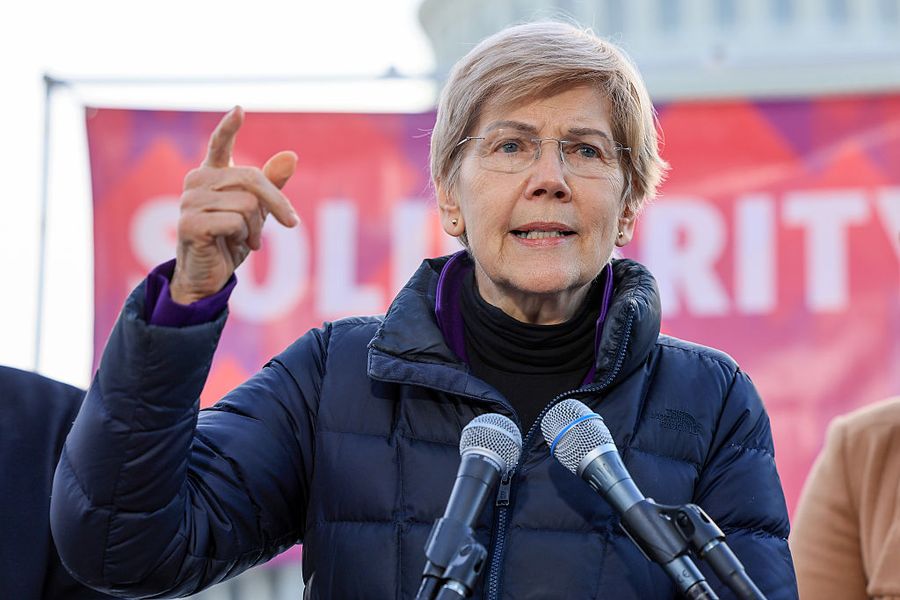
Jemal Countess / Stringer / Getty Images
Sen. Elizabeth Warren has asked Nvidia $NVDA CEO Jensen Huang to testify before the Senate Banking Committee about the chipmaker's compliance with U.S. export control laws and its business in China.
Warren wrote in a letter to Nvidia executives that an appearance by Huang would allow him to speak to "NVIDIA's views on U.S. export control laws and regulations and NVIDIA's business in China." Warren set a Monday deadline for Huang to confirm whether he would attend.
The invitation follows multiple Department of Justice enforcement actions alleging schemes involving the unlawful diversion of Nvidia products to China. Those cases include alleged exports of $160 million in H100 and H200 chips, millions of dollars in graphics processing units routed through Malaysia and Thailand, and $510 million in diverted servers, according to the letter Warren sent to Nvidia's general counsel and audit committee chair on Monday.
The letter also points to a report by short-seller Culper Research alleging that more than 20% of Nvidia's fiscal year 2026 compute revenues remained driven by China, supported by illegal chip diversion and Southeast Asian intermediaries.
Warren said in the letter that those allegations undermine Huang's public claims that there is "no evidence of any AI chip diversion" and that Nvidia's chip market share in China has "dropped to zero."
Nvidia has not commented on the request for Huang to testify.
In the letter, Warren asked Nvidia's audit committee whether it considers the alleged unlawful diversion of Nvidia products a material legal or regulatory risk, whether it has evaluated the company's export-control compliance following a March 2026 indictment connected to Super Micro Computer Inc., and whether it has conducted any independent evaluation of those compliance programs.
Before the letter became public, Warren had used a Wednesday appearance on CNBC's "Squawk Box" to air her broader concerns, telling viewers: "The Chinese, in effect, buy our stuff, and American companies make a profit doing that. But it certainly undermines our long-term security." She went further, arguing that the hardware flowing to China is not general-purpose technology — "these are chips that are actually used for military purposes," she said.
Data centers running the most advanced AI systems depend heavily on Nvidia hardware, and the chipmaker has pushed back against sweeping trade restrictions, contending they risk ceding market share to foreign competitors. Huang joined President Donald Trump's delegation to China last month for a summit with Chinese President Xi Jinping, where Trump said opening China for U.S. businesses would be his "first request" to Xi.
Join 500,000+ readers who start their day with Quartz.
By subscribing, you agree to our Terms of Service and Privacy Policy.