
Lokman Sevim / Pexels
The American history curriculum teaches American history. This is reasonable — a country's schools are not obligated to provide a comprehensive account of every conflict in world history — but the specific gaps it leaves are significant, because many of the wars that shaped the modern world were not American wars and did not directly involve the United States. The political map of Europe was drawn largely by the Thirty Years' War, which most American students have never encountered. The specific character of Chinese civilization was shaped by internal conflicts of a scale that dwarfs the American Civil War. The modern Middle East was created by the collapse of the Ottoman Empire and the wars that followed — a process with direct consequences for the contemporary world that is almost entirely absent from standard American curricula.
The gaps are not random. They reflect the specific priorities of a curriculum built around national history, Western civilization as experienced from the American perspective, and the two World Wars that brought the United States to the center of global events. What falls outside this frame is enormous: the history of Africa, the internal history of China, the history of Central Asia, the history of South and Southeast Asia, the history of pre-colonial Americas — all of these contain conflicts of enormous historical significance whose absence from the standard American education produces specific blind spots in how Americans understand the contemporary world.
This list covers 20 wars and conflicts that most Americans have not studied and that shaped the world in ways that are directly relevant to understanding contemporary geopolitics, culture, and society. The selection is not exhaustive — the history of warfare outside the American curriculum would fill many volumes — but each entry has been chosen because its specific consequences are visible in the world as it exists today and because understanding them changes something specific about how the contemporary world is legible.
Each slide covers the conflict, its scale, its causes, its outcome, and — most importantly — its lasting consequences. The goal is not mere historical information but a specific enrichment of the frame through which the contemporary world is understood.
1 / 20
Credit: Wikimedia Commons
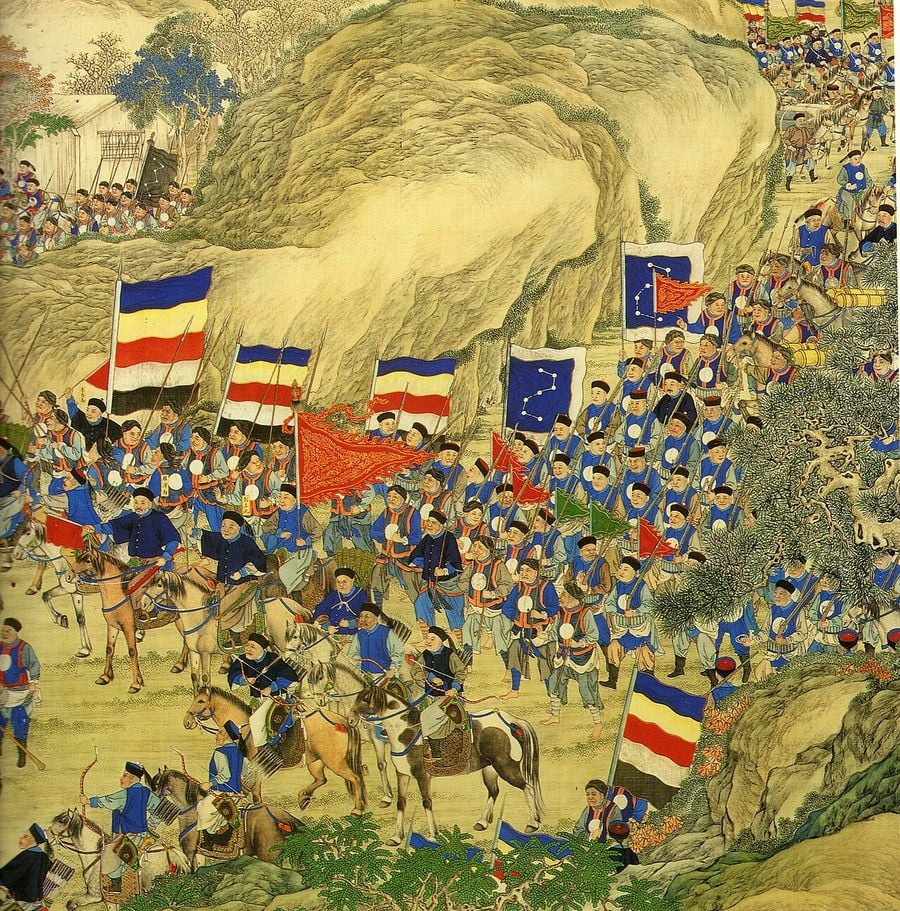
The Taiping Rebellion was a civil war in southern China that killed an estimated 20 to 30 million people — more than World War I — making it one of the deadliest conflicts in human history and one of the least known outside China and specialist historical circles. Its leader, Hong Xiuquan, was a Hakka Chinese man who had failed the imperial civil service examinations and, following a breakdown, came to believe he was the younger brother of Jesus Christ. He established the Taiping Heavenly Kingdom in southern China in 1851 and spent the following fourteen years attempting to overthrow the Qing dynasty.
The Taiping movement was not merely a rebellion but a revolutionary social program: it abolished foot binding for women, promoted literacy, abolished private land ownership, and attempted to create an egalitarian social order based on a specific Chinese interpretation of Christian millenarianism. At its height, the Taiping Heavenly Kingdom controlled territory with a population larger than most European countries of the era.
The Qing dynasty's suppression of the Taiping Rebellion — accomplished with significant assistance from Western-trained Chinese forces and European military officers, including Frederick Townsend Ward and later the British officer Charles Gordon — was the beginning of the Western military involvement in Chinese affairs that characterized the late 19th century. The destruction produced by the rebellion — the depopulation of Jiangnan, one of China's most productive agricultural regions, the disruption of the Grand Canal trade routes, the weakening of the Qing state — contributed directly to the dynasty's eventual collapse in 1912.
2 / 20
_1966_by_Zdeněk_Němeček-1920x1280.jpg)
Txllxt TxllxT / Wikimedia Commons (CC BY-SA 4.0)
The Thirty Years' War — fought primarily in the Holy Roman Empire (roughly modern-day Germany, Austria, and the Czech Republic) between 1618 and 1648 — was one of the most destructive conflicts in European history and the war that established the basic principles of the modern international state system. The Peace of Westphalia that ended it in 1648 is the foundational document of modern international relations, establishing the principle of state sovereignty — the right of each state to govern its own territory without interference from other states — that remains the basis of international law.
The war began as a conflict between Protestant and Catholic states within the Holy Roman Empire — triggered by the Defenestration of Prague, in which Protestant Bohemian nobles threw three Catholic imperial officials from a window — and expanded into a general European war involving Denmark, Sweden, France, Spain, and the Empire. By its end, it had acquired a character that transcended religion: France, a Catholic country, fought on the Protestant side to check the power of the Habsburg empire.
The human cost was catastrophic. Germany lost approximately a quarter to a third of its total population to war, famine, and disease — in some regions, the population decline was 50% or more. The physical and demographic devastation of Germany was so severe that it took generations to recover, and some historians argue that the trauma of the Thirty Years' War shaped German political culture in ways that persisted into the 20th century.
The Westphalian system — the framework of sovereign states interacting through diplomacy, treaty, and formal declarations of war rather than through religious or dynastic claims — is the framework within which all subsequent international relations has been conducted, including contemporary international law, the United Nations system, and the diplomatic conventions that govern interstate conflict.
3 / 20
SY / Wikimedia Commons (CC BY-SA 4.0)
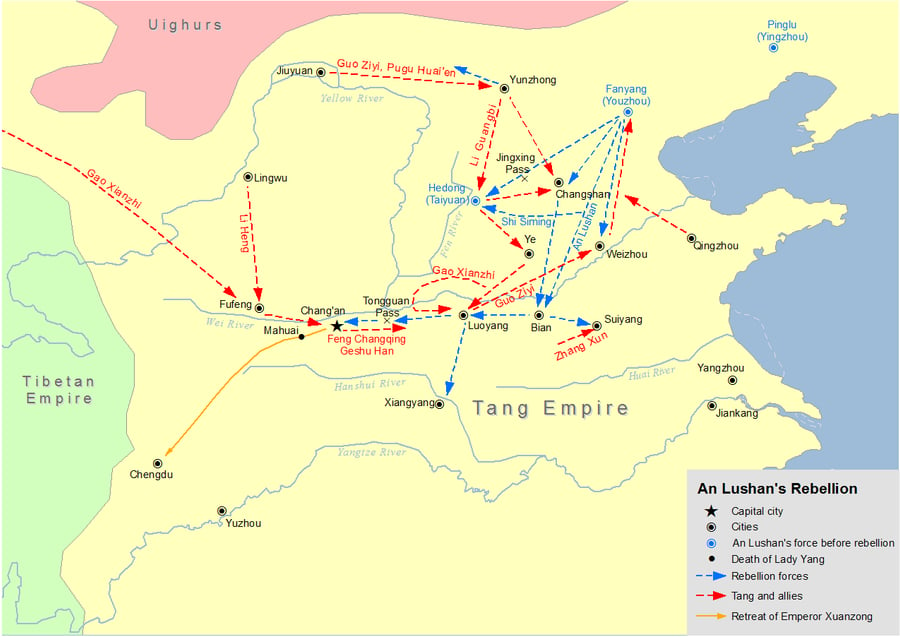
The An Lushan Rebellion — a civil war within the Tang dynasty of China, led by the half-Sogdian, half-Turkic general An Lushan — is estimated to have killed 13 to 36 million people, representing somewhere between a sixth and a third of China's total population at the time, making it possibly the deadliest war in human history as a proportion of global population. At a time when the total global population was approximately 200 to 250 million, the losses in China alone represented a significant fraction of all humanity.
An Lushan was a military governor who commanded three of the Tang empire's northeastern armies and who launched his rebellion in 755 CE, capturing the Tang capital Luoyang and briefly taking the secondary capital Chang'an. The Tang emperor Xuanzong fled to Sichuan; the dynasty survived only with military assistance from the Uyghur Khanate, whose soldiers helped recapture the capitals at the cost of giving the Uyghurs the right to sack the cities they liberated.
The rebellion's aftermath fundamentally changed the character of the Tang dynasty and, by extension, Chinese civilization. The central government's power was permanently weakened; the northeast became effectively autonomous under military governors; the cosmopolitan, outward-looking character of the early Tang — when Chang'an was one of the most diverse cities on Earth, with Sogdian, Persian, Indian, and Central Asian communities — was replaced by a more inward-looking, culturally conservative orientation. The poets Du Fu and Li Bai, whose work defines the Chinese literary canon, both lived through the rebellion; Du Fu's poems documenting the suffering of ordinary people during and after the war are among the most significant documents of Chinese literature.
4 / 20
Credit: Wikimedia Commons
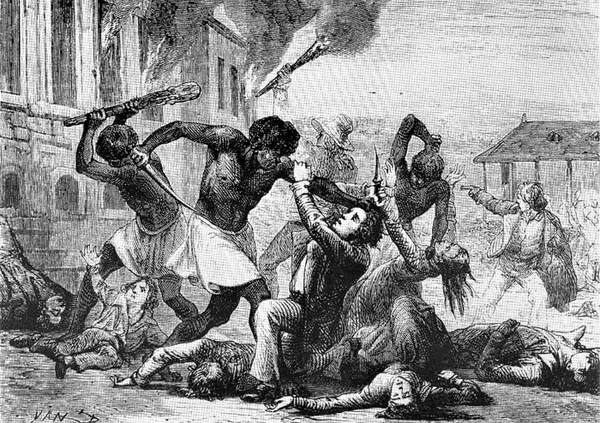
The Haitian Revolution — the slave rebellion that began in the French colony of Saint-Domingue in 1791 and concluded with the establishment of Haiti as the first Black republic in the world and the first nation founded by formerly enslaved people — is one of the most consequential events in the history of the Atlantic world and one of the most consistently underrepresented in American historical education despite its direct relevance to the history of American slavery, expansion, and race relations.
The revolution began in August 1791 when enslaved people in the northern province of Saint-Domingue rose against their enslavers, burning plantations and killing plantation owners. The uprising was partly inspired by the rhetoric of the French Revolution — liberty, equality, fraternity — and the enslaved people of Saint-Domingue asked, with devastating logical consistency, why the Declaration of the Rights of Man did not apply to them. The revolution's military leader, Toussaint Louverture, was a formerly enslaved man of extraordinary military and political ability who at various points allied with Spain, France, and Britain depending on which offered the best terms for Haitian freedom.
The establishment of Haiti in 1804 had direct consequences for the United States. Napoleon's failure to reconquer Saint-Domingue — his army was devastated by yellow fever and Haitian military resistance — led him to abandon his ambitions for a French empire in the Americas and to sell the Louisiana Territory to the United States in 1803. The Louisiana Purchase, which doubled the size of the United States, was a direct consequence of the Haitian Revolution. Simultaneously, the success of the Haitian Revolution terrified American slaveholders and produced a hardening of pro-slavery ideology in the American South.
5 / 20
Credit: Wikimedia Commons
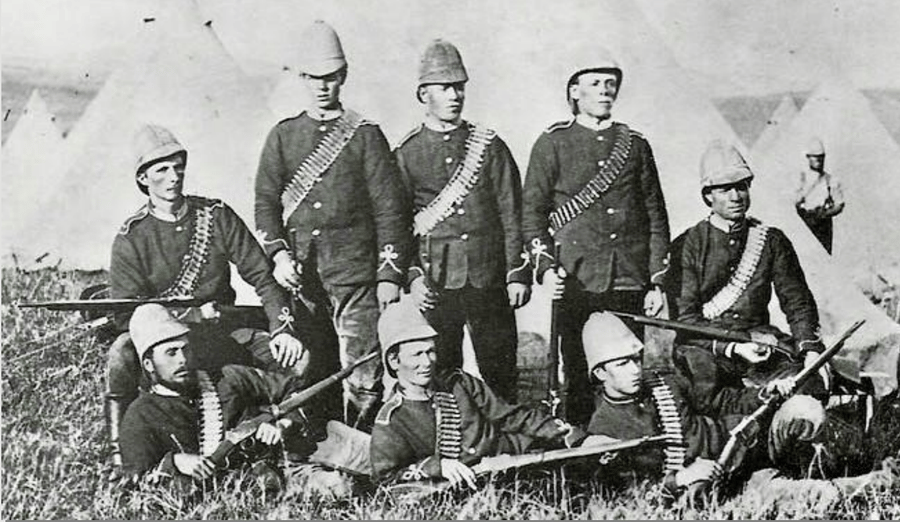
The Anglo-Zulu War of 1879 — fought between the British Empire and the Zulu Kingdom in what is now KwaZulu-Natal, South Africa — is one of the most studied colonial wars of the 19th century in British military history but is almost entirely absent from American historical education despite its significance for understanding the dynamics of imperial expansion, African military resistance, and the specific mechanisms of colonialism.
The war began with a British ultimatum to the Zulu king Cetshwayo that was designed to be unacceptable — requiring the disbanding of the Zulu military system that was the foundation of Zulu political organization — and ended with the annexation of the Zulu Kingdom. The specific episode that made the war famous in British history was the Battle of Isandlwana in January 1879, in which a Zulu army of approximately 20,000 warriors attacked a British column and killed approximately 1,300 British and allied soldiers — one of the worst defeats of the British army in the Victorian era.
The Zulu military system — the impondo zankomo (bull horn) formation, which enveloped enemy forces with flanking "horns" while the main "chest" engaged frontally — was one of the most sophisticated military tactical systems in 19th-century Africa, developed under King Shaka Zulu in the early 19th century. The Zulu Kingdom's resistance to British annexation, and the eventual defeat of that resistance despite tactical victories, is a specific case study in the dynamics of colonial conquest — how superior firepower and logistics eventually overcame military ingenuity and courage.
6 / 20
Modesto González / Wikimedia Commons
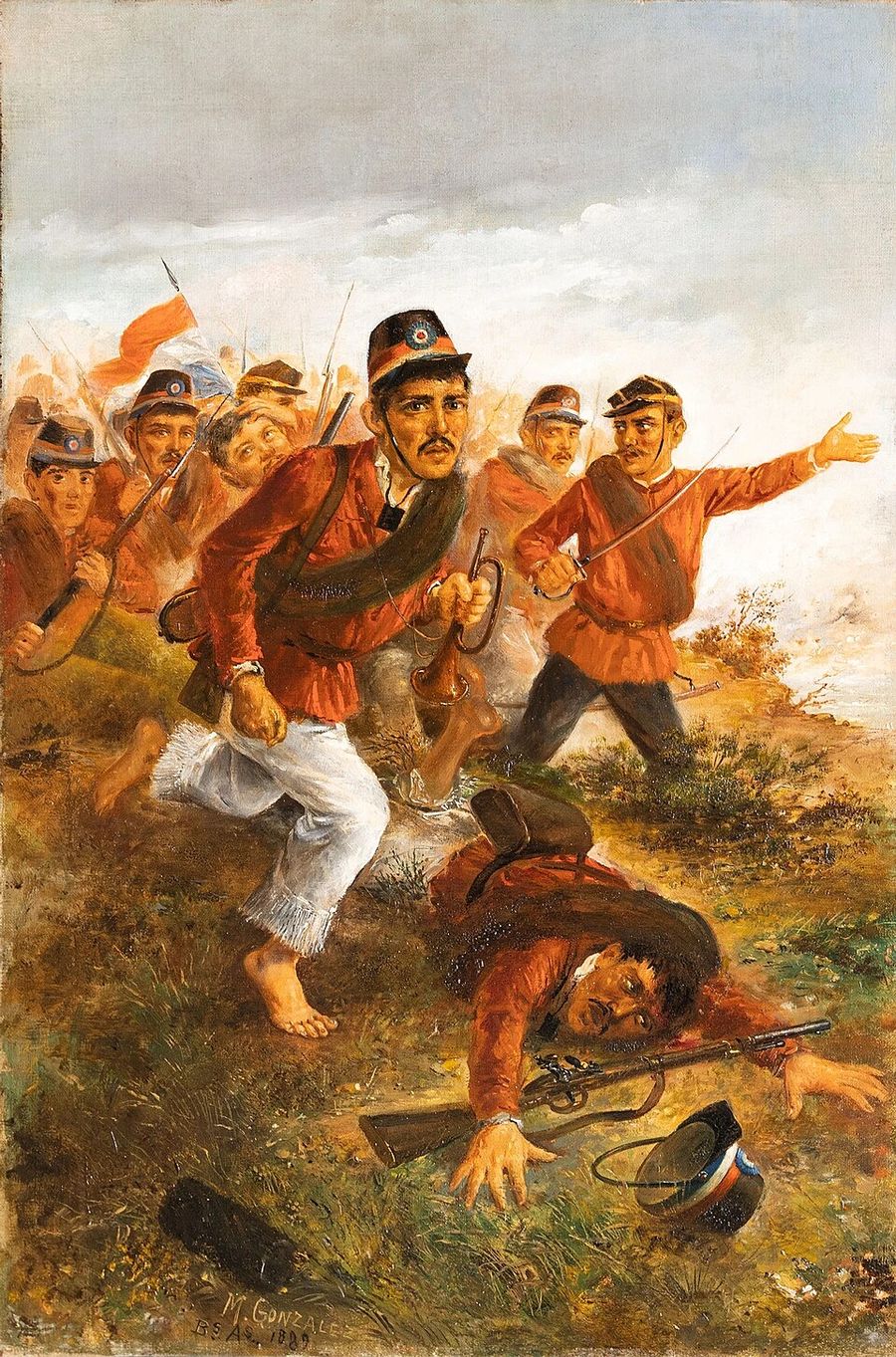
The War of the Triple Alliance — fought between Paraguay and the allied forces of Brazil, Argentina, and Uruguay — was the deadliest war in Latin American history and one of the most catastrophic national destructions in the history of warfare. Paraguay, which initiated the war under the leadership of Francisco Solano López, lost approximately 60 to 70% of its total population, including more than 90% of its adult male population, in a war that it ultimately lost decisively.
López's decision to go to war simultaneously against three neighboring countries — Brazil, Argentina, and Uruguay — is one of the most studied examples of catastrophic strategic miscalculation in military history. The initial Paraguayan campaigns captured territory in Brazil and Argentina, but the allied counterattack drove Paraguayan forces back to their own territory within two years, and the remaining three years of the war were fought on Paraguayan soil as the allied forces methodically destroyed the country's ability to resist.
Paraguay's demographic collapse was so severe that the country's population did not recover to its pre-war level for approximately a century. The gender imbalance — the loss of almost all adult men — produced profound social changes that persisted for generations. The war also transformed Brazilian politics: the military prestige acquired during the conflict strengthened the Brazilian army's political influence and contributed directly to the overthrow of the Brazilian Empire in 1889.
7 / 20
Hyderabad in India (1951) / Wikimedia Commons (CC BY-SA 4.0)
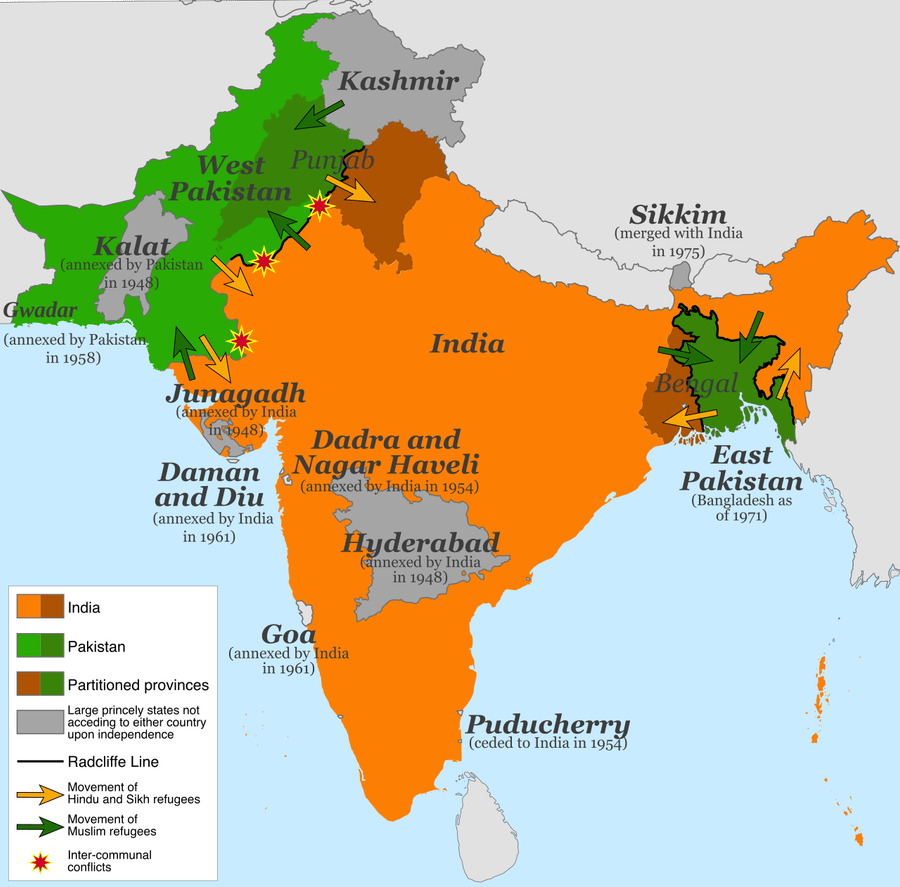
The Partition of India — the division of British India into the independent nations of India and Pakistan in August 1947, accompanied by the forced migration of approximately 14 to 18 million people and the deaths of an estimated 200,000 to 2 million people in communal violence — is one of the most significant events of the 20th century and the foundational trauma of South Asian political history. Its consequences are directly visible in the contemporary world: the India-Pakistan conflict over Kashmir, the three Indo-Pakistani wars, Pakistan's nuclear weapons program, and the specific character of Indian and Pakistani nationalism all trace directly to Partition.
The violence of Partition was not incidental to the political settlement — it was produced by the specific circumstances of the settlement. The Radcliffe Line, drawn by British lawyer Cyril Radcliffe in five weeks with no prior knowledge of India and no fieldwork in the affected areas, divided the Punjab and Bengal between the two new nations, cutting through communities, families, and agricultural systems that had been integrated for generations. The migration that followed — Hindus and Sikhs moving to India, Muslims moving to Pakistan — was accompanied by massacres, rape, and property destruction on both sides that was specifically designed to make the migration irreversible.
The specific American gap in knowledge about Partition reflects the general underrepresentation of South Asian history in American education despite the South Asian diaspora being one of the largest and most economically significant immigrant communities in the United States.
8 / 20
GalaxMaps / Wikimedia Commons (CC BY-SA 4.0)
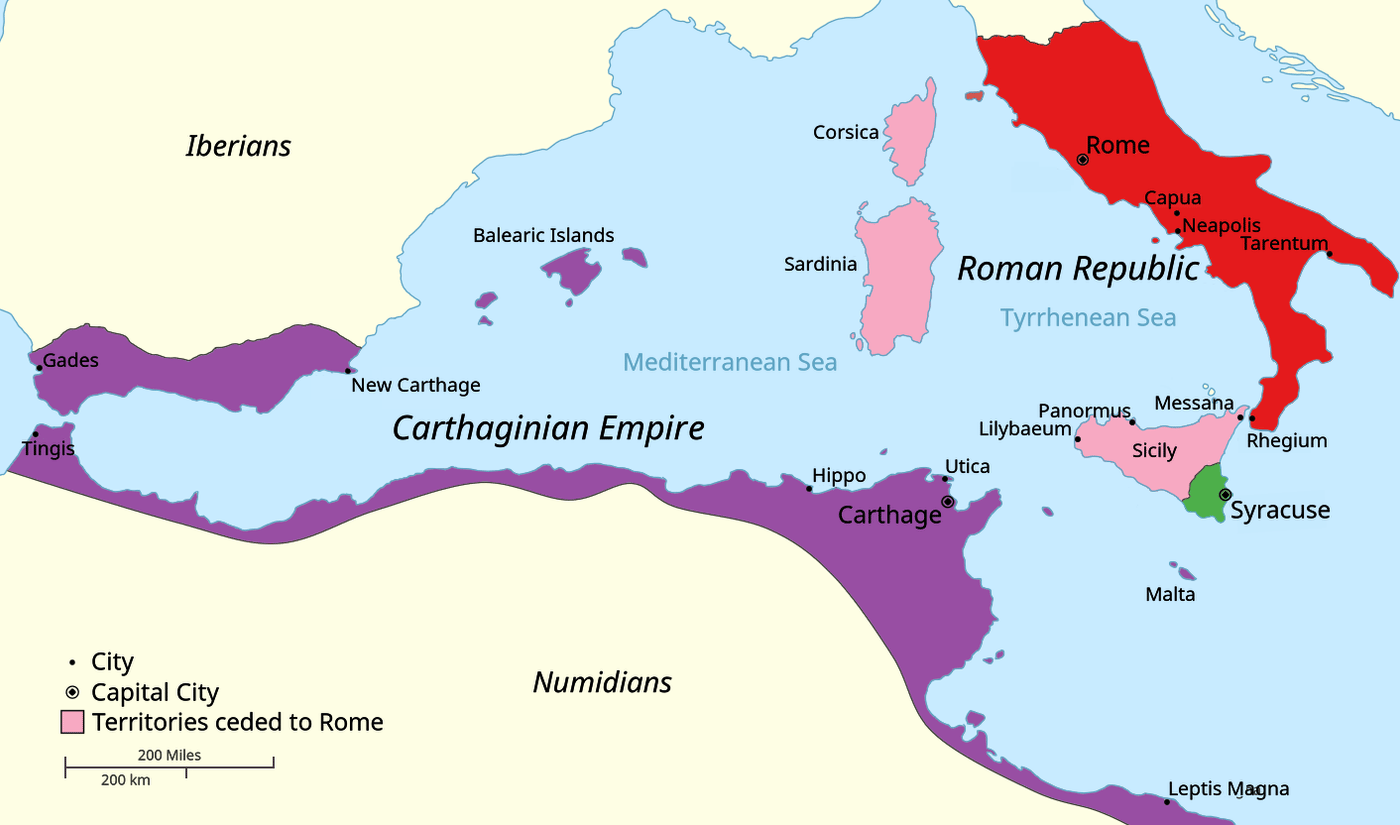
The three Punic Wars — fought between Rome and Carthage for control of the Mediterranean world — are known to students of classical history but are entirely absent from most American high school curricula despite being the wars that established Rome as the dominant power of the ancient world and that determined the cultural trajectory of Western civilization. Had Carthage won, the Western world would have been shaped by a Phoenician-derived North African civilization rather than by Rome.
The Second Punic War (218–201 BCE) — the conflict in which the Carthaginian general Hannibal crossed the Alps with elephants and invaded Italy, winning a series of stunning victories including the Battle of Cannae (216 BCE), where approximately 50,000 Roman soldiers were killed in a single afternoon — is one of the most studied military campaigns in history. Hannibal's double envelopment at Cannae remains a case study in tactical genius taught at military academies worldwide, and his campaign in Italy lasted fifteen years despite Rome's refusal to seek terms.
The destruction of Carthage in the Third Punic War (149–146 BCE) — the city was razed, its population killed or enslaved, and its territory salted (the salting of Carthage is likely a later embellishment, but the destruction was absolute) — eliminated a major alternative to Roman civilization from the Mediterranean world. The subsequent Romanization of North Africa, Spain, and Gaul, which followed from Rome's unchallenged dominance, shaped the cultural and linguistic development of the Western world in ways that remain visible in the Romance languages, Roman law, and the Western legal tradition.
9 / 20
Felice Beato / Wikimedia Commons
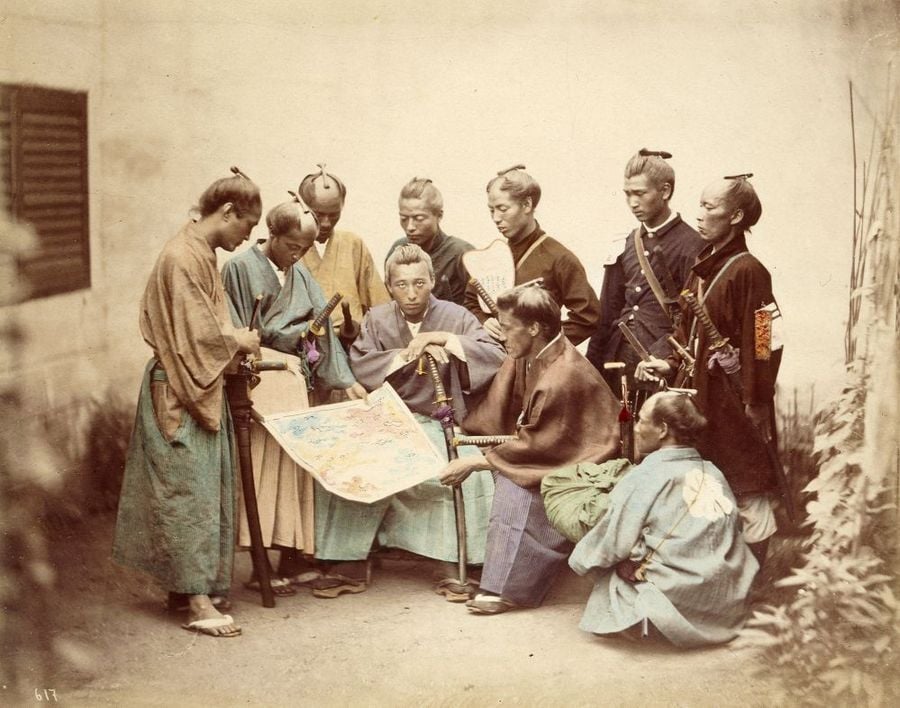
The Boshin War — the Japanese civil war between forces loyal to the Tokugawa shogunate and forces supporting the restoration of imperial rule under Emperor Meiji — is the conflict that ended 265 years of Tokugawa rule and launched the Meiji Restoration, the most rapid and most successful modernization program in the history of any pre-industrial society. The Japan that became a major industrial and military power by the turn of the 20th century, that defeated Russia in 1905, and that fought the United States in World War II was the Japan created by the Boshin War and the Meiji Restoration that followed it.
The war was brief — less than two years — and relatively small in casualties compared to the conflicts it enabled. The Satsuma and Chōshū domains, whose samurai forces were equipped with modern Western weapons and tactics acquired through trading contacts, defeated the traditional Tokugawa forces and established the new Meiji government in Tokyo (formerly Edo). The last holdout — the Ezo Republic in Hokkaido, established by former shogunate forces — surrendered in May 1869.
The Meiji Restoration that the Boshin War made possible was a deliberate, government-directed transformation of every aspect of Japanese society: the feudal domain system was abolished, the samurai class was eliminated as a legal category, Western legal and governmental systems were adopted, universal education was established, and an industrial infrastructure was built with such speed that Japan moved from a feudal agricultural society to a modern industrial state in approximately three decades. This transformation is one of the most significant events in Asian and world history and is almost entirely absent from American secondary education.
10 / 20
Don-kun, Uwe Dedering / Wikimedia Commons (CC BY 3.0)
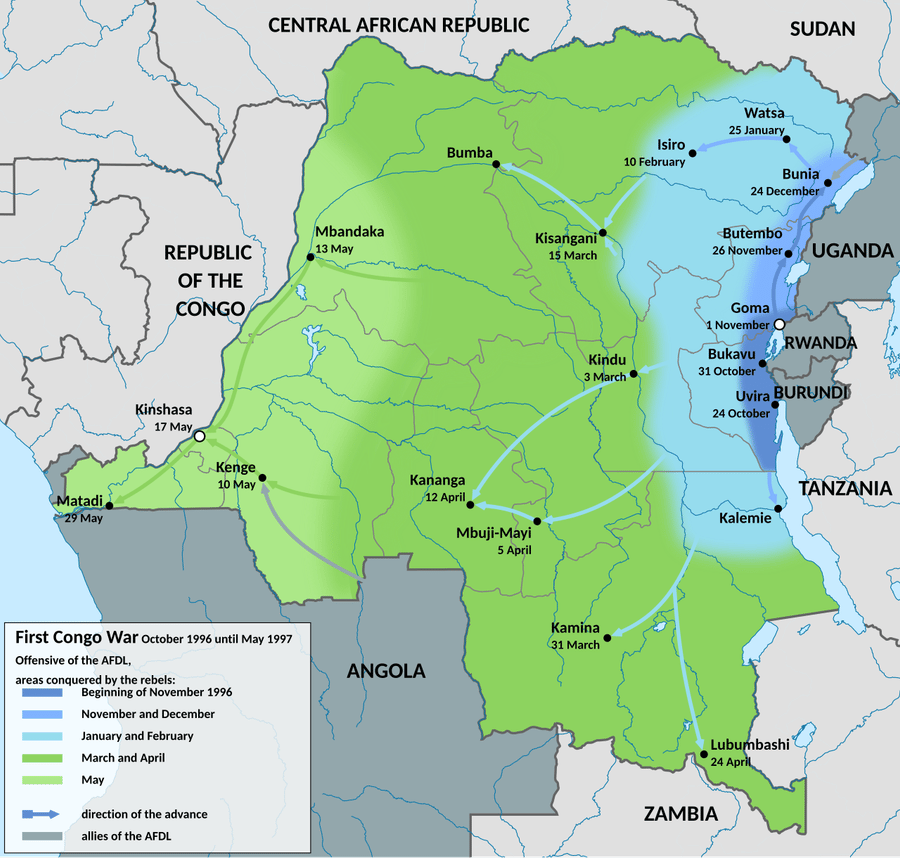
The First and Second Congo Wars — fought in the Democratic Republic of Congo between 1996 and 2003, involving the armed forces of eight African nations and dozens of armed groups — constitute the deadliest conflict since World War II, with an estimated 5.4 million deaths from violence, disease, and famine, and are almost entirely absent from American public awareness despite occurring within living memory and having profound consequences for the contemporary politics and humanitarian situation of central Africa.
The First Congo War (1996–1997) overthrew the dictatorship of Mobutu Sese Seko, who had ruled Zaire (now the Democratic Republic of Congo) since 1965 with American support as a Cold War client state, and installed Laurent-Désiré Kabila as president. The Second Congo War (1998–2003) — triggered by Kabila's falling out with his Rwandan and Ugandan backers — drew in Rwanda, Uganda, Burundi, Angola, Zimbabwe, Namibia, and Chad, each supporting different factions in a conflict fought primarily in the resource-rich eastern Congo.
The wars' roots in the 1994 Rwandan genocide — which sent approximately two million Hutu refugees, including genocidaires, into eastern Zaire and destabilized the entire region — connect the Congolese conflicts to one of the most discussed failures of international intervention in the 1990s. The eastern Congo has remained in a state of chronic conflict since the formal end of the Second Congo War in 2003, with ongoing violence by armed groups competing for control of the region's mineral wealth — cobalt, coltan, gold, and cassiterite — that enters global supply chains for consumer electronics.
11 / 20
Takshashila7977 / Wikimedia Commons (CC BY-SA 4.0)
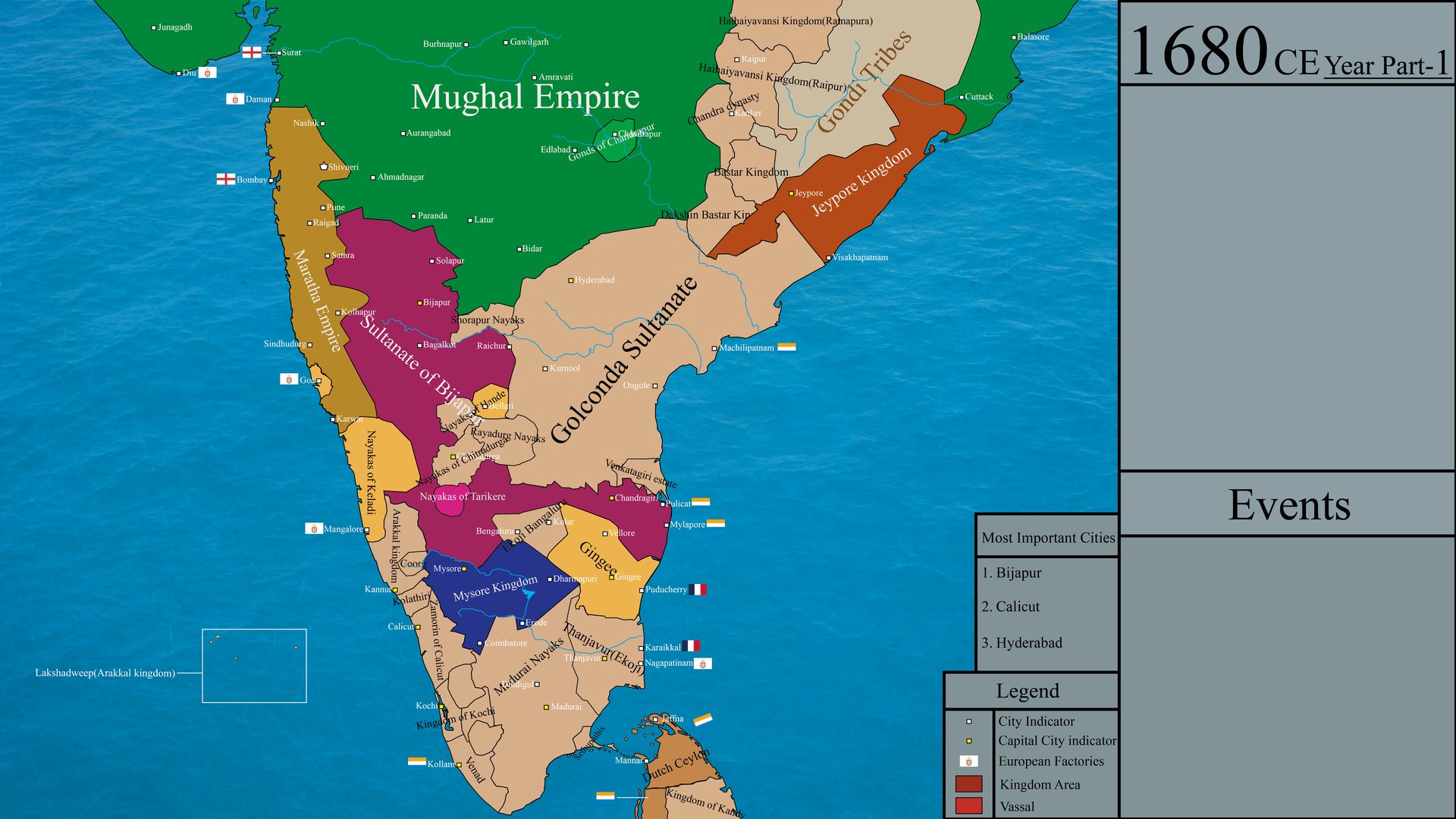
The Mughal-Maratha Wars — the prolonged conflict between the declining Mughal Empire under Emperor Aurangzeb and the rising Maratha Confederacy under Chhatrapati Shivaji and his successors — are among the most consequential conflicts in Indian history and the wars that effectively ended Mughal imperial authority over the subcontinent. The Mughal Empire's exhaustion in these wars left a power vacuum that the British East India Company ultimately filled — making the Maratha Wars a significant indirect cause of British colonial rule in India.
Aurangzeb's Deccan campaign — his personal command of the Mughal army in the Deccan plateau from 1681 until his death in 1707, a period of 26 years during which he was continuously campaigning — was one of the longest and most personally costly military campaigns by a major world ruler. The Maratha guerrilla tactics, developed by Shivaji and continued by his successors, were specifically designed to frustrate the Mughal army's conventional strengths: the Marathas avoided pitched battles, raided Mughal supply lines, and maintained the initiative through rapid movement across difficult terrain.
The Maratha Confederacy that emerged from these wars became the dominant power in India through the 18th century, and the three Anglo-Maratha Wars that pitted the Marathas against the British East India Company in the late 18th and early 19th centuries were the specific conflicts through which the British established their dominance over the Indian subcontinent. Understanding the Maratha Wars is therefore essential to understanding the trajectory of Indian history from the Mughal period through colonialism to independence.
12 / 20
davidjl123 / Somebody500 via Wikimedia Commons (CC BY-SA 4.0)
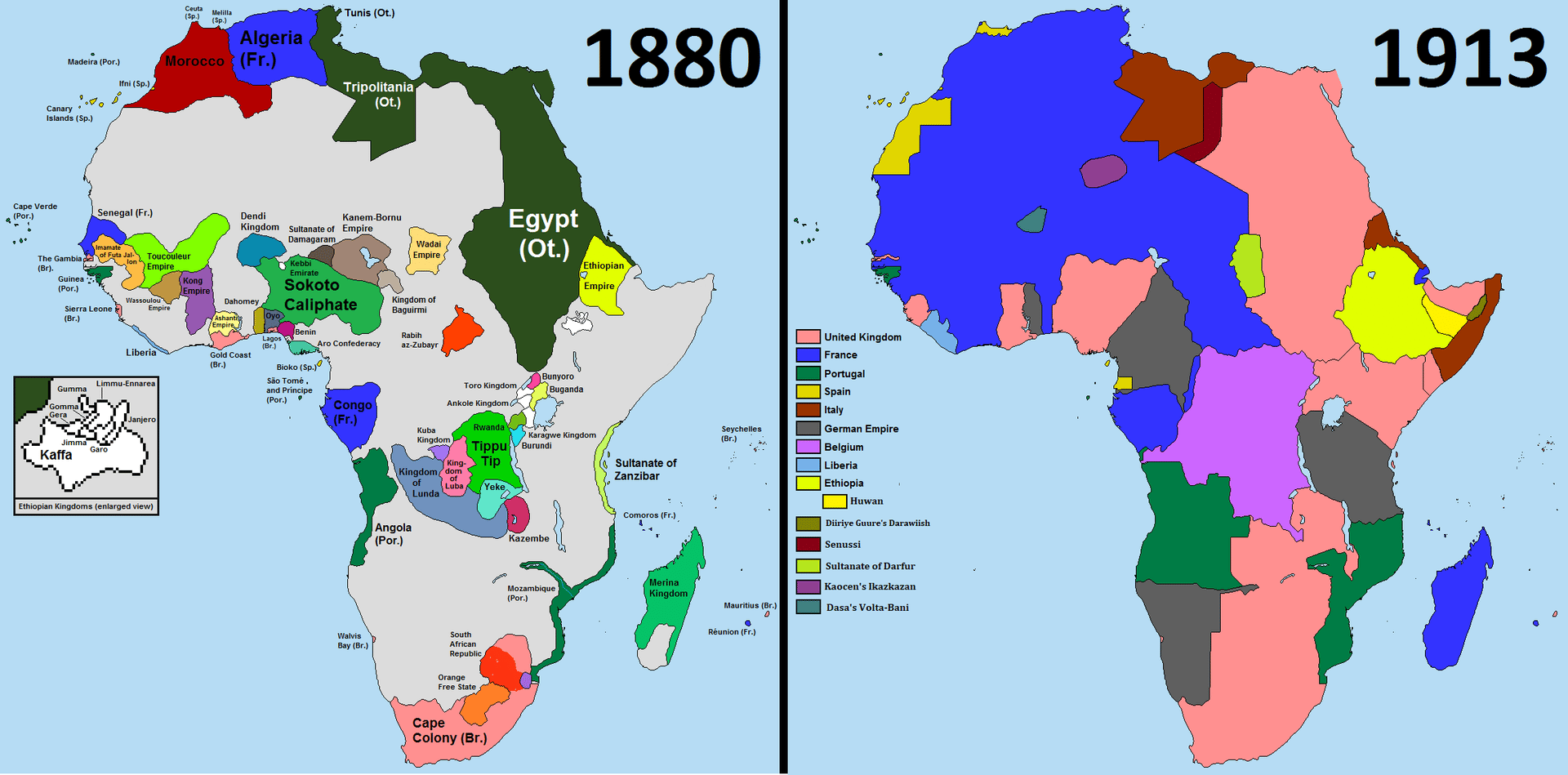
The Scramble for Africa — the rapid colonization of nearly the entire African continent by European powers between approximately 1880 and 1900 — was not a single war but a series of conquest campaigns, treaties, and armed suppressions that transferred control of approximately 10 million square miles of territory and hundreds of millions of people from indigenous African polities to European colonial rule within two decades. Its most extreme expression was the Congo Free State, the personal property of King Leopold II of Belgium, where a regime of forced labor and terror killed an estimated 10 million Congolese people between 1885 and 1908.
The Berlin Conference of 1884–1885 — at which the major European powers formalized the rules of African partition — was the diplomatic mechanism by which African territory was divided among European claimants without any African participation or consent. The conference established the principle of "effective occupation" as the basis for territorial claims, producing a competition among European powers to establish military and administrative presence in African territory as rapidly as possible.
Leopold II's Congo Free State — established as his personal domain under the fiction of a humanitarian and civilizing mission — was the most extreme case of colonial exploitation in Africa. The rubber quota system, enforced by the Force Publique (the colonial army), required Congolese villages to deliver fixed amounts of rubber on pain of collective punishment. The specific practice of cutting off the hands of Congolese people who failed to meet quotas — documented by journalists, missionaries, and reformers in the early 1900s — produced the first major international human rights campaign of the modern era, led by E.D. Morel and Roger Casement, that forced Belgium to take over the territory from Leopold in 1908.
13 / 20
Peter Schenk the Younger / Wikimedia Commons (CC BY 4.0)
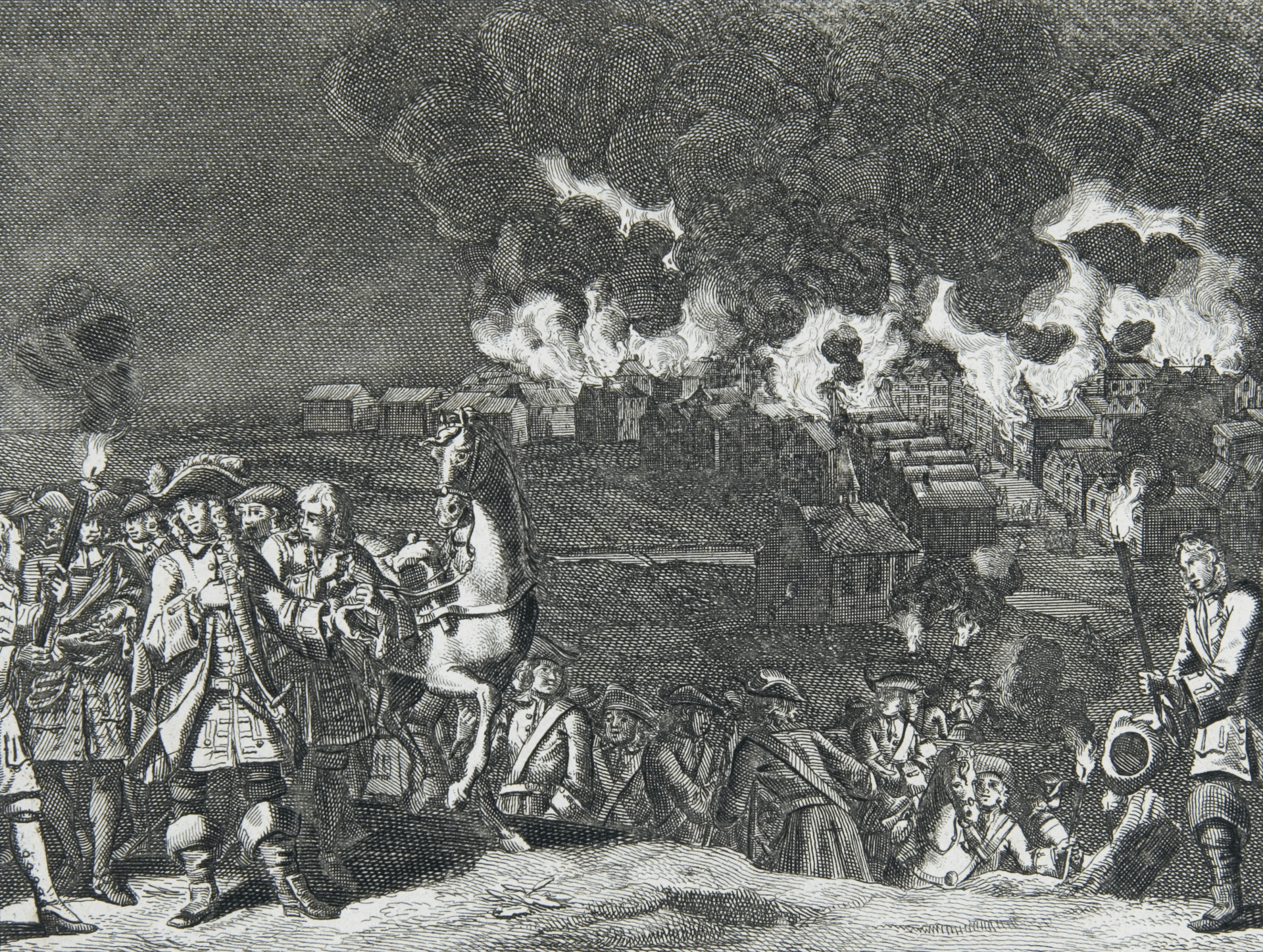
The Great Northern War — fought between Sweden (then one of Europe's great powers) and a coalition led by Russia under Peter the Great — was the conflict that ended Swedish dominance in northern Europe and established Russia as a major European power. The specific consequence was the transformation of Russia from a relatively isolated, semi-Asiatic state on the margins of European affairs into the dominant power of northeastern Europe — a transformation whose geopolitical consequences are directly visible in the contemporary world.
Sweden in 1700 was the major power of the Baltic region, controlling Finland, Estonia, Latvia, and significant portions of Germany. The coalition that attacked Sweden — Russia, Denmark-Norway, and Saxony-Poland — was motivated by the desire to reduce Swedish power and reclaim Swedish-held territories. The early years of the war produced Swedish military triumphs under the young King Charles XII, including the Battle of Narva (1700), where a Swedish army of 8,000 defeated a Russian force of 40,000.
The decisive battle was Poltava (1709), where Peter the Great's reformed Russian army — reorganized and trained on Western European military models specifically in response to the Narva defeat — defeated and effectively destroyed the Swedish main army. The subsequent Treaty of Nystad (1721) gave Russia Estonia, Latvia, and a portion of Finland, establishing Russia's Baltic ports and its "window to the West" that Peter had been seeking. The Russia that emerged from the Great Northern War — a centralized, militarized state with European ambitions and Baltic access — is recognizably the predecessor of the imperial and Soviet Russia that shaped European history for the following three centuries.
14 / 20
Gustave Doré / Wikimedia Commons
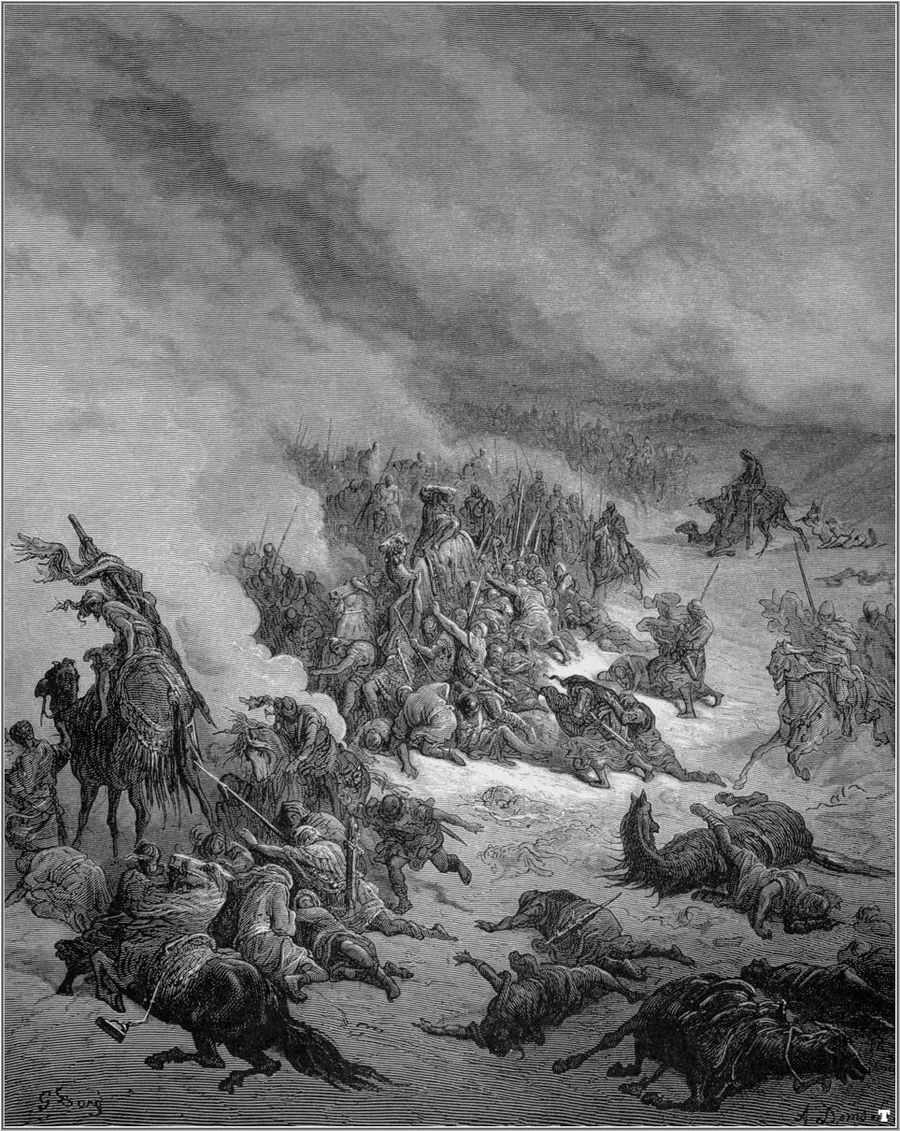
The Reconquista — the approximately 800-year process by which the Christian kingdoms of northern Iberia gradually reconquered the Iberian Peninsula from the Moorish (Muslim) kingdoms that had controlled most of it since the Arab and Berber invasion of 711 CE — is one of the longest sustained conflicts in human history and the process that created the Spain and Portugal that colonized the Americas. Columbus's 1492 voyage was financed by the Spanish Crown in the same year that the last Moorish kingdom, Granada, fell to Ferdinand and Isabella — the connection is not coincidental.
The Moorish civilization of al-Andalus — the Islamic state on the Iberian Peninsula — was one of the most culturally and intellectually sophisticated in the medieval world, producing advances in mathematics, astronomy, medicine, philosophy, and architecture that were transmitted to the rest of Europe through the translation movement in Toledo. The knowledge that had been preserved in Arabic translations — classical Greek philosophy, Indian mathematics, Persian astronomy — re-entered European intellectual life through Iberia, contributing directly to the European Renaissance.
The Reconquista's conclusion produced the specific combination of religious fervor, military experience, administrative capacity, and expansionist ambition that drove Spanish and Portuguese colonialism. The same crusading ideology that had sustained 800 years of reconquest — the idea that territorial expansion in the name of Christianity was both justified and meritorious — was the ideology that the Spanish conquistadors brought to the Americas. The entire history of Latin America is therefore downstream of the Reconquista.
15 / 20
Oomoto (1894) / Wikimedia Commons
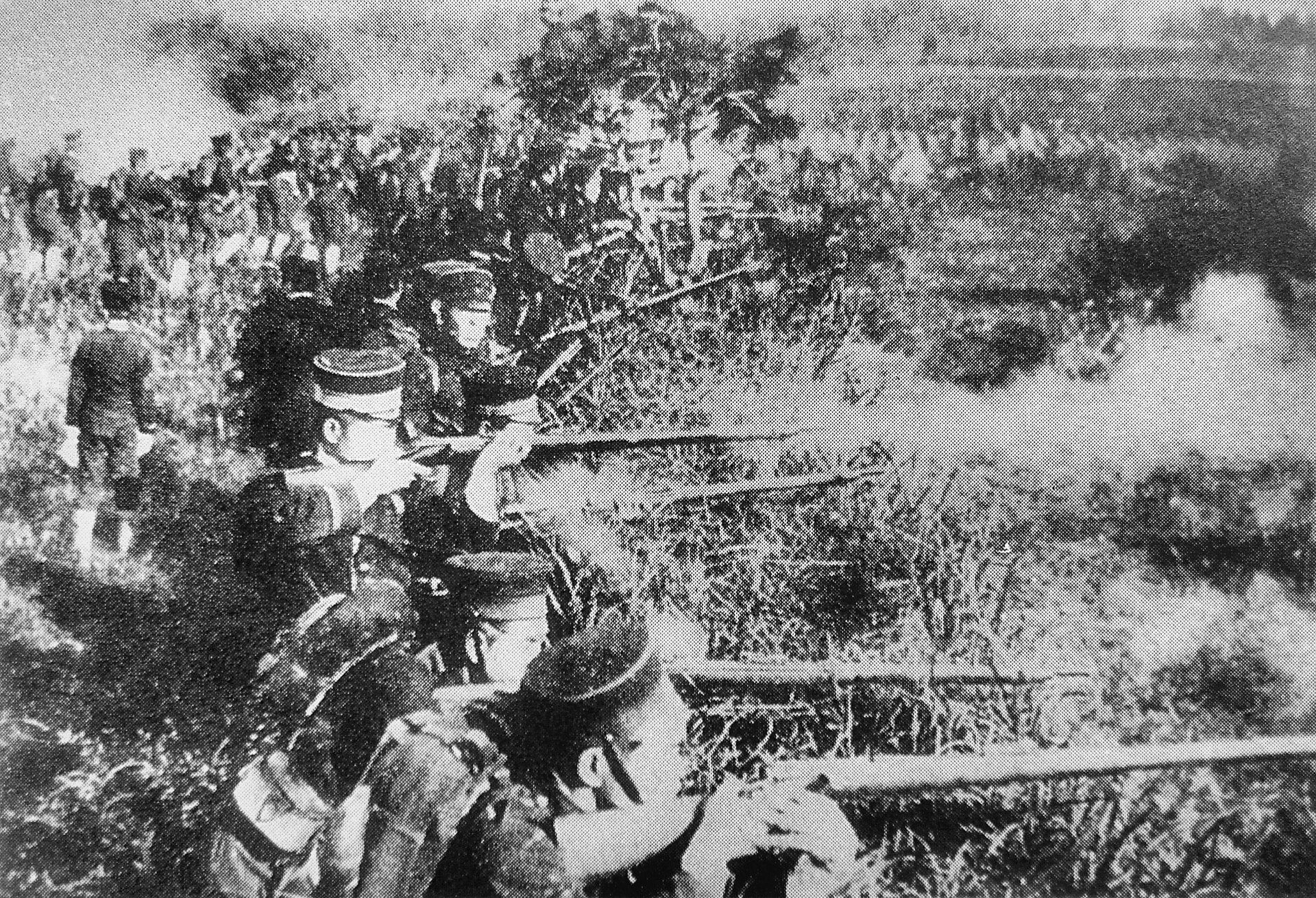
The First Sino-Japanese War — fought between China and Japan over influence in Korea — was the war that demonstrated to the world that Japan had successfully modernized following the Meiji Restoration and that China's Qing dynasty had not. Japan's decisive defeat of China in the war shocked European observers who had assumed that China's vastly larger territory and population would be decisive, and it initiated the "scramble for China" — the intensified competition among European powers and Japan for territorial concessions and spheres of influence in China — that dominated East Asian international relations for the following half-century.
The war's specific outcome — the Treaty of Shimonoseki, under which China ceded Taiwan, the Penghu Islands, and the Liaodong Peninsula to Japan — was the beginning of Japan's colonial empire. Taiwan remained a Japanese colony until 1945, and the question of Taiwan's status — complicated by the Chinese Civil War and the establishment of the Republic of China government in Taipei in 1949 — is one of the most consequential unresolved territorial disputes in contemporary international relations.
The war's humiliation of China catalyzed Chinese nationalist and reform movements: the Hundred Days Reform of 1898, the Boxer Rebellion of 1900, and ultimately the overthrow of the Qing dynasty in 1912 were all connected to the crisis of legitimacy that the Sino-Japanese War produced. The anti-Japanese nationalism that was a central feature of Chinese communist and nationalist politics in the first half of the 20th century, and that remains a significant element of contemporary Chinese political culture, traces its origins to the 1894–1895 war.
16 / 20
British Red Cross / Wikimedia Commons (CC BY 2.0)
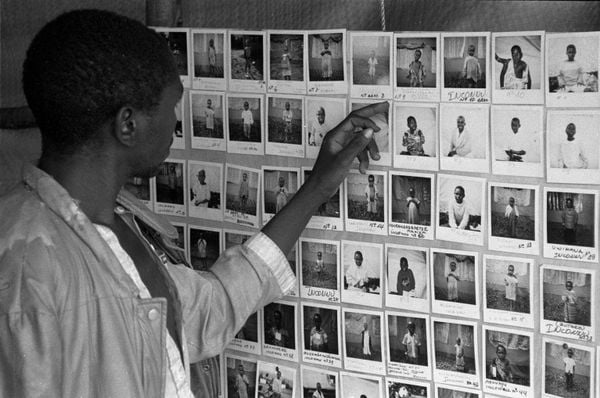
The Rwandan Genocide — the organized mass killing of approximately 500,000 to 800,000 Tutsi and moderate Hutu Rwandans by Hutu extremists over a period of approximately 100 days in April through July 1994 — is one of the most rapid mass killings in history and one of the most discussed failures of international intervention, but its specific causes, course, and consequences are less well understood by most Americans than its broad outline suggests.
The genocide was not spontaneous. It was planned in advance by a network of Hutu Power extremists within the Rwandan government, who had spent months distributing weapons to civilian militias (the Interahamwe) and using state radio (Radio Mille Collines) to prepare the population for mass killing. The assassination of President Juvénal Habyarimana on April 6, 1994 — whose perpetrators remain disputed — was the trigger that set the prepared plan in motion.
The international response was a deliberate non-intervention. The United States, France, and the United Nations had advance warning of the planned genocide and chose not to act. President Clinton's administration explicitly avoided using the word "genocide" in official communications during the killing because acknowledging genocide would have created a legal obligation to respond under the Genocide Convention. The specific mechanisms by which the international community was aware of and chose not to prevent the Rwandan Genocide are extensively documented and are among the most consequential failures of international humanitarian intervention in the post-Cold War era.
17 / 20
Opium War Documentary / Wikimedia Commons (CC BY-SA 4.0)
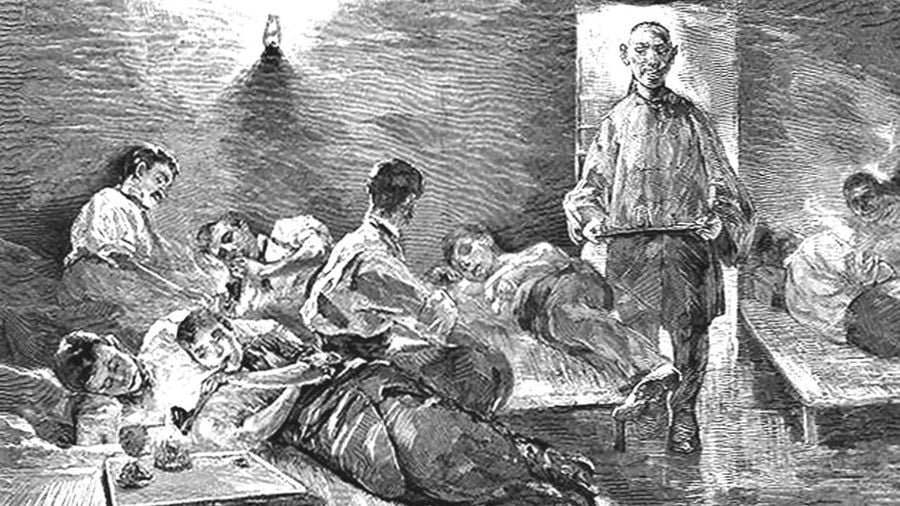
The two Opium Wars — fought between Britain (and France in the second) and China — were the conflicts that forced China to open its ports to foreign trade, established the treaty port system that gave Western powers extraterritorial rights on Chinese soil, and began the "Century of Humiliation" that is the foundational narrative of the Chinese Communist Party's legitimacy and of contemporary Chinese nationalism.
The First Opium War (1839–1842) was triggered by China's destruction of British-owned opium stockpiles in Canton. The East India Company had been selling Indian-grown opium in China to balance the trade deficit created by Chinese tea exports — a trade in which Britain paid silver for Chinese goods while China bought little from Britain. China's efforts to suppress the opium trade, which was devastating Chinese society and draining Chinese silver reserves, led to military conflict with Britain. Britain's military superiority was overwhelming, and the Treaty of Nanking (1842) ceded Hong Kong to Britain and opened five treaty ports to British trade.
The Century of Humiliation that the Opium Wars initiated — the series of defeats, territorial concessions, and extraterritorial impositions that China experienced from 1842 to 1949 — is the specific historical trauma that the Chinese Communist Party defines itself as having ended, and that motivates China's contemporary assertiveness about territorial sovereignty, foreign interference, and national dignity. Understanding the Opium Wars is therefore essential for understanding contemporary Chinese foreign policy.
18 / 20
Ippolito Caffi / Wikimedia Commons (CC BY-SA 4.0)
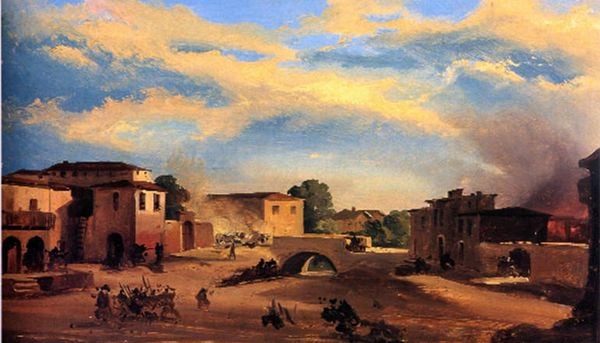
The Risorgimento — the series of political events and military campaigns that produced the unification of Italy from a collection of separate states into a single nation between 1848 and 1871 — is a foundational event of modern European history that is almost entirely absent from American education despite having shaped the political geography of Europe and the dynamics of European nationalism that produced both World Wars.
Italy in 1848 was not a country but a collection of states — the Kingdom of Sardinia (which drove the unification process), the Papal States, the Kingdom of the Two Sicilies, Lombardy and Venetia (under Austrian control), and smaller duchies — with no common political authority. The unification was driven by the political genius of the Sardinian prime minister Camillo di Cavour, the military campaigns of Giuseppe Garibaldi (whose volunteer force of a thousand red-shirted fighters conquered the Kingdom of the Two Sicilies in 1860), and the military pressure on Austria of the Franco-Sardinian war of 1859.
The unified Italy that emerged had specific institutional weaknesses — the deep divide between the industrialized north and the impoverished south, the hostility of the Catholic Church to the new secular state, and the weak parliamentary traditions of most of the constituent states — that shaped Italian politics through the 20th century. The specific conditions that produced Benito Mussolini's fascism in 1922 — the disillusionment of Italian nationalism with the post-World War I settlement, the weakness of parliamentary government, and the deep north-south economic divide — are all directly traceable to the specific character of Italian unification.
19 / 20
Peter Williams / Wikimedia Commons (CC0)
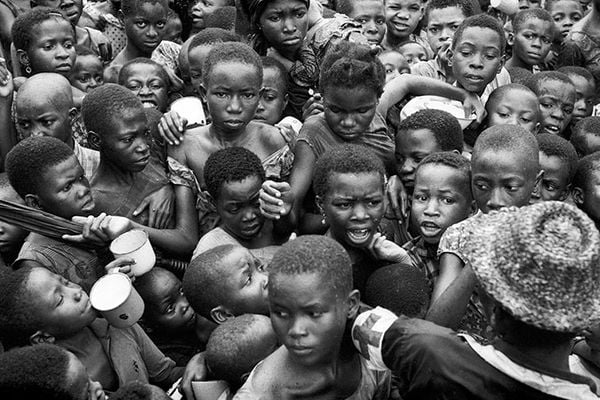
The Nigerian Civil War — fought between the Federal Republic of Nigeria and the secessionist Republic of Biafra between 1967 and 1970 — killed an estimated one to three million people, primarily from famine and disease rather than direct combat, and was one of the first major humanitarian crises of the television age, producing the iconic images of malnourished Biafran children that catalyzed the modern international humanitarian aid movement.
The war's origins lay in the specific circumstances of Nigerian independence from Britain in 1960 and the ethnic and religious tensions between the predominantly Hausa-Fulani Muslim north, the Yoruba southwest, and the predominantly Christian Igbo southeast. The January 1966 military coup — led by Igbo officers and killing primarily northern politicians and military officers — and the July 1966 counter-coup, followed by massacres of Igbo people in the north, produced the specific crisis of trust that led the eastern region, under Odumegwu Ojukwu, to declare the independent Republic of Biafra in May 1967.
The Federal blockade of Biafra — which prevented food, medicine, and other supplies from reaching the secessionist region — produced the mass starvation that became the war's most visible humanitarian consequence. The famine images that reached Western television audiences in 1968 and 1969 produced an outpouring of charitable giving and the creation of several major humanitarian organizations. Médecins Sans Frontières (Doctors Without Borders) was founded in 1971 partly in direct response to the perceived failures of the International Committee of the Red Cross during the Biafran crisis.
20 / 20
Blaue Max / Wikimedia Commons (CC BY-SA 4.0)
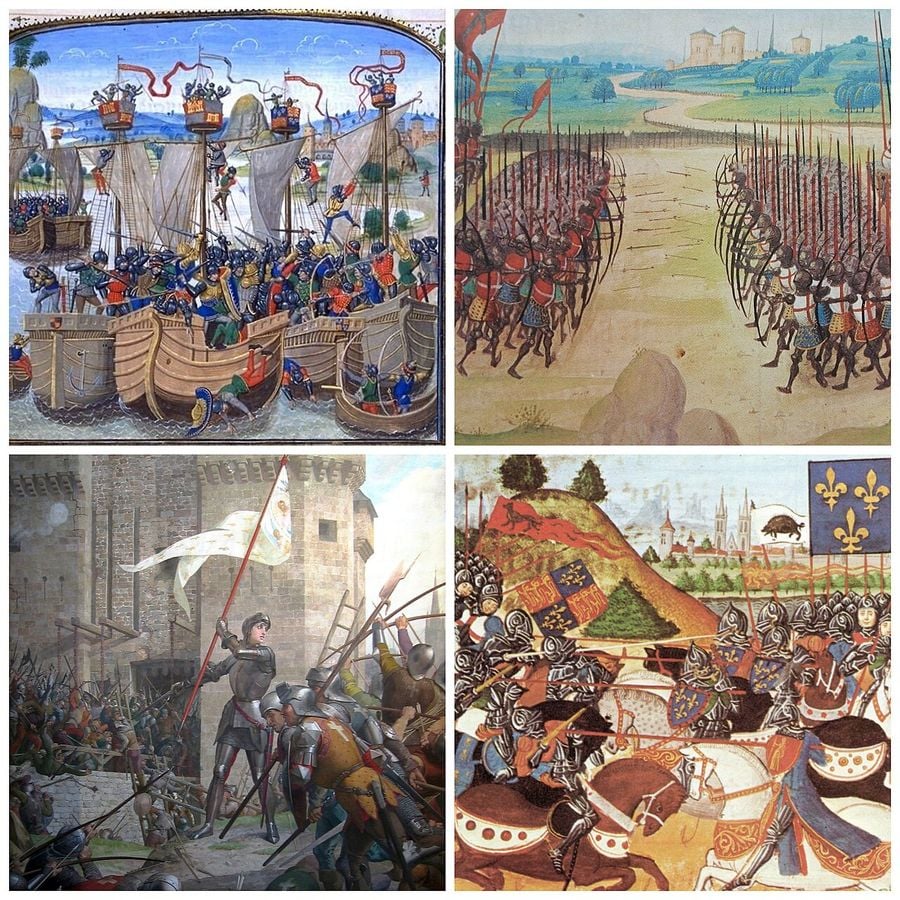
The Hundred Years' War — the series of conflicts between England and France from 1337 to 1453, fought over English claims to the French throne and control of territory in France — was the foundational conflict of French and English national identity, the war that produced Joan of Arc, and the war whose outcome determined the subsequent political development of both nations. It is taught in some American history courses as background to the English and French involvement in colonial history but is rarely covered with the depth that its significance warrants.
The war began with Edward III of England's claim to the French throne through his mother (a claim that France rejected under Salic law) and continued through multiple phases over 116 years. English military successes — the Black Prince's campaigns, the victories of Crécy (1346) and Agincourt (1415) — were achieved partly through the decisive military advantage of the English longbow against French mounted knights, and the Battle of Agincourt (immortalized by Shakespeare's Henry V) was one of the most significant military engagements of the medieval period.
Joan of Arc — the young peasant woman from Domrémy who claimed divine guidance, led the French army to a series of victories, and was subsequently captured, tried for heresy, and burned at the stake by the English in 1431 — is the specific individual whose story encapsulates the war's final phase, in which France gradually reclaimed its territory. Joan's canonization in 1920 and her status as the patron saint of France reflect the centrality of the Hundred Years' War to French national identity.
