These 15 conflicts remain legally unresolved — some for decades, some for centuries — with consequences that are still playing out
Ahmed Akacha / Pexels
The end of a war is a legal act, not merely a military one. Guns falling silent is not the same as a peace treaty being signed. A ceasefire — an agreement to stop shooting — is a temporary measure that leaves the underlying conflict legally unresolved. An armistice is a more formal suspension of hostilities but is still technically a pause rather than a conclusion. Only a formal peace treaty, or in some cases a recognized political settlement, constitutes the legal end of a conflict in international law.
The distinction matters more than it might appear. A conflict that has not formally ended remains, in legal and diplomatic terms, an active one — regardless of how long it has been since shots were last fired. The legal status of the conflict affects the rights of the parties, the validity of territorial claims, the status of prisoners, the applicability of laws of war, and the political relationship between the parties. It can affect the deployment of military forces, the negotiating leverage of each side, and the conditions under which the conflict might resume.
Several of the conflicts in this list are well known; several are obscure to most Western readers despite involving significant populations and ongoing diplomatic complexity. Several involved some of the most consequential geopolitical events of the 20th century — the Korean War's armistice has shaped East Asian security for 70 years; the technical continuation of World War II with Japan affected the normalization of relations between Japan and the Soviet Union for decades. Several are conflicts most people would assume ended long ago that, on examination, remain technically unresolved.
Each entry covers the conflict, why it has not formally ended, what the current status is, and why the unresolved legal status continues to have real consequences. The list is not a ranking of dangerousness or significance — it is a record of the specific legal and diplomatic limbo that these conflicts occupy, and what that limbo means for the people and states involved.
Credit: Wikimedia Commons
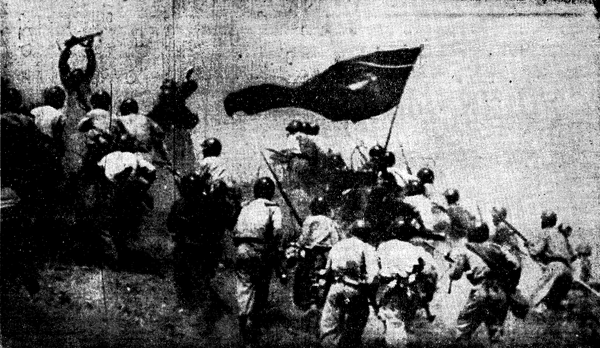
The Korean War — the conflict between North Korea (supported by China and the Soviet Union) and South Korea (supported by the United Nations, primarily the United States) — concluded in July 1953 with the Korean Armistice Agreement, which established the demilitarized zone (DMZ) along roughly the 38th parallel and created a Military Armistice Commission to supervise the ceasefire. No peace treaty has ever been signed. The Korean War is technically still in progress.
The armistice was signed by representatives of the United Nations Command, the Korean People's Army, and the Chinese People's Volunteer Army — but not by South Korea, whose president Syngman Rhee refused to sign, objecting to any agreement that did not achieve the reunification of the peninsula. The United States and North Korea are therefore technically in a state of suspended war, as are China and the UN Command, though South Korea itself was never technically a signatory to the armistice that governs the ceasefire on its own soil.
The legal status has real ongoing consequences. The DMZ — 4 kilometers wide and 250 kilometers long, the most heavily militarized border in the world — remains technically a wartime feature rather than a permanent border. The approximately 28,500 American troops stationed in South Korea are there under a wartime authorization that has never been superseded by a peacetime treaty. Every diplomatic interaction between North and South Korea, and between North Korea and the United States, occurs in the shadow of the unresolved legal status — there is no peace to violate, only an armistice to breach.
Multiple attempts at a peace treaty have been proposed and have failed: the 1994 Agreed Framework, the Six-Party Talks of the 2000s, and the 2018 Singapore Summit between Donald Trump and Kim Jong-un all raised the possibility without producing the treaty. As of 2026, the Korean War remains the most consequential unresolved conflict in the world by most measures.
FORTEPAN / Konok Tamás id via Wikimedia Commons (CC BY-SA 3.0)
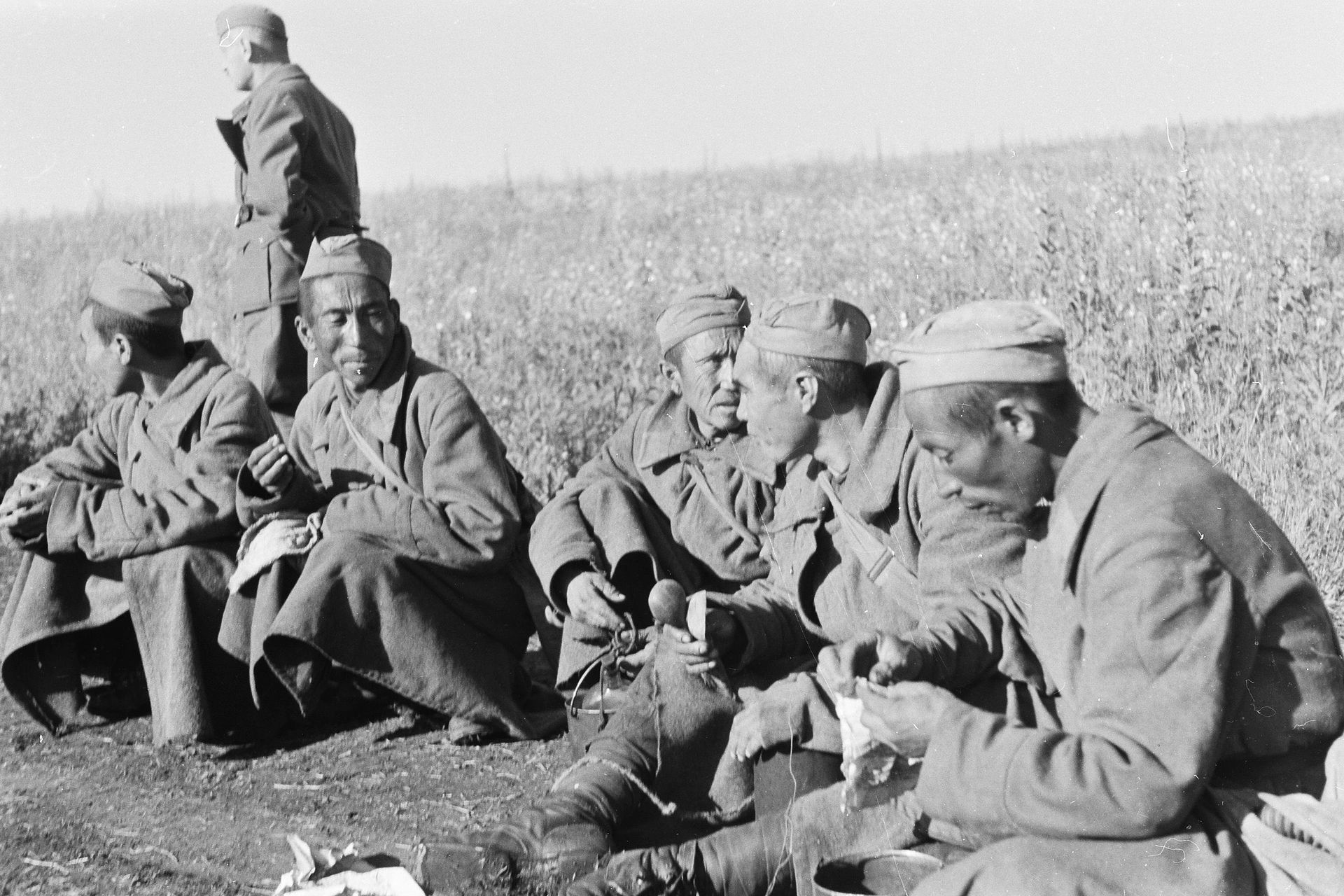
The Soviet Union declared war on Japan on August 8, 1945, two days after the atomic bombing of Hiroshima, and rapidly seized the Kuril Islands chain — a string of islands stretching from Hokkaido, Japan's northernmost main island, toward the Kamchatka Peninsula of Russia. Japan surrendered to the Allied powers on September 2, 1945, ending World War II in the Pacific — but the Soviet Union and Japan never signed a peace treaty.
The obstacle was the Kuril Islands, which Japan calls the Northern Territories — specifically the four southernmost islands (Iturup, Kunashir, Shikotan, and the Habomai group) that Japan considers its inherent territory, occupied by the Soviet Union without a valid legal transfer, and which Russia inherited as the successor state to the Soviet Union. The Soviet Union and Japan signed a Joint Declaration in 1956 normalizing diplomatic relations and ending the state of war, with a Soviet commitment to transfer the two smaller islands (Shikotan and Habomai) to Japan after a peace treaty — but the peace treaty itself was never concluded.
The 1956 declaration has been the basis of subsequent negotiations, but the territorial dispute has prevented any progress: Japan demands all four islands; Russia has offered at most two. The unresolved status affected Japanese-Russian economic cooperation, tourism, and diplomatic relations for 80 years after the guns fell silent. Russia's 2022 invasion of Ukraine and the subsequent breakdown of Japan-Russia relations suspended the peace treaty negotiations entirely and added new complications to a dispute that was already among the most durable territorial grievances in the post-World War II international order.
Rohit Sharma / Wikimedia Commons (CC BY-SA 4.0)
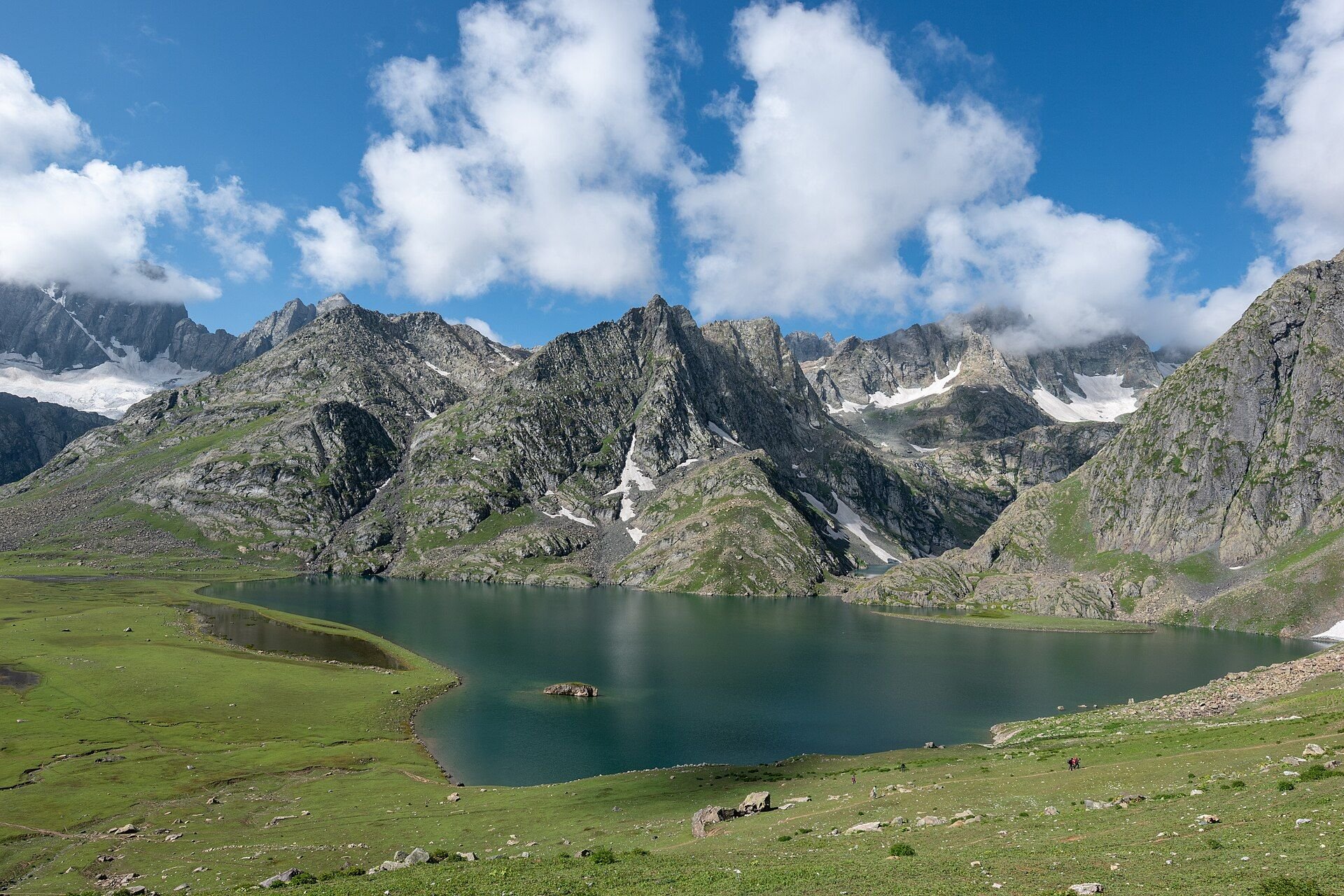
The conflict over Jammu and Kashmir — begun in 1947 when the partition of British India produced competing claims by India and Pakistan over the princely state's territory, and formalized into a military confrontation when Pakistan-backed tribal forces invaded Kashmir and India airlifted troops in response — has never been resolved by a peace settlement. The Line of Control (LoC) that separates Indian-administered Kashmir from Pakistani-administered Azad Kashmir is not an internationally recognized border but a ceasefire line, first established in 1949 and adjusted after subsequent wars in 1965 and 1971.
The conflict has produced three full-scale wars between India and Pakistan (1947–48, 1965, and 1971), a limited military confrontation at Kargil in 1999, and a sustained low-intensity insurgency in the Kashmir Valley that has continued since 1989. Both India and Pakistan possess nuclear weapons, and the Kashmir dispute is one of the most dangerous nuclear flashpoints in the world — the two countries have come close to war on multiple occasions since their nuclear tests in 1998.
The legal status of the territory remains genuinely unresolved. UN Security Council Resolutions 47 and 80 from 1948 called for a plebiscite to allow the Kashmiri people to determine their own status — a plebiscite that has never been held. India considers Jammu and Kashmir an integral part of India; Pakistan considers the Muslim-majority region's accession to India illegitimate; and the political aspirations of the Kashmiri people themselves are divided and contested. India's revocation of Jammu and Kashmir's special constitutional status in 2019 further hardened positions and made diplomatic progress more remote.
Sanjay Rao / Wikimedia Commons (CC0)
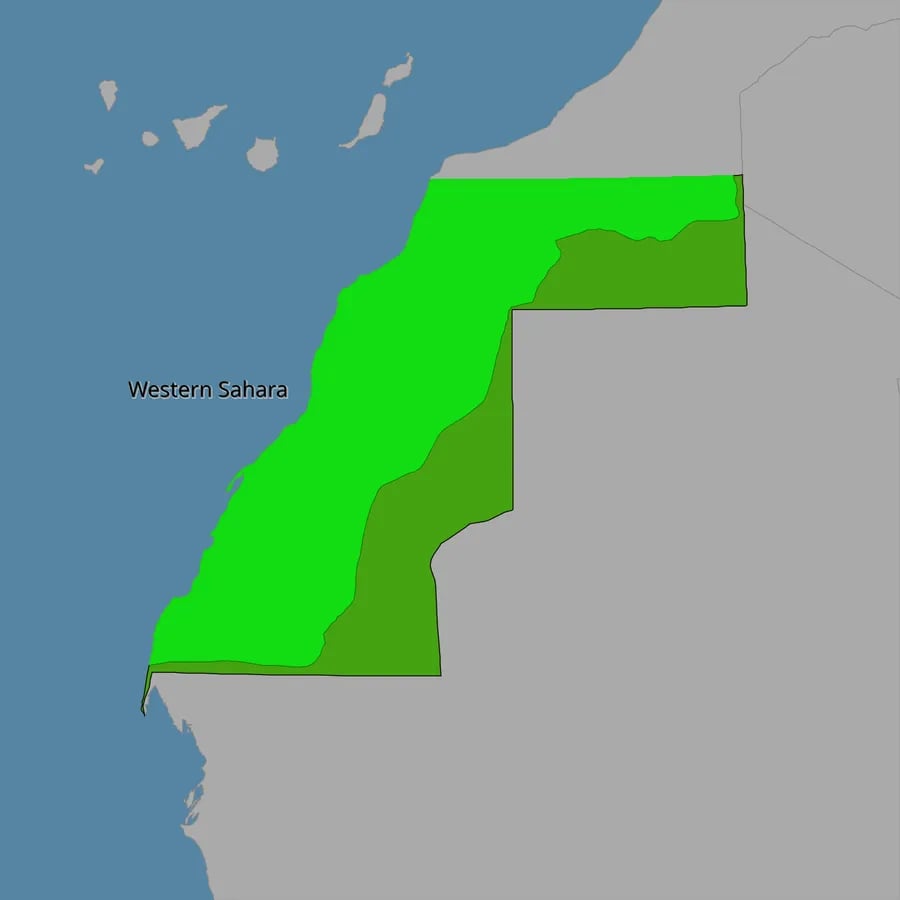
The Western Sahara conflict — between Morocco, which claims and administers approximately 80% of the territory, and the Polisario Front, a Sahrawi independence movement backed by Algeria that controls the remaining 20% from its base in Algeria — has been legally unresolved since Spain withdrew from its colonial territory in 1975. The United Nations considers Western Sahara a Non-Self-Governing Territory whose final status must be determined by the Sahrawi people themselves, through a referendum that has been promised and postponed for 35 years.
Morocco argues that Western Sahara is its "Southern Provinces," historically part of Moroccan territory before French and Spanish colonization, and that its 1975 Green March — the movement of 350,000 Moroccan civilians into Western Sahara immediately following Spain's withdrawal — established its claim. The Polisario Front and Algeria argue that Western Sahara is a distinct people with a right to self-determination that Morocco has suppressed by military force and demographic change (through the settlement of large numbers of Moroccan citizens in the territory).
The UN Mission for the Referendum in Western Sahara (MINURSO) was established in 1991 to organize the referendum — but the referendum has never occurred because Morocco and the Polisario Front cannot agree on who qualifies as a voter. A ceasefire in 1991 ended the hot war phase; fighting resumed briefly in 2020 when Moroccan forces moved into a buffer zone, breaching the ceasefire for the first time in decades. As of 2026, Western Sahara remains the last significant unresolved colonial territorial dispute in Africa.
Boris Carmi /Meitar Collection / National Library of Israel / The Pritzker Family National Photography Collection via Wikimedia Commons (CC BY 4.0)
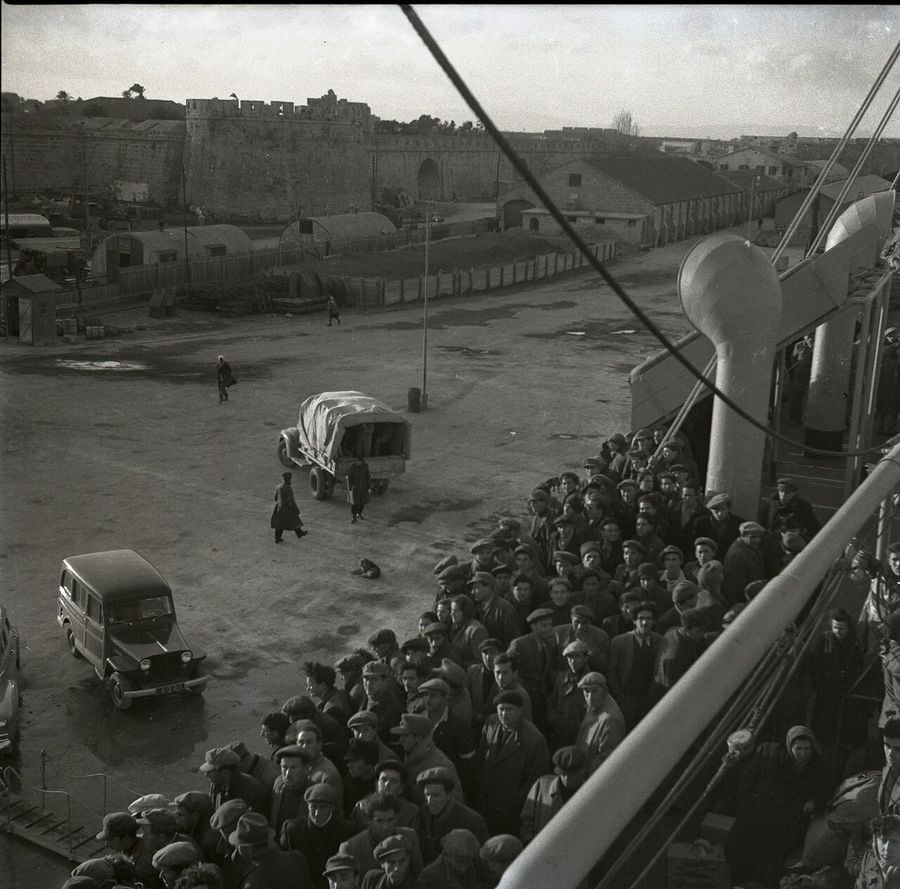
Cyprus has been effectively divided since 1974, when Turkish forces invaded the northern third of the island following a coup backed by the Greek military junta that sought to unite Cyprus with Greece. The Turkish intervention produced a de facto partition: the south is governed by the internationally recognized Republic of Cyprus, a member of the European Union; the north is governed by the Turkish Republic of Northern Cyprus (TRNC), recognized only by Turkey.
The ceasefire established in 1974 has held for five decades without a peace settlement. The Green Line — the UN-monitored buffer zone that divides the island — runs through the capital Nicosia, the last divided capital city in Europe. The UN Peacekeeping Force in Cyprus (UNFICYP) has maintained a presence continuously since 1964 (predating the 1974 partition), making it one of the longest-running UN peacekeeping operations in history.
Multiple reunification negotiations have failed, most prominently the 2004 Annan Plan — a UN proposal for a bizonal, bicommunal federation that was accepted by Turkish Cypriots in a referendum but rejected by Greek Cypriots. Cyprus's EU accession in 2004 with the island still divided has created a specific anomaly: EU law is suspended in the northern third of a member state's internationally recognized territory. The unresolved status continues to affect the economic development of the island, the movement of people across the Green Line, and the broader relationship between Greece, Turkey, and the European Union.
Ilgar Jafarov / Wikimedia Commons (CC BY-SA 4.0)
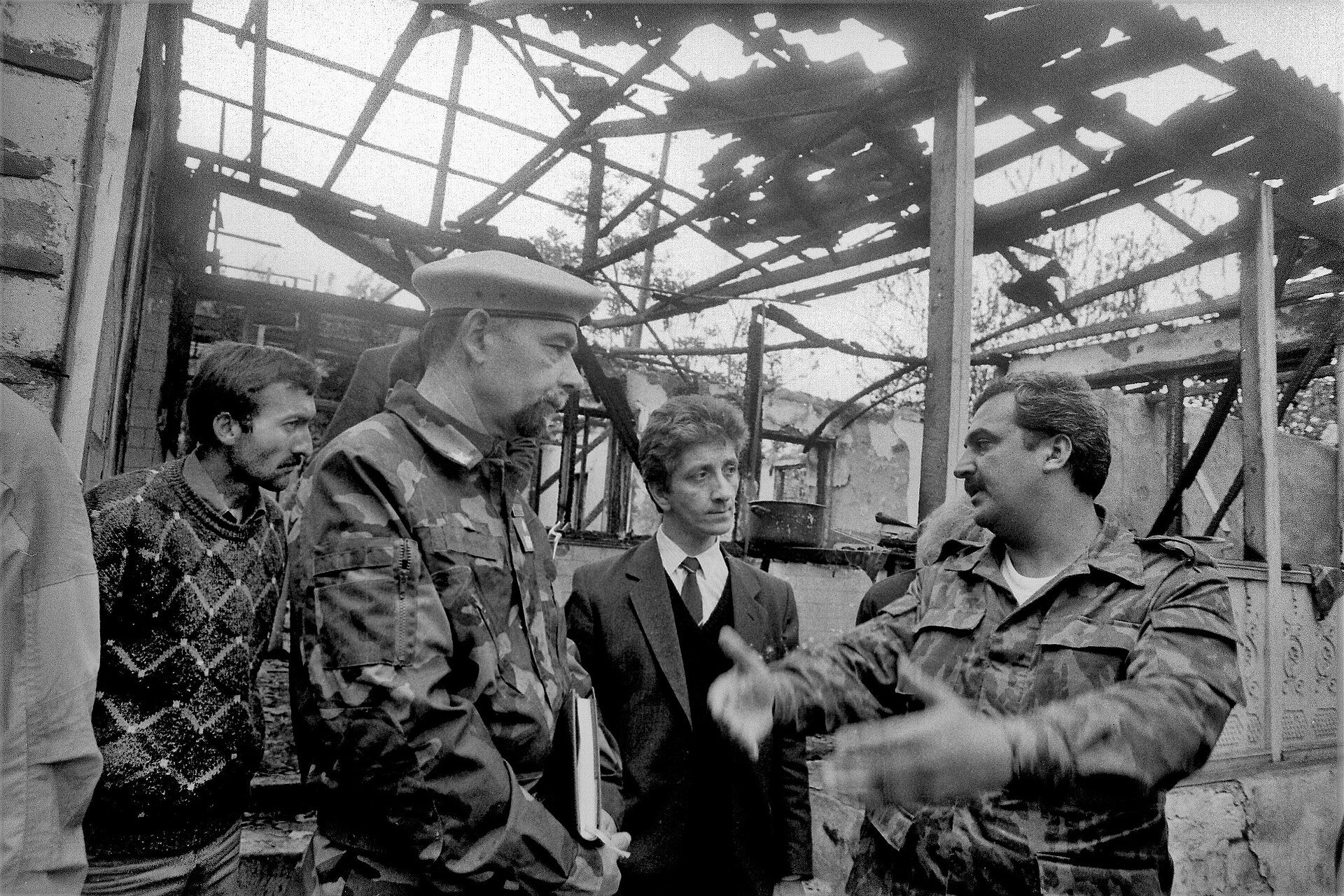
The conflict over Nagorno-Karabakh — an enclave in Azerbaijan with a majority Armenian population that declared independence during the collapse of the Soviet Union — produced a war from 1988 to 1994, a Second Nagorno-Karabakh War in 2020, and a third military offensive in September 2023 in which Azerbaijan rapidly captured the territory and effectively ended the Armenian presence there. Despite the military resolution, the underlying international legal status of the territory and the status of the displaced Armenians remain unresolved in formal terms.
The 1994 ceasefire that ended the first war left Nagorno-Karabakh and surrounding territories under Armenian military control, with the territory's final status subject to the OSCE Minsk Group negotiations that continued inconclusively for 26 years. The 2020 war significantly changed the military balance, and the 2023 offensive produced the departure of virtually the entire Armenian population of Nagorno-Karabakh to Armenia — what many observers and governments have described as ethnic cleansing, though Azerbaijan disputes this characterization.
The legal status remains unresolved in the specific sense that no peace treaty between Armenia and Azerbaijan has been concluded that formally settles the border, addresses the rights of displaced Armenians, or resolves the status of those who fled. The negotiations toward such a treaty were ongoing as of 2026, with significant international facilitation, but had not produced a signed agreement.
PH1 R. Oriez / Wikimedia Commons
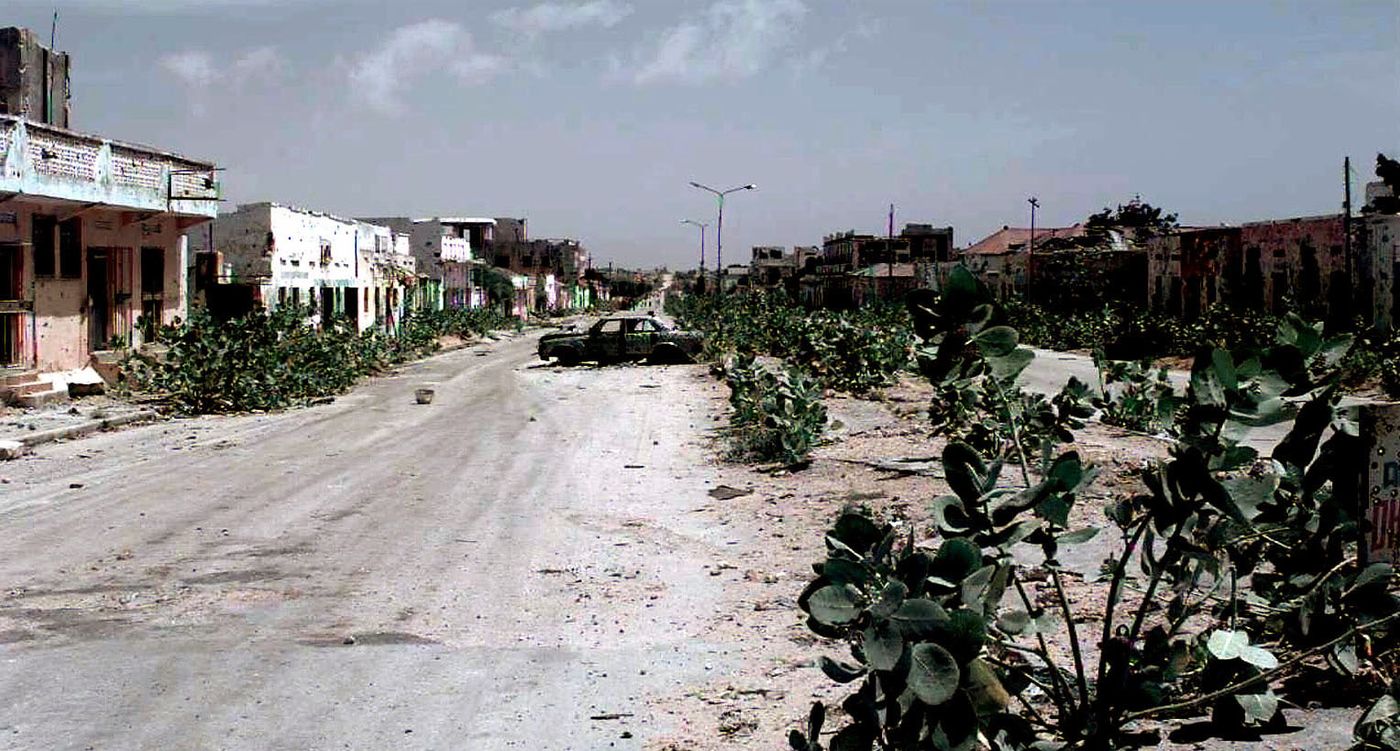
Somalia's civil war — which began with the collapse of the Siad Barre government in 1991 and produced a period of total state failure in which no government controlled the country — has never been formally concluded with a peace settlement, and the country's territorial integrity and political authority remain contested by multiple armed groups and by the self-declared independent states of Somaliland and Puntland.
Somaliland — the northwestern region that declared independence from Somalia in 1991, based on the borders of the former British Somaliland Protectorate — has maintained a functioning government, held multiple democratic elections, and created a stable administration for over 30 years. It has not been recognized by any other country as an independent state, leaving its population in the specific legal limbo of a functioning political entity with no international legal standing.
The Federal Government of Somalia, established through a internationally supported political process, controls Mogadishu and parts of southern Somalia but does not effectively govern significant portions of its claimed territory, where the Islamist group al-Shabaab continues to operate as a parallel administrative and military force. The ongoing conflict between the federal government and al-Shabaab, combined with the unresolved status of Somaliland, means that Somalia's civil war — while less acute than in the early 1990s — has no formal conclusion.
Boris Carmi /Meitar Collection / National Library of Israel / The Pritzker Family National Photography Collection via Wikimedia Commons (CC BY 4.0)
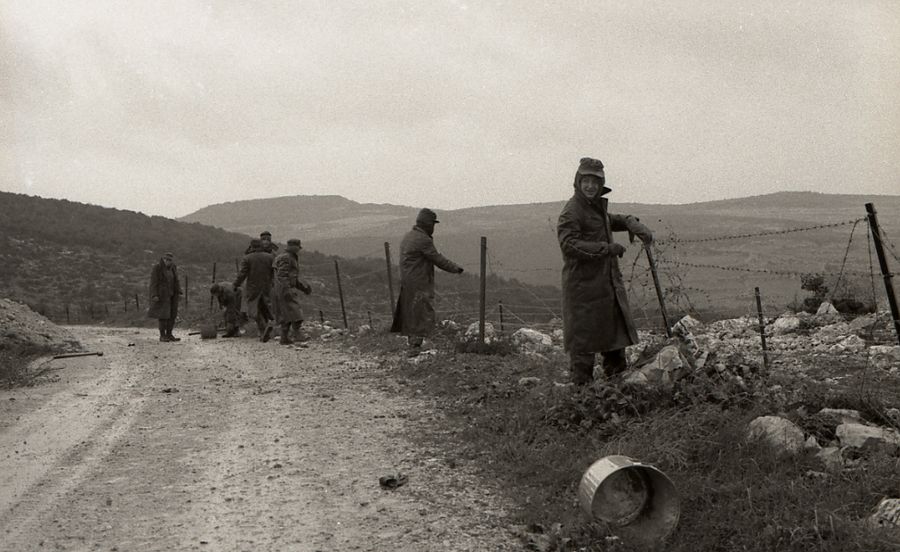
Lebanon and Israel have been technically in a state of war since Lebanon's declaration of war against Israel in 1948, in conjunction with the Arab-Israeli War that followed Israel's declaration of independence. No peace treaty has ever been signed between Lebanon and Israel. The two countries do not have diplomatic relations. Israel's northern border with Lebanon is technically a ceasefire line — the Blue Line established by the United Nations after Israel's withdrawal from Lebanon in 2000 — rather than a recognized international border.
The unresolved legal status of the 1948 war has been complicated by multiple subsequent military confrontations: Israel's invasion of Lebanon in 1978, the 1982 Israeli invasion and subsequent occupation of southern Lebanon until 2000, the 2006 war between Israel and Hezbollah, and the 2023–2024 conflict that erupted in parallel with the Gaza war and produced extensive destruction in southern Lebanon and northern Israel.
The specific legal mechanism through which Lebanon has never concluded peace with Israel reflects the broader Lebanese political reality: Lebanon has never had the political consensus to negotiate a peace treaty, partly because significant Lebanese political factions — most prominently Hezbollah, which operates as both a political party and a military organization — have used opposition to normalization with Israel as a foundational political position. Lebanon's sovereignty over its own territory in the south has been effectively contested by Hezbollah's parallel military authority, creating a situation in which Lebanon cannot deliver on any peace agreement its government might sign.

José Manuel Restrepo / Wikimedia Commons
The border war between Ecuador and Peru — which produced multiple armed confrontations over a disputed jungle border region from 1941 through 1995 — was formally resolved by the Brasília Presidential Act of 1998, making it one of the few entries on this list that did eventually reach a formal conclusion. It appears here as an instructive contrast: the same underlying border dispute that had produced three wars in 57 years was resolved in four years of negotiation after the final 1995 Cenepa War, demonstrating that formally unresolved conflicts can be formally resolved when political conditions allow.
The resolution required four guarantor nations (Argentina, Brazil, Chile, and the United States) to facilitate negotiations and guarantee the implementation of the agreed boundary. It included not only a formal demarcation of the border but an agreement to create a binational ecological reserve in the disputed area, converting a military flashpoint into a cooperative environmental project.
The Ecuador-Peru resolution is also instructive for what it required: genuine political will on both sides, external guarantors with the credibility to make commitments stick, and a willingness to accept a settlement that neither side could describe as a complete victory. Most of the conflicts on this list lack one or more of these conditions.
ԶԻՆՈՒԺ MEDIA / Wikimedia Commons
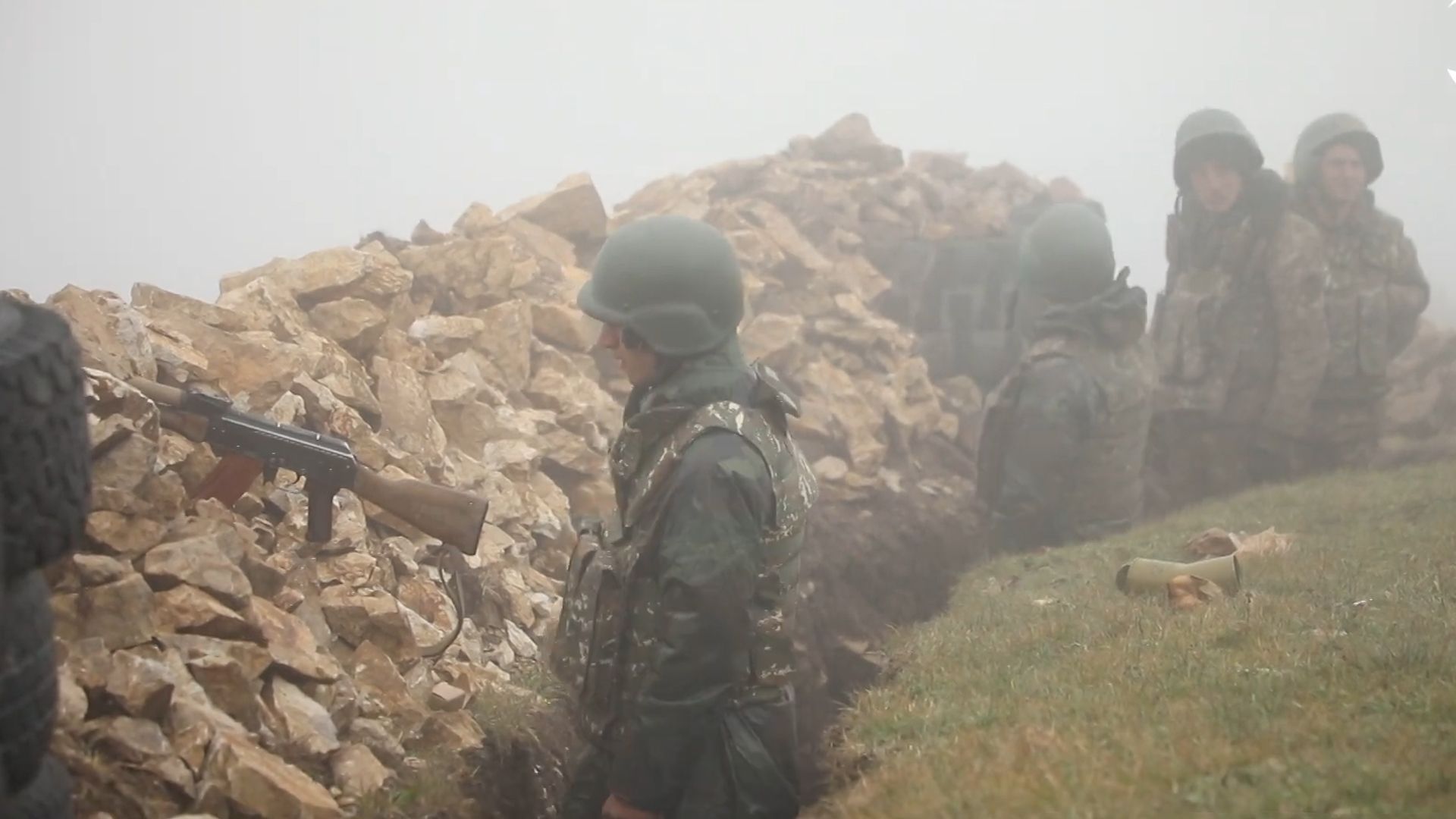
Beyond the specific Nagorno-Karabakh situation described earlier, the broader Armenia-Azerbaijan conflict — their mutual claims to the borders established under Soviet administration versus those Armenia claims on historical grounds — remains formally unresolved despite the military resolution of the Nagorno-Karabakh question in 2023. A peace treaty has been under negotiation since the 2020 ceasefire but has not been concluded.
The specific unresolved issues in the peace treaty negotiations include: the precise delineation of the border between Armenia and Azerbaijan in areas outside the former Nagorno-Karabakh conflict zone; the opening of the Zangezur Corridor, a land connection between Azerbaijan and its Nakhchivan exclave through Armenian territory that Azerbaijan demands and Armenia resists; and the formal legal status of the former Nagorno-Karabakh territory now under Azerbaijan's full control.
The peace process has been complicated by the involvement of multiple external facilitators — the European Union, Russia, the United States, and France — whose own geopolitical rivalries have introduced competing agendas into the negotiations. Russia's weakened leverage over both Armenia and Azerbaijan following its 2022 invasion of Ukraine has changed the dynamics of the negotiation in ways that have not yet produced a final agreement.
Saharauiak / Wikimedia Commons (CC BY-SA 2.0)
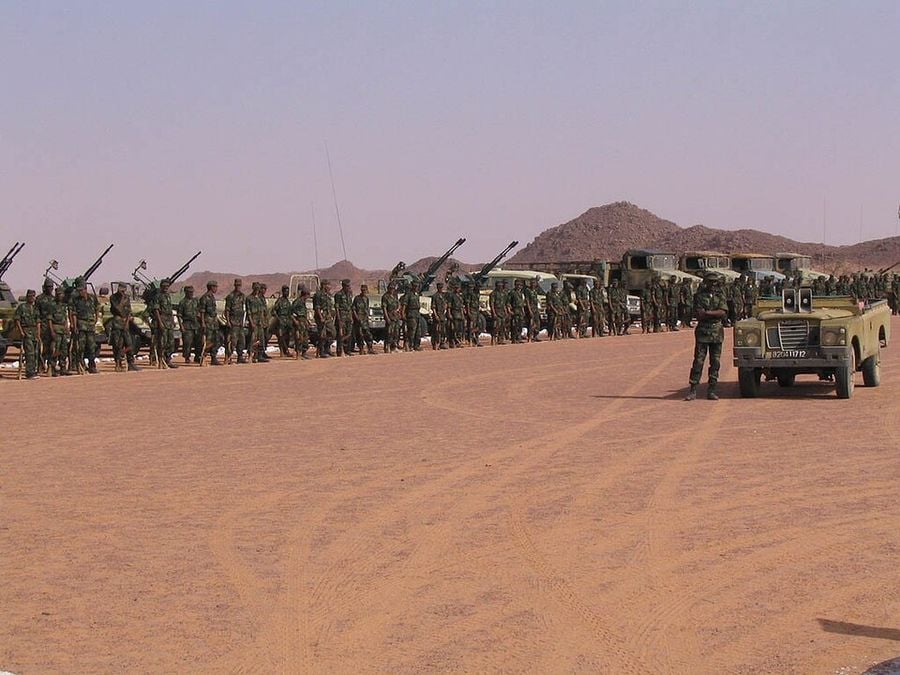
The Sahrawi Arab Democratic Republic (SADR) — the government proclaimed by the Polisario Front in 1976 to represent the people of Western Sahara — is recognized by approximately 45 UN member states and is a member of the African Union, but is not recognized by the United Nations or most Western countries as a state with sovereignty over Western Sahara. Morocco does not recognize the SADR's existence.
This creates a specific legal paradox: a state recognized by roughly one-quarter of the world's countries, operating a government in exile from refugee camps in Algeria and administering a small buffer zone in Western Sahara, whose claimed territory is entirely controlled by another state that denies its existence. The SADR's legal status has not changed since its proclamation — its recognition has grown slightly over decades, as has Morocco's counter-recognition campaign — and the underlying territorial dispute that produced it remains unresolved.
The SADR's situation is one of the clearest examples of how unresolved conflicts produce permanently ambiguous legal entities: a government with international recognition but no effective territorial control, a people (the Sahrawis) whose political status has been suspended in diplomatic limbo for half a century, and a UN mission whose mandate is to organize a referendum that no party currently has the political incentive to hold.
Matti&Keti / Wikimedia Commons (CC BY-SA 4.0)
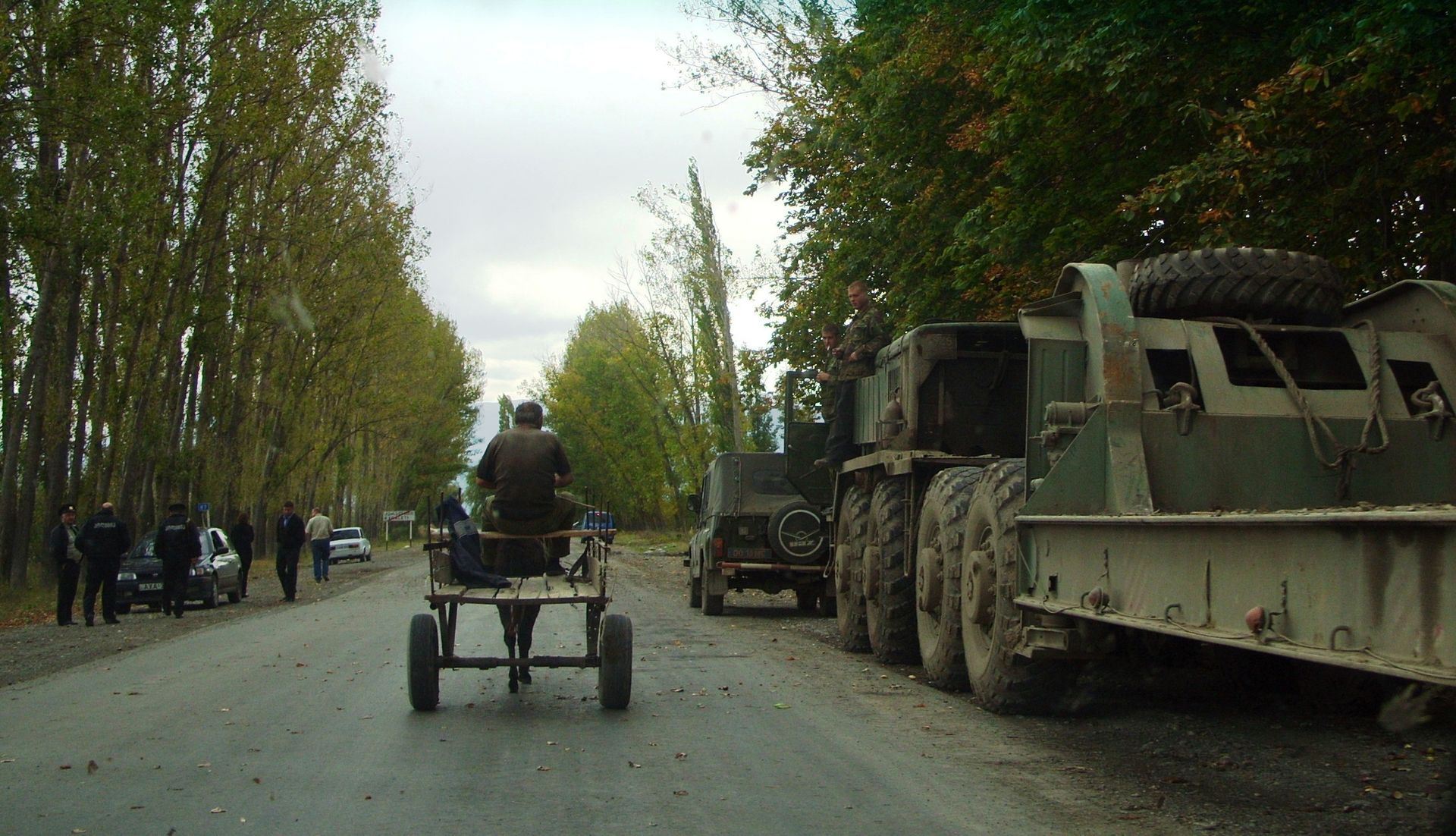
Russia's 2008 war with Georgia — a five-day conflict in August 2008 following Georgia's attempt to reassert control over the breakaway region of South Ossetia — ended with a French-brokered ceasefire but no peace treaty. Russia recognized South Ossetia and Abkhazia as independent states immediately after the ceasefire; no other UN member state except Nicaragua, Venezuela, Syria, and Nauru has recognized them. Georgia considers both territories occupied Georgian territory.
The ceasefire terms — including a Russian commitment to withdraw from areas outside South Ossetia and Abkhazia — were only partially implemented. Russian forces established new administrative boundary lines that in some areas extend further into Georgian-controlled territory than the pre-war boundary, a process of creeping annexation that has continued since the ceasefire through the construction of fences and barriers that move the effective boundary incrementally into Georgian territory.
The legal status of the conflict remains unresolved in the sense that Georgia and Russia have no peace treaty, Georgia does not recognize the new boundaries, and the international community (with the exceptions noted) does not recognize the independence of South Ossetia or Abkhazia. The Geneva International Discussions — a diplomatic process established by the ceasefire agreement — have met regularly since 2008 without producing any formal resolution of the underlying disputes.
Toronto Star Archives / Wikimedia Commons
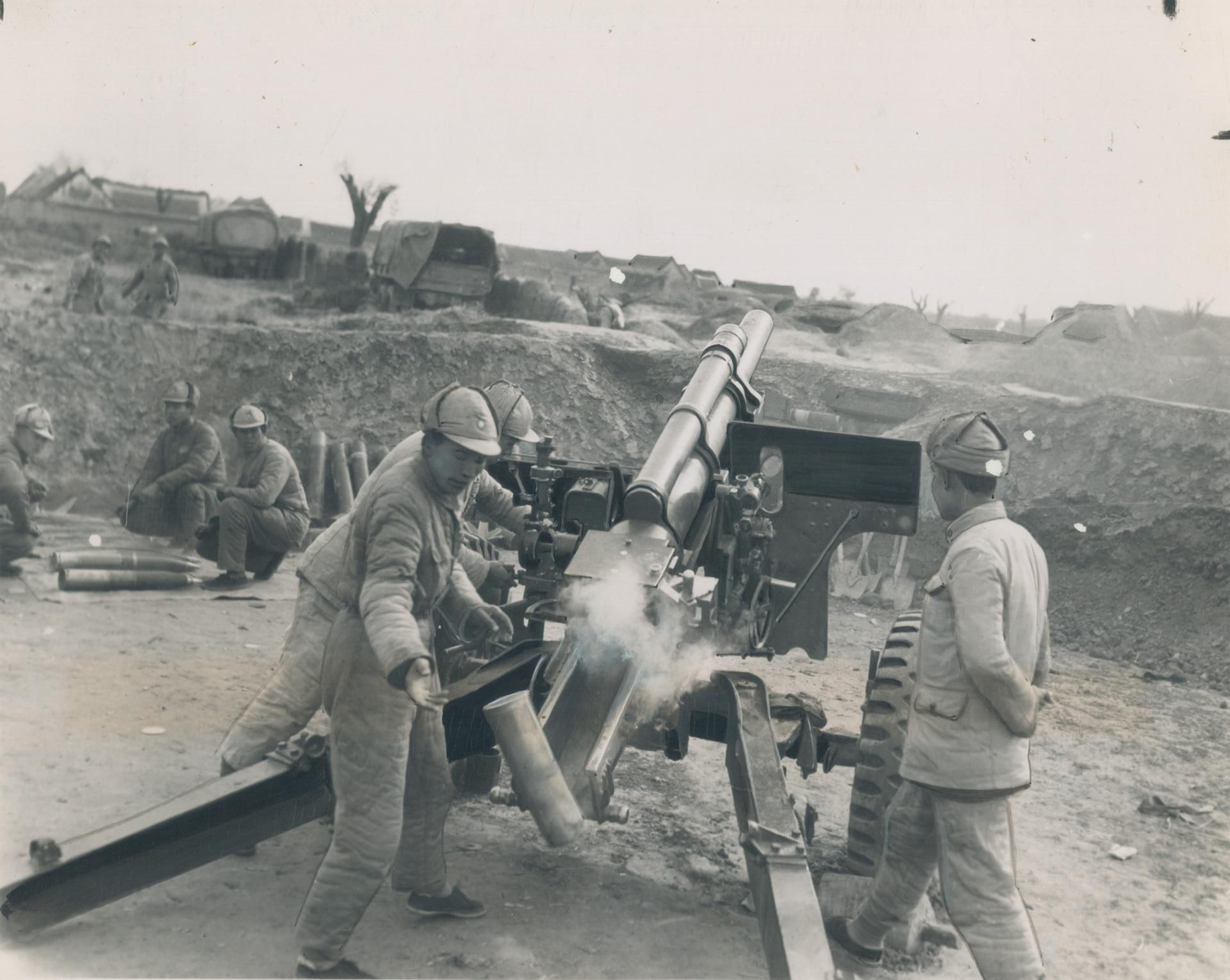
The legal status of Taiwan is one of the most consequential unresolved questions in international relations and derives directly from the unfinished Chinese Civil War — the conflict between the Nationalist government of the Republic of China (ROC) and the Communist Party of China, which ended in 1949 with Communist victory on the mainland and the retreat of the ROC government to Taiwan. No peace treaty was ever signed. The civil war, technically, has never ended.
The People's Republic of China (PRC), which governs mainland China, considers Taiwan a breakaway province of China whose reunification with the mainland is a core national interest. The ROC government on Taiwan has evolved from formally claiming sovereignty over all of China to a more ambiguous position in which Taiwan functions as a de facto independent state — with its own government, military, currency, and passport — without formally declaring independence (which China has said would trigger military action).
Taiwan is recognized as a sovereign state by only 12 UN member countries as of 2026. The United States maintains unofficial relations with Taiwan through the American Institute in Taiwan and has committed under the Taiwan Relations Act to provide Taiwan with defensive weapons, while maintaining a policy of "strategic ambiguity" about whether it would militarily defend Taiwan against a Chinese attack. The unresolved legal status of the Chinese Civil War therefore directly determines the most significant potential military confrontation in the contemporary world.
2878-900x755.jpg)
Imperial War Museums / Wikimedia Commons
The Treaty of Sèvres, signed in 1920 to formally end World War I with the Ottoman Empire, was never ratified by the Ottoman government and was superseded by the Treaty of Lausanne in 1923 following the Turkish War of Independence. The Treaty of Lausanne formally ended hostilities between the Allied powers and the new Turkish Republic, replacing the unratified Sèvres. In this sense, World War I is formally concluded with Turkey.
However, several specific aspects of the post-World War I settlement remain legally contested or unimplemented. The Armenian Genocide — the mass killing of Armenians by Ottoman authorities during World War I, recognized as genocide by approximately 33 countries including the United States — has never been formally acknowledged by Turkey, and the question of reparations or territorial adjustment based on the genocide remains a live diplomatic issue. The specific border provisions of the Treaty of Lausanne regarding islands in the Aegean, the demilitarization of certain Greek islands, and the status of the Dodecanese have been subjects of ongoing Greek-Turkish diplomatic dispute for a century.
The Lausanne Treaty also established a 100-year validity period for some of its provisions — a claim made by some Turkish nationalist commentators — though international law scholars generally do not accept that the treaty's territorial provisions expire, and Turkey's own position has shifted on this point.
Albeiror24 / Wikimedia Commons
Colombia's armed conflict — which began in 1964 with the formation of the FARC guerrilla organization, expanded through the 1980s and 1990s with the involvement of the ELN (National Liberation Army), paramilitary groups, and drug cartels, and produced one of the longest-running armed conflicts in the Western Hemisphere — achieved a partial formal resolution with the 2016 peace agreement between the Colombian government and the FARC. The FARC formally demobilized; most of its members underwent a reintegration process; and the peace agreement was signed and ratified.
The reason Colombia's conflict appears on this list is that the peace agreement was partial rather than complete. The ELN — the second-largest guerrilla group — did not sign the 2016 agreement and continues to operate in rural Colombia. Dissident FARC factions that rejected the peace agreement have continued armed activity under various names. And the underlying conditions that produced the conflict — rural poverty, land distribution inequality, coca cultivation and the narcotics economy — have not been resolved by the peace agreement.
Negotiations with the ELN have proceeded and stalled through multiple Colombian administrations. President Gustavo Petro, himself a former M-19 guerrilla who took office in 2022, pursued "total peace" negotiations simultaneously with the ELN and dissident FARC factions, with intermittent ceasefires and resumed negotiations that had not produced a comprehensive settlement as of 2026. Colombia's conflict is therefore both partially formally ended (with respect to the FARC mainstream) and technically ongoing (with respect to the ELN and dissident factions).
