
Quartz
Subscribe
Quartz
Subscribe
Edition
Business News
A.I.
Technology
Money & Markets
Leadership
Lifestyle
Latest

Get Quartz in your inbox

Free daily briefing on global business news.

Business News
AirlinesAutomobilesFoodPharmaceuticalsPolitics & GovernmentRetail & EcommerceSpace & AerospaceEarnings
Technology
A.I.ComputingConsumer TechSpace & AerospaceEarnings
Money & Markets
Economic IndicatorsMarketsPersonal FinanceEarnings
Lifestyle
Cars & BikesCollectingEntertainmentFood & Fine DiningHealth and FitnessReal EstateTravel
Quartz

Global business news for a smarter world

Topics

  • Business News
  • Money & Markets
  • Tech & Innovation
  • Generation A.I.
  • Lifestyle
  • Leadership

Products

  • Daily Brief
  • Weekly Digest
  • Member Benefits
  • Quartz Pro

Legal

  • Sitemap
  • About
  • Accessibility
  • Privacy
  • Terms of Service
  • Advertising

© 2026 Quartz Media, Inc. All rights reserved.

Business News

Washington wants to scrutinize the AI industry. The hard part is just beginning

The universe of policy solutions in Washington ranges from voluntary compliance with the U.S. government to the nationalization of AI companies

By Joseph Zeballos-Roig·2 min read·Updated June 7, 2026
Add QZ to Google
Washington wants to scrutinize the AI industry. The hard part is just beginning

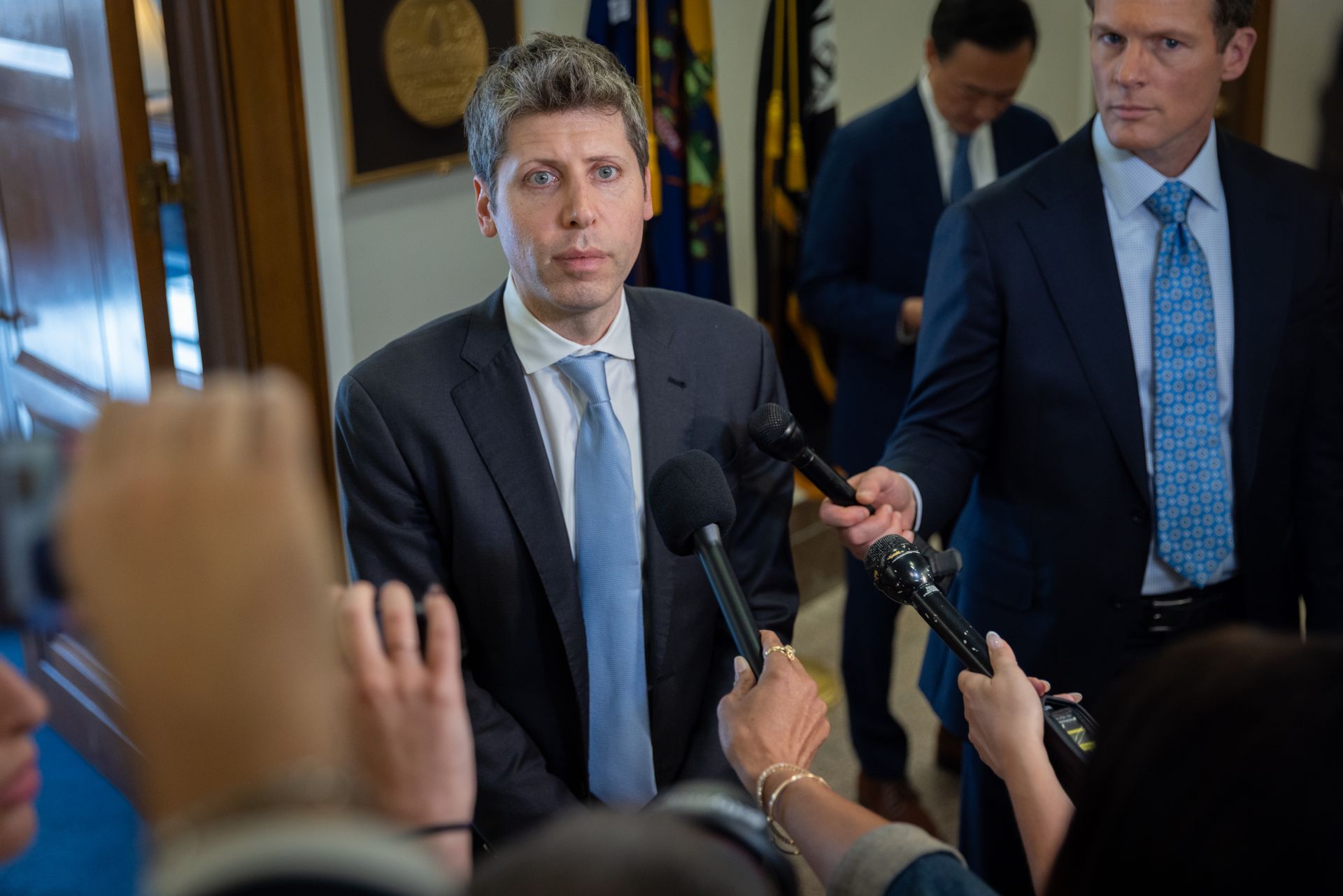
OpenAI CEO Sam Altman talks to reporters following a meeting with Senator Bernie Sanders (I-VT) at the Dirksen Senate Office building in Washington, DC on June 3, 2026. (Nathan Posner/Anadolu via Getty Images)


The AI industry is flexing its muscles in the midterms with plans to spend at least $265 million through super PACS to influence the regulatory landscape. It’s no different in Washington D.C., with industry titans Anthropic and OpenAI opening offices in the past year to establish their presence in the capital. Policymakers are grappling with how far to go to police the fast-evolving technology. 

The hard part is just beginning. Washington is increasingly scrutinizing the AI industry, and the universe of policy solutions ranges from voluntary compliance with the U.S. government to the nationalization of AI companies. It underscores the split among competing factions in the White House and Congress on how to balance technological innovation and responsible deployment of AI models.

On Tuesday, President Donald Trump signed an executive order that requested tech companies to voluntarily allow the U.S. government a 30-day period for reviewing AI models before their public release. It also pushed the Treasury to set up a process to review security vulnerabilities identified by AI models.

Venture capitalist David Sacks, Trump's ex-AI czar, touted the order in a social media post as “a game changer because it allows our AI labs to comply with the voluntary framework without delaying new model releases."

Democrats aren't sold. Many panned the order as insufficient in curtailing the Trump administration’s hands-off approach to AI regulation.

“This largely voluntary and classified approach is simply not sufficient,” Rep. Don Beyer of Virginia, co-chair of the Congressional AI caucus, said in a statement. “This is underwhelming policy that mirrors the Trump Administration’s broader pattern of creating a wild west environment for AI development, rather than ensuring safe and responsible governance to protect the American public.”

Americans are wary on AI, in part due to rising power bills from rapid construction of data centers. Public opinion on AI is trending negative due to growing anxiety about its potential to wipe out jobs, in addition to its disruptive effects on social media and national security.

One influential progressive even wants the federal government to partly nationalize the AI industry. 

Independent Sen. Bernie Sanders of Vermont is pushing for the U.S. to take a 50% ownership stake in AI companies. His proposal would channel returns from the stock to structure a sovereign wealth fund that issues direct payments to Americans. Part of the idea borrows from the Trump administration’s fervor for government stakes in chipmaker Intel $INTC and over a dozen U.S. companies in critical mineral production.

Trump administration officials are reportedly discussing taking stakes in AI firms, according to NOTUS and the Wall Street Journal. OpenAI CEO Sam Altman met with Sanders on Wednesday at the U.S. Capitol.

The White House did not respond to a request for comment.

Daily Brief

The essential business news, delivered fresh every morning.

Join 500,000+ readers who start their day with Quartz.

By subscribing, you agree to our Terms of Service and Privacy Policy.

Related

AirlinesAir China and Shenzhen Airlines are ordering 55 Airbus jets in a $12.4 billion deal
Economic IndicatorsU.S. import prices climbed unexpectedly in June as goods from China hit an 18-year high
A.I.An AI critic is warning that OpenAI's failure would be the Lehman Brothers of the AI bubble
AutosHonda is giving up on electric vehicles in the U.S.
A.I.Xi Jinping used China's biggest AI conference to challenge U.S. dominance of the sector