Working from home gives you flexibility and removes the structure that made flexibility possible — these 20 approaches help you rebuild it on your own terms

Annushka Ahuja / Pexels
The office solved a problem most people did not know they had. It imposed structure — a commute that created a transition into work mode, a physical space dedicated to work and nothing else, colleagues whose presence created social accountability, a building you had to leave to stop working — without requiring any conscious effort to maintain that structure. The office just was, and the structure came with it. When the office disappeared, the structure went with it, and the problem it had been solving invisibly became visible immediately.
Working from home is, for most people, harder than it looks from the outside and harder than it seemed when it was first proposed. The difficulty is not motivation — most people who work from home are motivated to do their jobs — it is architecture. The architecture of a productive workday requires boundaries, transitions, rhythm, and some form of accountability, and the home environment provides none of these automatically. They have to be designed, built, and maintained by the person working in them, usually without training, usually in a space that was not designed for the purpose, usually while managing the competing claims of domestic life on the same space and the same attention.
The 20 approaches on this list are not motivational advice. They are structural interventions — specific changes to the physical environment, the schedule, the social context, or the behavioral habits of a workday that have documented effects on focus, productivity, and the quality of the separation between work and non-work that makes both sustainable. Some are borrowed from behavioral science. Some are borrowed from the practices of people who have worked from home successfully for years before remote work became common. Some are counterintuitive. Several will work better for some people than others, and identifying which requires trying them rather than selecting in advance.
The underlying principle across all of them is that structure is not optional in knowledge work. It is the precondition for focus, and focus is the precondition for doing work that is worth doing. The office provided structure automatically. Working from home requires building it deliberately — and the building is itself a skill that improves with practice.

AlphaTradeZone / Pexels
Consistency of start time is the single most structurally significant habit available to a remote worker, and it is the one whose absence most reliably produces the characteristic malaise of a home workday that never quite gets going. When the start time varies — sometimes 8am, sometimes 9:30, sometimes after checking email in bed for 40 minutes — the cognitive transition into work mode is imprecise, incomplete, and gradually eroded by the knowledge that the start time is negotiable. When the start time is fixed and non-negotiable, the cognitive transition becomes reliable and eventually automatic.
The mechanism is circadian entrainment. The body's biological clock regulates cortisol levels, alertness, and cognitive readiness in a pattern that can be anchored to consistent behavioral cues — waking time, first light exposure, first meal, first social contact. A consistent work start time, associated with consistent pre-work routines, trains the system to produce the physiological state of alertness at the appropriate moment with decreasing effort over time. Inconsistent start times prevent this entrainment, requiring more conscious effort to reach productive focus on each individual day.
The specific time matters less than the consistency. A person who naturally functions best in the late morning is better served by a consistent 9:30am start than by an aspirational 8am start that they resist daily and occasionally miss. The point is not adherence to a culturally prescribed work schedule but the creation of a reliable anchor that the rest of the day can organize around.
The practical implementation is straightforward but requires a commitment that home working tends to erode: treat the start time as externally imposed rather than self-selected. The mental model that works best is the one that makes the start time feel non-negotiable — set by an imaginary employer, enforced by an imaginary colleague, observed by an imaginary boss — because the actual employer is not present to enforce it and the temptation to renegotiate it daily is continuous.

alleksana / Pexels
A morning routine — a consistent sequence of activities that precedes the start of work and signals the transition from personal to professional mode — is the most widely recommended behavioral intervention for remote workers and the most consistently effective across different work types, personalities, and home environments. Its function is not primarily productivity but transition: the creation of a clear boundary between the domestic morning and the work morning that tells the nervous system which mode is now active.
The morning routine does not need to be elaborate or aspirational. The multi-hour routines of productivity influencers — cold plunge, journaling, meditation, exercise, reading — are effective for some people and completely unworkable for others, and the gap between the aspirational routine and the actual morning produces guilt rather than structure. A functional morning routine is any consistent sequence of activities that takes 20 to 40 minutes, ends with a clear action that marks the beginning of work, and can be reliably executed on ordinary mornings rather than ideal ones.
The content of the routine matters less than its consistency and its directional signal. Getting dressed in work-appropriate clothing is one of the most commonly cited elements, not because a video call requires a specific outfit but because the act of dressing differently from how one dresses in domestic mode creates a physical cue that mode has changed. Eating breakfast before sitting at the desk, rather than at the desk, creates a spatial boundary. A short walk before work creates both a physical and temporal transition.
The most functional routines end with a consistent first work action — opening a specific document, reviewing a task list, sending a specific email — that eliminates the ambiguity of the transition from morning routine to work and makes the first minute of the workday automatic rather than a fresh decision.
Huy Phan / Pexels
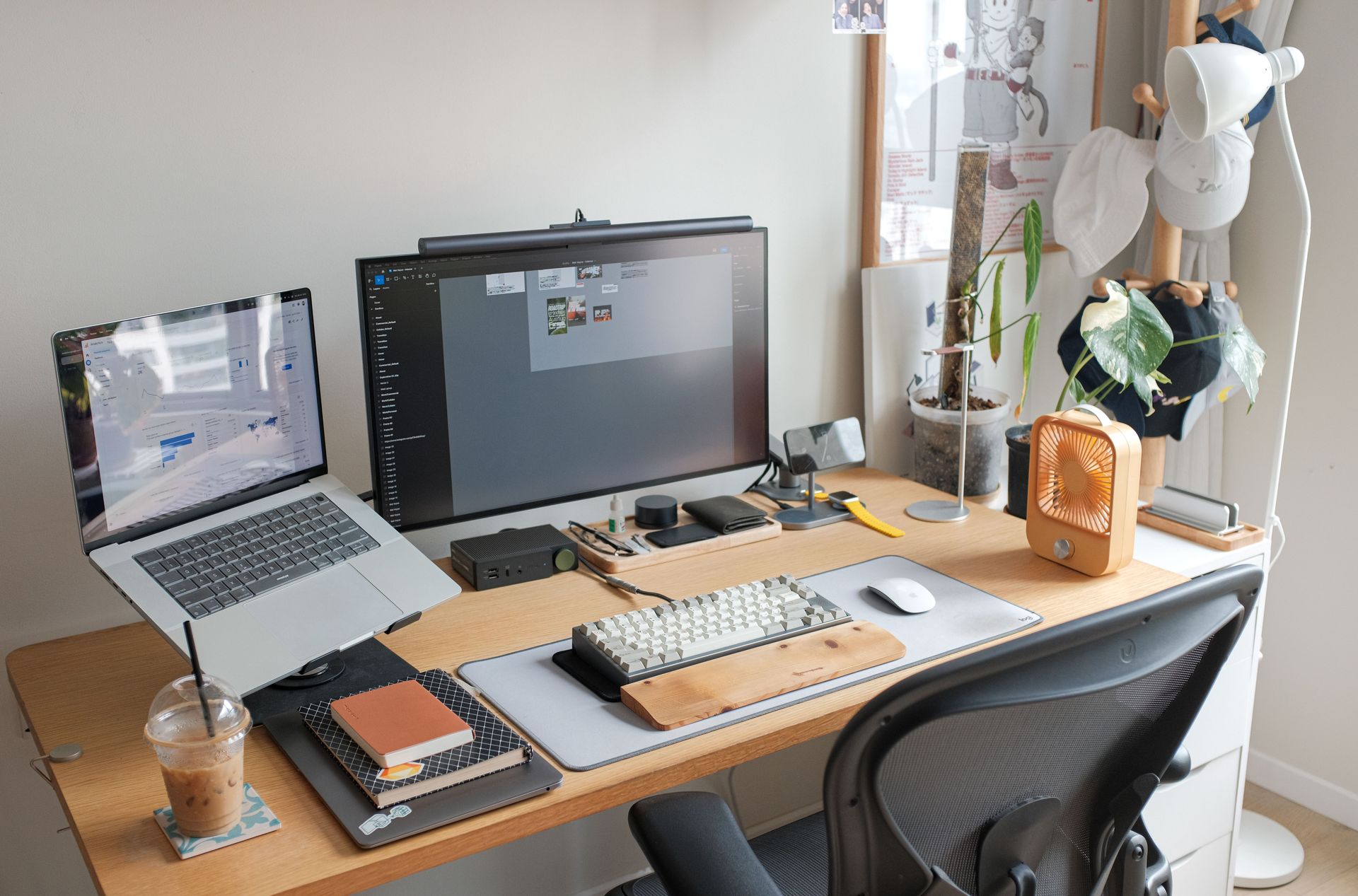
The physical environment of work has a significant effect on cognitive state and work quality that most people underestimate until they experience the difference between working at a proper desk and working from a sofa. Dedicated workspace — a physical location that is used only for work and not for leisure or domestic activities — creates the spatial conditioning that helps the brain enter work mode upon arrival and exit it upon departure.
The principle is behavioral conditioning: environments become associated with the activities repeatedly performed in them. The bedroom is associated with sleep; lying in a bedroom cues sleepiness. The sofa is associated with relaxation; working from a sofa cues the mental state associated with leisure, which competes with the focus required for work. A desk used only for work gradually becomes associated with work mode, reducing the cognitive effort required to achieve focus and increasing the reliability of the transition.
The physical workspace does not need to be a dedicated room — for most people working from home, it is not. A corner of a room, consistently arranged for work, used only for work, and left or rearranged when work is done, can perform the same conditioning function as a separate room. The key variables are consistency of location, exclusivity of use for work activities, and a physical arrangement that supports the type of work being done — monitor height, chair support, lighting — well enough that the workspace is not itself a source of discomfort and distraction.
Eliminating visual distractions from the workspace — clearing domestic clutter from the peripheral field of vision during work hours, having a background behind the desk that does not contain laundry or unwashed dishes — reduces the cognitive intrusion of domestic tasks into the work headspace. The to-do items that are visible from the desk are harder to ignore than those that are not, and the home environment is full of potential to-do items.
Ahmed / Pexels
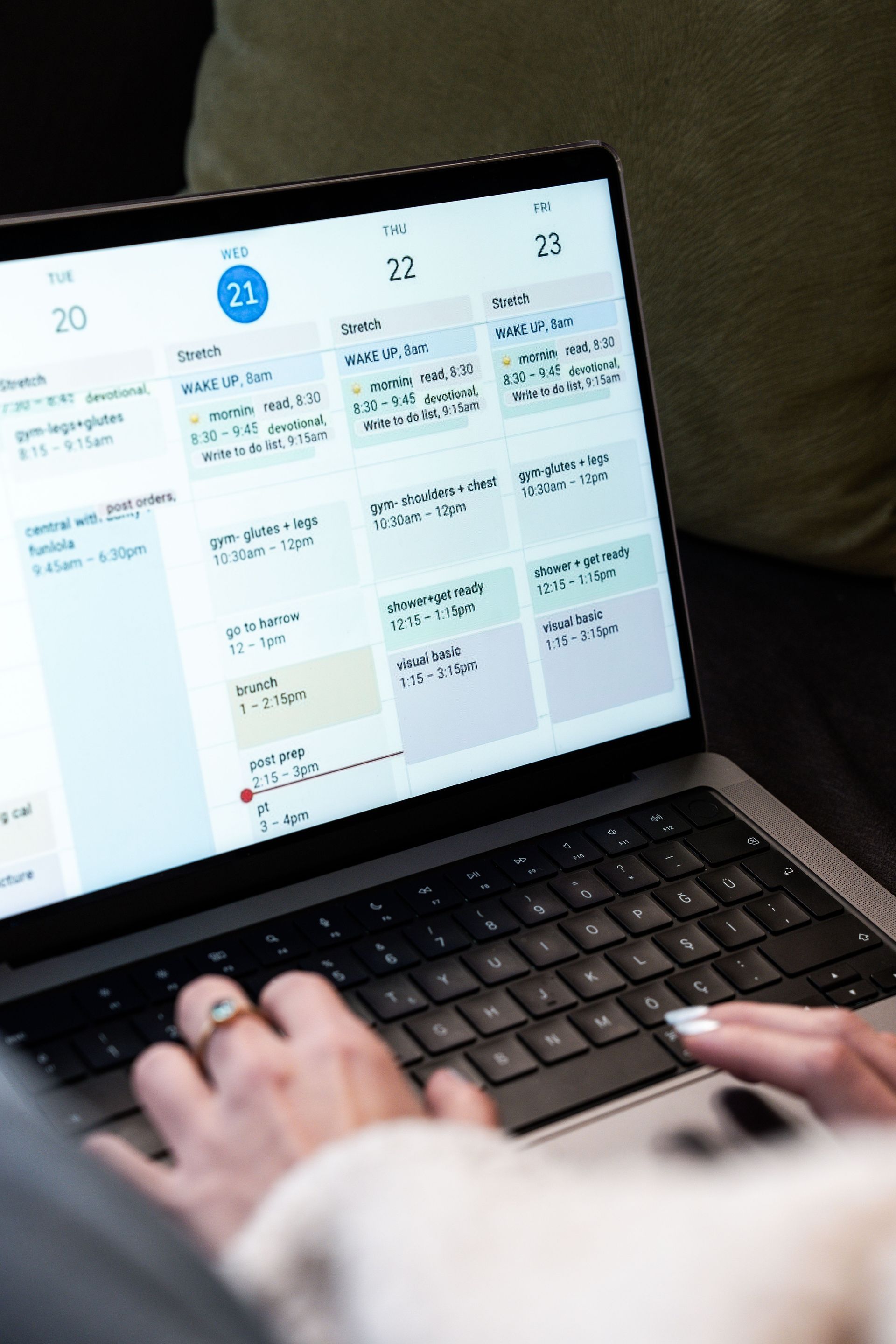
Time-blocking — the practice of assigning specific blocks of time to specific tasks or categories of work, rather than working from an undifferentiated to-do list — is one of the most evidence-supported productivity techniques available and one whose benefits are particularly pronounced in the home environment, where the absence of external schedule structure makes unstructured time especially prone to fragmentation and displacement by low-priority activities.
The distinction between a to-do list and a time-blocked schedule is significant. A to-do list specifies what needs to be done without specifying when, leaving the timing decision to be made continuously throughout the day. A time-blocked schedule makes those decisions once, in advance, and then executes them. The reduction in decision load — the cognitive effort of deciding what to work on next, made dozens of times in an unstructured day — is itself a productivity gain, and the pre-commitment to specific tasks at specific times reduces the likelihood that easy or enjoyable tasks will displace difficult or important ones.
The practical implementation requires about 15 minutes at the start of each week or the end of each day. Review the tasks that need to be done, estimate how long each will take, and assign them to specific time slots in the calendar. Protect those slots from meeting requests and other interruptions where possible. Review the blocks at the start of each day and adjust for the realities of what has shifted.
Deep work — cognitively demanding tasks that require sustained focus — should be scheduled during the hours of highest cognitive energy, which for most people is the mid-morning period before lunch. Administrative tasks, email, and meetings should be scheduled in the lower-energy periods, typically the early afternoon. The mismatch between task difficulty and cognitive energy level — scheduling deep work in the post-lunch energy trough — is one of the most common and most correctable sources of poor-quality work in remote workers.
The Pomodoro Technique — working in focused intervals of 25 minutes separated by short breaks of five minutes, with a longer break after four intervals — is the most widely used time management technique among knowledge workers and one whose effectiveness is supported by the psychology of focused attention and sustained effort. Its specific contribution to home working is the creation of artificial constraint in an environment that lacks the natural constraints of office hours and colleague oversight.
The technique works because it makes the unit of work small enough to start without resistance. The psychological barrier to beginning a difficult task is significantly lower when the commitment is to 25 minutes of focused effort rather than to completing the whole task. It also provides a reliable rhythm of rest that prevents the unrecognized fatigue that accumulates when attention is sustained past its effective limit without recovery.
The five-minute break between intervals is not optional and is not a reward — it is the mechanism by which the technique produces sustainable focus over a full day. Using the break for activities that genuinely rest the cognitive system — walking around, looking out a window, a brief physical movement — rather than for activities that maintain cognitive activation — checking social media, reading news — produces measurably better focus in the subsequent interval.
The technique requires a timer — either a physical timer or one of the many Pomodoro apps available — and a commitment to stopping work at the end of each interval and resting at the end of each break. Neither is natural in a home environment, where the absence of external clock discipline makes both easy to override.

Cup of Couple / Pexels
The counterpart to a consistent start time is a consistent stop time, and for many remote workers it is the harder discipline to maintain. The office imposed a stop time through the social convention of leaving — when colleagues left and the building emptied, remaining felt anomalous rather than productive. At home, work can expand indefinitely into the evening, and without a hard stop, it frequently does, producing a progressive blurring of work and personal life that is one of the most commonly cited sources of burnout in remote workers.
The research on overwork is consistent: beyond approximately 50 hours per week, additional work hours produce diminishing returns in output quality and increasing costs in health, relationships, and long-term productivity. The remote worker who regularly works 60 or 70 hours per week is not producing 20 to 40% more work than one who works 50 — they are producing comparable work with significantly higher costs to their physical and psychological health.
Setting a hard stop time means treating the end of the workday as non-negotiable in the same way that a school pickup time or a booked appointment is non-negotiable. It means closing the laptop at 6pm and not reopening it until the next morning, regardless of whether the to-do list is cleared — which it never is. It means telling colleagues and clients what the working hours are and not responding to communications outside them, which sets an expectation that makes the boundary sustainable rather than requiring daily renegotiation.
The act of shutting down — closing applications, writing a short note about where things stand and what the first task is tomorrow — is a psychological closure ritual that marks the end of the work mode as clearly as the morning routine marks its beginning, and it makes the transition into personal time cleaner and more complete.

Pavel Danilyuk / Pexels
Breaks during the workday are not productivity losses. They are productivity investments — periods of cognitive recovery that maintain the quality of focus over a full day rather than the declining quality of unbroken sustained effort. The remote worker who works without breaks for eight hours produces less, and produces lower-quality work, than one who takes regular, genuine breaks at intervals calibrated to their cognitive endurance.
The distinction between genuine breaks and pseudo-breaks is important. Scrolling social media while ostensibly taking a break does not provide the cognitive recovery that the break is intended to produce, because it continues to engage the default mode network and the attention system in low-grade activation that prevents restoration. Genuine breaks involve activities that allow the attention system to rest — walking, a brief social interaction, looking at a natural view, a non-goal-directed physical activity. The research on attention restoration consistently shows that natural environments and low-demand activities produce superior cognitive recovery compared to stimulating or screen-based activities.
Lunch breaks specifically deserve attention. The temptation to eat at the desk, treating lunch as a production activity rather than a break, produces a day without a genuine extended recovery period. A lunch break taken away from the desk — even 30 minutes of sitting outside, walking around the block, or eating with another person — produces measurable improvements in afternoon focus quality compared to a desk lunch of the same duration.
The schedule-based approach to breaks — scheduled at specific times rather than taken when focus fails — is more effective than reactive breaks because it prevents the accumulation of fatigue that makes recovery harder and work quality lower before the break is finally taken.

Diva Plavalaguna / Pexels
Getting dressed in work-appropriate clothing — not necessarily formal, but deliberately different from sleepwear or the clothes worn for domestic activities — is the behavioral intervention most consistently described by experienced remote workers as having a larger effect on focus and productivity than its apparent triviality would suggest. The mechanism is embodied cognition: the clothes worn influence the psychological state and cognitive mode of the wearer through the associations those clothes carry.
Research on what Adam and Galinsky called "enclothed cognition" — the effect of clothing on the wearer's psychological state — demonstrates that wearing clothing associated with specific roles and activities produces the cognitive and motivational states associated with those roles. Medical students who wore a coat they were told belonged to a doctor showed better sustained attention than those who wore a coat they were told belonged to a painter. The association embedded in the clothing influenced the wearer's performance.
The practical application for remote working is straightforward: wearing clothing associated with work and professional performance — even casual workwear — creates the cognitive associations that support work mode in the same way that a dedicated workspace creates spatial associations. Wearing pajamas to a 9am video call is not merely aesthetically casual. It is a behavioral cue that the work mode has not been entered.
The boundary does not need to be dramatic. The distinction between the clothes worn during working hours and those worn during personal time does not require a shirt and tie where jeans and a clean top suffice. What matters is that a consistent change occurs that marks the transition, and that the work clothes are associated consistently and exclusively with the work context.

RDNE Stock project / Pexels
Task batching — grouping similar tasks and doing them in concentrated blocks rather than distributing them throughout the day — reduces the cognitive switching cost that is one of the primary sources of inefficiency in fragmented workdays. Every time attention shifts from one type of task to another, there is a transition cost — a period of reduced performance while the cognitive context of the new task is loaded and the previous context is cleared. Batching minimizes the number of these transitions.
The most commonly batched task category is email and communications. Checking and responding to email once or twice at designated times — rather than continuously throughout the day — reduces the total number of attention switches between email and deep work, and it reduces the cognitive background load of unread messages visible in a notification system. Studies on email and productivity have consistently found that batched email processing produces better focus during non-email periods and roughly equal total communication quality compared to continuous email monitoring.
Administrative tasks — scheduling, invoicing, filing, expense management — are naturally batchable and benefit from the efficiency of doing similar cognitive work in concentrated blocks. The admin hour or admin afternoon, scheduled at a consistent time and containing all the week's small administrative tasks, is more efficient than distributing those tasks across the week and losing focus on deeper work each time one arises.
Creative and analytical work benefits from the reverse logic: concentrating these tasks in long, uninterrupted blocks rather than fragmenting them across the day. Deep creative and analytical work requires time to load the cognitive context fully, and that context is lost with every interruption. A two-hour block of uninterrupted analysis produces more and better work than four 30-minute blocks interspersed with other tasks.

Torsten Dettlaff / Pexels
Notifications — the ambient stream of pings, banners, badge counts, and audible alerts from email, messaging apps, social media, and news feeds — are the primary mechanism by which the home environment fragments attention, and their management is the most immediate leverage point available for improving focus quality. The average knowledge worker is interrupted by notifications approximately 77 times per day, and each interruption produces a recovery time of 23 minutes before full focus is restored — a calculation that suggests notifications alone may be consuming most of the productive hours of a standard workday.
The default state of most smartphones and computers is maximum notification visibility — every app configured to notify at every event, every message delivered immediately with maximum intrusion. This configuration was designed by systems optimizing for engagement, not for the user's productivity, and the default serves the interests of the apps rather than the person using them.
The most effective notification strategy is notification-off as the default, with selective re-enabling for categories that genuinely require immediate response. Phone calls and direct messages from a small, defined group of people may justify an audible notification. Email, Slack $WORK messages outside direct mentions, social media notifications, news alerts, and app badges do not. The work of identifying which notifications to keep and which to disable is an hour's investment that pays dividends every day.
The most aggressive and most effective approach is the phone in another room during focused work periods. Physical distance removes the temptation to check even when the phone is silent, eliminating the residual awareness of the device's presence that draws attention even without audible notification.

cottonbro studio / Pexels
One of the most significant structural losses of remote work — and one of the least frequently discussed in productivity guides that focus primarily on focus and output — is the reduction of incidental social contact that the office provided automatically. The brief conversations before a meeting, the shared lunch, the colleague noticed across the room who prompts a question that turns into a productive exchange — these micro-interactions provided social connection, cognitive stimulation, and a form of ambient accountability whose absence from home working is felt as loneliness and disengagement rather than identified as a specific structural deficit.
Building in deliberate social contact — scheduling regular video calls with colleagues that are not purely functional, maintaining relationships with professional peers through regular check-ins, working from a café or a coworking space once or twice a week — addresses this deficit directly. The social contact does not need to be extensive to be effective. Research on workplace wellbeing consistently finds that the quality of social connections matters more than their frequency, and that brief, genuine interactions produce wellbeing benefits comparable to those of longer but more superficial ones.
Virtual coworking — working in a video call with a colleague or a group of colleagues who are also working independently, in a format that provides ambient social presence without requiring active communication — is a specific practice that addresses the isolation of home working while preserving the focus of solo work. Body doubling, the practice of working alongside another person (physically or virtually) whose presence creates gentle accountability, is particularly effective for tasks that are prone to procrastination.
The weekly rhythm of social contact — what days involve more contact and what days are set aside for solitary deep work — is as worth designing as the daily schedule, and the design of that rhythm is one of the primary differentiators between remote workers who thrive and those who progressively disengage.
cottonbro studio / Pexels
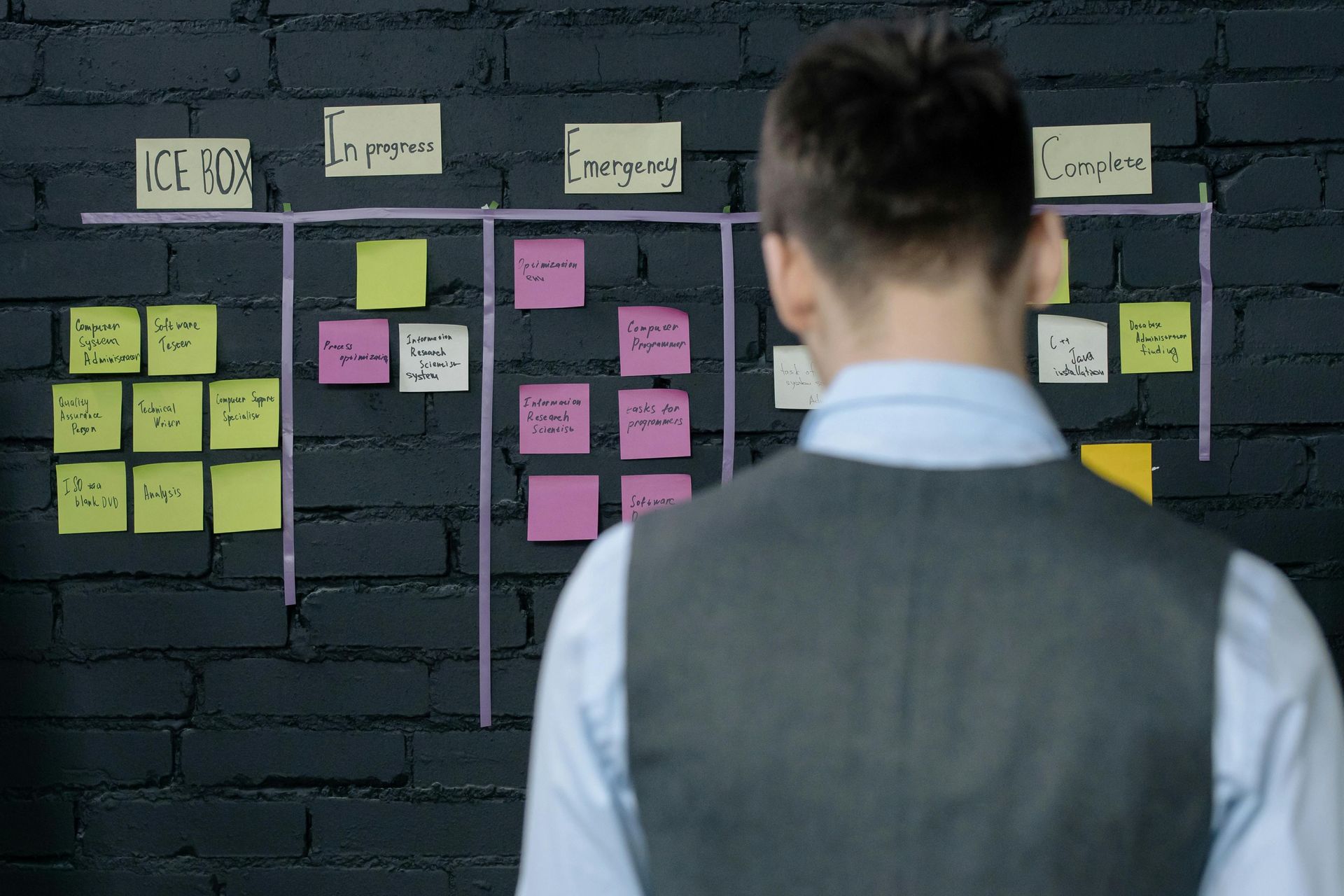
The home working environment lacks the external memory support that offices provide — the visible whiteboard with team priorities, the overheard conversation that reminds you of a deadline, the colleague who stops by to check on a project. All of the ambient information management that offices perform automatically needs to be replaced by a deliberate personal system when working from home, and the quality and consistency of that system has a direct effect on how much cognitive load is consumed by tracking commitments and how much is available for actual work.
A task management system — whether a digital tool like Todoist, Notion, or Asana, or an analog system like the Bullet Journal or a simple weekly paper planner — externalizes the tracking of tasks and commitments in a way that reduces the cognitive load of remembering them. The act of capturing a task in a trusted system — one that will reliably surface it at the appropriate time — allows the mind to release it, reducing the background processing load that unmemorable tasks create.
The system's design matters less than its consistent use. A simple to-do list maintained in a single trusted location and reviewed daily is more effective than a sophisticated system used inconsistently. The review practice — looking at the full list of tasks each morning, updating priorities, and identifying the two or three most important things for the day — is as important as the initial capture, and its absence is one of the most common reasons task systems fail to deliver their promised benefits.
Distinguishing between tasks that must be done today, tasks that should be done this week, and tasks that need to be tracked for the future — a simple three-tier priority system — prevents the experience of being overwhelmed by a flat, undifferentiated list of everything that needs doing and makes the daily task selection process faster and more reliable.
Maria Kray / Pexels
Remote working in a shared household requires a specific and often underemphasized form of structural work: the negotiation of boundaries with the other people in the space. A partner who interrupts frequently because they do not know whether the remote worker is in a focused work session or available for conversation, children who do not have a reliable signal for "do not disturb," domestic tasks that intrude into work hours because the line between them is unclear — these are household management problems masquerading as productivity problems, and they require household management solutions rather than personal productivity interventions.
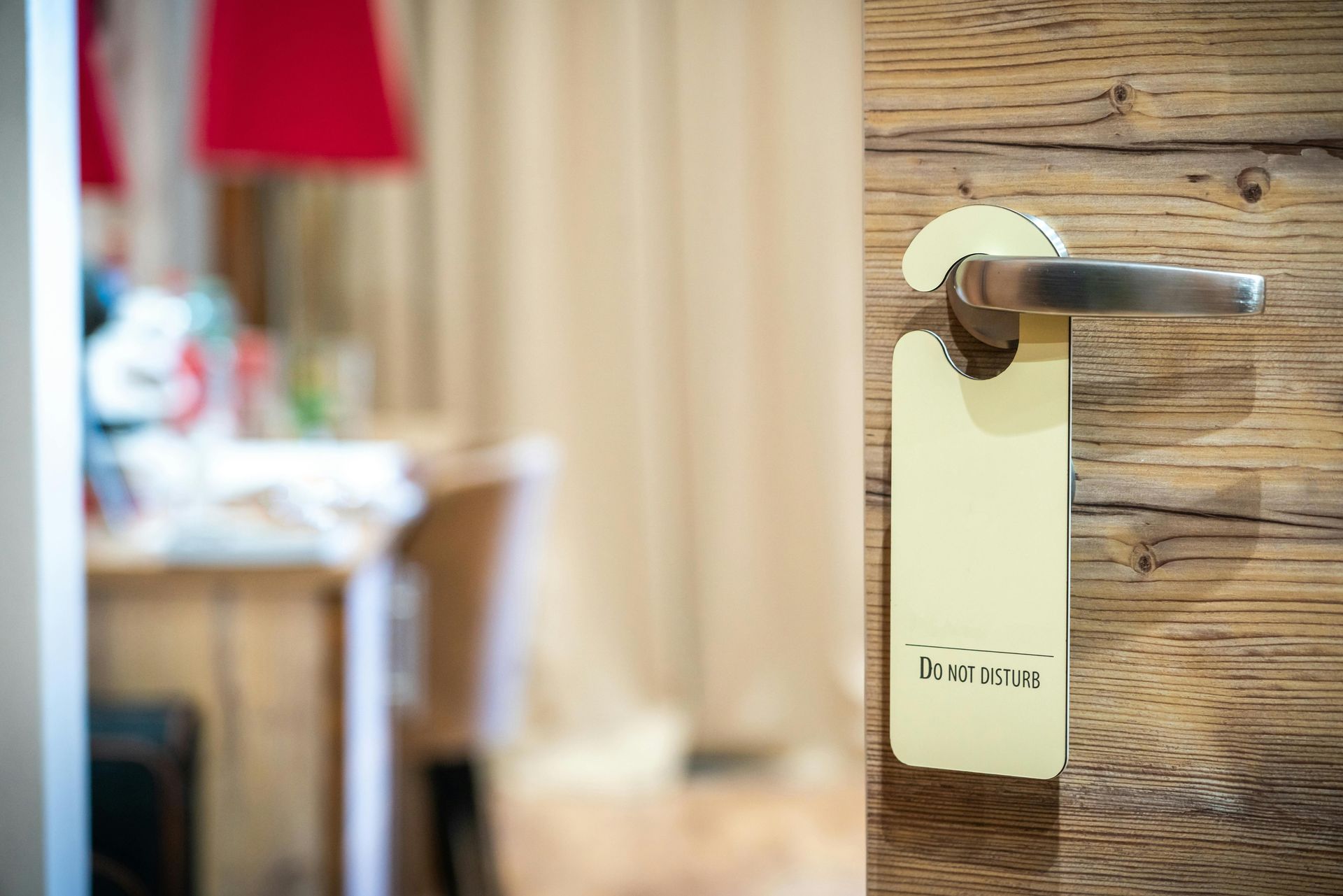
The establishment of clear signals — a closed door, a "do not disturb" sign, a specific visual indicator like a red flag that means "I am in focused work" — gives other household members the information they need to calibrate their interruptions without requiring constant communication about availability. The signal works best when it is used sparingly and reliably: if the "do not disturb" signal is deployed continuously, it loses meaning; if it is used only during genuine focused work periods and removed when the work period ends, it provides accurate information.
Clear communication about working hours — specifically about which hours involve video calls and therefore require quiet, which involve focused deep work and therefore require non-interruption, and which are flexible — allows household members to schedule their own activities around the remote worker's genuine requirements rather than around a blanket unavailability that is more restrictive than necessary.
Children specifically benefit from predictable schedules — knowing when a parent is genuinely available and when they are not, rather than navigating a fluctuating availability that requires constant testing.

Burst / Pexels
Deep work — the cognitively demanding, high-value work that requires extended, uninterrupted focus and that is typically the most difficult to produce — is the category of work most vulnerable to the fragmenting environment of the home. It requires long, unbroken blocks of time, the absence of interruption, and a cognitive state that takes time to enter and is lost quickly when disturbed. The home environment's tendency toward interruption, notification, and the competing demands of domestic life makes deep work time the most important time to actively protect.
Cal Newport's distinction between deep work — focused, cognitively demanding work that creates real value — and shallow work — administrative, logistical, and communicative tasks that are necessary but easily replicated — provides a useful framework for allocating protected time. Most remote workers spend the majority of their most cognitively alert hours on shallow work (email, meetings, administrative tasks) and attempt deep work in the remaining fragmented time, which produces results proportional to the quality of the time available.
The reversal — scheduling deep work in the highest-quality time blocks, typically mid-morning, and batching shallow work into lower-quality time — requires active defense of those blocks from meeting requests, communication expectations, and the default tendency to fill available time with responsive rather than generative work. Blocking deep work time in the calendar as an appointment that cannot be moved, communicating the unavailability to colleagues, and closing communication channels during the block are the practical implementations.
A realistic target for deep work is three to four hours per day for most knowledge workers — a figure that seems modest but is substantially above the average that research on knowledge worker time use suggests is actually achieved in most workplaces, remote or otherwise.
cottonbro studio / Pexels
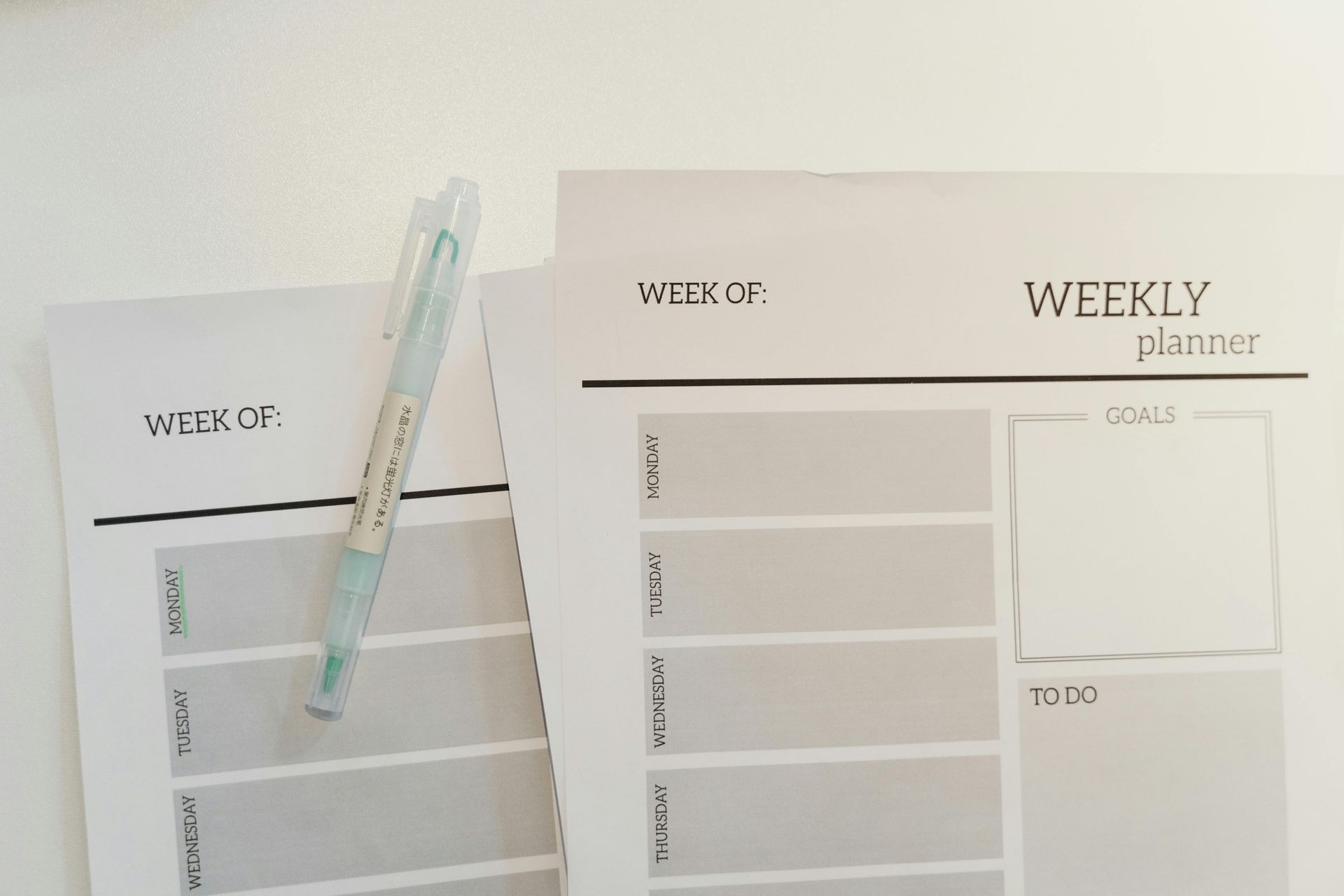
The weekly review — a scheduled period of reflection and planning that bookends the work week — is one of the highest-leverage habits available to remote workers and one of the least commonly practiced. It serves three functions simultaneously: it provides the regular overview of commitments and progress that prevents tasks from falling through the cracks, it creates the planning horizon that makes time-blocking and task prioritization possible, and it provides the structured reflection on what is and is not working in the current approach that enables continuous improvement.
The review has two components: a backward-looking review of the week that has just ended and a forward-looking planning session for the week ahead. The backward review covers what was accomplished, what was not, what caused the gaps, and what should be done differently. The forward planning covers what commitments the coming week contains, what the priority tasks are, and what structural changes to the schedule might improve the week's outcomes.
A thorough weekly review takes 60 to 90 minutes and is best conducted at a consistent time — Friday afternoon before closing down, or Sunday evening — when the transition between weeks is natural and the information about the past week is fresh. The consistent timing creates the same kind of rhythmic anchor as a consistent daily start time, and its regular occurrence makes the habit self-reinforcing: each week's planning makes the following week more productive, which reinforces the value of the review.
The weekly review is also the moment at which the patterns in the home working schedule become visible — which time blocks consistently underperform, which types of work consistently get displaced, which structural arrangements are working and which are not — and at which adjustments can be made deliberately rather than reactively.
RDNE Stock project / Pexels
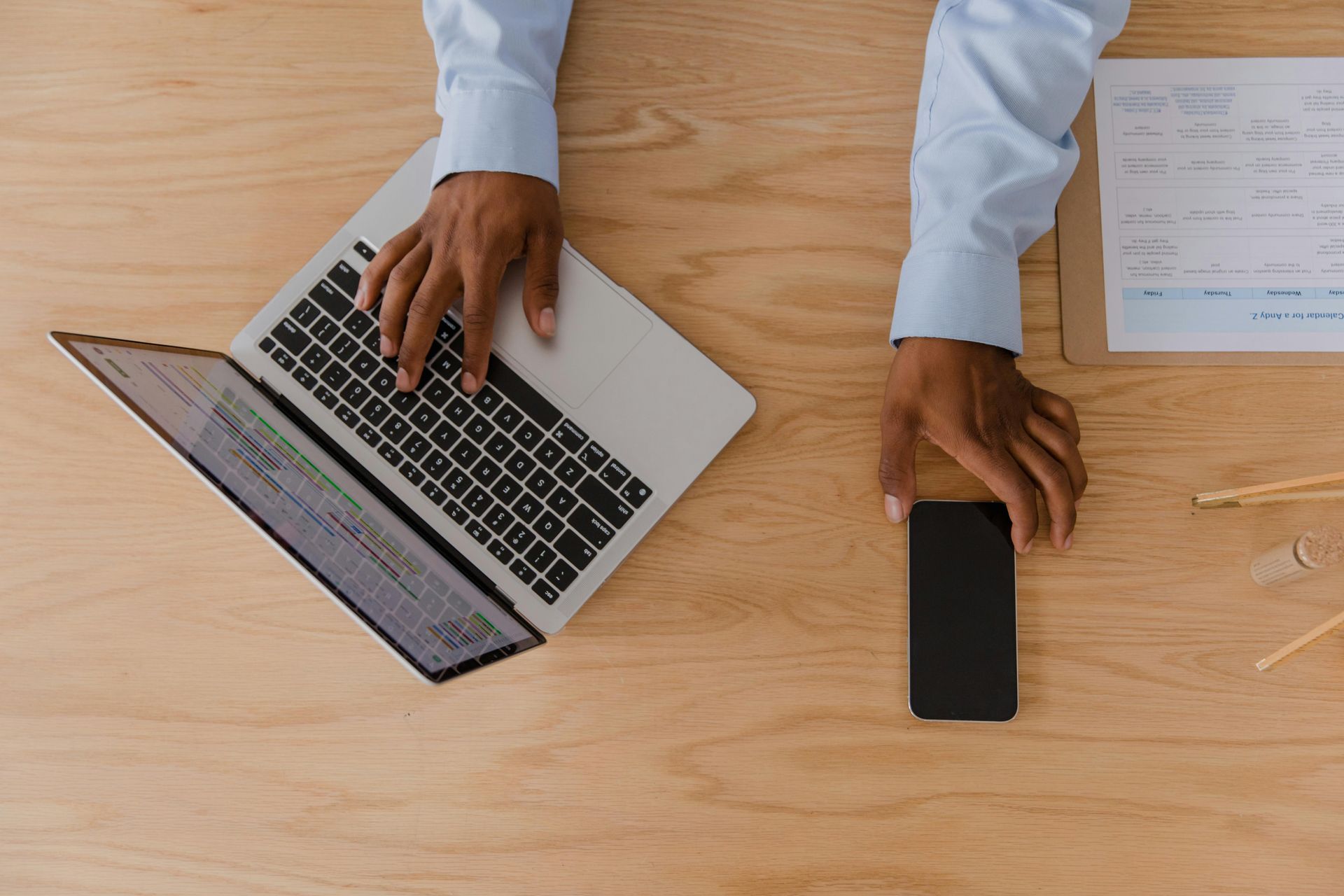
The convergence of work and personal communication on a single device — the smartphone that carries both work email and personal messaging, both Slack $WORK and WhatsApp — is one of the primary mechanisms by which work intrudes into personal time and personal life intrudes into work time. The absence of physical separation between the two contexts makes the boundary between them perpetually permeable, and the permeability accumulates over time into a state in which neither work nor personal life is fully engaged because both are always partially active.
Maintaining work email and work communication tools on a laptop or desktop that is shut down at the end of the work day, rather than on a smartphone that is carried everywhere, creates the physical separation that the office previously provided. When the laptop is closed and put away at 6pm, the work communication channels are closed with it. The smartphone — used for personal communication, maps, music, and other non-work functions — does not carry the ambient load of unread work messages that pull attention back to work during personal time.
For those whose work requires a degree of smartphone availability outside hours, a work phone — or a work profile on an Android device — that can be disabled outside working hours provides the same separation without requiring a second device. The principle is the same: a clear physical or digital boundary that can be opened at the start of work and closed at the end, rather than a blurred interface that is always on.
The research on psychological detachment from work — the ability to mentally disengage from work during non-work time — consistently shows that it is one of the strongest predictors of recovery from work stress and long-term sustainable performance. The structural separation of work and personal devices is one of the most reliable ways to enable psychological detachment.
Jakub Zerdzicki / Pexels
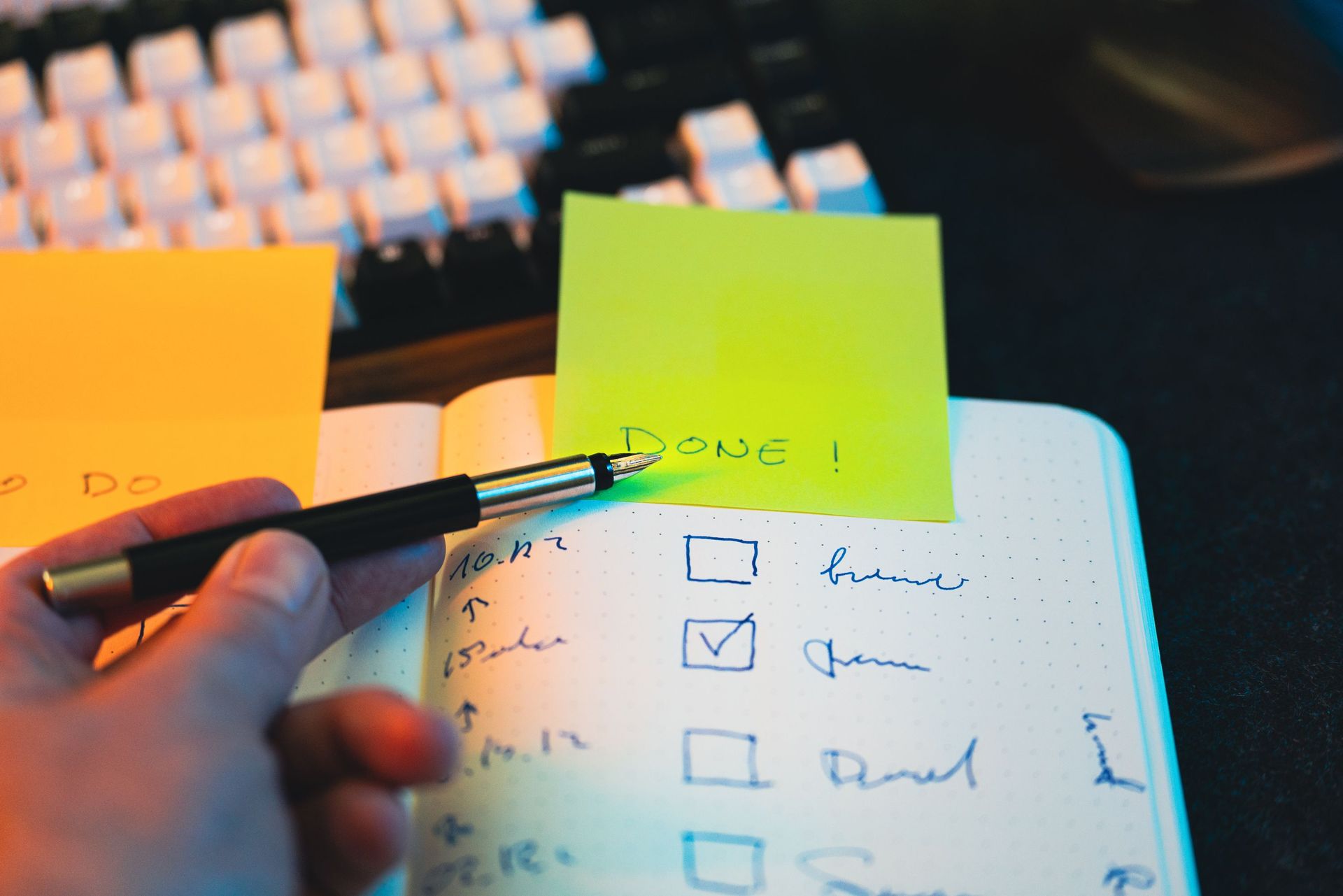
Transition rituals — consistent, brief behavioral sequences that mark the movement from one mode or context to another — are the structural mechanism by which the home worker creates the psychological boundaries that the physical architecture of an office created automatically. The commute was a transition ritual. The walk from the car park to the office was a transition ritual. Collecting coffee from the communal machine before sitting at the desk was a transition ritual. These were not productivity techniques but psychological preparation activities, and their absence from home working is a genuine structural loss.
The start-of-day transition ritual — the morning routine discussed earlier — is the most important, but the end-of-day transition is equally necessary and more commonly neglected. A consistent shutdown sequence — closing all work applications, writing a brief note about where things stand, physically closing the laptop, changing into non-work clothing — marks the end of the work mode as clearly as the morning routine marks its beginning, and it prevents the bleed of work consciousness into personal evening time.
Mid-day transitions — the lunch break ritual that marks the shift from morning work to genuine midday rest — and the micro-transitions between focused work sessions and breaks also benefit from consistency. The ritual does not need to be elaborate: standing up and stretching before a break, walking to a specific location in the home for lunch rather than eating at the desk, making a specific drink that signals the beginning of an afternoon work session — these are small but reliable behavioral cues that support the cognitive transitions they mark.
The most effective transition rituals are physical — they involve movement or a change of physical context — because physical state changes are more powerful cognitive transition cues than purely behavioral or mental ones.
Atlantic Ambience / Pexels
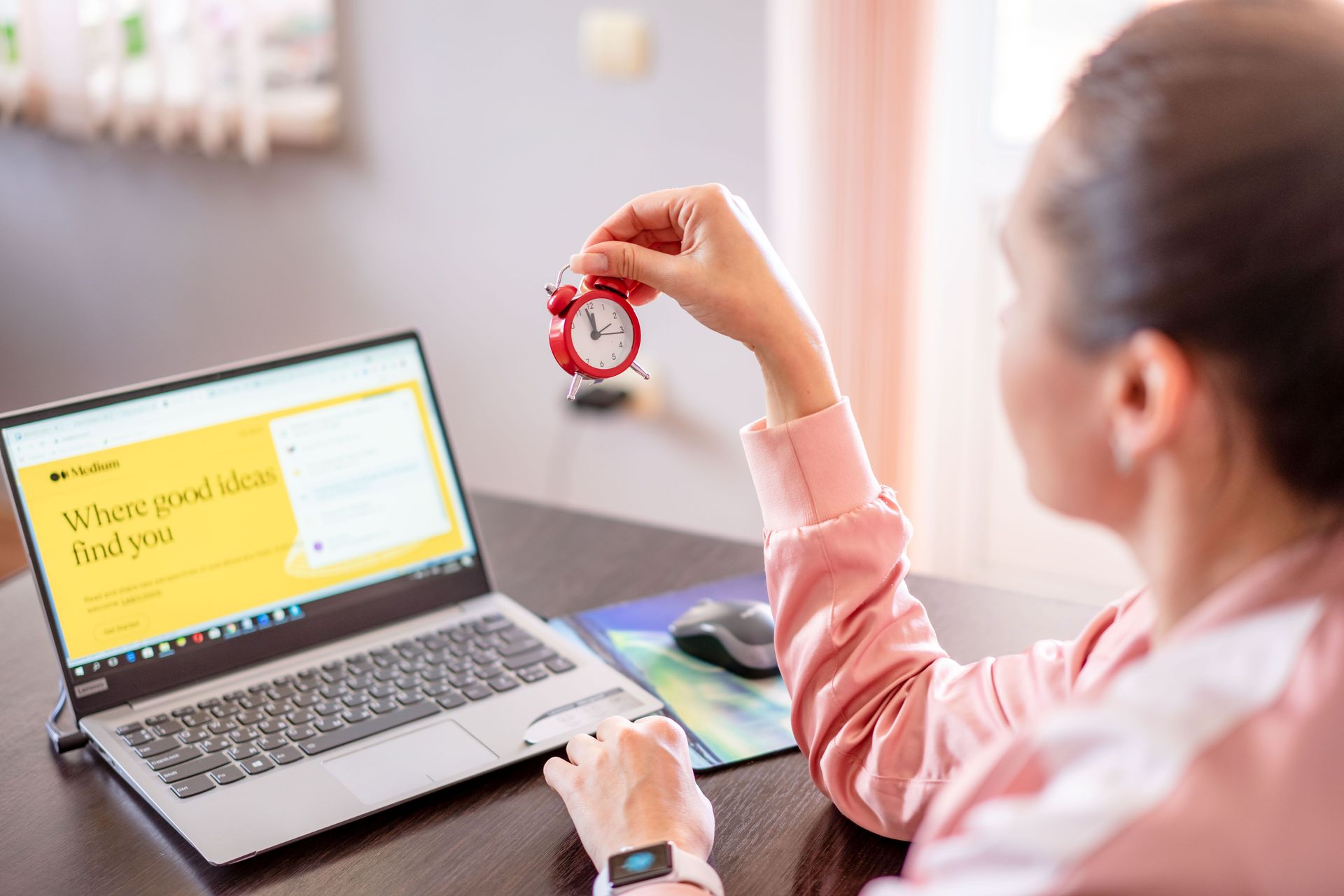
Self-knowledge about personal productivity patterns — knowing when cognitive energy is highest, when focus is most reliable, and when attention deteriorates — is the foundation of an effective home working schedule, and most people have significantly less of this self-knowledge than they believe. The assumption that one's own cognitive patterns conform to the culturally standard model — energetic in the morning, flagging in the afternoon — is frequently wrong, and designing a home working schedule around the standard model when one's actual patterns are different produces chronic underperformance.
Time tracking — logging how time is actually spent throughout the workday, as opposed to how it is planned to be spent — provides the empirical foundation for an evidence-based approach to schedule design. Most people who track their time for a week find that the proportion of actual focused work time is significantly smaller than they believed, that shallow tasks and communication consume more of the day than intended, and that the hours they assumed were most productive are not always the hours in which their best work was actually done.
Tools for time tracking range from dedicated apps (Toggl, Clockify, RescueTime) to simple written logs in a notebook. The investment of attention required for consistent time tracking is itself a form of awareness that tends to improve the quality of time use regardless of what the data reveals — the act of recording what one is doing creates accountability to the record that influences behavior.
A one-week tracking experiment, conducted once and reviewed thoroughly, produces more actionable information about schedule optimization than most productivity books — because it is specific to the individual rather than generic to a category, and because it reveals what is actually happening rather than what is imagined to be happening.

Svetlana Tumina / Pexels
The practice of ending each workday by setting up the next — reviewing what was accomplished, identifying the three most important tasks for tomorrow, and arranging the workspace or the digital environment to make the next morning's start as frictionless as possible — is one of the highest-return five-minute investments available to a remote worker. It eliminates the ambiguity of the morning start, reduces the decision load of the first hour, and provides the psychological closure that allows genuine disconnection from work during the evening.
The specific technique is simple. Before closing down for the day, spend five minutes writing down: what the three most important tasks for tomorrow are, what the first action on the most important task is, and what the schedule for tomorrow looks like in broad terms. Leave this note in a visible, consistent location — a sticky note on the laptop, the first entry in a daily planner, a note in a task management app that opens automatically at startup.
The first action specification is the most important element. Knowing that tomorrow starts with "write introduction for Q3 report" is significantly more useful than knowing that tomorrow involves "Q3 report work," because the specific first action eliminates the decision of how to begin and allows the morning to start immediately in the relevant cognitive context. The friction of deciding how to start a large task is one of the primary causes of morning procrastination, and eliminating it through end-of-day preparation is one of the simplest structural interventions available.
The forward setup also creates a specific psychological benefit: the knowledge that tomorrow is organized reduces the ambient cognitive background noise of unresolved task planning that otherwise occupies mental bandwidth during evening and weekend time, making the non-work period more genuinely restorative.

Yan Krukau / Pexels
The most effective home working structure is not the one that looks best on paper or that works well in the first week — it is the one that holds up across ordinary weeks, difficult weeks, and weeks disrupted by illness, travel, domestic demands, and the full range of real-life variability that a theoretical productivity system does not account for. Building a system that survives contact with reality requires treating it as a living design rather than a fixed solution, revisiting it regularly, and adjusting it in response to evidence rather than aspiration.
The common failure mode is the opposite: building an ambitious, highly structured system in a moment of motivation, experiencing the inevitable days when it cannot be maintained, interpreting those failures as personal inadequacy rather than system design problems, and abandoning the system entirely rather than modifying it. The system was not too demanding because you are undisciplined. It was too demanding because it was designed for ideal conditions rather than average ones.
The adjustment practice is simple: once per month, review what in the current system is working and what is not. What habits are maintained reliably? What is consistently skipped? Which structural choices produce the intended results? Which produce friction, resistance, or resentment that is making them unsustainable? The answers to these questions, reviewed consistently, reveal the difference between systems that fit the actual person and work context and systems that fit an imagined version of them.
Small adjustments made regularly compound into a substantially better system over time. A start time moved 30 minutes later because the original time was consistently missed is not a failure — it is the system self-correcting toward a version that can be maintained. The goal of the adjustment practice is not to optimize toward an external standard of productivity but toward the maximum sustainable output quality in the specific life, work context, and cognitive profile of the person doing the adjusting.
