The gap between what most people think causes weight loss and what the science actually shows is wider than most realize — and that gap is why so many approaches fail

Annushka Ahuja / Pexels
Weight loss is one of the most researched topics in medicine and one of the most consistently misrepresented in popular culture. The gap between what clinical nutrition research actually shows and what most people believe about weight loss — based on decades of diet culture messaging, oversimplified public health advice, and the commercial interests of an industry that benefits from repeat customers — is large enough to explain much of the frustration that most people experience when they attempt to manage their weight. The advice that fails is not failing randomly. It is failing predictably, because it is based on models of how weight loss works that do not accurately reflect what is happening in the body.
This piece is not a diet plan. It does not propose a correct approach to weight management and does not recommend one dietary pattern over another. What it does is identify 20 specific beliefs about weight loss that are either demonstrably incorrect, significantly more complicated than their common framing suggests, or so context-dependent that the generic version of them is misleading. Each entry covers the common belief, what the evidence actually shows, and — where it exists — a more accurate framing of the underlying truth.
Several important caveats apply throughout. Weight management is a genuinely complex area of medicine whose research base is large, growing, and contested in specific ways. Individual variation in response to dietary and behavioral interventions is substantial and not fully explained by current science. Nothing in this piece should substitute for individualized medical advice, and several entries discuss conditions (metabolic disorders, hormonal conditions, medication effects) for which clinical evaluation and management are appropriate. The goal of correcting misinformation is not to make weight management feel easy — it is not, and the research is honest about this — but to make the relevant information accurate enough to be useful.

Deane Bayas / Pexels
"A calorie is a calorie" — the claim that the source of caloric intake is irrelevant to weight management and that only total calories matter — is the most frequently cited principle in weight loss advice and the most misleading when presented without qualification. The thermodynamic principle it references is correct: a calorie is a unit of energy, and the body's energy balance ultimately determines weight. But the physiological response to different macronutrients at the same caloric intake is not identical, and the equality of calories-in versus calories-out as policy advice ignores the complexity of how the body regulates both sides of that equation.
The research on macronutrient composition and weight loss shows consistent differences: protein at the same caloric intake as carbohydrate or fat produces greater satiety per calorie (through the thermic effect of food, which is approximately 20 to 30% for protein versus 5 to 10% for carbohydrate and 0 to 3% for fat), reduces appetite through greater effects on satiety hormones (GLP-1, PYY), and preserves lean mass during caloric restriction more effectively than either carbohydrate or fat. These differences are not enormous but they are consistent and clinically meaningful.
The other problem with "a calorie is a calorie" as a practical framework is that it treats the body's energy expenditure as fixed — as if the calories-out side of the equation is constant regardless of what or how much is eaten. It is not: the body adapts to caloric restriction through multiple mechanisms (reduced BMR, reduced NEAT — non-exercise activity thermogenesis, which is spontaneous physical activity — and hormonal changes) that reduce energy expenditure in ways that partially offset caloric restriction and that the simple calorie model does not account for.

Kaboom Pics / Pexels
The framing of weight loss as a matter of willpower — the idea that people who fail to lose weight or maintain weight loss are failing because of insufficient determination or self-discipline — is both empirically incorrect and specifically harmful, because it locates the cause of a metabolic problem in a character deficiency and thereby redirects effort from addressing the actual mechanisms to self-reproach.
The mechanisms that regulate body weight — leptin, ghrelin, insulin, GLP-1, neuropeptide Y, and the complex neuroendocrine systems that integrate signals from the gut, fat tissue, and brain to regulate appetite and energy expenditure — operate largely outside conscious control. These systems are not passive: they actively defend a set point (or settling point) around which body weight tends to stabilize, and the defense mechanisms include the adaptive metabolic changes described in the previous entry. When caloric restriction reduces weight, the system responds by increasing hunger, reducing energy expenditure, and producing hormonal changes that drive compensatory eating.
Traci Mann's research at the University of Minnesota, summarized in "Secrets from the Eating Lab," documents the specific neural and hormonal mechanisms through which the body resists weight loss after initial loss — mechanisms that operate independently of the person's intentions, beliefs, or determination. The person who regains weight after a successful period of dieting is not, in most cases, failing to try hard enough. They are experiencing the operation of biological defense mechanisms whose strength and persistence most willpower-focused weight loss frameworks entirely ignore.

Kuiyibo Campos / Pexels
The role of exercise in weight management is frequently overstated in popular health messaging, because exercise is genuinely important for health but is specifically not the most important factor for weight loss in most people. The mathematics are clear: a 30-minute moderate-intensity run burns approximately 300 calories, which is approximately equivalent to one glass of orange juice or two slices of bread. At this ratio, exercise alone — without dietary changes — produces relatively modest weight loss for most people.
The research on exercise as a weight loss intervention, reviewed in multiple meta-analyses, consistently finds that exercise alone (without dietary changes) produces statistically significant but clinically modest weight loss — typically 1 to 3 kilograms over several months. The primary reason is compensation: both conscious (people eat more after exercising, believing they have "earned" it) and unconscious (the hormonal changes from exercise increase appetite, and the NEAT — spontaneous physical movement — often decreases elsewhere in the day to compensate for the structured exercise).
The important qualification is that exercise is enormously important for weight maintenance (preventing regain after loss), for metabolic health, and for body composition (the ratio of lean mass to fat). A person who exercises regularly and maintains a stable weight is in substantially better metabolic health than one who does not exercise at the same weight. But for the specific question of weight loss, dietary modification has a substantially larger effect size than exercise, and presenting exercise as the primary lever for weight loss produces a discouraging experience for the many people who exercise consistently and do not see the weight change they expected.

Ramon Rangel / Pexels
The "fat makes you fat" belief — the assumption that dietary fat is the primary dietary driver of body fat accumulation and that reducing fat intake is therefore the most direct route to reducing body fat — was the dominant paradigm of American nutrition policy from roughly the 1970s through the 1990s and is still widely held despite decades of contradictory evidence.
The specific error in the fat-makes-you-fat reasoning is the conflation of dietary fat (a macronutrient) with body fat (a tissue). The body stores excess energy as fat regardless of whether the excess calories come from dietary fat, carbohydrate, or protein. Dietary fat, gram for gram, contains more than twice the calories of carbohydrate or protein (9 kcal/g versus 4 kcal/g), so reducing fat intake does reduce caloric density. But the low-fat dietary pattern that dominated nutrition advice for three decades was not effective at reducing obesity rates — it was implemented by replacing fat with refined carbohydrates, and the metabolic consequences of high refined carbohydrate intake (elevated insulin, greater glycemic oscillation, reduced satiety) partially or fully offset the benefit of reduced fat intake.
The research on dietary fat quality is consistent: saturated and trans fats have adverse effects on cardiovascular risk markers; unsaturated fats (monounsaturated from olive oil, polyunsaturated from fish, nuts, and seeds) have neutral to beneficial effects; and dietary fat per se, in the context of a diet not excessively high in total calories, does not drive weight gain in the way the "fat makes you fat" model predicts.

Dave Garcia / Pexels
The claim that breakfast is "the most important meal of the day" — that eating breakfast is necessary for weight management, that skipping it slows metabolism, and that people who eat breakfast weigh less — is one of the most frequently repeated nutrition recommendations and one of the most clearly dependent on industry influence in its origins. The specific phrase "most important meal of the day" was coined by a marketing campaign for Grape Nuts cereal in the early 20th century.
The research on breakfast and weight loss does not support the causal claim. Observational studies consistently find that people who eat breakfast weigh less on average — but this is a correlation that does not establish that breakfast causes lower weight. The more likely explanation is that people who maintain stable, healthy dietary patterns tend to eat breakfast as part of those patterns, and that the healthy patterns (not the breakfast specifically) drive the lower weight.
Randomized controlled trials of breakfast versus no breakfast for weight loss find no significant difference. The CALEX trial (Caxton trial) and multiple subsequent RCTs have found that people assigned to eat breakfast do not lose more weight than those assigned to skip it. Time-restricted eating research — which systematically delays breakfast as part of a condensed eating window — finds that this approach can be effective for weight management, directly contradicting the requirement for early breakfast.

Katya Wolf / Pexels
Attributing weight gain or difficulty losing weight to a "slow metabolism" is one of the most common explanations people offer for their weight and one of the least accurate as a general explanation. True hypothyroidism and other medical conditions that reduce metabolic rate do cause weight gain, but they affect a small minority of people with weight management difficulties. The variation in resting metabolic rate (RMR) among healthy adults of the same body composition is actually relatively small — approximately 200 to 300 calories per day between the high and low ends — and does not explain the variation in body weight that most people attribute to metabolic differences.
The metabolic adaptation that does matter — and that is frequently confused with a constitutionally slow metabolism — is the adaptive reduction in metabolic rate in response to caloric restriction, described in the first entry. This is not a pre-existing condition but a response to dieting, and it is proportional to the severity and duration of caloric restriction. The Minnesota Starvation Study (1945), in which 36 healthy young men were semi-starved to 25% below their maintenance intake for six months, found that RMR fell by approximately 40% over the course of the restriction — a dramatic adaptive reduction that partially offset the caloric deficit and slowed the rate of weight loss.
The specific implication: the experience of weight loss "stalling" after an initial period of success is largely explained by this adaptive metabolic reduction rather than by individual constitutional differences in metabolic rate. It is a predictable physiological response, not a sign that the approach is uniquely unsuited to a particular individual's "broken" metabolism.

Mikhail Nilov / Pexels
The category of foods claimed to "boost metabolism" or "burn fat" — green tea, cayenne pepper, grapefruit, apple cider vinegar, and numerous others — is a perennial fixture of popular weight loss content and a consistently unreliable one. Several of these foods do have documented thermogenic or metabolic effects, but the magnitude of these effects is small enough to be clinically trivial for most people.
Green tea catechins and caffeine have been shown in controlled studies to increase thermogenesis by approximately 4 to 5% — which translates to approximately 80 to 100 additional calories burned per day at typical consumption levels, a real but modest effect. Capsaicin (the active compound in cayenne pepper) similarly increases metabolic rate by approximately 4 to 5% acutely, with evidence of tolerance development with regular use. Grapefruit's supposed fat-burning properties have no credible mechanistic basis or clinical evidence.
The broader point is that no food meaningfully "burns fat" in the sense that popular content implies. The thermogenic effects of specific foods are small, tolerance usually develops with regular use, and the foods are not a meaningful substitute for the dietary patterns and behaviors that have substantial evidence for weight management.

Mali Maeder / Pexels
The insulin-carbohydrate hypothesis of obesity — the claim that refined carbohydrates specifically cause obesity through insulin's effect on fat storage, and that reducing carbohydrate intake is therefore the specific and necessary intervention for weight loss — was the intellectual framework underlying the Atkins diet and its descendants and remains widely believed despite not being well-supported by the evidence.
The hypothesis is not without any basis: insulin does promote fat storage, dietary carbohydrates do raise insulin more than fats, and reducing carbohydrate intake does reduce insulin levels. But the claim that insulin is the primary driver of obesity, and that caloric balance only matters through the medium of insulin's effects, has been repeatedly tested and repeatedly not confirmed.
The DIETFITS trial (2018), the largest and most rigorous head-to-head comparison of low-carb and low-fat diets to date, found that both approaches produced similar weight loss at 12 months — with enormous individual variation around both means — and that the variation in weight loss was predicted by baseline insulin secretion (people who secreted more insulin at baseline did better on low-carb) and genotype, not by adherence to the insulin-specific prediction. Low-carb diets work for many people, but the evidence suggests they work primarily through caloric reduction (protein-rich foods and fat-rich foods produce greater satiety, reducing total intake) rather than through the specific insulin mechanism.
Andres Ayrton / Pexels
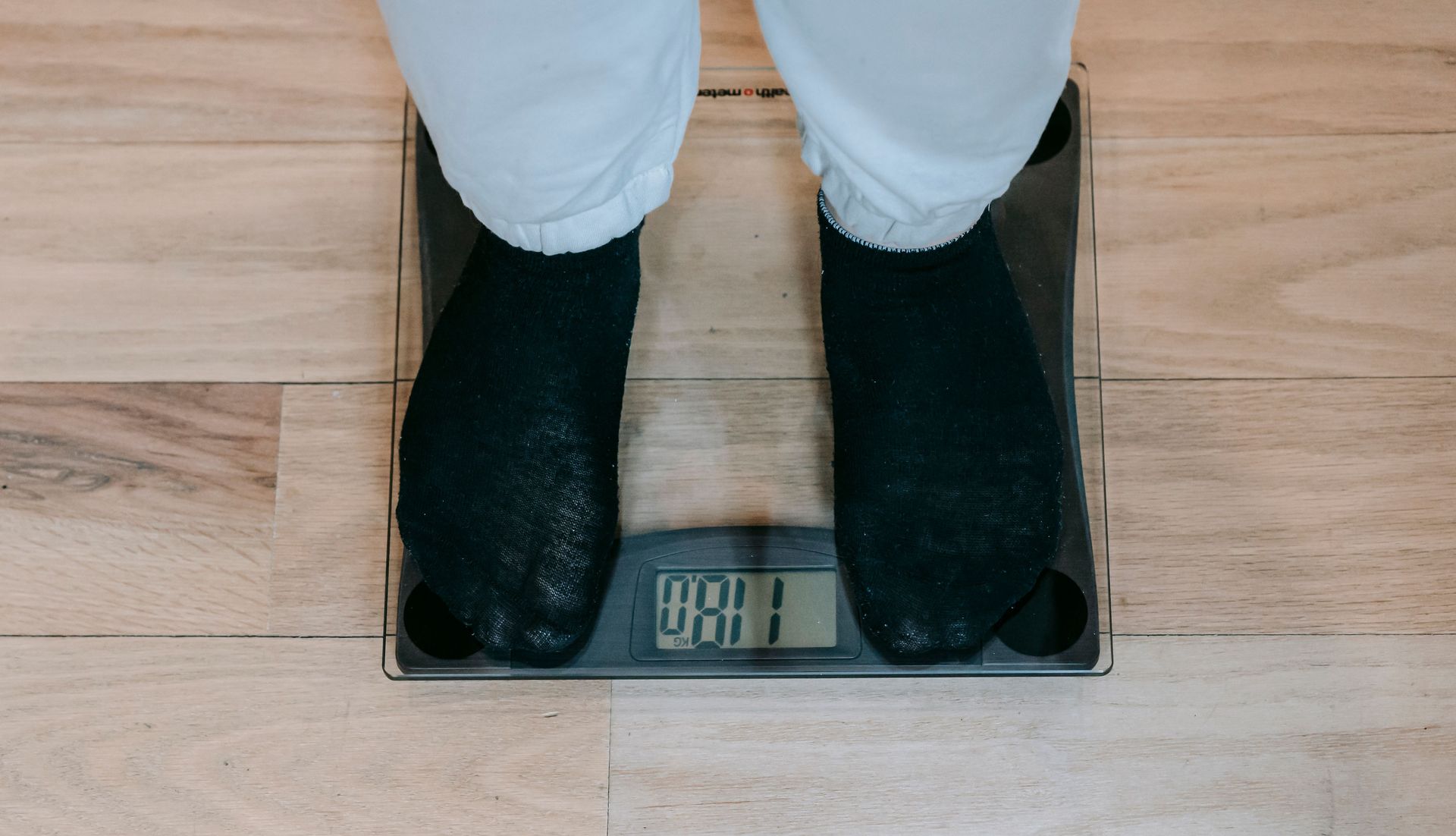
Body weight measured on a scale is the most available and most frequently used measure of weight loss progress, and one of the most misleading in the short to medium term. Body weight fluctuates by 1 to 3 kilograms on a daily basis depending on hydration status, food volume in the digestive system, glycogen stores (which bind approximately 3 grams of water per gram of glycogen), and hormonal water retention patterns. These fluctuations are entirely unrelated to fat mass changes and produce the scale readings that derail many otherwise successful weight loss attempts.
The more clinically meaningful measures of progress are changes in body composition (fat mass versus lean mass, measurable by DEXA scan or bioelectrical impedance), waist circumference (a better predictor of metabolic health risk than total weight), and metabolic markers (fasting glucose, triglycerides, blood pressure, HbA1c). A person who begins exercising and gains muscle while losing fat may see no change or even an increase in scale weight while experiencing significant improvement in body composition and metabolic health — the scale reading is meaningless as an indicator of this progress.
The practical recommendation from most weight management researchers is to track scale weight as a trend over weeks rather than as a daily measure, to use multiple measurement points and calculate a rolling average, and to complement scale weight with waist circumference and at least one metabolic marker as indicators of the type of progress that matters for health.

Sarah Dietz / Pexels
The belief that food consumed late at night is more likely to be stored as fat than food consumed earlier in the day has no direct physiological basis but has persistent popular currency. The body does not process a calorie consumed at 9pm differently from the same calorie consumed at noon — the macronutrient content, the hormonal context at the time of consumption, and the total daily energy balance are what determine the metabolic response, not the clock time.
Where the belief has indirect validity is through the behaviors that late-night eating tends to be associated with: eating after 8pm often represents additional calories consumed beyond the planned daily intake (because the 8pm mark is treated as the end of the eating day, and food consumed after it is extra), the foods consumed late at night tend to be calorie-dense snack foods rather than balanced meals, and evening eating is often associated with screen time in a low-activity state.
The emerging research on time-restricted eating and circadian alignment of food intake does suggest that eating in alignment with the body's circadian metabolic rhythms — concentrating intake in the earlier part of the active day when insulin sensitivity is highest — has metabolic benefits. But this is a different claim from "eating after 8pm causes weight gain" — it is about the optimal distribution of intake across the day, not about a specific hour threshold.

Nadin Sh / Pexels
The specific belief that carbohydrate restriction is a necessary condition for weight loss — that reducing carbs specifically (rather than reducing total caloric intake, or reducing any macronutrient) is what drives fat loss — is not supported by the comparative evidence. The DIETFITS trial, multiple earlier meta-analyses, and the National Weight Control Registry data (tracking people who have successfully maintained significant weight loss for years) all show that both low-carb and low-fat dietary approaches can produce and maintain weight loss, and that the critical variable is adherence to the chosen approach rather than the macronutrient composition of the diet.
The reason this misconception persists is the initial weight loss from low-carbohydrate diets: in the first two to four weeks of carbohydrate restriction, glycogen stores are depleted, and since glycogen is stored with approximately 3 grams of water per gram of glycogen, this produces a rapid loss of water weight that registers as impressive scale progress. The rapid initial results create a strong positive feedback loop that reinforces the belief that carbohydrate restriction is specifically responsible for the loss — when it is largely water.
Subsequent fat loss on low-carbohydrate diets occurs through the same mechanism as on any other dietary approach: caloric deficit. The evidence that low-carbohydrate diets produce meaningfully greater fat loss at equivalent caloric intake compared to other dietary patterns is weak.

Anna Shvets / Pexels
Spot reduction — the idea that exercising a specific muscle group will preferentially burn fat from the overlying area — is one of the most persistently believed fitness myths and one of the most clearly contradicted by the available evidence. Fat is not a local fuel source for the muscles that overlie it. Fat mobilization from adipose tissue (lipolysis) is controlled by systemic hormones (primarily epinephrine and glucagon) that produce whole-body fat mobilization rather than localized mobilization.
Multiple studies have tested spot reduction directly: in one frequently cited design, participants performed many repetitions of a single-sided exercise (such as unilateral leg press or abdominal crunches) for weeks, with the contralateral limb as control. The results consistently show that the exercised side does not lose more fat than the non-exercised side — fat loss is distributed systemically according to individual genetic patterns (the "last in, first out" pattern that means the areas where fat is deposited first tend to be the areas from which it is lost last).
The practical implication: abdominal exercises strengthen abdominal muscles and improve core function but do not specifically reduce abdominal fat. Reducing abdominal fat requires creating a systemic caloric deficit; the exercise mode is less important than the total energy expenditure.

Beyzanur K. / Pexels
The use of artificially sweetened beverages as substitutes for sugar-sweetened beverages in weight loss efforts is common and intuitive — replace the caloric beverage with the zero-calorie version and reduce caloric intake. The evidence on whether this substitution produces the expected weight loss benefit is more complicated than the intuition suggests.
Short-term randomized controlled trials of artificial sweetener substitution generally find that it reduces caloric intake and promotes modest weight loss compared to continuing to consume sugar-sweetened beverages. Longer-term epidemiological studies, however, have found associations between diet beverage consumption and weight gain — a correlation that is likely explained by reverse causation (people who consume more diet beverages are often people who are already trying to manage weight and who have elevated baseline weight) but that complicates the simple substitution story.
The more substantive concern is the effect of artificial sweeteners on appetite and on the gut microbiome. Research by Dana Small at Yale and others has found that the uncoupling of sweetness from caloric intake — tasting something sweet but receiving no calories — impairs the brain's ability to accurately predict the caloric content of sweet foods, potentially increasing overall caloric intake from other sources. The gut microbiome effects of specific artificial sweeteners (saccharin, sucralose, and aspartame have each been studied) are an active research area with preliminary findings that some sweeteners may alter microbiome composition in ways that affect glucose metabolism.

Samson Katt / Pexels
The mechanism by which dietary fat becomes body fat is not the simple process that "fat makes you fat" implies. Dietary fat does not simply travel from the digestive system into fat cells and stay there. All macronutrients — fat, carbohydrate, and protein — can be stored as body fat when consumed in excess of metabolic needs. The pathway differs: dietary fat is packaged in chylomicrons and transported through the lymphatic system before entering the circulation; excess dietary carbohydrate is converted to fat in the liver through de novo lipogenesis; excess dietary protein can also contribute to fat storage through gluconeogenesis followed by fat synthesis. The body has multiple pathways for converting any excess energy into stored fat.
The practical implication of this mechanism is that reducing dietary fat specifically does not prevent the storage of excess energy as fat if the overall caloric balance is still positive. The low-fat era demonstrated this at population scale: when dietary fat was reduced and replaced with refined carbohydrates, the expected reduction in obesity did not occur, because the caloric balance was not meaningfully altered and the macronutrient substitution changed the hormonal environment in ways that may have slightly worsened metabolic health.

Annushka Ahuja / Pexels
The expectation that weight loss will proceed at a steady, predictable rate — that consistent adherence to a dietary approach will produce consistent weekly reductions in scale weight — is set by the simple arithmetic of caloric deficit calculation (a 500-calorie-per-day deficit should produce approximately 0.5 kg of fat loss per week) and contradicted by the actual experience of almost everyone who has tracked their weight during a loss period.
Weight loss is not linear because body weight is not a direct readout of fat mass. The multiple factors that determine scale weight — hydration, glycogen stores, food volume, hormonal water retention, muscle gain — produce fluctuations that mask the underlying fat loss trend. Additionally, the adaptive metabolic changes that occur with sustained caloric restriction mean that the rate of fat loss slows over time at the same caloric deficit, producing the plateaus that most people interpret as failure.
The research on the expected pattern of weight loss in carefully controlled studies — where caloric intake is precisely monitored and the composition of weight lost (fat, lean mass, water) is measured — shows that weight loss follows a roughly exponential decay rather than a linear pattern: faster in the early weeks when glycogen and water are being lost, then progressively slower as the body adapts and as lower body weight means lower total energy expenditure.

Victor Freitas / Pexels
The dose-response relationship between exercise volume and weight loss is not linear — exercise above a certain volume does not produce proportionally greater weight loss, and very high exercise volumes can actually impede weight loss through the compensatory mechanisms described in the exercise entry.
The specific compensatory mechanism at high exercise volumes is increased hunger and food intake: the metabolic demand of large amounts of exercise (training for a marathon, for example) produces large increases in appetite that many people cannot consistently resist, resulting in caloric compensation that partially or fully offsets the exercise-induced caloric expenditure. Research by John Speakman at the University of Aberdeen identified an "energy constrained" range of daily energy expenditure above which total energy expenditure does not increase proportionally with physical activity, because internal metabolic processes (immune function, reproductive function, and other energy-expensive processes) are down-regulated to compensate.
The practical implication: for weight loss specifically, moderate consistent exercise (30 to 60 minutes, most days of the week) has a more favorable effect than very high volume training for most people, because it produces caloric expenditure without the compensatory hunger increases that high volumes generate.

Anna Shvets / Pexels
The belief that successful weight loss requires tolerating significant ongoing hunger — that hunger is the unavoidable and necessary experience of eating in a caloric deficit — is both discouraging and inaccurate. Hunger is determined primarily by the hormonal response to food (the release of satiety hormones GLP-1, PYY, and CCK, and the suppression of ghrelin) and the physical volume of food in the stomach, rather than by caloric intake per se.
Foods with high satiety per calorie — protein, fiber, whole foods with high water content — produce greater suppression of appetite hormones and greater stomach fill per calorie than calorie-dense, low-satiety foods. A dietary approach that maximizes protein and fiber while reducing energy-dense foods can create a meaningful caloric deficit without requiring the constant, significant hunger that most people associate with dieting.
The research on dietary protein and satiety is particularly consistent: high-protein diets reduce hunger, reduce ghrelin (the primary hunger hormone), and reduce ad libitum caloric intake — the amount people naturally eat when not explicitly restricting — by 400 to 700 calories per day in multiple well-controlled studies. This effect is large enough to produce a meaningful caloric deficit without deliberate calorie counting, which is why high-protein dietary patterns are associated with easier weight management in many people.

Towfiqu barbhuiya / Pexels
The near-universal pattern of weight regain following successful weight loss — most people who lose significant weight regain most of it within five years — is widely interpreted as evidence that the diet "didn't work" or that the individual has failed. The more accurate interpretation, supported by the biology of adaptive thermogenesis, is that the diet succeeded at weight loss but did not address the physiological conditions that produce weight regain — and that these conditions are biological rather than motivational.
The research on weight regain following caloric restriction has identified the specific biological mechanisms responsible: persistent reduction in leptin (the fat-tissue hormone that signals energy sufficiency to the brain) below pre-diet levels, persistent elevation in ghrelin (hunger hormone), reduced thyroid hormone levels, and reduced resting metabolic rate — all of which persist for years after weight loss, continuing to drive hunger and reduce energy expenditure long after the active dieting has concluded. Erin Fothergill and colleagues' follow-up of "The Biggest Loser" contestants, published in Obesity in 2016, documented these persistent metabolic changes six years after the competition ended, with contestants showing metabolic rates substantially below what their current body composition would predict.

Pixabay / Pexels
The conflation of body weight with health — the assumption that higher weight means poorer health and that weight loss necessarily improves health — is deeply embedded in medical and popular culture and is more complicated than this framing suggests. The relationship between body weight and health outcomes is real and significant at the population level, but it is not a simple, linear, individual-level relationship, and several lines of evidence complicate the "lower weight equals better health" assumption.
The "obesity paradox" — the observation that in several chronic disease conditions including heart failure and chronic kidney disease, patients with higher BMI show better survival outcomes than those with lower BMI — has been documented in multiple large studies, though its interpretation is contested. More broadly, the finding that physical fitness is a stronger predictor of mortality than body weight (a finding documented in research by Steven Blair and colleagues using large cohorts of people with measured cardiorespiratory fitness) suggests that the behaviors associated with weight — dietary quality, physical activity, sleep — matter more for health than the weight itself.
The specific evidence on weight loss and health outcomes is also more nuanced than it initially appears: weight loss improves several cardiovascular risk markers (blood pressure, triglycerides, blood glucose), but the effect of weight loss on mortality — whether losing weight actually extends life in people who are obese — is less clearly established than the effect on intermediate biomarkers. The research is ongoing and contested, but the simple "less weight equals better health" equation is not as well-supported as its ubiquity in public health messaging implies.

Mikhail Nilov / Pexels
The transition from active weight loss to weight maintenance — the phase in which the goal shifts from reducing weight to sustaining the reduced weight — is frequently treated as simply continuing to do what produced the weight loss, but at a slightly less strict level. The research on weight maintenance indicates that this framing is wrong in a specific way that explains much of the failure of long-term weight management.
Weight maintenance after loss is a physiologically different challenge from weight loss, because it occurs against the background of the persistent biological changes described in the weight regain entry — reduced metabolic rate, elevated hunger hormones, reduced leptin — that continue to drive the system toward the prior weight. Successful long-term maintainers (the National Weight Control Registry tracks people who have maintained at least 30 pounds of weight loss for at least one year) demonstrate behavioral patterns significantly different from those of people in active weight loss: more consistent eating patterns across weekdays and weekends, higher physical activity levels (averaging approximately one hour of exercise per day), more frequent self-monitoring of weight, and lower dietary fat intake.
The specific implication is that weight maintenance requires ongoing active management of the behaviors that counteract the biological drive toward regain — not at the intensity of active weight loss, but as a sustained, permanent shift in behavior rather than a temporary diet that can be discontinued once the goal weight is reached. The people who maintain weight loss successfully have, in most cases, permanently changed their relationship with food and activity rather than successfully completing a temporary program.
