
Credit: VANNGO Ng / Pexels
Running is one of the most accessible forms of exercise on earth. You need no gym membership, no equipment beyond a pair of shoes, and no coach standing over you. You can do it alone at 5 a.m., with friends on a Saturday morning, or in a foreign city with nothing but your hotel key and a sense of direction. That simplicity is part of the appeal — and part of the trap.
Because running is so easy to start, most people start wrong. They go out too fast, too far, too soon, and within a few weeks they're nursing shin splints or a sore knee, wondering why everyone else seems to manage it. The truth is that running is a high-impact, technically demanding sport that rewards patience and punishes impatience in roughly equal measure. The body adapts to the stress of running — but only if you give it time.
The other misconception is that running is purely physical. It isn't. The mental side of the sport — learning to manage discomfort, to stay consistent through bad weeks, to resist the urge to compare yourself to others — is as important as any training plan. Runners who last tend to be the ones who figured out how to make the sport sustainable, not just intense.
What follows is a guide built for people who want to run seriously: not just jog around the block a few times, but build a real practice. That might mean training for a 5K, a half marathon, or simply becoming someone who runs four times a week and expects to keep doing so for decades. The advice here applies across all of those goals.
Some of it will feel counterintuitive. Slow down. Rest more. Run less than you want to. These are hard instructions for people who are motivated and eager. But the runners who follow them consistently are the ones who are still running at 50, 60, and beyond — while the ones who ignored them tend to cycle through injuries, burnout, and long gaps away from the sport.
This guide covers the physiology, the gear, the training principles, the mental habits, and the small practical details that make the difference between a running career that lasts and one that stalls out before it begins. Read it before your first serious training block, and come back to it when something isn't working.
1 / 25

Credit: Thomas Ronveaux / Pexels
Most people treat running as a purely cardiovascular activity — you lace up and go, and the only question is how hard you push. This framing misses something important. Running is a movement skill, and like any skill, it can be done well or poorly, with consequences that accumulate over time.
Human beings evolved to run, but modern life has changed how most people move. Long hours sitting, shoes with elevated heels, and a lack of varied terrain have altered the way many adults walk and stand, let alone run. When you start running seriously, you're not just training your heart and lungs — you're also teaching your body a movement pattern that it may have largely forgotten, or never properly developed.
The basic mechanics of running are worth understanding from the start. Good running posture involves a slight forward lean from the ankles, not a hunch from the waist. Your arms should swing forward and back, not across your body, and your hands should stay relaxed — a clenched fist means tension that travels up the arm and into the shoulders. Your foot should land roughly beneath your center of mass, not far out in front of you.
Landing with your foot too far ahead — what's called overstriding — is one of the most common errors beginners make. It acts as a braking force with every step, slowing you down and sending a shockwave up through your heel, ankle, knee, and hip. Over time, overstriding is a significant contributor to common running injuries. Shortening your stride slightly and increasing your cadence — the number of steps you take per minute — tends to correct it.
Cadence $CDNS is worth paying attention to early on. Most recreational runners take somewhere between 150 and 165 steps per minute. Many experienced runners aim for around 170 to 180. A higher cadence generally means lighter, shorter steps, which reduces impact force and is associated with better running economy. You don't need to hit a specific number, but if your cadence is well below 160 and you're experiencing impact-related discomfort, it's worth experimenting with.
Running form is something you improve gradually, not all at once. Trying to fix everything simultaneously tends to create awkwardness and new problems. Pick one aspect — say, relaxing your shoulders, or keeping your arms from crossing your midline — and work on it consciously for a few weeks before moving to the next. Video yourself occasionally from the side and from behind. What you feel like you're doing and what you actually look like are often quite different.
The payoff for attending to form is significant. Efficient runners use less energy at the same speed, experience fewer injuries, and tend to get faster more reliably as their fitness improves. The runners who neglect form and simply train harder often hit a wall — they work harder for diminishing returns while accumulating wear on joints and connective tissue.
2 / 25

Credit: Bohdan Hyrovych / Pexels
If there is one principle that beginning runners ignore more than any other, and pay for more than any other, it's this: don't increase your training load by more than 10% per week. That applies to mileage, intensity, and the time you spend on your feet.
The 10% rule exists because the cardiovascular system adapts to training faster than the musculoskeletal system does. After a few weeks of consistent running, your heart and lungs will feel ready for more. Your tendons, ligaments, and bones are not. These connective tissues adapt slowly — tendons, in particular, can take months to strengthen in response to new demands. The result is a gap: your engine gets bigger before your chassis does, and if you keep pushing, the chassis breaks.
The most common overuse injuries in running — stress fractures, IT band syndrome, shin splints, patellar tendinopathy, plantar fasciitis — are almost always the result of increasing load too quickly. The runner felt fine, added a long run too fast, or jumped from three days per week to five, and two weeks later they're limping.
What the 10% rule looks like in practice: if you're running 20 miles a week, you should add no more than two miles the following week. If you're running three days a week and want to add a fourth, that's roughly a 33% increase — too much, too fast. Add the fourth day, but reduce the length of your existing runs to keep total volume roughly the same for a few weeks before increasing again.
The rule applies to intensity as well. Adding a speed workout and a longer run in the same week is asking a lot. If you're introducing new types of training — intervals, tempo runs, hill repeats — do it by substituting them for existing easy runs rather than adding them on top.
Every four weeks or so, reduce your total mileage by 20 to 30 percent. This is called a cutback week or a deload week, and its purpose is to allow accumulated fatigue to clear and connective tissue to consolidate the adaptations it's been building. Many new runners skip cutback weeks because they feel good and don't want to lose fitness. They lose more by getting injured.
The 10% rule is conservative, and some runners can handle slightly more. But if you're going to err, err on the side of doing less. Time spent injured is time not running, and a small week now is far less costly than six weeks on the sideline.
3 / 25

Credit: David Kanigan / Pexels
New runners almost universally run too hard. They go out the door, get their heart rate up, feel like they're working, and conclude that this is what running should feel like. It isn't — not most of the time.
The principle underlying this is polarized or aerobic-base training: the idea that the majority of a runner's volume should be done at a relatively low intensity, and only a small fraction — typically 20% or less — should be done at genuinely hard effort. This isn't a new concept. It's the foundation of how elite endurance athletes have trained for decades.
The practical definition of easy is running at a pace where you can hold a full conversation without gasping. If you can say a few words but not full sentences, you're going too fast. Many beginners find this pace almost embarrassingly slow — slower than they feel they should be going, slower than seems like exercise. That discomfort is worth pushing through, because running easy has enormous physiological benefits that hard running doesn't replicate.
Easy running builds your aerobic base: it increases the density of mitochondria in your muscle cells, improves the efficiency with which your body uses fat as fuel, and develops the slow-twitch muscle fibers that handle endurance work. It also puts far less stress on connective tissue than hard running, meaning you can do more of it without the injury risk that comes from training fast.
The heart rate monitor or the talk test are the two most useful tools for enforcing easy effort. If you use heart rate, easy running for most people falls somewhere in the range of 60 to 75 percent of maximum heart rate — though individual variation is significant, and formulas for estimating max heart rate are often inaccurate. The talk test is more reliable: if you can't talk, slow down.
The counterintuitive truth is that running more slowly more often is one of the fastest ways to get faster over time. Runners who build a wide aerobic base find that their easy pace gradually gets faster — the same heart rate produces more speed — without any additional effort. Hard running sessions become more productive because the base is there to absorb them. And the injury rate drops, which means more consistent training, which compounds all the benefits further.
4 / 25

Credit: RUN 4 FFWPU / Pexels
The running shoe industry is very good at making runners feel that the right pair of shoes will solve their problems and the wrong pair will cause injury. The reality is considerably more complicated.
There are genuine considerations when choosing running shoes. The most important is fit: a running shoe should have about a thumb's width of space between your longest toe and the end of the shoe, should not pinch at the midfoot, and should not allow your heel to slip. Width is often overlooked — many people, particularly women, have been wearing shoes that are too narrow for years, which can cause blisters, black toenails, and foot pain.
Beyond fit, the most useful distinction is between shoes designed for road running and shoes designed for trail running. Road shoes have flatter, more durable outsoles optimized for pavement. Trail shoes have aggressive lugs that grip dirt, mud, and rock. Running in trail shoes on pavement will wear them out quickly. Running in road shoes on technical trails is manageable but reduces traction.
Stack height — how much foam is between your foot and the ground — has become a major marketing variable in recent years, with maximalist shoes at one extreme and minimalist shoes at the other. Very high-stack, highly cushioned shoes reduce ground-feel and can alter your gait, sometimes in ways that mask problems rather than solving them. Very minimalist shoes demand a lot of foot and calf strength that most new runners haven't developed. Something in the middle tends to work for most people starting out.
Carbon-fiber plate shoes, which became widespread in road racing around 2017, do improve running economy and racing performance, but they're not training shoes. The propulsive feel they create can alter mechanics in ways that stress tendons, and they wear out faster than standard trainers. New runners don't need them.
What does help: rotating between two pairs of shoes, which allows each pair to decompress fully between runs and appears to reduce injury risk. Replacing shoes when the midsole foam — the soft layer between the outsole and the insole — becomes compressed, typically after 400 to 600 miles.
Go to a running-specific store if you can. Knowledgeable staff can watch you walk and run and help you find shoes that fit correctly. Ignore any recommendation for a shoe that isn't comfortable immediately — the idea that running shoes need breaking in is a myth.
5 / 25

Credit: Kindel Media / Pexels
Before you think about pace, before you think about distance, think about time. How much time can you spend on your feet, running or walking, each week without feeling broken or exhausted? That number is your starting point, and building from it gradually is how you make lasting progress.
This mindset is particularly useful for complete beginners, but it applies at any level when returning from injury or from a long break. Pace and distance are metrics that can drive counterproductive behavior — the runner who goes out determined to run five miles and limps through the last two when they should have stopped at three, or the runner who runs faster than they should because they want to finish a pre-planned route in a satisfying time.
Time-based running removes those pressure points. A 30-minute easy run is a 30-minute easy run whether you cover three miles or four. Your body experiences roughly the same amount of work either way, and some days the easier pace is the right one — when it's hot, when you're tired, when you slept badly. Judging yourself by time rather than pace or distance lets you respond to those conditions honestly.
This approach also helps with the run-walk method, which is one of the most evidence-supported approaches to building running fitness for beginners. Rather than running until you're forced to stop, you schedule walk breaks from the start — running for two minutes, walking for one, repeating. The walk breaks let your heart rate come down and allow you to cover more time on your feet than you could if you ran continuously from the start.
The run-walk ratio shifts over time as your fitness builds. Two minutes running to one walking becomes three-to-one, then five-to-one, then you're running continuously. The progression feels slow, but runners who use it consistently tend to arrive at continuous running with stronger joints and better habits than those who forced through it.
The goal in the early weeks is simply to establish the habit and let your body adapt to the mechanics of running. Speed comes later, after the body has learned the movement and the connective tissue has had time to strengthen.
6 / 25
Credit: RUN 4 FFWPU / Pexels
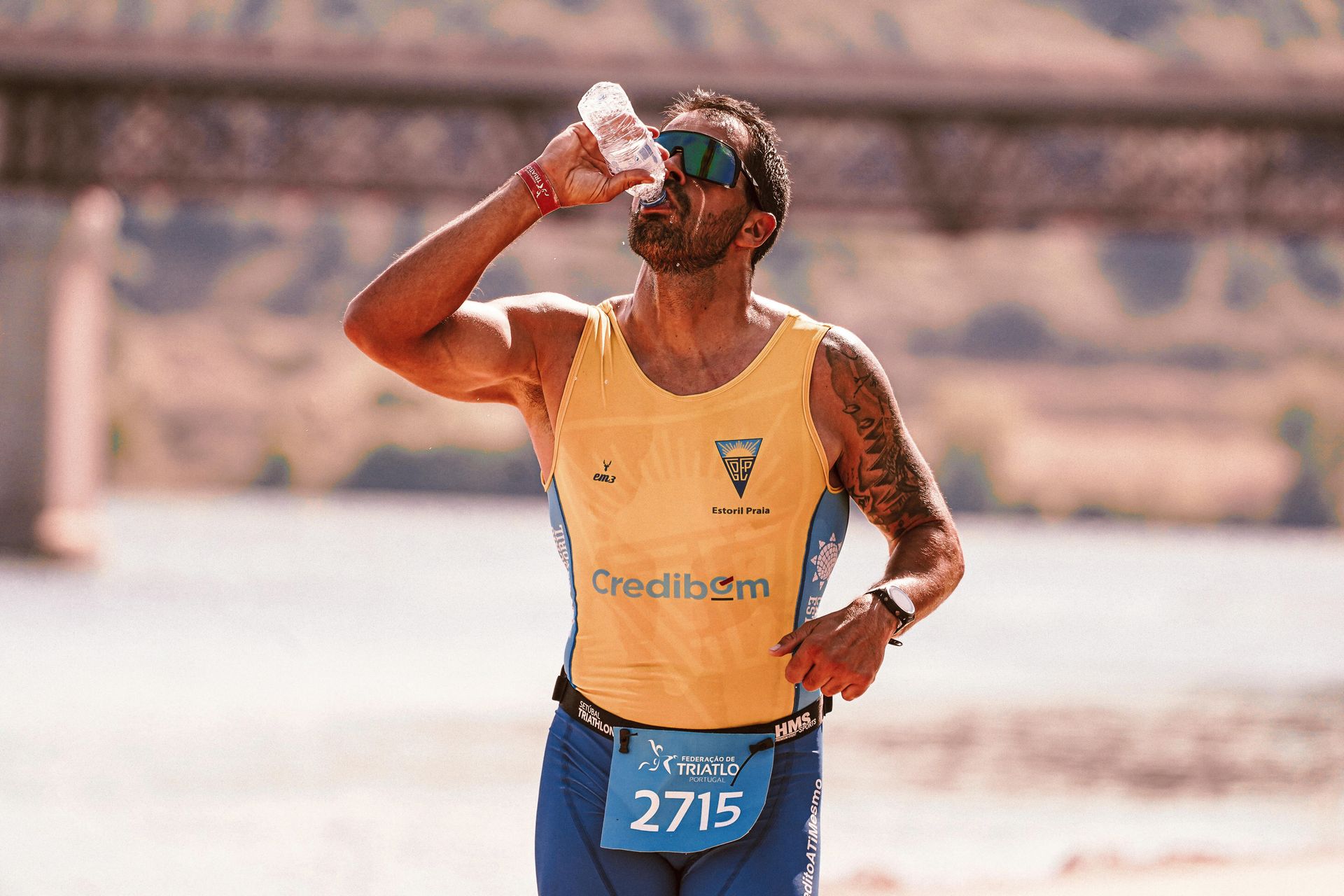
Temperature changes everything about how running feels and what it costs your body. Running in warm, humid conditions is physiologically more demanding than running in cool conditions at the same pace, and failing to account for this is a common cause of early burnout and overtraining.
When you run in heat, your body has to do two things simultaneously: deliver blood to working muscles and deliver blood to the skin for cooling. These demands compete. The result is that your heart rate climbs higher at the same pace, and your perceived effort increases. You're working harder to do the same thing.
Humidity compounds this because sweat is your body's primary cooling mechanism, and sweat can only cool you when it evaporates. In high humidity, evaporation slows, and your cooling system becomes less effective. This is why a 75°F day with 85% humidity feels harder than a 90°F day with low humidity in many ways — the heat index, or "feels like" temperature, accounts for this interaction.
The practical implication: in hot weather, abandon your pace targets and run by effort or heart rate instead. If easy running is typically a pace of nine minutes per mile in cool weather, the same aerobic effort in heat might require running at ten or ten and a half minutes per mile. This is not a performance regression; it's your body doing its job correctly.
Hydration matters, but not in the way sports drink marketing suggests. For runs under 45 minutes, most people don't need to drink during the run at all, provided they're adequately hydrated beforehand. For longer runs in heat, drinking water when you're thirsty is a reliable guide for most healthy adults. Overhydration — drinking far more than thirst signals — can cause a dangerous condition called hyponatremia, where sodium levels in the blood drop too low.
Run in the morning or evening during hot months when possible. Wear light colors. Wear a hat. Slow down before you feel like you need to. The heat index at which running becomes potentially dangerous depends on the individual and their acclimatization, but general caution is warranted above 90°F heat index for most runners, and extreme caution is warranted above 100°F.
7 / 25

Credit: Andrea Piacquadio / Pexels
The instinct of many new runners is to spend all their available time running. More miles means more fitness, the logic goes, and anything else is a distraction. This isn't wrong exactly, but it's incomplete.
Strength training — particularly exercises that target the glutes, hips, and core — meaningfully improves running performance and significantly reduces injury risk. This has less to do with adding muscle mass and more to do with building the functional strength to maintain good form over long distances and the structural resilience to absorb repeated impact without breaking down.
The glutes are the most important muscle group for runners. Strong gluteus medius and maximus muscles stabilize the pelvis, control the knee from collapsing inward on landing, and generate power at push-off. Many runners, particularly those who sit at desks for most of the day, have underactive glutes — their hamstrings and quads pick up the slack, which places uneven demands on the knee and increases injury risk.
Single-leg exercises are particularly valuable for runners because running is fundamentally a single-leg sport — you're always landing on one foot. Single-leg squats, Romanian deadlifts, and step-ups build strength in a way that translates directly to the demands of running, while also exposing and correcting the imbalances that exist between legs.
Core strength doesn't mean doing endless crunches. For runners, the relevant core is the deep stabilizing musculature — the muscles that resist rotation and keep the spine neutral. Planks, dead bugs, bird dogs, and side planks build this kind of functional stability. A runner with a weak core wastes energy on lateral sway and rotation with every stride.
Two sessions of 20 to 30 minutes per week is enough to see benefits. More than that starts to create fatigue that competes with running. Do your strength work on easy running days or after short runs, not before your long run or hard sessions.
8 / 25

Credit: Greg Pappas / Unsplash
Running breaks the body down. Sleep builds it back up. This is not a metaphor — the physiological adaptations that come from training occur primarily during sleep, not during the run itself.
During deep sleep, the body releases human growth hormone, which drives tissue repair and adaptation. Blood flow to muscles increases. The immune system does maintenance work. Neural pathways that govern movement patterns consolidate. Skimping on sleep doesn't just make you tired; it actively impairs the recovery process and reduces the return on your training investment.
For runners in serious training, seven hours is a floor, not a target. Eight hours produces meaningfully better outcomes for most adults. The research on sleep and athletic performance is unusually consistent on this point: more sleep improves reaction time, decision-making, mood, and physical output. Sleep deprivation undermines all of them.
Practical sleep hygiene for runners includes keeping a consistent sleep schedule — going to bed and waking up at the same time even on weekends — which regulates the circadian rhythm and improves sleep quality. Avoiding screens for 30 to 60 minutes before bed reduces exposure to blue light, which suppresses melatonin and delays sleep onset. Keeping the bedroom cool and dark creates an environment that promotes deeper sleep.
One specific note for runners who train in the morning: be cautious about cutting sleep to fit in early workouts. The runner who wakes at 4:30 a.m. to run before work but only gets five and a half hours of sleep is not making a net positive investment in their fitness. Training on inadequate sleep produces diminishing returns and elevates injury risk. If the choice is between a training run and adequate sleep, prioritize sleep.
Napping has genuine value if you can manage it. A 20-minute nap in early afternoon is long enough to reduce fatigue and improve performance on afternoon runs without disrupting nighttime sleep.
9 / 25

Credit: Leanna Myers / Unsplash
Running burns more calories than most people realize, and underfueling is a common problem among new runners — particularly those who started running to manage their weight and are trying to maintain a caloric deficit while training.
The body needs carbohydrates to fuel running. Carbohydrates are stored in the muscles and liver as glycogen, which is the primary fuel source for moderate to hard running. A diet that is too low in carbohydrates impairs performance, slows recovery, and increases injury risk. This is particularly important for runners who have adopted low-carbohydrate eating patterns for other health reasons — the demands of running make adequate carbohydrate intake a practical necessity for most people.
Protein supports muscle repair and adaptation. Runners generally benefit from somewhat higher protein intakes than sedentary people — roughly 1.4 to 1.7 grams per kilogram of body weight per day is a commonly cited range, though individual needs vary. Distributing protein intake across meals, rather than eating most of it in one sitting, improves absorption and utilization.
Eating before running depends on the duration and intensity of the run and the individual's gut tolerance. For runs under 45 to 60 minutes, many runners do fine on an empty stomach or with a small snack. For longer runs, eating a carbohydrate-rich meal two to three hours before running allows adequate digestion and fueling. Running on a completely empty stomach for runs over 90 minutes accelerates glycogen depletion and can impair performance.
During runs lasting longer than 60 to 75 minutes, consuming carbohydrates in the form of gels, chews, or sports drinks helps maintain energy levels. The gut can absorb roughly 30 to 60 grams of carbohydrates per hour from a single carbohydrate source, and somewhat more when multiple types of carbohydrates are combined. Training the gut to tolerate fueling during long runs is a skill that takes practice — start with small amounts and build up.
Post-run nutrition matters for recovery. Consuming carbohydrates and protein within 30 to 60 minutes of finishing a hard or long run helps replenish glycogen and initiate muscle repair. This window matters more after hard sessions than after easy runs.
10 / 25
Credit: VANNGO Ng / Pexels
If you're training for any race longer than a 5K, the weekly long run is the single most important workout on your schedule. It drives adaptations that shorter, faster runs can't produce and builds the specific kind of endurance that determines how you perform over distance.
Long runs work because they stress your body for an extended period of time. They deplete glycogen stores more thoroughly than shorter runs, which teaches the body to become more efficient at using fat as fuel — a critical skill for any race lasting more than about 90 minutes. They also develop the mental resilience to keep moving when tired, strengthen connective tissue under sustained load, and build the cardiovascular infrastructure to support long-duration effort.
The pace of the long run should be easy — genuinely easy, not just easier than hard. For most runners, this means a conversational pace, somewhere between 60 and 75 percent of maximum heart rate. Running the long run too fast defeats part of its purpose and dramatically increases recovery time. A long run done at the right pace leaves you tired but functional; one done too hard can leave you depleted for three or four days.
Build the long run gradually. The general principle is to add no more than a mile or two per week, and to cap any single week's long run at no more than 30% of total weekly mileage. So if you're running 30 miles a week, your long run shouldn't exceed nine miles, roughly speaking.
Every three to four weeks, cut your long run back by 20 to 30 percent before resuming the buildup. This allows the accumulated fatigue and microtrauma from the previous weeks to resolve before you add more stress.
Long runs also train your mind. There is something that happens around the 90-minute mark of a run — a combination of fatigue, tedium, and the awareness that you still have a long way to go — that tests your resolve in a way that shorter efforts don't. Learning to stay calm and steady in that space, to maintain form when you're tired, is as valuable as any of the physical adaptations the long run produces.
11 / 25

Credit: Tiago L BR / Pexels
One of the most undervalued skills in running is knowing when not to run. Training stress accumulates over weeks and months, and the body needs periodic opportunities to absorb it. The runner who pushes through every warning sign eventually breaks down.
There is a useful distinction between normal training fatigue and the kind of fatigue that signals overtraining or impending injury. Normal fatigue from a hard week of training typically resolves after one or two rest days. Your legs feel heavy at the start of a run but loosen up after a mile. Your motivation is a little lower than usual but you still feel like yourself. This kind of tiredness responds well to rest and easy running.
Overtraining is different. The signs include persistent fatigue that doesn't resolve after rest, declining performance despite consistent training, elevated resting heart rate, disturbed sleep, loss of motivation that extends beyond running, and increased frequency of minor illness. Overtraining is not a single bad week — it's a pattern that builds over time when the training load consistently exceeds the body's ability to recover from it.
Pain is the clearest signal to stop. The challenge is distinguishing between the normal discomfort of hard effort — burning lungs, tired legs, general soreness — and the pain that signals injury. A useful heuristic: discomfort that is symmetrical, that fades during a run, and that is gone the next day is usually normal. Pain that is localized to one specific spot, that gets worse during a run rather than better, or that is present on rest days warrants attention.
The three-day rule is a reasonable guide: if a pain is present for three or more consecutive days, see a sports medicine professional or physiotherapist rather than trying to run through it. Most running injuries treated early are manageable with a brief period of reduced load and targeted rehabilitation. The same injury ignored for weeks typically requires far more time off.
Resting heart rate is a useful daily metric for monitoring recovery. Measure it each morning before getting out of bed. A resting heart rate that is five to seven beats per minute above your normal baseline suggests that your nervous system is still recovering from a recent stress — training, poor sleep, illness, or life stress. That's a day to run easy or not at all.
12 / 25

Credit: Erik Mclean / Pexels
Cold weather changes the challenge of running in ways that are distinct from heat. The primary danger isn't hypothermia for most urban and suburban runners doing typical training runs — it's the combination of cold, wet, and wind that can quickly strip body heat, and the ice or snow that turns running surfaces treacherous.
Layering is the key principle. The inner layer should be a moisture-wicking fabric that pulls sweat away from the skin — not cotton, which absorbs sweat, becomes heavy, and causes chilling. A mid-layer of fleece or light insulation adds warmth. An outer layer of a wind- and water-resistant shell protects against precipitation and wind chill. For most runs below about 40°F, two thin layers beat one thick layer for both warmth and temperature regulation.
The extremities — hands, feet, and ears — lose heat disproportionately and should be protected even when the torso doesn't need heavy insulation. Thin running gloves and a lightweight hat or headband make a substantial difference in comfort at temperatures below 45°F. Gloves that can be easily taken off and tucked into a waistband are useful when you warm up mid-run.
The common fear of breathing cold air and damaging the lungs is largely unfounded. By the time cold air reaches the bronchi, it has been warmed to near body temperature by the nasal passages and upper airway. Runners with asthma may notice cold air triggers symptoms, but for healthy adults, cold air itself is not a lung hazard. A buff or gaiter worn over the nose and mouth in very cold temperatures can ease the transition of air.
Ice and snow require genuine care. Slow down — by how much depends on conditions, but more than most people intuitively do. Shorten your stride and keep your feet under your hips rather than reaching forward. Running stores sell screw-on traction devices and slip-on microspike attachments that improve grip on icy surfaces considerably. Treadmill running is a legitimate alternative on truly dangerous days.
13 / 25

Credit: Ketut Subiyanto / Pexels
Running injuries are so common among beginners that they've become normalized — as if they're a predictable cost of entry that you simply have to pay. They're not. The majority of common running injuries are preventable, and they share a small number of root causes.
The first and most common cause is too much, too soon. This has been covered from the angle of the 10% rule, but it bears repeating from the injury prevention angle. The body's connective tissues — the Achilles tendon, the plantar fascia, the IT band, the patellar tendon — cannot adapt as quickly as the cardiovascular system. When training load increases faster than connective tissue can adapt, those tissues accumulate microdamage that eventually becomes injury. The fix is progressive, patient loading.
The second cause is insufficient strength. Weak glutes, weak hips, and weak feet mean the body absorbs the impact of running in suboptimal ways. The knee, in particular, is vulnerable to problems caused by weakness elsewhere. Patellofemoral pain syndrome — runner's knee — is often not a knee problem at all but a consequence of weak hip muscles that allow the knee to track improperly. Strengthening the hips and glutes frequently resolves knee pain more effectively than treating the knee directly.
The third cause is ignoring early warning signs. Most serious running injuries don't appear suddenly — they announce themselves with mild, easy-to-rationalize symptoms for days or weeks before becoming significant. The runner who notices tightness at the bottom of their foot every morning and convinces themselves it's nothing is often the runner who develops plantar fasciitis three weeks later.
Shoes that don't fit properly, running on cambered roads in only one direction, and sleeping in positions that compress irritated tendons are less dramatic but real contributing factors. Changing running surfaces occasionally — alternating between pavement, trail, and grass where possible — distributes stress across slightly different movement patterns and reduces the cumulative load on any one point.
Return from injury slowly. The normal instinct after a week or two of forced rest is to charge back into training at the level you left. The injury is still fresh even if it doesn't hurt, and connective tissue needs several more weeks of gradual loading before it's truly ready. Returning too aggressively after injury is one of the most reliable ways to re-injure.
14 / 25

Credit: Lisa from Pexels / Pexels
Running without a plan is like trying to build a house without blueprints. You might get somewhere, but the process will be longer, more expensive, and more error-prone than it needed to be. A training plan provides structure, progression, variety, and recovery in a system that a runner improvising from week to week almost never replicates.
The core components of any sound training plan are easy runs, a long run, and one or two quality sessions per week. Quality sessions are harder efforts — tempo runs, interval training, or hill repeats — that develop specific physiological capacities. The remainder of the week is easy aerobic running that builds volume without adding significant stress.
Easy runs should make up the bulk of the plan — typically 70 to 80 percent of total weekly volume. This is where the aerobic base is built and where the body recovers between harder sessions. Runners who make most of their easy runs too hard compromise their ability to run the hard sessions well, and get less benefit from both.
Tempo runs — sustained efforts at roughly the pace you could hold for about an hour, often called lactate threshold pace — are one of the most effective tools for improving race performance. They train the body to clear lactate faster, which raises the pace you can sustain before fatigue sets in. A tempo run is hard but controlled: you should be able to speak in short phrases, not full sentences, but not gasping either.
Interval training involves repeated short, fast efforts with recovery between them. These sessions develop running economy, speed, and the ability to sustain faster paces. They are the most physiologically stressful sessions in a training plan and should not be done more than once or twice a week — and not at all in the first several months of training for complete beginners.
Free training plans for every common race distance are available from running publications, coaches, and running app platforms. The differences between a reasonable beginner plan and a poor one tend to be in how aggressively they ramp mileage, how much easy running they include, and whether they build in recovery weeks.
15 / 25

Credit: RUN 4 FFWPU / Pexels
Every runner eventually arrives at a point in a run — usually somewhere in the second half of a long effort or a hard interval — where the mind begins negotiating. It offers compelling reasons to slow down, stop, or skip the next rep. The body still has capacity; the mind is what limits it. Learning to work with that negotiation rather than being controlled by it is a core skill.
This isn't about ignoring legitimate pain signals or pushing through warning signs. It's about recognizing the difference between the genuine discomfort of hard effort and the premature surrender that the mind sometimes proposes when things get difficult. Most runners find that the hardest moment is rarely the final few minutes — it's typically somewhere in the middle, when you're tired enough to struggle but not close enough to the finish to feel the pull of it.
Psychological research on endurance performance consistently points to the importance of attentional focus. External focus — directing attention outward, toward the environment, the route, a conversation — tends to make easy and moderate-effort runs feel more enjoyable and sustainable. Internal focus — watching your breath, your stride, your heart rate — becomes more useful in races and high-intensity sessions where precise effort management matters.
Mantras work for many runners. A short phrase — "relax," "stay smooth," "this is supposed to be hard" — can interrupt the spiral of doubt that hard running sometimes triggers. The specific words matter less than having something to return to when the mind starts to wander toward quitting.
Goal-setting is an area where many beginners go wrong. Setting a goal that is too specific and too ambitious too early — finishing a first 10K in under 50 minutes, for example — attaches too much self-worth to an outcome that is partly outside your control. Time goals are valuable eventually, but early in a running life, process goals tend to produce better outcomes: run four times this week, finish the long run at an easy effort, do all my strength sessions.
Consistency is the most underrated mental virtue in running. Training plans don't fail because individual sessions are skipped — they fail because a bad week leads to a discouraging conclusion, which leads to two missed weeks, which makes returning harder, and the compound erosion from there. Showing up imperfectly is worth infinitely more than not showing up because the conditions aren't ideal.
16 / 25

Credit: Stephen Leonardi / Pexels
Many new runners sign up for a race before they're ready to race — meaning before they have the fitness to genuinely compete for a time — and treat it as a test rather than a milestone. This is a reasonable way to think about early races, but it comes with a risk.
The energy of a race environment is unlike anything in training. The crowd, the adrenaline, the sight of other runners going out fast — all of it conspires to make you run harder than you intended in the first mile. This is called going out too fast, and it is the most common mistake in every race distance from the 5K to the marathon. The cost of a fast first mile is paid in the second half of the race, when the accumulated debt comes due.
The best strategy for a first race is to run by feel at an effort that is genuinely comfortable in the first half. Not the effort that feels appropriate given the occasion — genuinely comfortable, as if you're on a training run. If you've done the work and your fitness is there, you can press in the final miles. If you've gone out conservatively and built to it, you'll almost always finish feeling better than if you'd chased early miles.
Every race teaches you something that training can't. You learn how your body responds to race-day adrenaline. You discover which parts of your preparation were solid and which weren't. You experience what it's like to hurt at mile 10 or mile 20 in a way that no training run fully replicates. That information is more valuable than your finishing time, especially in the early years of a running career.
Sign up for a race early in your training cycle if the deadline and accountability help you stay consistent. But approach the race itself as a learning experience with a time goal as a secondary consideration — not the primary one.
17 / 25

Credit: K / Pexels
Nutrition during running matters progressively more as distance increases. For a 5K, what you ate the night before probably matters more than anything you do during the race itself. For a half marathon, some mid-race fueling helps most runners. For a marathon, fueling strategy can be the difference between a strong finish and a collapse.
The mechanism is glycogen depletion. The body stores approximately 400 to 500 grams of glycogen in the muscles and liver — enough to fuel roughly 90 minutes to two hours of moderate-intensity running. When those stores run low, performance degrades rapidly and dramatically. Runners call this "hitting the wall" or "bonking." It feels like a sudden loss of energy and motivation, sometimes accompanied by a dragging heaviness in the legs, and it is physiologically distinct from normal running fatigue.
Consuming carbohydrates during long runs delays glycogen depletion. The general recommendation is to begin fueling around the 45-minute mark of a run lasting longer than 60 to 75 minutes, and to consume 30 to 60 grams of carbohydrates per hour thereafter. The most common forms are energy gels, chews, and sports drinks.
The gut needs training. Running reduces blood flow to the digestive system, and consuming fuel during hard effort can cause nausea or gastrointestinal distress — colloquially, runner's stomach. This is particularly common with higher fat or protein content, with too-concentrated carbohydrate solutions, or with foods the gut hasn't been exposed to during running. Practicing your fueling strategy during long training runs, using the same products you plan to race with, significantly reduces the risk of GI problems on race day.
Caffeine improves endurance performance by reducing perceived effort and increasing alertness. For runners who tolerate it well, consuming caffeine approximately 45 to 60 minutes before a long run or race, or during a long run via caffeinated gels, can meaningfully improve performance. This is one of the most consistently supported ergogenic aids in sports nutrition research.
18 / 25

Credit: Kindel Media / Pexels
Cross-training means aerobic exercise that isn't running. Cycling, swimming, elliptical training, rowing, aqua jogging — any of these can maintain cardiovascular fitness while reducing the impact load on the musculoskeletal system. It's a tool with two main applications in a runner's life: active recovery and injury-forced substitution.
As active recovery, cross-training fills easy days with aerobic stimulus without the wear of additional running miles. Cycling, in particular, is a good complement to running because it develops the quadriceps in a low-impact environment and gives the hips and ankles a rest while still keeping the cardiovascular system active. Many high-mileage runners use easy cycling on their off days to stay loose without adding running stress.
When injury prevents running, cross-training can preserve a significant portion of cardiovascular fitness. Pool running — wearing a flotation belt and simulating running form in the deep end of a pool — is the closest cross-training analog to actual running in terms of muscle use and cardiovascular demand. It's monotonous but effective, and runners who use it during injury comebacks typically return to form faster than those who rest completely.
The limitation of cross-training is that cardiovascular fitness and running fitness are not the same thing. The specific neuromuscular adaptations, tendon conditioning, and running economy that come from actually running don't transfer from cycling or swimming. A runner who spends six weeks on a bike during an injury will return with a reasonable aerobic base but will still need several weeks of gradual running to rebuild the running-specific fitness they lost.
Yoga and mobility work are sometimes grouped with cross-training but serve a different purpose: they improve range of motion and movement quality rather than cardiovascular fitness. They're useful additions to a running program but don't substitute for aerobic cross-training in terms of maintaining fitness.
19 / 25

Credit: RUN 4 FFWPU / Pexels
Running dehydrates you. How much depends on temperature, humidity, your sweat rate, and how hard you're running. Sweat rates vary enormously between individuals — some people sweat three times as much as others at the same effort in the same conditions. There is no universal hydration formula that applies to everyone.
The principle of drinking to thirst — drinking when you feel thirsty and stopping when you don't — is supported by a reasonable body of evidence and is a reliable guide for most healthy runners in most conditions. Thirst evolved precisely to signal fluid need, and in the absence of unusual conditions or extreme duration, it works.
The over-hydration concern is real and worth naming. Hyponatremia — low blood sodium caused by drinking too much water — is more common in endurance running than is widely understood. It can be fatal. It most commonly affects slower runners who spend more time on the course and drink at every fluid station regardless of thirst. The solution is straightforward: drink when you're thirsty, not on a schedule.
Electrolytes — primarily sodium, but also potassium, magnesium, and chloride — are lost in sweat and become relevant for runs lasting longer than 90 minutes, particularly in heat. Drinking plain water during very long runs while losing significant sodium can dilute blood sodium levels. Sports drinks contain electrolytes, as do salt capsules, electrolyte tablets, and some gels. For runs under an hour, water is fine. For longer runs in heat, some electrolyte intake is worth planning for.
The color of your urine is a useful hydration indicator. Pale yellow indicates adequate hydration. Dark yellow or amber suggests dehydration. Clear urine can suggest overhydration. Check first thing in the morning before a long run as a simple baseline.
20 / 25

Credit: www.kaboompics.com / Pexels
The running community has a complicated relationship with rest. Taking time off feels like regression — like you're losing fitness you've worked hard to build. The physiological reality is that rest is when adaptation happens, and runners who fail to build genuine recovery into their schedules eventually pay for it.
An easy week — sometimes called a down week or recovery week — is a period, typically one week in every three to four, where total mileage drops by 20 to 30 percent and there are no hard sessions. Everything runs at an easy, conversational pace. The purpose is to allow the accumulated fatigue and structural stress from the previous weeks to resolve.
During hard training, the body is in a constant state of partial breakdown and repair. Muscles are damaged and rebuilt. Connective tissues experience microstress that gradually accumulates. The immune system works to manage inflammation. This process is the mechanism of adaptation, but it requires adequate downtime to complete. If you never give it that time, the damage accumulates faster than the repair, and you trend toward injury or overtraining.
Recovery runs — very short, very easy runs on the day after a hard effort — serve a different but related purpose. Light movement increases blood flow to fatigued muscles, which accelerates the clearance of metabolic waste products and reduces soreness. A 20-minute easy jog the morning after a hard workout typically leaves you feeling better than complete rest, because it gets the circulation moving without adding meaningful stress.
The trap is turning recovery runs into moderate runs because you feel better than expected. The recovery run works precisely because it stays easy. The moment you start picking up the pace because your legs feel good, you've converted it from a recovery stimulus into a training stress, and the benefit disappears.
Hard and easy days must alternate, at least roughly. Running hard two days in a row does not give connective tissue and the nervous system time to recover. Three hard days in a row is how many injuries begin.
21 / 25

Credit: Kampus Production / Pexels
Running consistently over years, not weeks, is what produces the health benefits, the performance gains, and the deep satisfaction that experienced runners describe. A plan that produces results in 12 weeks but burns you out is less valuable than one that produces slower results but can be sustained for 12 years.
Habit formation research suggests that behaviors become more automatic when they're attached to consistent cues — a time of day, a location, a preceding routine. Runners who run at the same time each day in the same general context tend to be more consistent than those who fit running in wherever they can. This doesn't mean rigidity — life changes, schedules shift — but a default time and a default route reduce the decision-making overhead that allows excuses to take hold.
Identity plays a role that most habit literature underweights. Runners who think of themselves as runners — not as people trying to start running — tend to be more consistent. The behavior becomes part of how they understand themselves rather than something they're trying to do. This shift doesn't happen immediately; it tends to follow consistent behavior rather than precede it. But holding the identity in mind as a goal, and telling others about it, can create accountability that supports the early stages.
Running with other people is one of the most reliable ways to maintain consistency. A group run you've committed to is harder to skip than a solo run. Running clubs exist in almost every city and town, often organized by ability level, and the social dimension of group running is something many runners cite as the aspect of the sport they'd be most reluctant to give up.
Race registration as a commitment device works for many people. Paying an entry fee and circling a date on the calendar creates a concrete target that gives weeks of training a clear purpose. The key is choosing a race that is achievable within your realistic training window — ambitious enough to motivate, realistic enough not to set up failure.
Track your runs, but not obsessively. A running log — whether a notebook, a spreadsheet, or an app — allows you to see progress over time, identify patterns in your training, and notice the correlation between training decisions and how you feel. It also makes it harder to convince yourself you've done more than you have.
22 / 25

Credit: Venti Views / Unsplash
Many people start running primarily to lose weight, and the relationship between running and body weight is more complicated than the simple equation of burning more calories suggests.
Running does burn a meaningful number of calories — roughly 80 to 100 calories per mile for most adults, though this varies significantly with body weight, running efficiency, and terrain. An hour of moderate running might burn 500 to 700 calories. These are real numbers, but they exist within a context.
One phenomenon is the compensation effect: the body, in response to increased exercise, tends to increase appetite and reduce non-exercise activity. Runners who become more sedentary during non-running hours, or who feel entitled to eat more because of their training, often find that the net caloric effect of their running is smaller than expected. This doesn't mean running fails at weight management — it means the equation is more complex than calories in minus calories out.
Running builds lean mass in the legs and glutes, which can initially offset fat loss on the scale even when composition is improving. A runner who sees no change on the scale after four weeks of training may have lost fat and gained muscle simultaneously, which is a positive outcome that the scale obscures. Measuring body composition — through girth measurements, fit of clothing, or body fat percentage — provides more informative feedback than weight alone.
The more important point is that running produces health benefits that are independent of weight: lower blood pressure, improved insulin sensitivity, better cardiovascular fitness, reduced risk of certain cancers and metabolic diseases, improved mood, and better sleep quality. These benefits appear even in people who do not lose significant weight, and they are meaningful regardless of starting weight.
Runners who are significantly underfueling — running high mileage while eating too little — often plateau or regress. The body responds to chronic energy deficit by reducing metabolic rate, impairing hormonal function, and prioritizing survival over performance adaptation. This condition, sometimes called Relative Energy Deficiency in Sport (RED-S), affects both male and female runners and can have serious long-term consequences.
23 / 25

Credit: Andrea Piacquadio / Pexels
Cadence $CDNS — the number of steps you take per minute — is one of the most practical levers for improving running efficiency and reducing injury risk, and it's one that many runners never think about.
The biomechanical argument for higher cadence is straightforward: at a higher cadence, your stride length shortens, which means your foot lands closer to your center of mass rather than well ahead of it. Overstriding — landing with the foot far in front of the body — creates a braking effect and significantly increases the impact force transmitted to the joints. Increasing cadence reduces overstriding without requiring you to consciously think about where your foot lands.
Measuring your cadence is easy with any GPS running watch or running app that measures steps. A cadence below 160 steps per minute typically indicates room for improvement. Most experienced runners settle between 170 and 185, with faster runners tending toward the higher end because faster speeds generally require higher cadence and longer stride length.
Increasing cadence requires deliberate practice. A useful approach is to find a metronome app on your phone, set it to a target cadence five to 10 steps per minute above your natural rate, and run to its beat for short intervals — five minutes at a time to start, scattered through a run. The new cadence will feel choppy and unnatural initially. This is normal; it takes several weeks of regular practice before a higher cadence begins to feel natural.
Increasing cadence by five steps per minute at a time, practiced over several weeks before attempting another increase, produces more durable change than trying to jump from 158 to 180 all at once. The neuromuscular system adapts to new movement patterns incrementally, and rushing the process creates awkwardness that tends to revert.
A common side effect of increasing cadence is initial calf and Achilles soreness, because a higher cadence with a midfoot landing asks more of the lower leg than heel-striking at a lower cadence. Build in this transition gradually and pay attention to how your calves and Achilles feel in the days following runs where you've practiced higher cadence.
24 / 25

Credit: RUN 4 FFWPU / Pexels
Choosing a race distance that matches your current fitness, your available training time, and your goals determines whether the race experience is rewarding or miserable. Many beginners default to the marathon because of its cultural status, when a shorter distance would teach them more and serve them better at this stage of their development.
The 5K is the most accessible race distance for beginners. It's short enough to complete without specialized training, long enough to require genuine effort, and fast enough to provide clear feedback on your current fitness. A strong 5K time is also a meaningful predictor of performance at longer distances. Building a solid 5K base before moving to longer distances is a training philosophy many coaches endorse.
The 10K sits at an interesting physiological intersection. It's long enough to require significant aerobic fitness but short enough that most of the race can be run at a pace that stresses the upper aerobic system. Runners who have built a comfortable 5K base can usually target a 10K within a few months of consistent training.
The half marathon is the most popular race distance globally, and for good reason. It's long enough to require meaningful training, short enough that the recovery time after a well-run race is measured in days rather than weeks, and it doesn't require the nutritional complexity of marathon training. For most runners, the half marathon offers the best return on training investment.
The marathon deserves respect. Running 26.2 miles well requires months of dedicated training, a careful approach to nutrition, and more mental and physical resources than shorter distances. The 16 to 20 weeks typically dedicated to marathon training also means that poor decisions early in the cycle — too much mileage, insufficient recovery, inadequate sleep — compound and become injuries in the later stages. Run a half marathon confidently before committing to marathon training.
Trail races are a category of their own. The technical demands of uneven surfaces, climbs, and descents require different physical preparation than road races. Distance on trail is measured differently from road distance — a 10K trail race at altitude with 2,000 feet of elevation gain is a very different challenge from a flat road 10K.
25 / 25

Credit: Airam Dato-on / Pexels
Most runners skip warming up. They feel like they're already going to run — why add more running beforehand? The answer has to do with how the body transitions from rest to hard effort and what happens to performance and injury risk when that transition is too abrupt.
A warmup serves several purposes. It gradually increases core temperature, which improves muscle elasticity and enzyme activity. It increases heart rate and blood flow to muscles before they're asked to perform. It rehearses the movement patterns of running at low intensity before demanding them at high intensity. And for runners doing hard sessions — tempo runs, intervals — it shifts the body into a physiological state where it can respond to hard effort without the shock of going from zero to threshold.
For easy runs, a warmup can be as simple as walking for five minutes and then jogging at a very easy pace for the first mile before settling into your target effort. This five-minute walk plus gradual start approach is enough for most moderate runs.
For hard sessions, a more complete warmup makes a meaningful difference. Ten to 15 minutes of easy jogging, followed by four to six 20-second strides — short accelerations to close to race pace with full recovery between each — prepares the neuromuscular system for fast running in a way that easy jogging alone doesn't. Strides teach the body to move quickly before asking it to sustain fast effort.
The cooldown is equally undervalued. After a hard run, a five to 10 minute easy jog or walk lets the heart rate come down gradually, keeps blood circulating through the muscles rather than pooling in the legs, and reduces the abruptness of the physiological transition. Stopping hard running and immediately sitting in a car is not something the cardiovascular system appreciates.
Post-run stretching is a contested area in sports science, and the evidence for static stretching preventing injury is weaker than many runners believe. What static stretching does do — holding a stretch for 30 to 60 seconds — is temporarily increase range of motion, which some runners find comfortable and useful for body awareness. Dynamic stretching before a run is generally preferred by sports medicine practitioners because it prepares muscles for movement without temporarily reducing the stiffness that actually protects joints.
