
Your location history, your political views, your financial situation — your phone has inferred all of it, from data you didn't know you were providing

Charlotte May / Pexels
There is a difference between the data you give your phone and the data your phone takes. The data you give it is obvious: your name, your contacts, the photos you choose to store, the messages you choose to send. The data it takes is something else — a continuous, largely invisible harvest of signals that you produce through ordinary use and that, individually, seem trivial, but that in combination constitute a portrait of your life more detailed than anything you have consciously constructed.
Your accelerometer generates 100 readings per second. Each reading reflects your body's movement: walking, sitting, driving, sleeping, running. The pattern of your accelerometer data over 24 hours reveals your sleep schedule, your commute mode, your exercise habits, and the specific rhythm of your daily life without you typing a single word. Your phone's microphone, in certain apps, listens for ambient sound not to record conversations but to detect the sonic environment you are in: a sports bar, a library, a car, a concert. The GPS antenna tracks your location continuously when apps request it, building a movement history whose implications extend far beyond the places you have visited.
The mechanism that connects these data streams to knowledge about you is inference — the process by which patterns in your behavior predict facts about you that are not directly measured. The Stanford study that inferred sexual orientation from facial features made headlines. The Target $TGT algorithm that identified pregnant customers from purchase data made headlines. Less noticed is that the same inferential logic operates continuously, in the background, on the data streams your phone generates, building a model of you that is updated thousands of times per day.
This list covers 20 specific things your phone knows about you — the data source, the inference mechanism, and the specific piece of knowledge it produces. Several of these are things most people are aware of in the abstract but have not thought through in the specific. Several are genuinely unknown to most smartphone users. All of them are happening right now, on the device in your pocket, regardless of whether you have clicked "I agree" on a privacy policy that technically disclosed them.
Dustin Konrad / Pexels
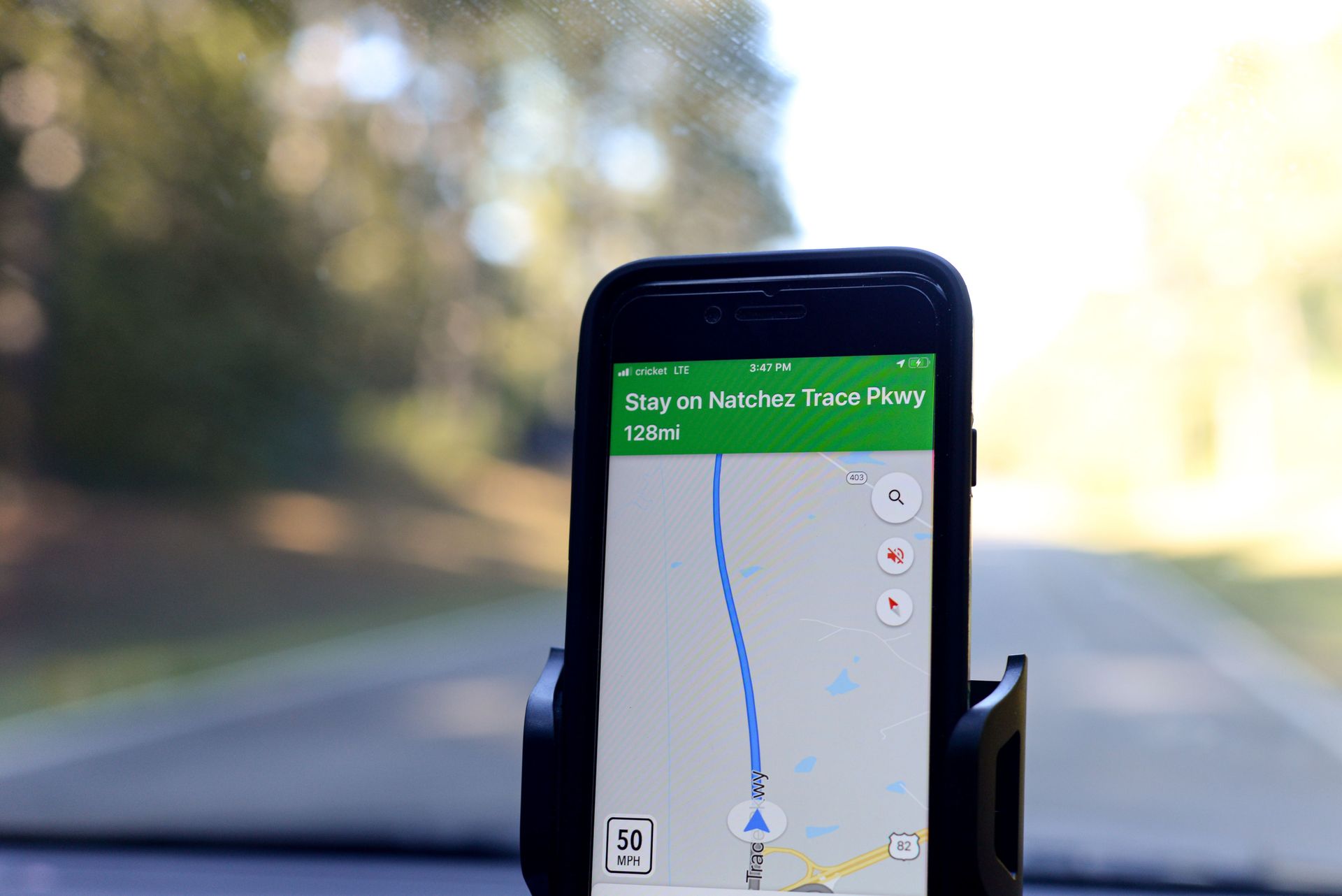
Your phone knows where you live and where you work without you having typed either address into it. The mechanism is simple: the GPS log and the pattern of where the phone spends its nights (home) and its weekday daytime hours (work) make both addresses derivable within days of the phone entering use. Mapping applications and operating systems use this inference explicitly — Google $GOOGL Maps surfaces "home" and "work" as suggested destinations based on location history even when the user has not entered these addresses in the settings.
The significance of knowing your home and work addresses is not merely directional: these two locations, combined with the routes between them, define the geography of your daily life and are the primary anchor points from which advertisers, data brokers, and the applications that access your location history can construct a model of your neighborhood, your income level, your commute behavior, and the commercial and institutional contexts you move between.
Location data brokers — companies that aggregate GPS data purchased from app developers and resell it — have demonstrated the ability to identify individuals' home addresses from anonymized location data in multiple published investigations. A 2018 New York Times investigation found that location data sold as "anonymous" could be re-identified to specific individuals using their home address as an anchor point, with the location history then revealing medical appointments, religious attendance, and other sensitive behaviors.

Miriam Alonso / Pexels
The accelerometer in your phone, combined with the phone's screen activity log, reveals your sleep schedule with high accuracy without any sleep tracking app being installed. The specific signals: the phone goes dark (screen off), stationary (accelerometer flat), and silent (no notifications generated) at a consistent time each night and returns to activity at a consistent time each morning. This pattern is detectable from raw phone usage data without any dedicated sensor.
Sleep tracking apps that request accelerometer access make this inference explicit and useful — turning the inferred sleep pattern into a displayed sleep stage analysis. But the underlying data exists independent of whether the sleep tracking app is installed: every app that accesses accelerometer data or usage logs has the raw material to infer sleep timing, and the phone's operating system logs this data continuously.
The implications of knowing someone's sleep schedule extend beyond the obvious: sleep timing is correlated with chronotype (whether a person is naturally a morning or evening person), which is in turn correlated with personality traits, health outcomes, and work performance. Sleep irregularity is correlated with mental health conditions, substance use, and socioeconomic stress. The sleep schedule inferred from phone data is not merely a practical fact about when someone is awake; it is a health and behavioral signal of significant predictive value.
Luriko Yamaguchi / Pexels
Your political views can be inferred from your phone data through several overlapping mechanisms, none of which require you to have explicitly stated a political preference. The apps you have installed (news apps, social media apps, petition apps, donation apps) reveal political orientation. The websites you visit reveal it. The contacts in your address book — and the political affiliations of those contacts, if they are registered voters in states with public voter registration data — reveal it through social network inference. The neighborhoods your GPS history shows you visiting reveal it through the well-documented correlation between residential geography and political affiliation in the United States.
Political inference from smartphone data is not hypothetical: it is the operational basis of political targeting by campaigns, political action committees, and the data brokers that supply them. A 2020 Vice investigation found that the US military had purchased smartphone location data from a Muslim prayer app and a Muslim dating app to track the movements of individuals in majority-Muslim countries — demonstrating that app-category inference of religious identity (a strong correlate of political views in many contexts) was operationally deployed at a government level.
The specific political inference that is most accurate and most troubling is the social network inference: because political views are highly correlated within social networks, knowing your contacts' political affiliations (from voter rolls, from donation records, from social media activity) allows your political views to be estimated with high accuracy from your address book alone.
Tima Miroshnichenko / Pexels
Your phone infers your financial situation through the combination of your location history, your app portfolio, your purchase behavior (if you use a mobile payment system), and the specific timing patterns of your phone use. The inference is not precise — the phone does not know your account balance — but it is directionally accurate and commercially valuable.
The location-based inference is the most reliable: your GPS history reveals the stores you shop at (discount grocery chains versus Whole Foods, dollar stores versus boutique retail), the restaurants you eat at, the neighborhoods you live and work in, and the specific commercial environments you frequent. Each of these location signals carries an income correlation that, in aggregate, produces a reasonably accurate estimate of your household income tier.
The app portfolio inference adds specificity: the presence of payday loan apps, rent-to-own apps, or buy-now-pay-later apps on your phone signals financial constraint. The presence of investment apps, premium subscription services, and high-end retail apps signals financial comfort. This app-based inference is used by financial services companies to pre-screen potential customers and by advertisers to target income-appropriate offers without asking income questions that users would decline to answer.
Nataliya Vaitkevich / Pexels
The combination of GPS history and time-stamped location data makes your daily routine predictable to a degree that most people find surprising when it is explained to them. Research by Northeastern University computer scientist Marta González, published in Nature in 2008, found that human movement patterns are approximately 93% predictable from location history — that the places you will be at any given time on any given day are highly constrained by the pattern of where you have been at those times on previous days.
This predictability is commercially useful (it allows advertisers to place geographically targeted ads in advance of your arrival at a location) and is also the basis for several documented privacy harms: stalkers have used location data obtained through app data brokers to track targets; law enforcement has used geofence warrants to obtain the location histories of all phones present at a specific location at a specific time; and insurance companies in some markets have used mobility data to adjust premiums based on inferred behavior.
The specific insight that makes your routine more exposed than you might expect is the distinction between what you tell apps and what they observe: you may have declined location access for most apps, but the few that have it — maps, weather, fitness — create a location history that reveals the entire routine.

Ivan S / Pexels
Your phone infers your emotional state through a combination of signals that individually seem unrelated to emotion but that in aggregate are predictive of emotional condition. Typing speed and error rate in messaging apps correlate with stress and cognitive load. Screen usage patterns (longer sessions, more app-switching, more frequent check-ins) correlate with anxiety and rumination. Music selection correlates with mood. The timing and length of social media interactions correlate with loneliness and social need.
Research at MIT and Stanford has demonstrated that passive smartphone data (collected without any user input or mood logging) can predict depression and anxiety with accuracy comparable to clinical assessment instruments. A 2018 study published in JMIR Mental Health found that GPS mobility patterns alone — specifically, reduced mobility, reduced time spent away from home, and reduced location variety — predicted depressive episodes with significant accuracy.
Mental health apps use this inference explicitly and intentionally — they are designed to infer emotional state from passive phone data. But the same signals are available to any app with sufficient data access, including social media platforms, which have a documented commercial interest in understanding users' emotional states and a documented history of using this understanding to maximize engagement.
Mart Production / Pexels
Your phone infers aspects of your physical health from the combination of accelerometer data, GPS history, and app behavior that reveals your activity level, your medical appointment schedule, and the specific symptoms you have searched for or sought information about.
The GPS inference is the most direct: your location history reveals which medical facilities you have visited, with what frequency, and at what times. Visits to an oncology center, a dialysis clinic, a fertility clinic, or a mental health facility are identifiable from location data even if no health information is explicitly provided to any app. A 2019 study published in the Journal of the American Medical Informatics Association demonstrated that medical appointment locations were identifiable from commercial location data with high accuracy.
The search and app behavior inference adds specificity: searches for medication names, symptom descriptions, and treatment options are recorded by the search engine and, in many cases, used for advertising targeting. The presence of specific health management apps (diabetes management, blood pressure monitoring, fertility tracking) on your phone reveals the condition they are designed to manage. The combination of location and app data creates a health profile that is, for many users, more comprehensive than their insurance company's claims data.

Kampus Production / Pexels
Your phone infers your relationship status and the structure of your social network from the combination of your contact list, your communication patterns, and your location history. The contact list reveals who you know; the communication frequency reveals who you are close to; the location data reveals who you spend physical time with.
The specific inference of romantic relationship status is highly accurate from call and text data: the person you communicate with most frequently, and with whom your location data shows significant physical co-presence, is identifiable as a likely romantic partner with high probability. Research on mobile communication data has found that romantic relationships are identifiable from call records before the individuals involved have updated their social media relationship status.
The social network inference has implications beyond the personal: your social network's behavior predicts your own behavior in documented ways. Your friends' health behaviors, purchasing decisions, and political views are predictive of yours. This means that data about your contacts — people who have not consented to any relationship with the app developer — is used to model and predict your behavior through social network effects.

Yuri Félix / Pexels
Your phone knows how you commute — by car, public transit, bicycle, or on foot — from the combination of GPS speed data and accelerometer patterns that are specific to each transportation mode. A car commute produces smooth, road-following GPS traces at 30 to 60 mph with the specific vibration signature of a vehicle in motion. A subway commute produces the specific pattern of GPS signal loss in tunnels alternating with surface position fixes at station locations. A bicycle commute produces GPS speeds of 10 to 15 mph with the specific accelerometer pattern of pedaling.
This transportation mode inference is used by mapping applications explicitly (Google $GOOGL Maps and Apple $AAPL Maps use it to improve their real-time traffic and transit data) and by data brokers for advertising and behavioral profiling. People who commute by public transit are in locations different from car commuters at the same time; their purchasing behavior, their exposure to out-of-home advertising, and their demographic profiles differ in ways that make the inference commercially valuable.
The transportation habit data has also been used in aggregate by urban planners, transportation departments, and real estate developers to understand mobility patterns and predict infrastructure demand — uses that are less individually sensitive but that demonstrate the breadth of inference available from what appears to be simple location data.

Magali Guimaraes / Peels
Your phone infers your religion from the combination of location history, calendar data, and app portfolio that reveals religious practice. A phone that is consistently in the same building at the same time each week — a church, a mosque, a synagogue, a temple — and that has a calendar with recurring religious holidays marked is producing a religious inference that requires no explicit statement of faith.
The mosque inference is the most documented in surveillance contexts: the US government's use of Muslim prayer app data described in an earlier entry demonstrates that app-category inference of religious identity was operationally deployed at a government level. But the same inference is available from GPS location data for any religious institution that has a distinctive location and a predictable attendance pattern.
The app-based inference adds specificity: the presence of the Quran app, the Bible app, the Siddur app, or religious community apps on a phone reveals religious affiliation with high specificity. These apps are often granted location, calendar, and contact access that allows them to build detailed profiles of religious practice — and the data they collect is subject to the same commercial data-sharing practices as any other app, with the religious affiliation as an attribute that can be sold to data brokers and used for targeting.

Kaboom Pics / Pexels
Your phone estimates your wealth tier from several converging data streams beyond the income inference described in the financial situation entry. The device itself is a signal: an iPhone 15 Pro Max retailing at $1,199 signals different income than an Android device retailing at $199, and the app ecosystem on each device reflects purchasing behavior that further refines the estimate.
The combination of home address (inferred from location), vehicle (inferred from vehicle-associated GPS patterns in parking lots and movement at highway speeds), travel history (flights inferred from GPS traces showing rapid long-distance movement), and shopping location history produces an income estimate that demographic research firms have found to be accurate within broad income tiers for the majority of smartphone users.
This wealth inference is used most aggressively in financial services advertising: credit card companies, investment platforms, and luxury brands target advertising based on inferred wealth tiers rather than stated income, because users do not state income to apps but their phones reveal it through behavior.

Samson Katt / Pexels
Sexual orientation is among the personal characteristics that smartphone data can infer, primarily through the combination of app portfolio and location history. The apps installed on a phone — dating apps, community apps, and media apps each associated with specific communities — are one of the more direct signals available to data systems. Location history adds further context: GPS visits to specific venues, community centers, or events associated with particular groups are identifiable from location records.
The social network inference is the mechanism that researchers have found most significant: because social networks tend to be internally correlated across many personal attributes, a system that knows the attributes of your close contacts can make probabilistic inferences about your own attributes without direct signals. This operates entirely through behavioral and network data rather than anything the user has stated.
The mechanism described here is the same one that operates across most of the inferences in this list: your phone does not ask for this information, and you did not provide it. It is derived from behavioral patterns that, in combination, allow systems to estimate personal characteristics that most users would consider private. The same commercial data infrastructure that enables targeted advertising enables this type of inference.

Ketut Subiyanto / Pexels
Your phone infers alcohol and substance use through the combination of location history (visits to bars, liquor stores, dispensaries, or substance use treatment facilities), purchase data (if you use mobile payment systems linked to your phone), and behavioral patterns (late-night phone use, specific app usage patterns associated with substance use contexts).
The location inference is the most direct: a GPS history that shows regular visits to bars on weekday evenings, or regular visits to a dispensary, or visits to an Alcoholics Anonymous meeting location, each produces a different inference about alcohol and substance behavior. The treatment facility inference — identifying visits to addiction treatment centers — is particularly sensitive, as it reveals both the use and the attempt to address it.
Insurance companies in markets where behavioral data is used for underwriting have demonstrated interest in substance use inference from smartphone data. Employment background check companies have been documented accessing location data from data brokers. The specific harm of substance use inference from smartphone data is the combination of its accuracy and its sensitivity in employment, insurance, and legal contexts.

Tom Fisk / Pexels
Smartphone data predicts personality on the Big Five personality dimensions (openness, conscientiousness, extraversion, agreeableness, neuroticism) with accuracy that the research literature has found to be moderate but significant — better than chance, and in some dimensions comparable to self-report accuracy.
The specific behavioral correlates of personality that phone data reveals: extraverts have larger and more diverse contact networks, spend more time in varied social locations, and have more varied app usage. Conscientious people have more regular sleep schedules, more consistent daily routines, and lower screen time variability. Neurotic people show higher phone check-in frequency, more frequent app-switching, and more irregular sleep patterns.
Research published in the Proceedings of the National Academy of Sciences in 2015 demonstrated that Facebook $META likes — a simpler and less rich data source than full smartphone behavioral data — predicted personality more accurately than the assessments of the user's own friends and family in several dimensions. The implication for full smartphone behavioral data is that the personality model derived from it is more accurate than any self-report instrument.

Helena Lopes / Pexels
Whether you have children, and approximately how old they are, is inferable from smartphone data through several mechanisms. The location inference is the most direct: GPS visits to pediatrician offices, schools, daycares, playgrounds, and children's activity venues reveal the presence and approximate age of children in the household.
The app portfolio inference adds specificity: the presence of parenting apps, children's educational apps, family calendar apps, and baby monitoring apps on a phone reveals parenting status with high specificity. The contact list inference adds corroboration: contacts identified as school administrators, pediatricians, or other parents in a school community network reveal the school-age child connection.
This parenting status inference is used commercially to target parenting-related products and services, and it is also used by data brokers who sell "parent" as a demographic attribute. The inference is made without any parental consent to the disclosure of information about their children — who are, in most jurisdictions, protected from commercial data collection — because the inference operates through the parent's phone data rather than any data collected directly from the child.

Soc Nang Dong / Pexels
Your phone infers your dietary habits from the combination of restaurant location history, food delivery app order history (if linked to your account), grocery store visits, and search behavior. The combination produces a profile of your eating habits that is more detailed than what most people would consciously describe about themselves.
The restaurant location inference is the most broadly available: your GPS history showing regular visits to fast food restaurants, vegetarian restaurants, halal restaurants, or vegan restaurants reveals dietary preferences and restrictions without any explicit disclosure. The food delivery app inference is the most granular: every order placed through a food delivery platform is recorded, timestamped, and associated with your identity, creating a detailed dietary record.
The commercial value of dietary preference data is significant: food brands, pharmaceutical companies, and health insurers are among the buyers of food behavior data. The specific sensitivity of dietary data for certain populations — people with diabetes managing carbohydrate intake, people following religious dietary laws, people with eating disorders — makes its commercial availability a privacy concern beyond the obvious marketing use case.

AI25.Studio / Pexels
Your phone infers your insurance risk profile — the combination of behavioral factors that predict the likelihood of filing an insurance claim — from the driving behavior data, health behavior data, and location data that insurers and their data broker partners access through app data purchases.
Driving behavior inference is the most developed: telematics apps installed with the user's knowledge (Progressive $PGR's Snapshot, State Farm's Drive Safe & Save) collect explicit driving data. But driving behavior data is also collected without dedicated telematics apps, through the accelerometer and GPS data that navigation and music apps access, and sold by data brokers to insurers. Research has found that smartphone-derived driving behavior data predicts accident risk with accuracy comparable to dedicated telematics devices.
Health behavior inference adds to the risk profile: the location visits to medical facilities, the sleep patterns, the activity levels, and the substance use signals described in other entries all carry actuarial relevance. In markets where insurers have access to behavioral data from data brokers, these inferences are being incorporated into risk models — a development that insurance regulators in most jurisdictions have not yet addressed.
Dave Garcia / Pexels
National origin and immigration-related activity can be inferred from smartphone data through a combination of location history, language settings, and communication patterns. The location inference is the most direct: GPS visits to government offices, legal aid organizations, consulates, and processing centers associated with immigration and visa services are identifiable from location records in the same way that any other category of location visit is.
The language inference adds specificity: the language setting of a phone, the apps installed in particular languages, and the language patterns visible in contact names and communication apps all provide signals about national origin. Communication patterns — the frequency and geographic destinations of international calls and messages — add further context about a user's connections to specific countries.
These signals are not unique to immigration; they describe a broader pattern of how national origin, international ties, and civic engagement with government and legal institutions are visible in smartphone behavior data. The same data infrastructure that infers national origin for advertising purposes produces data that is commercially available through data brokers, with the same use-restriction limitations (and lack thereof) that apply to other categories of location and behavioral data.

Kaboom Pics / Pexels
Mental health is among the most sensitive personal attributes, and it is also among the most inferable from passive smartphone behavior. The mechanisms span multiple data streams: GPS mobility patterns have been shown in peer-reviewed research to correlate with depressive episodes; social communication patterns (reduced frequency, shorter messages, longer response times) correlate with anxiety and mood; the presence of mental health and wellness apps on a phone reflects the conditions they are designed to support; and location history showing visits to therapists' offices or mental health facilities is identifiable from GPS records.
The aggregate picture that smartphone data assembles about mental health is detailed because behavioral symptoms — reduced mobility, disrupted sleep, social withdrawal, changes in communication patterns — are captured passively and continuously, not only during clinical encounters. Research published in academic journals has demonstrated that passive smartphone data can identify periods of mental health difficulty with meaningful accuracy.
Mental health app data is subject to the same privacy policies and data-sharing practices as other app categories. Users of mental health apps should review the data-sharing terms of the specific apps they use, as these vary significantly across products. The broader point — that behavioral signals from ordinary phone use carry mental health inference capacity independent of any dedicated app — reflects the general principle that applies throughout this list: your phone observes your behavior continuously, and behavior is a reliable signal about many things you may prefer to keep private.

Vitaly Gariev / Pexels
Your phone predicts your future behavior — the products you will buy, the places you will go, the services you will sign up for — with an accuracy that is the central commercial premise of the behavioral advertising industry. The prediction is based on the combination of your behavioral history (what you have done) and the behavioral patterns of people demographically similar to you (what people like you tend to do next).
The purchase prediction is the most commercially developed: Google $GOOGL, Meta $META, and Amazon $AMZN each operate predictive advertising systems that identify users who are in the pre-purchase phase of specific product categories based on search behavior, location visits to relevant stores, and category-relevant app usage. These systems do not merely show you ads for things you searched for; they show you ads for things the system predicts you will search for next, based on the behavioral sequence that typically precedes that search.
The location prediction is the basis for geofence advertising — placing ads in front of users before they arrive at a location where a relevant purchase might be made, based on their predictable movement patterns. The behavioral prediction is the basis for the "people also buy" and "you might like" recommendation systems that account for a significant share of e-commerce revenue. The future you that your phone has modeled is, for most users, a more accurate predictor of your behavior than your own conscious intentions.