
Sunsets look different depending on where you stand, shaped by latitude, altitude, humidity, dust, and smoke drifting through the atmosphere
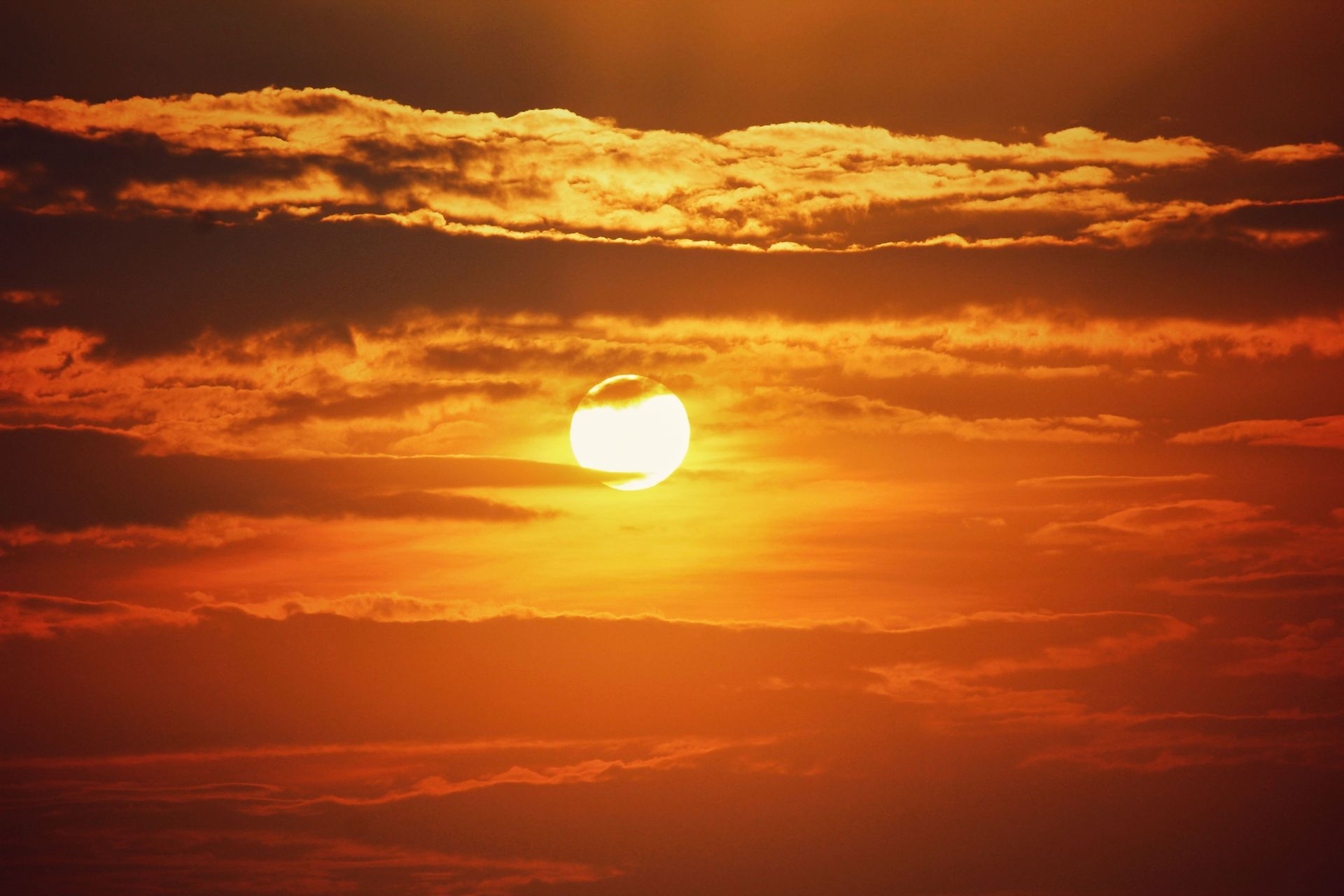
Credit: CHRISTO JAMES V / Pexels
Why sunsets look different depending on where you are comes down to physics, not chance. The same sun crosses the same atmosphere every evening, but the angle of its descent, the particles suspended in the air, and the elevation of the ground beneath a viewer's feet all change what color reaches the eye and how long the display lasts. A sunset watched from a beach in Bali rarely resembles one seen from a rooftop in Los Angeles or a ridge in the Rocky Mountains, and the differences are measurable, not just a matter of mood or memory.
Sunlight looks white at midday because it scatters off the tiny molecules that make up air, a process called Rayleigh scattering that spreads blue wavelengths across the sky and leaves the sun itself looking pale yellow. Near sunset, sunlight travels through a much longer stretch of atmosphere to reach an observer, which scatters away even more blue and green light and lets red and orange dominate. How long that stretch is, and what floats inside it along the way, depends entirely on location.
Latitude decides how steeply the sun drops toward the horizon. Aerosols like dust, sea salt, and smoke change which wavelengths survive the trip. Humidity determines whether the light diffuses into a soft haze or holds together in sharp, defined bands. Elevation changes how much atmosphere sits between a viewer and the sun. Local geography, from open ocean horizons to mountain ridgelines, decides how a sunset starts and ends. And volcanic ash or wildfire smoke lofted into the upper atmosphere can tint a sunset thousands of miles from where that smoke or ash actually originated.
None of this is a matter of opinion. Each of these six factors is a documented mechanism, and together they explain why the same sunset never happens the same way twice in two different places. The six reasons below cover the biggest drivers of that variation, from the angle of the sun's descent to the particles riding along in the air a person happens to be breathing when the sky starts to change color.
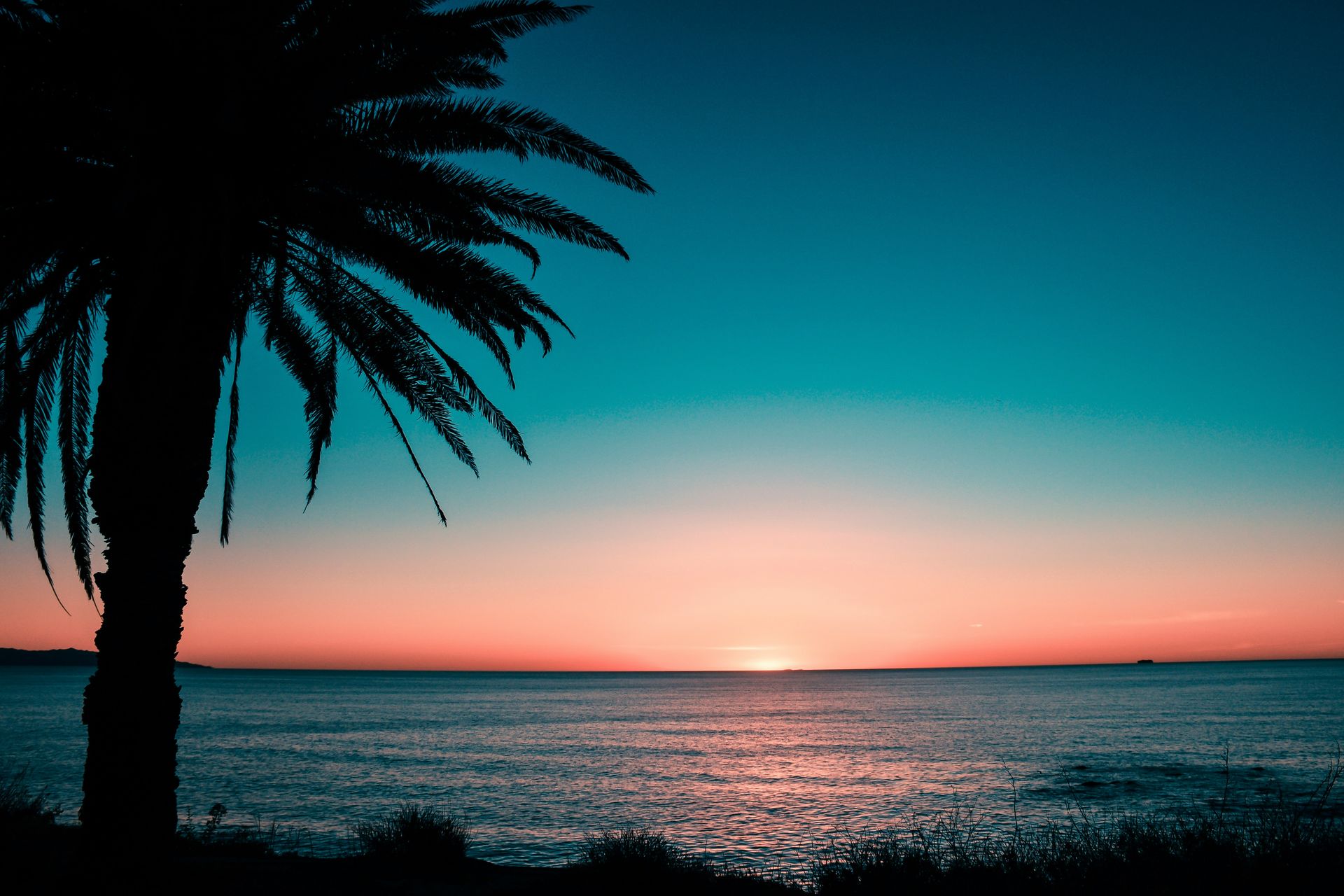
Credit: Guss B / Unsplash
Near the equator, the sun drops almost straight down toward the horizon, so sunset arrives and passes in around 20 minutes, while locations closer to the poles see the sun slide sideways along a shallow angle, stretching twilight out for an hour or longer. This happens because the sun's daily path, called its diurnal arc, meets the horizon at a steep angle near the equator and a shallow, grazing angle at high latitudes.
In cities close to the equator, such as Quito, Nairobi, or Singapore, day turns to night with little warning. The sun sits high overhead for most of the day, then drops quickly once it nears the horizon, giving the sky only a brief window of orange and pink before darkness sets in. Visitors from temperate cities often notice this rapid shift immediately, since it defies the slow fade they are used to at home.
Farther from the equator, in places like Reykjavik, Anchorage, or southern Patagonia, the geometry works in the opposite direction. The sun's path tilts more parallel to the horizon, so it takes much longer to fully disappear, and twilight can stretch on well past the point where the sun's disc has technically set. In summer, this effect becomes extreme at high latitudes: parts of Norway, Alaska, and Svalbard experience the midnight sun, where the sun never fully sets for weeks at a time, while in winter those same places see correspondingly long, drawn-out dawns and dusks around a sun that barely clears the horizon.
The tilt of Earth's axis, roughly 23.5 degrees, is what creates this latitude effect in the first place, since it determines the angle at which sunlight strikes different parts of the globe across the year. A traveler who watches the sun set in Singapore and then in Oslo within the same month is really watching two different geometric relationships between the sun's path and the local horizon, not two different suns. The duration of a sunset, in other words, is not a matter of climate or air quality at all. It is pure geometry, fixed by how far a location sits from the equator.
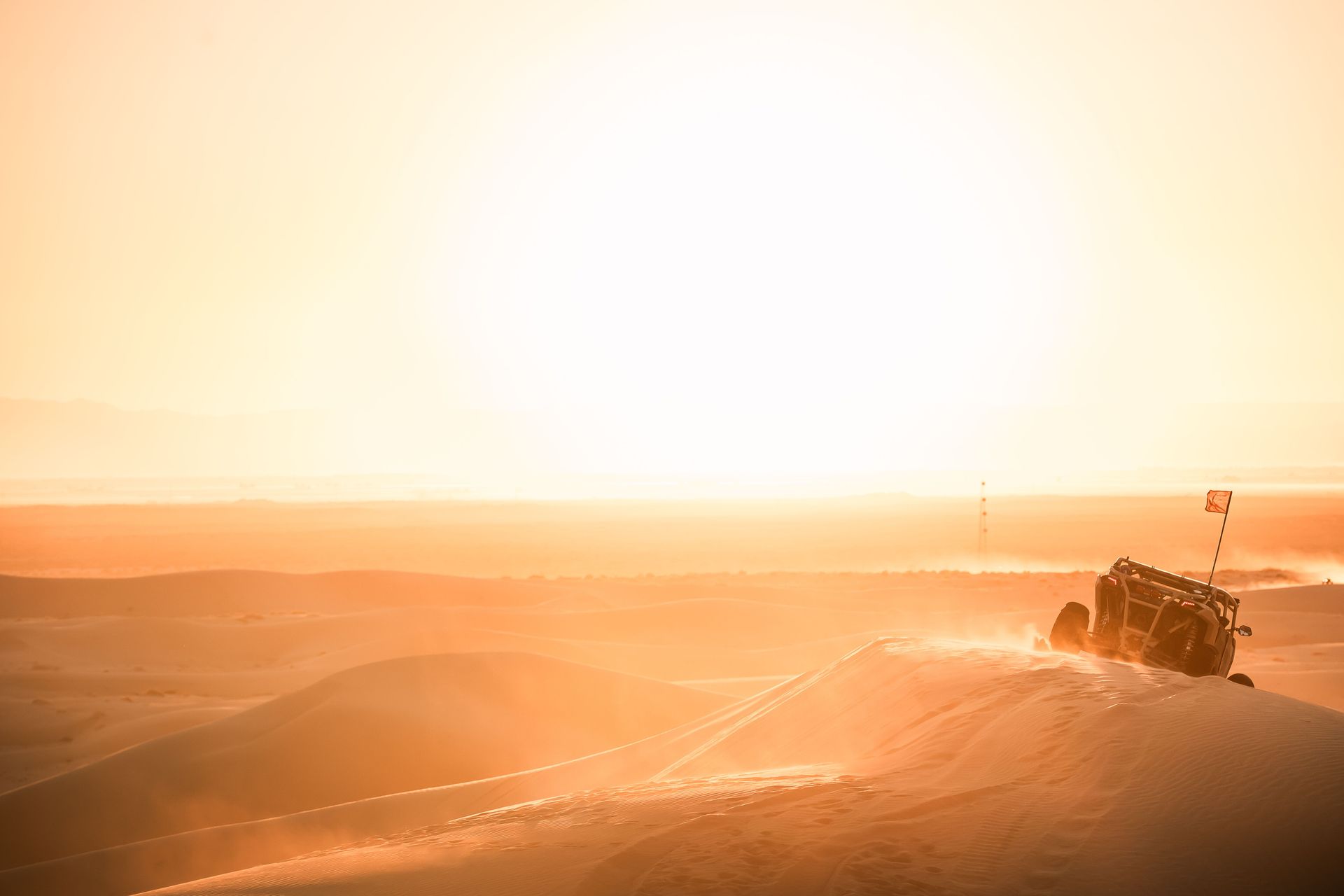
Credit: Roy Serafin / Pexels
Sunsets turn more orange and red where the air carries more dust, sea salt, or pollution, because these larger particles scatter light differently than clean air does. Clean air scatters light through a process called Rayleigh scattering, which mainly affects short blue wavelengths. Air loaded with bigger particles adds Mie scattering on top of that, which scatters a broader range of wavelengths, including the reds, oranges, and pinks that give a dramatic sunset its color.
Desert regions supply some of the most consistent examples. The Sahara, the Arabian Peninsula, and the Sonoran Desert in the U.S. Southwest regularly carry fine mineral dust lifted from dry ground, and that dust intensifies the orange and red bands visible at sunset, especially during dry seasons or dust storm events. Sunsets in Phoenix or Marrakech often look deeper and more saturated than sunsets over open water on the very same evening, purely because of what is suspended in the air above each location.
Cities with heavy particulate air pollution show a related but distinct pattern. Delhi, Beijing, and Mexico City have all recorded strikingly vivid sunsets tied to elevated levels of fine particulate matter, the same pollution that harms air quality and respiratory health during the day. The particles that make the air unhealthy to breathe are often the same particles responsible for the deep amber and red skies photographed at dusk in those cities.
Sea salt aerosol plays a similar role for people near oceans. Coastal air constantly carries tiny salt particles kicked up by wave action, and that salt scatters light in ways that can soften or warm a sunset's color depending on wind and humidity. By contrast, air over open ocean far from land, or air at high altitude far from any dust or pollution source, tends to produce paler, more delicate sunsets with less red and more soft pink or gold, since there is simply less material in the air to scatter the longer wavelengths. What a viewer sees at sunset is, in a real sense, a picture of the particles the local atmosphere happens to be carrying that day.
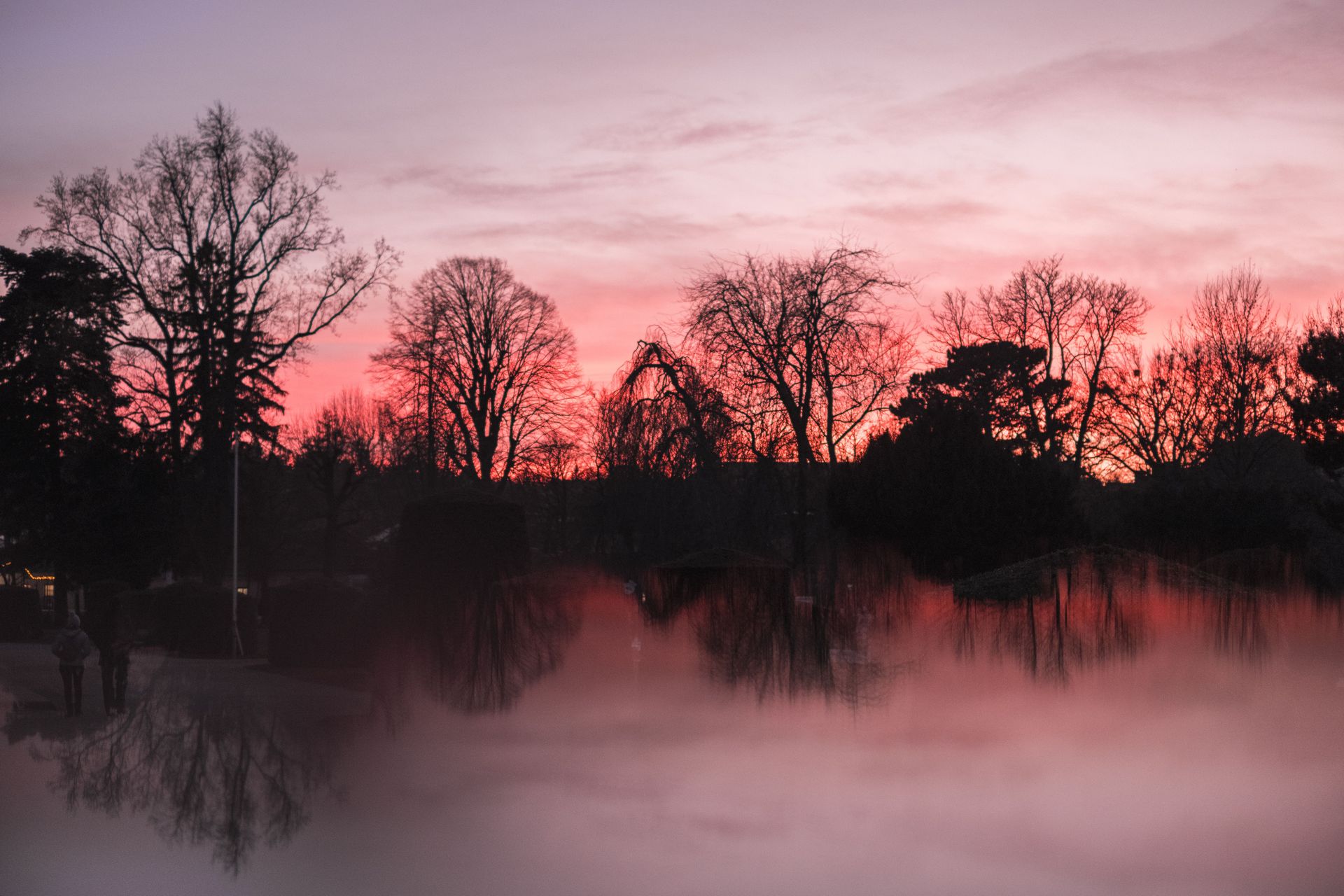
Credit: Michele Raffoni / Pexels
Humid air tends to produce softer, hazier sunsets, while dry air produces sharper, more clearly defined bands of color, because water vapor and water droplets scatter and diffuse light differently than dry air does. Moisture in the atmosphere, even before it condenses into visible cloud, spreads light across a wider area of sky, which blends colors into gentler gradients rather than crisp lines.
Tropical and coastal cities with high humidity, such as Miami, Singapore, or Mumbai during the monsoon season, often see sunsets that fade gradually from gold to pink to gray, with soft transitions and less contrast between bands. The extra moisture in the air acts almost like a diffusing filter, spreading the available light across a broader swath of sky rather than concentrating it into a single, sharply bounded strip of color.
Dry, continental locations show the opposite pattern. Interior deserts and high, arid plains, including parts of Arizona, Nevada, and the Australian outback, often produce sunsets with clean, well-defined bands of orange, pink, and purple stacked visibly on top of one another. With less water vapor to scatter and blur the light, the transitions between colors stay sharper, and the boundary between the colored sky and the darker blue above it remains more distinct.
Humidity also affects how long the colorful part of a sunset lingers. Moist air scatters light over a longer period as the sun continues to drop below the horizon, so twilight in humid regions can appear to fade more slowly, even at similar latitudes, compared with the more abrupt color shift often seen in dry climates.
This is one reason the same traveler can watch a sunset in a rainforest region and a desert region within the same week and come away with two entirely different impressions of what a sunset looks like, even without any difference in latitude, season, or altitude. The moisture content of the local air alone is enough to change whether a sunset reads as a soft, blended wash of color or a sharp, layered display. Weather systems moving through an area can shift this quality from one evening to the next, since a dry air mass arriving behind a cold front can replace humid air within a matter of hours.
Credit: Marek Piwnicki / Pexels
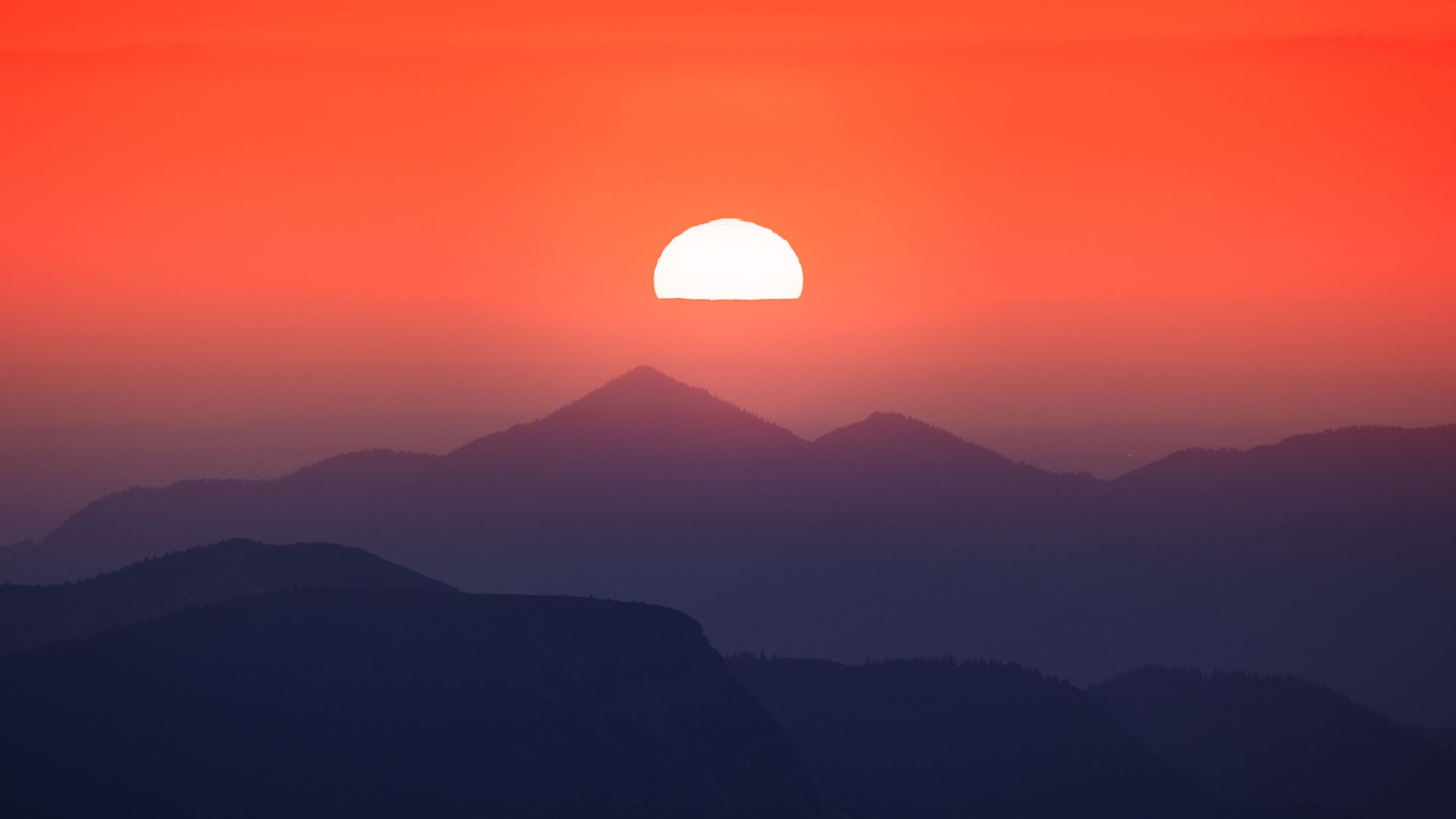
Sunsets viewed from high elevation tend to look more saturated and clear than sunsets viewed from sea level, because less atmosphere and fewer low-lying particles sit between a viewer and the sun. Dust, pollution, and water vapor are heaviest near the ground and thin out with altitude, so a person standing on a mountain ridge is looking through cleaner air than someone standing on a beach, even if both are watching the very same sunset.
High-altitude locations such as the Colorado Rockies, the Peruvian Andes, and parts of the Himalayan foothills are known among photographers for sunsets with deep, saturated color and unusually sharp contrast between the colored sky and the darker blue above it. Observatories are often built at high elevation for a related reason: thinner, drier, cleaner air distorts and scatters starlight and sunlight less than the denser air found lower down.
Elevation changes something else about a sunset besides color. A person who watches the sun set from a valley floor and then climbs several hundred feet higher can sometimes watch the same sun set a second time, because gaining altitude pushes the visible horizon farther away and lower, giving the sun a bit more sky to cross before it disappears again. This double-sunset effect is a straightforward consequence of geometry, not an illusion, and it becomes more noticeable the more elevation a person gains in a short amount of time.
Air pressure also drops with elevation, which changes how light refracts as it passes through the atmosphere near the horizon. This is part of why sunsets photographed from airplane windows, tens of thousands of feet above the ground, often look strikingly different from the same sunset as seen from the ground below, with deeper blues above the horizon and a more compressed, intensely colored band where the sun itself sits.
None of this means high elevation always produces a better sunset. It means a different one, built from a thinner, cleaner slice of atmosphere than the version seen by someone standing at sea level under the very same sky. Travelers $TRV moving between a coastal city and a nearby mountain town within the same day often notice this shift immediately, even without changing latitude or season.
Credit: Jürgen / Pexels
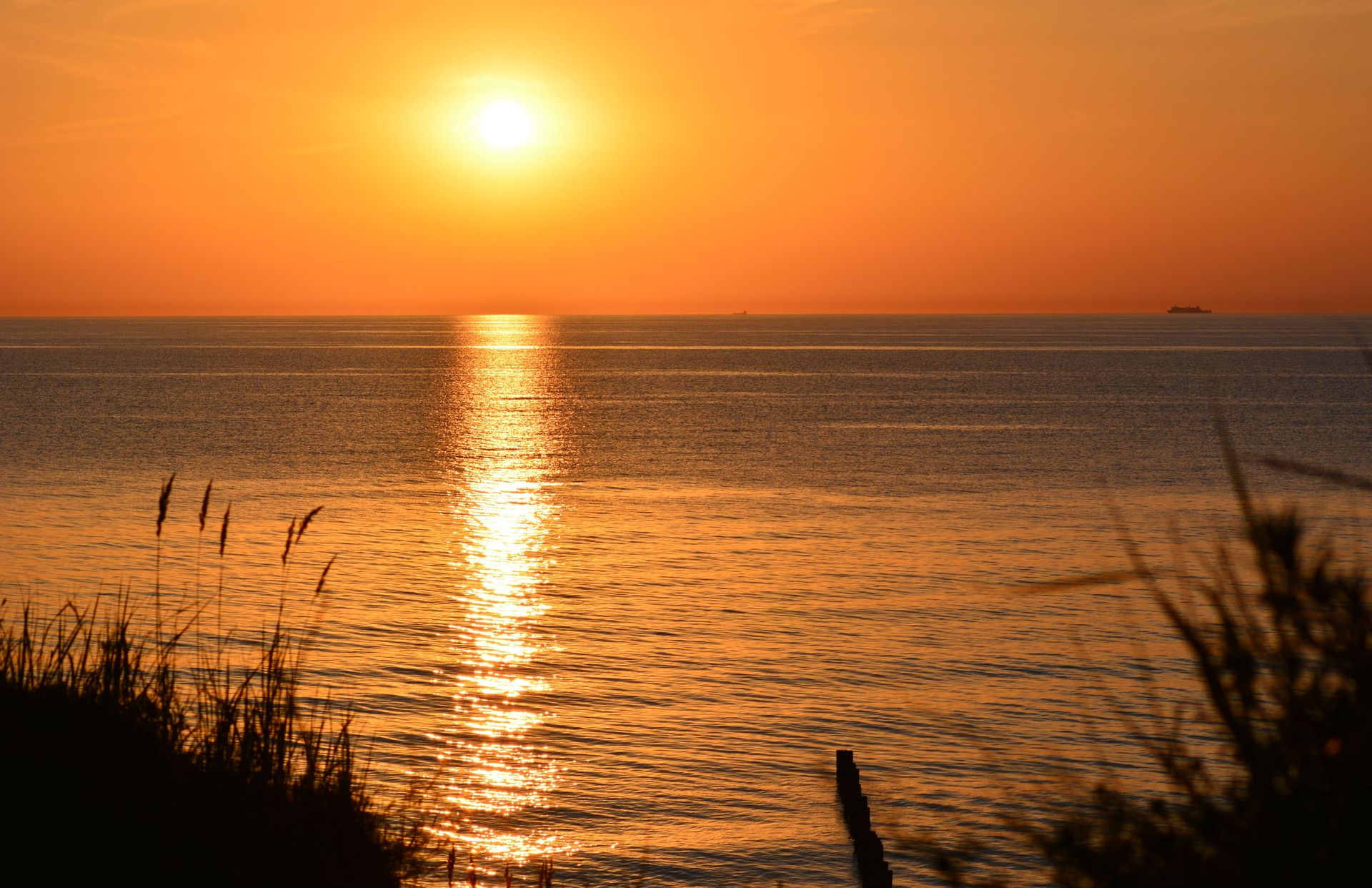
An unobstructed ocean horizon lets a sunset run its full course, while mountains, forests, or city skylines can cut it short by blocking the sun long before it reaches the true horizon. Local geography decides not just how a sunset looks, but how much of it a viewer actually gets to see.
Over open water, the horizon is a flat, unbroken line, so the sun's full disc is visible as it flattens and sinks, sometimes producing a brief green flash right at the moment the last sliver disappears, caused by the atmosphere bending light of different colors by slightly different amounts. This flash is a real, documented optical effect, though it requires very clear air and an unobstructed sea-level or ocean horizon to be visible, which is why it is reported far more often from coastal cities like Key West or Honolulu than from inland locations.
Mountain ranges work in the opposite direction. In cities like Denver or Zermatt, the sun often disappears behind a ridge of peaks well before it reaches the mathematical horizon, shortening the visible sunset and sometimes replacing the usual glowing disc with a display of light rays fanning out from behind the silhouetted mountains, an effect sometimes called crepuscular rays.
Deserts and open plains offer a middle case: a flat, distant horizon similar to the ocean's, but combined with dry, dusty air rather than moist, salty air, which produces sharply banded, highly saturated color instead of the softer gradient that humid coastal air tends to create. Locations like the Mojave Desert or the high plains of Mongolia combine that open horizon with dry air to produce some of the most vividly layered sunsets found anywhere.
Urban skylines add a final variable. Tall buildings can block the lower portion of a sunset entirely, but they can also reflect and scatter the remaining light across glass and steel surfaces, adding a secondary glow to the display that has nothing to do with the atmosphere at all. A sunset watched from a rooftop bar in Manhattan or Hong Kong is shaped as much by the surrounding architecture as it is by the sky itself, since buildings determine where the visible horizon actually sits for that viewer.
Geography, in short, does not just provide a backdrop for a sunset. It actively determines which part of the light show a viewer gets to witness, how long it lasts, and whether effects like a green flash or crepuscular rays even have a chance to appear. Two people photographing what they call the same sunset, one from a beach and one from a mountain town an hour inland, are often documenting two different physical events entirely.
Credit: Og Mpango / Unsplash
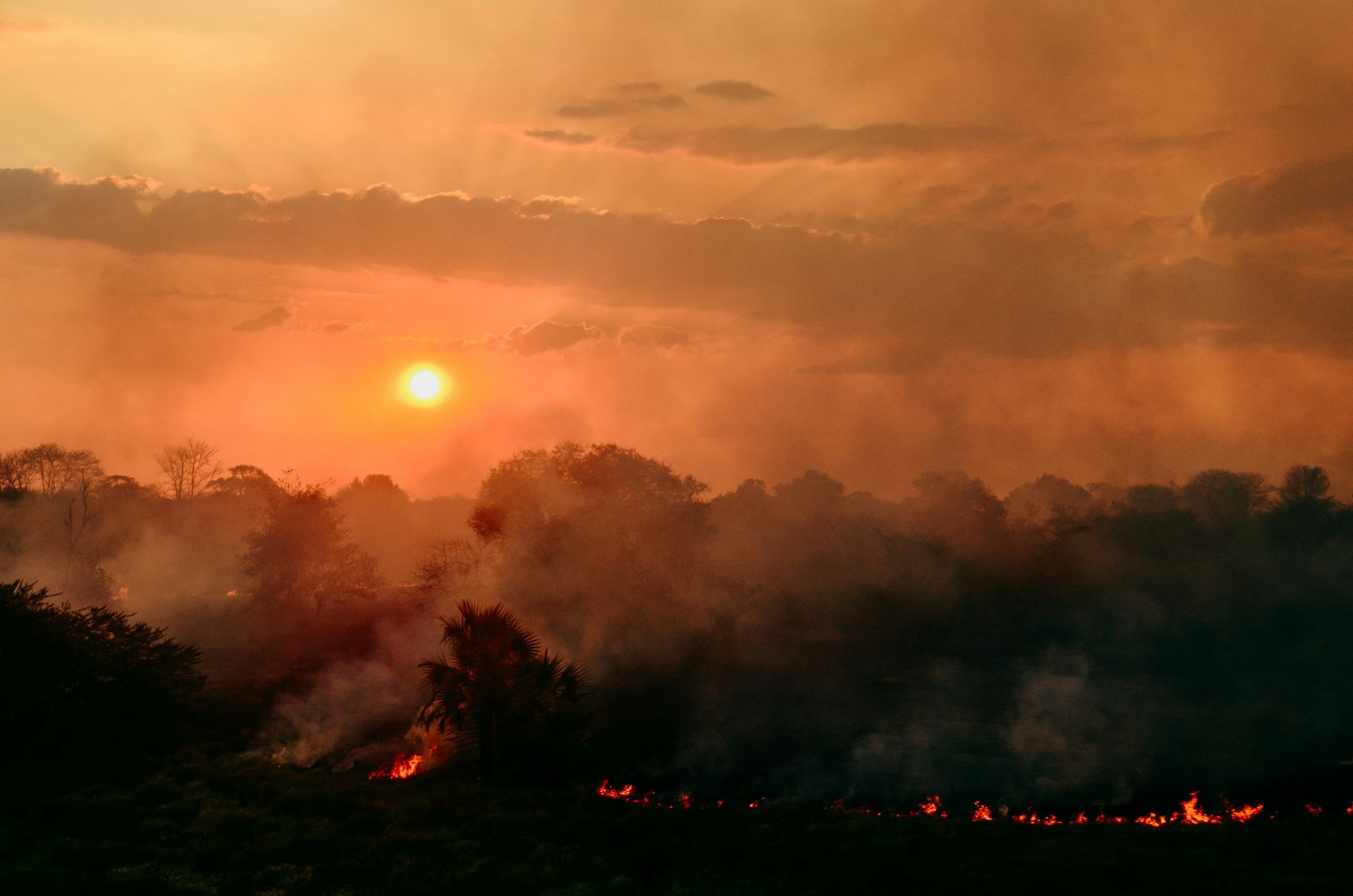
Large volcanic eruptions and major wildfires can change sunset colors across entire continents by injecting fine ash and sulfate particles high into the atmosphere, far above where weather normally mixes the air. These particles can drift for months or years, tinting sunsets in places thousands of miles from the eruption or fire that produced them.
The 1883 eruption of Krakatoa, in present-day Indonesia, sent sulfate aerosols into the stratosphere that circled the globe and produced unusually vivid red and orange sunsets across Europe and the Americas for roughly two to three years afterward. Newspapers at the time described skies so vivid that fire brigades were called out in some cities, mistaking the glow for a distant blaze. The 1991 eruption of Mount Pinatubo in the Philippines produced a similar, well-documented effect, cooling the planet slightly while also generating strikingly colorful sunsets worldwide for about two years as its sulfate aerosols spread through the stratosphere.
Wildfire smoke produces a related but shorter-lived version of the same effect. Smoke from major fires in Australia, Canada, and the western U.S. has repeatedly traveled thousands of miles and altered sunset color in cities with no fires anywhere nearby. In June 2023, smoke from wildfires burning in Quebec drifted south and turned skies over New York City, Washington, D.C., and other East Coast cities a deep orange, with sunsets and even midday light taking on a color usually associated with far more polluted cities.
Unlike the latitude, humidity, or elevation effects described earlier, volcanic and wildfire aerosols are temporary rather than a fixed feature of a given location. A city with typically pale, clean sunsets can suddenly produce some of the most dramatic skies on the planet for weeks or months if enough ash or smoke happens to be passing overhead, and then return to its usual pattern once the particles disperse or settle out of the atmosphere.
This is the one factor on this list that has nothing to do with where a location sits permanently on the globe. It depends instead on what happens to be drifting through the upper atmosphere on a given evening, which is why the same city can produce both some of the plainest and some of the most striking sunsets on record within the same year.