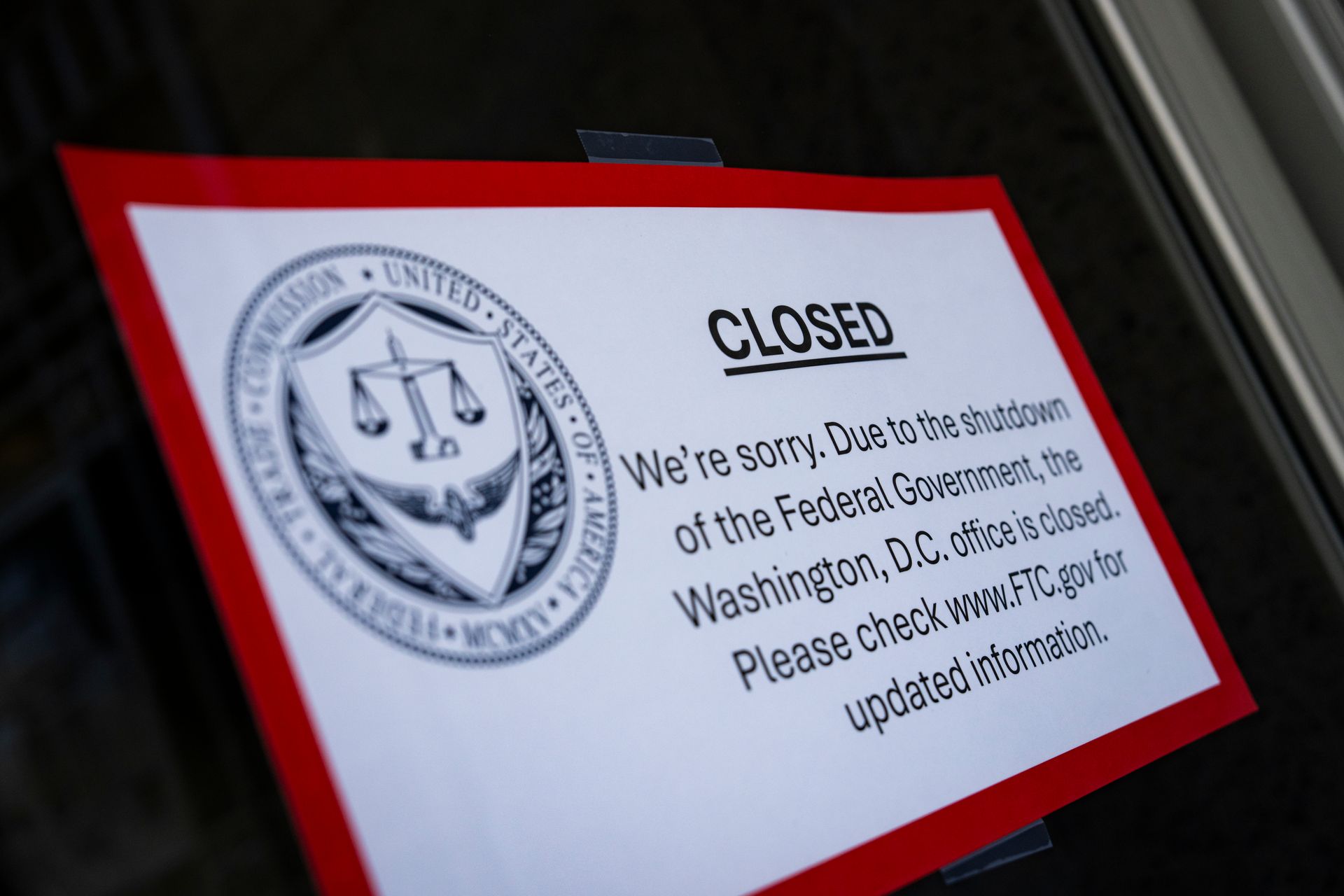
Here's how the federal government shutdown could affect various sectors — and how its duration will come into play
Al Drago/Getty Images
If the U.S. government shutdown is bothering investors, you wouldn’t know it by the stock market.
In early morning trading on Thursday, the benchmark S&P 400 index was up 8% and appeared to be extending an already three-month winning streak.
It’s not just the S&P, either. Both the NASDAQ and the Dow Jones Industrial Average were also up on the second day of post-shutdown trading, suggesting a collective shrug across broad sectors of the U.S. stock market.
Join 500,000+ readers who start their day with Quartz.
By subscribing, you agree to our Terms of Service and Privacy Policy.
A benign reaction to the government shutdown shouldn’t surprise investors, market experts say.
“Expect the equity market reaction to be relatively muted, at least initially, while the bond market may experience some downdraft in yields, but nothing on the order of a major move,” said Mark Gibbens, president and chief investment officer of Gibbens Capital Management, a wealth management services firm.
Market participants have experienced this type of situation numerous times over the past 15 years, and it’s usually the shutdown timetable that dictates any negative investment sentiment. “The longer the shutdown carries on, the more damage will be done to the financial markets, but assuming the shutdown is short-lived, investors will not fret much,” Gibbens added.
That’s not to say there aren’t any reverberations stemming from the government shutdown, the 14th federal funding halt since 1981. Historically, shutdowns can cause market slides if given enough legs. For instance, the last U.S. government shutdown, which began on December 22, 2018, lasted 35 days and resulted in a $3 billion GDP loss.
If the federal funding gap persists for an extended period, Main Street investors may take notice, while seasoned market mavens may seek opportunities for leverage and market advantage as long as the spending freeze remains in place. If that scenario occurs, look for the market "winners and losers" rise to the surface.
Alternative investments.
If the shutdown timeline is extended, investors may head to the sidelines and pivot to other market options.
“The response in terms of gold and the crypto trade is likely to be positive as we see Congress tussle on how to fund the government on a go-forward basis,” Gibbens said.
Investors may also consider bonds.
Ironically, government bonds and other fixed-income products could ignite in a prolonged government shutdown environment. “Treasuries are expected to see strong demand, as prices rise, and yields fall due to flight-to-safety behavior when the stock market is at risk,” said Fanar Nissan, president and CEO of Arizona-based Akkadian Wealth.
International diversification could be in play.
If investors flee to foreign stocks amid a prolonged federal funding freeze, they should attract more Wall Street capital. “At the margin, investors sometimes rotate into non-U.S. assets when U.S. fiscal risks flare, though usually briefly,” said Dan Lindberg, principal at Milwaukee-based Applied Economic Insight, LLC.
A slowdown in initial public offerings.
The government spending halt should lead to a temporary halt in the IPO market. “However, investors will likely expect this shutdown to resolve not too far down the road,” Gibbens noted. “The shutdown shouldn't permanently impair the market for IPOs, only postpone its recent strength."
Defense stocks could take a hit, although size does matter.
Defense contractors will be impacted, but not all sector stocks will be affected.
“The big players, such as Lockheed and Northrop Grumman $NOC (NOC), usually weather the storm fine because they have long-term contracts,” Nissan noted. “However, smaller suppliers and those waiting on new funding can experience delays and cash flow issues.”
Travel-related stock could be derailed in a more protracted shutdown.
Travel and transportation are impacted as air traffic controllers and TSA agents continue to work, albeit without pay.
“This can lead to staffing stress and additional flight delays,” Nissan said. “The FAA furloughs can also slow down certifications and inspections,” which could also delay travel and discourage travelers.
Generally, there’s a risk in aggressively trying to trade the shutdown.
“History shows markets often rise through or shortly after the disruption,” Lindberg said.
Instead, Lindberg advises investors to use volatility to rebalance their portfolios or upgrade quality, rather than chasing headlines.
“It’s a good idea to maintain liquidity for near-term needs, and be mindful if you hold firms heavily exposed to federal contracts or D.C.-area demand,” he added. “The bigger drivers for portfolios remain inflation, Federal Reserve policy, and global energy/geopolitics, not the shutdown itself.”
