Kiese Laymon always knew he would write a book. As a 44-year-old professor of English and creative writing at the University of Mississippi, he’s written three.
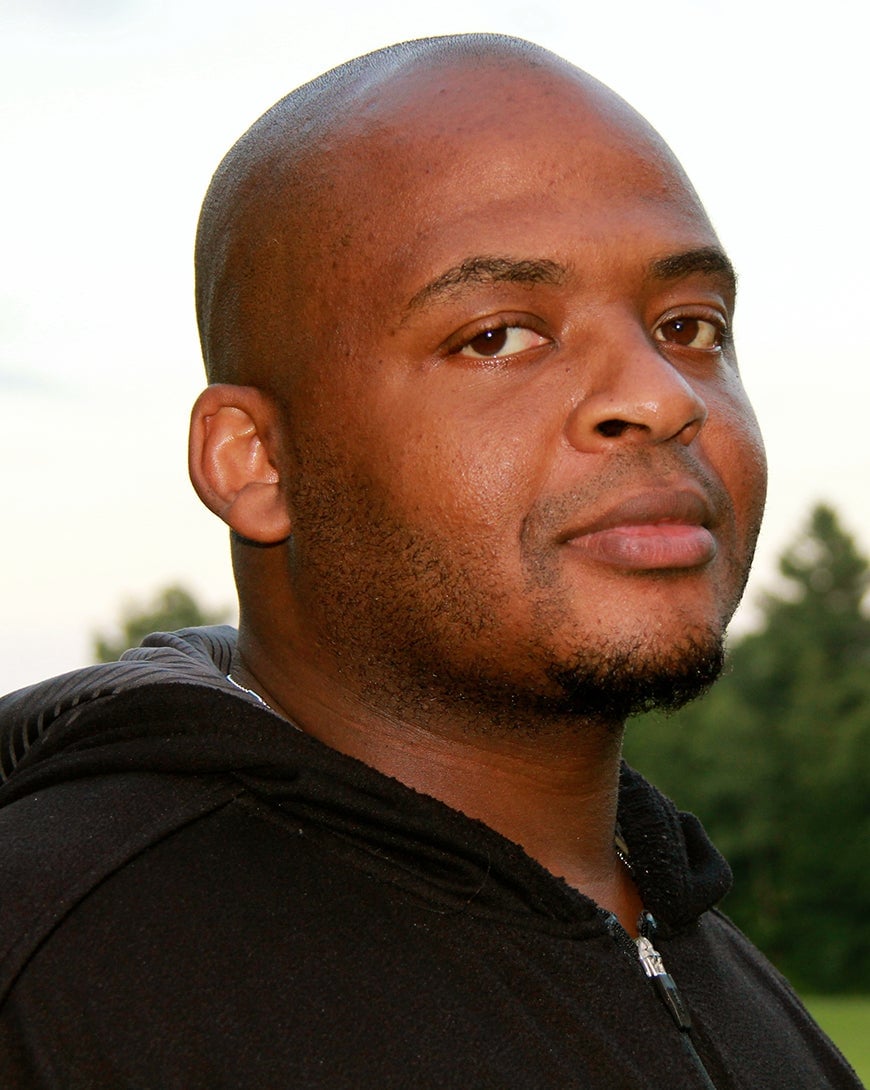
Kiese Laymon always knew he would write a book. As a 44-year-old professor of English and creative writing at the University of Mississippi, he’s written three.
Black feminism, in particular, is a driving force in his work. That’s in part because of his mother. In his 2018 memoir Heavy, Laymon writes: ”We have always been a bent black southern family of laughter, outrageous lies, and books…. your insistence I read, reread, write, and revise in those books, made it so I would never be intimidated … by words, punctuation, sentences, paragraphs, chapters, and white space. You gave me a black southern laboratory to work with words.”
Join 500,000+ readers who start their day with Quartz.
By subscribing, you agree to our Terms of Service and Privacy Policy.
In this interview with Quartz, Laymon laments on the state of American men, considers how the workplace is the nexus of all kinds of power, and reflects on what it means to move through the world in his body.
I thought a lot about workplace gender inequality prior to the Me Too movement. The most important lesson I’ve been reminded of [by it] is that our nation, as it is currently constituted, encourages abuse and harm. That means nearly everyone in this country has participated in structural and/or interpersonal abuse and harm. It’s impossible to dismantle that kind of culture unless we accept the ways that kind of culture exists inside of us and all the things we deem valuable.
I definitely identify as a feminist because feminism, particularly black feminism, is really the only consistent force in my life that has demanded gender-based liberation internally and externally.
Not enough, for sure. I try to work toward honest acceptance of how I fail and I try to do everything I can professionally and personally to ensure good love, healthy choices, and second chances to extremely vulnerable folk.
Men are the biggest threat to men in America. Our appetite for terror seemingly has no bottom. We are actually congratulated for being terrible and congratulated for being a tiny bit less terrible. We are a violent mess.
I do. Asking hard questions of myself and offering hard realities of the life I’ve lived are probably most effective. My biggest inhibition is publicly reckoning with the ways I’ve emotionally harmed the women closest to me in my life.
I worry about hurting people, and now that I’m way fatter than I used to be, I worry a lot about people touching me and thinking my body is so much softer than it once was.
I’m a big, black man but I really don’t want to hurt anyone, though I understand why that is something that cannot be taken for granted.
It’s not about winning. It’s about being better at justly loving. And just love is often messy love. But when you mess up, please accept it, not with empty platitudes.
This is hard. I’d generally be more tender and really think about the way all kinds of power collide in the workplace. Consent isn’t just sexual and consent means nothing if it’s not fully informed. I would have been more honest, more tender, less desperate.
Best advice came from [the writer and activist] Darnell Moore. He told me that you can’t be good at love if you’re not good at accepting love. I’d tell young men the same thing. Love others and yourself as gently and honestly as you can. If people ask you to leave them alone, leave them alone.
