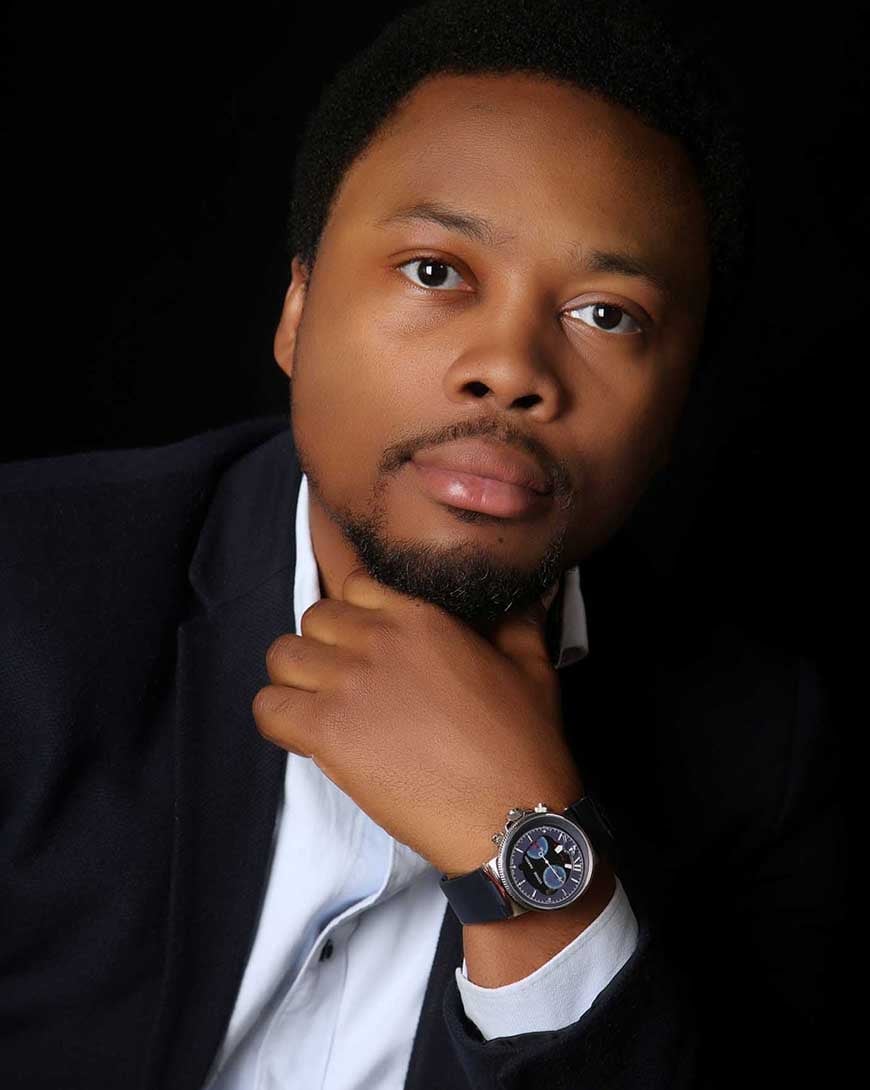
In 1997, when Oscar Ekponimo was 11, his father lost his job. The family sometimes wouldn’t eat for two or three days. During that time Ekponimo made a promise to himself: He would do his best to make sure others did not have to go through what he did.
Ekponimo, now 32, is a software developer and entrepreneur who has been celebrated as a Time magazine Next Generation leader, a 2017 Quartz Africa Innovator, and a recipient of the Rolex Award for Enterprise 2017. The accolades are in recognition of the Chowberry app, which is the fulfillment of that promise he made to himself.
Chowberry helps grocery stores manage inventory by offering items nearing expiration to welfare and aid agencies at a discount. The agencies then take the food that otherwise would have been wasted and distribute it to those in need, such as orphanages and low-income households.
“I had several job offers from big [technology] companies over the past few years,” Ekponimo told Time. “But Chowberry is what I am passionate about and find fulfilling. I want to see it grow and continue to benefit people’s lives.”
Ekponimo also is doing his part to close Nigeria’s gender gap in science through Gallery of Code, a research and development lab he launched in May 2018 in partnership with the Austrian arts and science institute Ars Electronica.
In this interview with Quartz, Ekponimo discusses how creating an environment free of gender discrimination is an ongoing process, why he chooses to operate outside ideological battlegrounds on the question of feminism, and how he has changed his approach to hiring women at Chowberry.
I have always been a firm believer of workplace equity and fairness to employees irrespective of gender. I think in terms of equality rather than the inequalities that persist, and constantly work to put adequate structures in the workplace to create an environment free of harassment or discrimination, but one with equal opportunity. [The] lesson learned from the Me Too movement [is] the empowering nature of shared experiences and trauma.
I do believe in equal rights and opportunity for both men and women, and evidently, in our world today, there is gross imbalance, inequality, and unfairness toward women. However, labels to me are confining containers that are rather limiting and constraining; I prefer to transcend beyond coinages and classifications. I identify myself as one who holds higher ideals of respect, equality, fairness, and decency toward women. If we decide to call that feminism, that’s great, but I choose to function outside of ideological battlegrounds. Containers, such as viewing innocent, good old courtesy, and chivalry as insulting or sexist—whereas one may innately be courteous, respectful, and kind toward women based on cultural contexts or upbringing—and [viewing] anyone who acts this way is outside the feminist container is therefore sexist? These are too extreme.
I set the disposition and approach regarding gender-sensitive issues such as being gender inclusive in my tone and language. I also include women in our decision-making processes and ensure they are part of top management.
I talk about sexism with my male peers from the standpoint of workplace sexism and discrimination. The strategy that proves most effective is two-sided: On the one hand, I express the value and advantages that inclusiveness brings to my organization, on the other hand, I let them know this does not in anyway emasculate or chip away at their “manhood” as they often say.
Pressure to succeed.
That I am gender-agnostic when it comes to leadership and opportunity.
Be secure in who you are, be unashamed to share your core values. When you are a person of higher ideals, no criticism can limit your advancement. It makes no difference what people think. Success is a personal state of mind. You define you.
In the past, I gave high-pressured, field-work-leading roles to male employees; I changed my approach recently by giving a similar role to a female employee and observed we achieved far better outcomes.
Challenges are for your benefit; promotion comes when you surmount them. My advice would be: Be a value creator, pursue vision and purpose. The universe responds to value.
