
The notion of networking as needing to be “on”—to shake every hand and capture every soul (for a minute, anyway)—is something we tend to think extroverts do well, and introverts—not so much. But when it comes to making connections, introverts may have the upper hand. You don’t have to change who you are or concoct a phony-feeling persona to meet people easily.
Let’s take a moment to review what “introvert” really means. In the 1920s, Swiss psychologist Carl Jung developed his theory of psychological types, noting that “Each person seems to be energized more by either the external world (extraversion) or the internal world (introversion).” Much more recently, the Urban Dictionary built on that idea: “Contrary to popular belief, not all introverts are shy. Some may have great social lives and love talking to their friends but just need some time to be alone to ‘recharge’ afterwards.”
That part about recharging is key. As Jung observed, extroverts typically gain energy from being in a crowd—a party, a game, concert, hopping from one gathering to another. Those of us at the other end of the spectrum need quiet time to regroup, think, plan, and dream. I’m not alone, I’m sure, in mentally calculating how long it will be till I can get away from the crowd. No matter how lovely a time I’m having at a group event, I always look forward to being back home.
Another mark of the introvert is the ability to be comfortable being quiet, which is often misunderstood. As a thoughtful and introspective teenager, my goal was to observe and eavesdrop on adult conversations. When my parents had guests over, I was intrigued by the sotto voce remarks they would make later, speculating about the (unspoken) troubles they knew their friends were having. Nothing had been uttered at the table, of course, which led me to understand that human experiences run much deeper than polite company revealed. I began to feel like an anthropologist—the outsider studying the group with a cool eye, never fully joining in.
I’m convinced that all of these qualities, which introverts seem to share—feeling like an outsider, being an observer, curiosity about the stories and situations of others—inform how I’ve made my way through life. (As one scholarly study put it, “An introvert who is silent in a group may actually be quite engaged—taking in what is said, thinking about it, waiting for a turn to speak.”) I think this ability to observe and assess are some of my best assets, and maybe they’re yours, too. Whether you’re shy, humble, self-effacing, insecure, or simply hate the stereotype of networking, I want to encourage you to make the most of your own personal style in order to build your own brain trust—to start from where you are. My long-held theory is that introverts (and other unassuming people) are well suited to building a strong web of connections because of some distinctive characteristics we share, such as these:
These abilities—listening, observing, being curious—are wonderful tools for connecting with people. And here’s the thing: none of them requires you to be in the limelight. That doesn’t mean you can’t have a successful career, of course.
For more than twenty years, Judy Wert has led her own executive recruiting firm in New York for companies in search of creative leadership. If you think a search consultant must be super-outgoing to succeed, meet Judy, who considers herself an introvert. She thinks of herself as a kind of “gentle provocateur” who plays a long game, professionally, out of necessity. Headhunters and recruiters must always meet new people to keep in mind for future client needs. She’s intentionally kept her firm small to employ a high-touch approach driven by her relationships across her global network.
A visual designer, Judy morphed her design tools into a new “medium of people,” which has made Wert&Co. “the story of people and conversations.” She has tracked these ongoing conversations through her proprietary custom-designed database—built long before LinkedIn or Salesforce $CRM—which is a repository for the thousands of people she’s met. It’s not unusual for her to follow up years later about an opportunity with an individual she met only once.
When I think of Judy, I think of someone whose work revolves around the qualities I’ve mentioned here: curiosity, observation, listening. She describes her process of matching people to positions as one of “strategic intuition”—a sensibility that captures the kind of calibration, internal and external, that introverts know very well. I admit to some bias here: I think introverts are more attuned to the steady thrum of needs, desires, secrets, and worries most people experience. That awareness informs our understanding of others, for the better.
It’s this notion that helps us think more roundly (and smartly) about who would be the right one for an open position, and more broadly, the right person to critique your resume; to be the executor of your will; the right friend with whom to enjoy the latest action movie or dive bar; the best brainstormer to develop your food truck idea—and a thousand other things. You already have a sense of who’d you want for some of these things, through the recommendations of friends or previous experiences. The same skill works when you apply it to a wider array of contacts that can help you with many of the choices there are to make throughout your career, and indeed throughout life.
The combination of introversion and observation provides a great gift: the art of sizing people up. We can sense the makeup of someone pretty quickly: are they needy, clueless, boastful, nervous? Do they evoke equilibrium, curiosity, good humor? Sensing such qualities means that you have a good grip on what to ask or expect of anyone you meet—and that’s a handy skill as you continue to build your network.
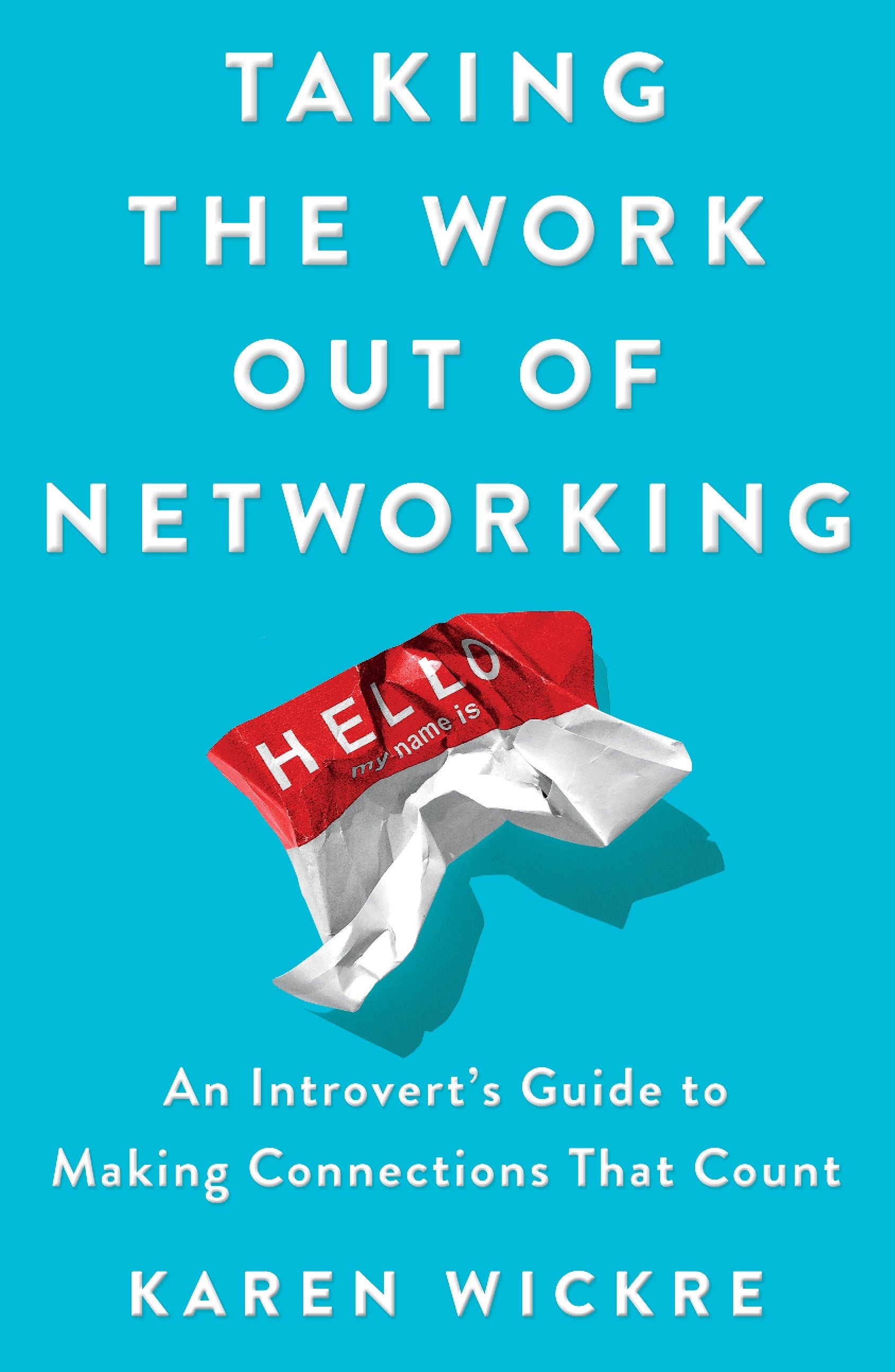
This article has been adapted from Taking the Work Out of Networking: An Introvert’s Guide to Making Connections That Count.
