The freedom to work from anywhere is real — and so are the tax implications, the visa complications, and the things that go wrong when your internet goes out in a country with no backup plan

Anna Shvets / Pexels
The remote work revolution of the past five years has produced an enormous volume of content about where to go, what gear to pack, and which cities have the best coffee shop culture for laptop workers. It has produced substantially less content about what happens when the tax authorities of two countries simultaneously consider you their resident, or when you discover that your health insurance has a geographic exclusion clause that voids your coverage outside your home country, or when your employer's legal team informs you that the employment agreement you signed was contingent on you being physically located in the state where the company is registered.
None of this is undiscoverable — the information exists, in tax codes and insurance policy small print and visa regulations and employment law — but it is distributed across specialized professional sources that most people do not consult before booking a flight and opening their laptop in a café in Lisbon. The gap between the aspiration of location independence and the administrative reality of it is the specific gap this list is designed to close.
The 20 items here are drawn from the experience of long-term remote workers, digital nomad community resources, tax professionals who specialize in expatriate and remote worker situations, and the specific legal and administrative changes that governments have made in response to the remote work boom. Several are genuinely urgent — the kind of thing that can result in tax liability, legal employment problems, or visa complications if not addressed before departure. Several are practical considerations that experienced remote workers handle routinely but that first-timers consistently underestimate. And several are positive surprises — things that are easier, cheaper, or more enjoyable than the conventional wisdom about international remote work suggests.
The intent is not to discourage international remote work, which for the right person in the right circumstances is genuinely one of the best professional arrangements available. The intent is to describe the actual conditions of that arrangement accurately enough that the person considering it can make an informed decision and avoid the specific pitfalls that catch the unprepared.

RDNE Stock project / Pexels
Tax liability for remote workers abroad is the single most consequential and most widely misunderstood aspect of international remote work. The common assumption — that if you are not physically in your home country, you do not owe taxes there — is incorrect for most nationalities and most situations, and the specific rules vary enough between countries that generalizations are dangerous.
The United States is the most extreme case: the US taxes its citizens on worldwide income regardless of where they live or work, meaning that an American working remotely in Thailand owes US federal taxes on their income even if they have not been in the United States for the entire year. The Foreign Earned Income Exclusion (FEIE) allows Americans abroad to exclude up to approximately $120,000 of earned income from US federal tax if they meet either the bona fide residence test or the physical presence test, but this exclusion requires filing a return, meeting specific residency criteria, and is not automatic.
The receiving country's tax treatment adds a second layer: if you spend enough time in a country to become a tax resident under its rules (typically 183 days in a calendar year, though some countries have shorter thresholds), you may owe taxes in that country as well as your home country. Most countries have bilateral tax treaties that prevent true double taxation, but navigating these treaties requires professional advice rather than self-research.
Practical action: consult a tax professional who specializes in expatriate or remote worker situations before your first trip exceeds 90 days in any single country. The cost of advice ($200 to $500 for an initial consultation) is negligible compared to the cost of getting it wrong.

The visa you enter a country on determines what you are legally permitted to do there — and a tourist visa, which is what most people use when visiting a country for weeks or months, typically prohibits paid employment. "Working remotely" in a tourist visa context occupies a legal gray area that countries interpret differently: some explicitly allow it (arguing that working for a foreign employer with no local clients creates no local labor market impact), some explicitly prohibit it, and many have no specific policy, leaving enforcement to individual immigration officer discretion.
The consequence of working on a tourist visa in a country that prohibits it ranges from nothing (in countries where enforcement is lax and the distinction is not actively monitored) to deportation, entry bans, and fines (in countries where immigration enforcement is strict). The risk is not theoretical — there are documented cases of remote workers being detained, fined, or deported from countries where they were working on tourist visas.
The expansion of digital nomad and remote worker visas — approximately 60 countries now offer some form of dedicated visa for remote workers — has created a legal pathway that was unavailable five years ago. These visas vary significantly in their requirements (minimum income thresholds ranging from $1,500 to $5,000 per month, health insurance requirements, application fees) and their benefits (legal right to work, tax exemptions in some countries, renewable terms).
Practical action: research the specific visa situation for your destination country before arrival, and apply for a digital nomad visa or appropriate work permit if one is available and your stay will exceed 90 days.

Vitaly Gariev / Pexels
Working remotely from another country creates legal exposure for your employer that most employees do not consider and that many employers are not fully aware of. The specific risk: if an employee is working from another country for an extended period, that country's labor authorities may determine that the employer has established a "permanent establishment" in that country — a legal presence that triggers corporate tax obligations and employment law compliance requirements in the host country.
The permanent establishment risk is most significant for senior employees and for employees who are conducting business activities (meeting clients, negotiating contracts) in the host country rather than simply performing work for clients located elsewhere. A software developer who works from Bali for three months for a US employer, performing work that has no Bali-based component, creates less PE risk than a sales manager who is meeting Southeast Asian clients from Bali.
The employment contract dimension is equally important: many employment agreements specify the employee's place of work (often the state or country where the company is registered) and may require employer consent before the employee works from another location. An employee who works from abroad without informing their employer may be in breach of their employment contract.
Practical action: inform your employer before working from abroad for more than a short period and get explicit confirmation of what the company permits. Many companies now have formal remote work abroad policies; if yours does not, getting written permission protects both parties.

RDNE Stock project / Pexels
Standard health insurance policies — employer-sponsored in the US, national health service in most other developed countries — typically have geographic coverage limitations that make them inadequate for extended international remote work. American employer health insurance typically covers emergency care abroad but not routine care, has networks that do not extend internationally, and may require pre-authorization for treatment outside the US that is logistically impossible in an emergency.
The specific gap that catches people most frequently is the "travel insurance vs health insurance" distinction: travel insurance covers emergency medical evacuation and short-term acute care but is not a substitute for comprehensive health coverage for ongoing conditions, medications, or non-emergency care. A remote worker who develops a chronic condition abroad, or who needs specialist care, surgery, or extended treatment, will face costs that travel insurance does not cover.
International health insurance — specifically designed for people living and working abroad for extended periods — is the appropriate coverage for remote workers abroad, and it is not as expensive as most people fear: comprehensive international health insurance for a healthy adult under 40 costs approximately $100 to $300 per month depending on the level of coverage, the geographic scope, and whether the US is included (US inclusion significantly increases premiums due to US healthcare costs).
Practical action: purchase dedicated international health insurance before departure, not after. Review your existing policy's geographic exclusions specifically, not just generally.

Thiago Japyassu / Pexels
The internet speed tests that digital nomad forums and city guides report are averages that conceal the specific variability that matters most for remote work: the consistency of the connection during video calls, the upload speed (which is typically worse than download and is what determines video call quality from your end), and the reliability of the connection during peak usage hours.
A city that tests at 100 Mbps download in the morning café may test at 8 Mbps during the lunch rush when every table is occupied by a laptop worker. An apartment that has fiber internet listed in its Airbnb $ABNB description may share that fiber connection with 30 other units in the building, producing congestion during business hours. A coworking space may have fast internet and no backup when the main connection goes down.
The specific connectivity risks that experienced remote workers manage: relying on a single connection without a backup (the appropriate backup is a local SIM card with a data plan sufficient for a full workday of video calls); choosing accommodation without testing the connection first (acceptable solutions include a 30-minute trial period upon check-in before committing to a longer stay, or using Airbnb accommodation whose reviews specifically mention internet quality); and failing to research the country's general infrastructure quality before committing to a working trip.
Practical action: always carry a local SIM with sufficient data for a full workday as backup; research the country's average and worst-case connectivity; test the specific accommodation's connection before committing to more than a week.

Nothing Ahead / Pexels
The time zone difference between a remote worker abroad and their employer, clients, or team is not merely a scheduling inconvenience but a professional constraint that determines the range of locations where international remote work is sustainably compatible with a given job. A European employee working for a US West Coast company faces a 9-hour time difference that places the US working day from 6pm to 2am local time — a schedule that is workable for a week or two and unsustainable as a long-term arrangement.
The specific professional risks of time zone mismanagement: reduced visibility in the organization (the employee who is always asleep when decisions are being made is the employee whose contributions are underweighted in those decisions); degraded communication quality (async communication is good for many things and poor for rapid decision-making, conflict resolution, and relationship maintenance); and the specific physical toll of sustained schedule inversion, which produces the same health consequences as long-term shift work.
The time zone-compatible destinations for different employer locations form a specific geography: US East Coast employers are compatible with Western Europe (±5 hours) and West Africa; US West Coast employers are compatible with Southeast Asia (±15 hours going the other direction, which often works better than it appears) or East Asia; European employers are compatible with Africa, the Middle East, and Central Asia.
Practical action: map your specific job's synchronous meeting requirements against the destinations you are considering; a job that requires one team meeting per week is compatible with almost any time zone, while a job that requires three hours of video calls per day is only compatible with time zones within 4 to 5 hours of the employer's location.
Jan van der Wolf / Pexels
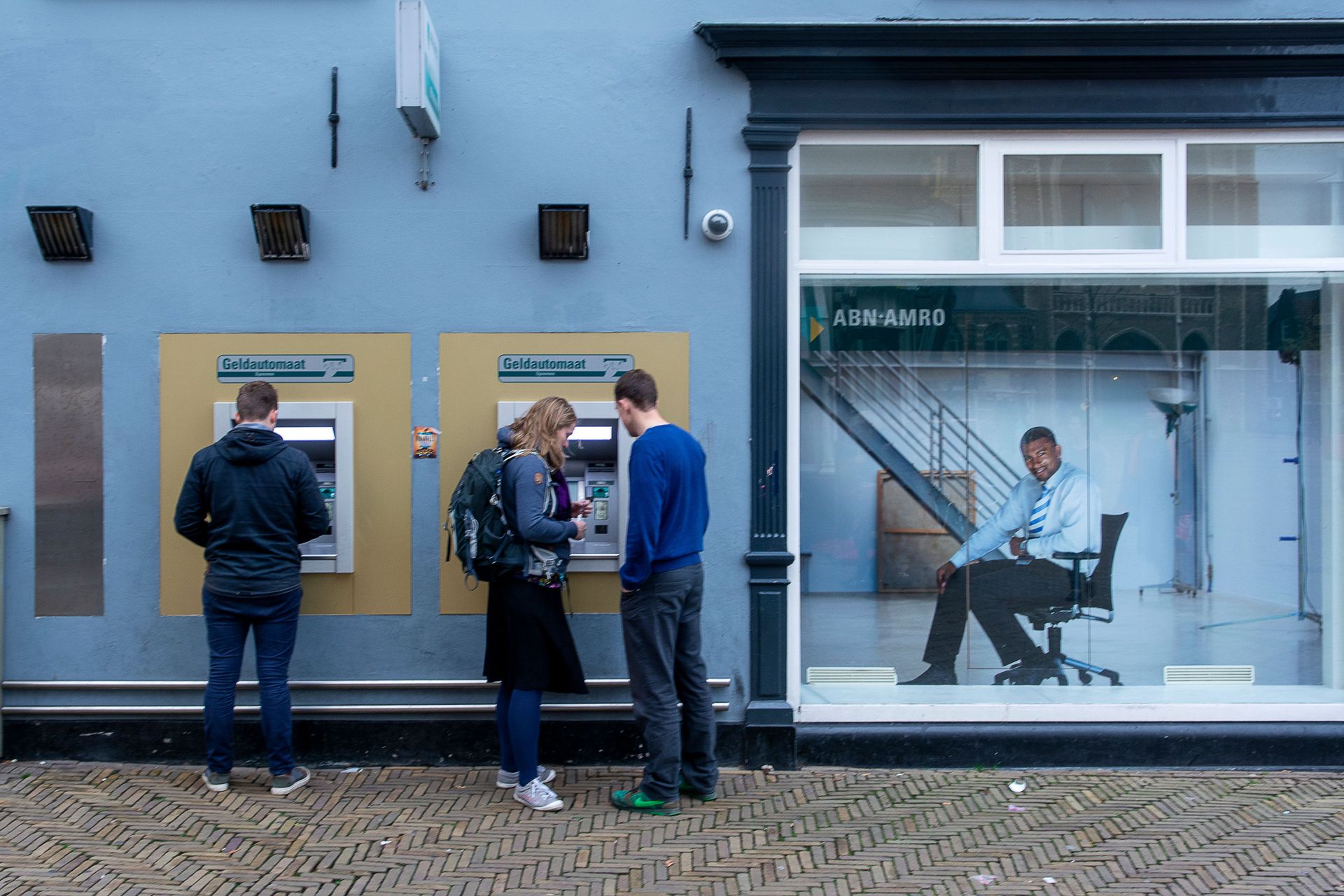
The assumption that a debit card and a credit card provide universal access to money anywhere in the world is broadly true and specifically false in the ways that matter most when things go wrong. Card fraud detection systems routinely block transactions in countries the cardholder has not previously visited; ATMs in some countries charge high fees or do not accept foreign cards from certain networks; bank transfers to foreign accounts can be delayed, blocked, or reversed under anti-money laundering procedures.
The specific banking solutions that experienced remote workers use: a multi-currency account with a fintech provider (Wise, Revolut, or N26 in Europe) that holds money in multiple currencies, converts at mid-market rates rather than the inflated bank rates, and issues debit cards that work reliably internationally; a backup card from a second institution (never rely on a single card as the primary payment method abroad); and sufficient cash in local currency for the first few days in case of card issues.
The payment direction matters too: receiving payment from employers or clients in a currency different from your local spending currency generates currency conversion costs that accumulate significantly over time. A freelancer paid in USD who converts to euros to pay rent, then to Thai baht to buy groceries, then back to USD to pay US taxes, is paying conversion fees at each step. Keeping funds in the payment currency and converting only for specific local expenses minimizes these costs.
Practical action: open a Wise or Revolut account before departure; notify your home bank of your travel plans; carry backup payment methods and sufficient local currency.

Jagan Jijo / Pexels
The social environment of office work — the casual conversation, the lunch companions, the after-work drinks, the incidental human connection that provides a significant proportion of most working adults' social interaction — does not automatically transfer to remote work abroad. A remote worker who arrives in a new city without an existing social network and without deliberately constructing one will experience isolation that degrades both professional effectiveness and personal wellbeing in ways that are directly traceable to the remote work structure rather than to the destination.
The specific social infrastructure that experienced remote workers build: coworking spaces, which provide reliable Wi-Fi and a population of people in a similar professional situation; structured community events (Meetup groups, digital nomad Facebook $META groups, Couchsurfing events, language exchange meetups) that provide a first-contact mechanism for building relationships; and the deliberate choice of longer stays over constant movement, because the first week in a new city produces only acquaintances, while the third and fourth weeks produce the repeated contact that builds friendships.
The loneliness risk is real and is one of the most consistent findings in research on remote workers abroad: studies find that loneliness and social isolation are the primary challenges reported by digital nomads, ahead of internet quality, cost management, and visa issues. The remote work lifestyle's flexibility is its attraction; its social thinness is its specific cost, and the cost is higher for people whose social needs are higher.
Practical action: join a coworking space in each new city; commit to stays of at least four weeks in each location; actively participate in structured social events for the first two weeks in each city.

Atlantic Ambience / Pexels
The productivity systems and environmental conditions that support effective work at home — the specific desk setup, the absence of social interruption during working hours, the established routines and ergonomic conditions — do not transfer automatically to a new environment. Most remote workers discover that their productivity is significantly lower during the first week in a new location and improves as they establish new routines and find working environments that support their specific working style.
The specific productivity challenges of international remote work: the absence of a dedicated workspace (café tables are ergonomically poor for full working days; most apartments are not set up for productive work; coworking spaces require a daily decision to go rather than the default of turning on the computer); the stimulation of a new environment that competes with work for attention; and the management of the tourist impulse versus the working obligation.
The rhythm that experienced remote workers develop is not "work everywhere and travel always" but a specific alternation: periods of settled, productive work (typically three to four weeks in a single location with a reliable workspace) alternating with periods of actual travel (moving, exploring, being a tourist) that are mentally separated from the work periods rather than combined with them.
Practical action: establish a dedicated working space (coworking membership, reliable café, or apartment with a desk) in each location before starting work there; create a morning routine that signals the transition from "travelling" to "working."

Andrey Matveev / Pexels
The difference between arriving in a new country with a functioning local SIM and arriving without one is the difference between having a backup connectivity option when the hotel Wi-Fi fails and spending the first afternoon of a critical work week trying to buy a SIM in a language you do not speak from a mobile carrier whose plans require a local ID number.
The SIM card situation varies significantly by country. Some countries (most EU countries, the UK, Thailand, Malaysia) allow immediate SIM purchase with a foreign passport and no local ID requirement. Others (India, China, some Latin American countries) require a local ID or registration process that can take days. Some countries have excellent nationwide coverage and high data plan value (Vietnam, the Philippines, most of Eastern Europe); others have patchy rural coverage and expensive data (parts of Africa, some Caribbean islands).
The eSIM has simplified this substantially for travelers with compatible devices: eSIM providers (Airalo, Holafly, Google $GOOGL Fi) sell data plans for most countries that can be activated before departure, without requiring a physical SIM purchase on arrival. The data costs are typically higher than a local SIM but the convenience and reliability of pre-activation make them worthwhile for the first few days until a local SIM can be obtained.
Practical action: research the SIM situation for your destination before arrival; purchase an eSIM for the first week as backup; get a local SIM within the first two days for better value on longer stays.

Oziel Gómez / Pexels
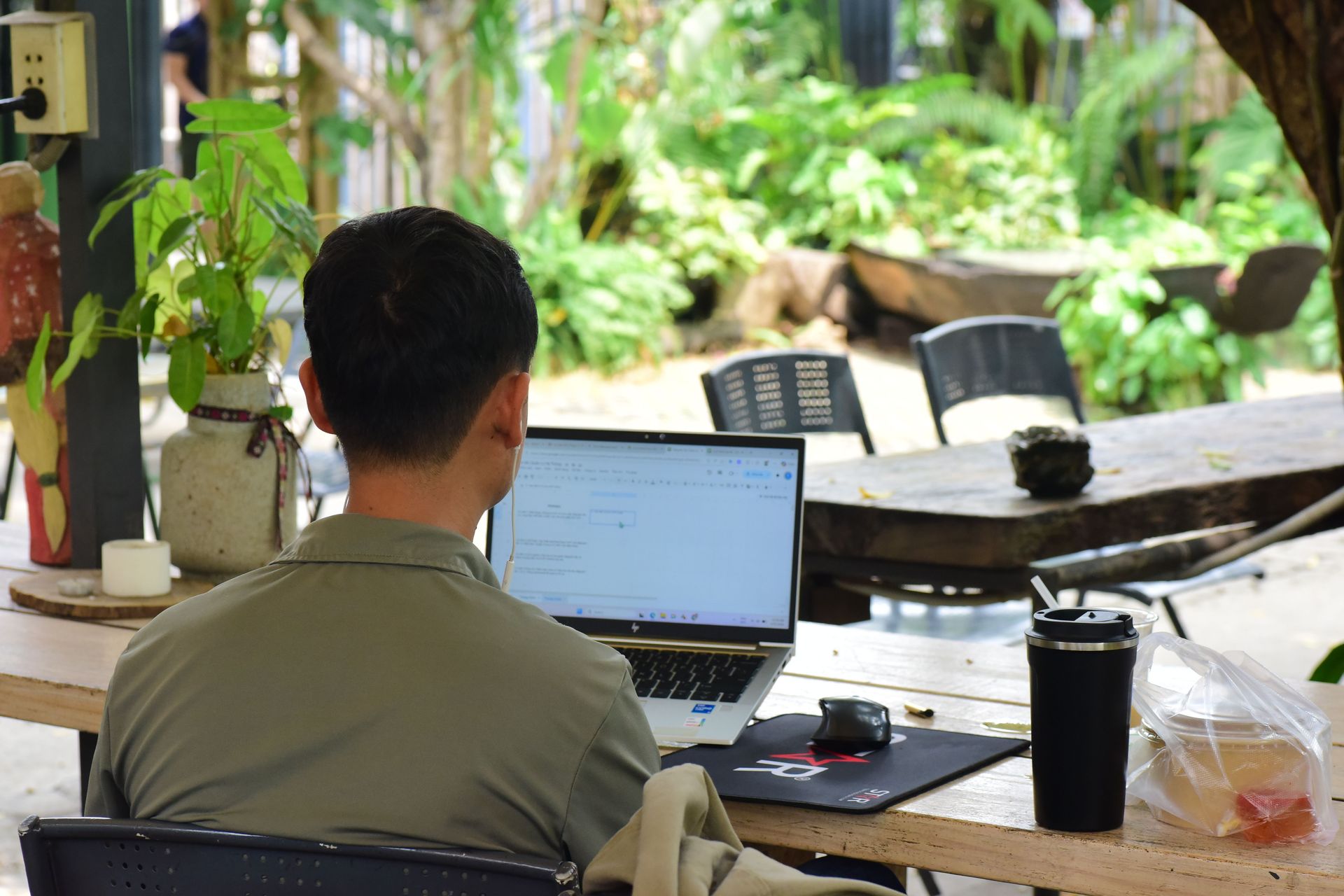
The cost of living comparisons that digital nomad blogs publish — "live and work in Chiang Mai for $1,200 per month" — are real but specific to a lifestyle and a spending pattern that may not match your own. The person living on $1,200 per month in Chiang Mai is eating primarily local food, living in a basic apartment far from the tourist center, using local transport, and spending very little on entertainment. The person who prefers Western restaurants, a central location with reliable air conditioning, and occasional flights to explore the region will spend significantly more.
The specific cost categories that consistently surprise remote workers: accommodation (Airbnb $ABNB pricing for furnished apartments with fast internet is often comparable to Western prices; the savings are in neighborhoods where local rental markets are accessible, which typically requires longer stays and local knowledge); healthcare (routine medical care is dramatically cheaper in most developing countries, but medical evacuation insurance and international health insurance are fixed costs regardless of destination); and the social cost of constant movement (the taxi to the airport, the visa fee, the first-night hotel while you find your bearings — movement has a cost that the monthly budget articles do not adequately reflect).
Practical action: research costs in the specific lifestyle tier you intend to maintain, not the minimum viable lifestyle budget; add 20% to your estimated budget for the first month in a new location.
Soc Nang Dong / Pexels
The digital nomad and remote worker visa category — which now exists in approximately 60 countries including Portugal, Spain, Croatia, Costa Rica, Barbados, Indonesia (Bali), UAE, Thailand, and many others — provides specific legal and sometimes financial advantages beyond simply being allowed to work legally.
The financial advantages vary by country but can be substantial. Portugal's D8 Digital Nomad Visa $V provides access to the NHR (Non-Habitual Resident) tax regime, which taxes foreign-source income at 20% flat for 10 years — significantly lower than the standard Portuguese income tax rates. Estonia's e-Residency program (not a visa, but a related concept) allows non-Estonians to establish EU businesses and access EU banking infrastructure. Several Caribbean nations (Barbados, Bermuda, Antigua) specifically waive local income tax for remote workers during the visa period.
The application requirements for these visas have standardized around a few common elements: proof of remote employment or freelance income (typically three to six months of bank statements and an employment letter or client contracts), a minimum monthly income (ranging from $1,500 in less expensive countries to $5,000 in more expensive ones), and health insurance coverage. Most applications can be completed without a lawyer, though complex cases (self-employed applicants, applicants with irregular income) may benefit from specialist advice.
Practical action: check the current digital nomad visa offerings for your target destinations; the category has expanded significantly in the past two years and the available options are substantially better than they were in 2021.

Andrea Piacquadio / Pexels
The physical cues that communicate professional seriousness in an office environment — the quality of your clothing, your physical presence in meetings, the visible signals of effort and engagement — are either absent or differently expressed in remote work. The remote worker abroad needs to maintain professional reputation through different channels: the quality and consistency of written communication, the reliability of commitments and deadlines, the quality of video call presentation, and the proactive communication that fills the visibility gap created by physical absence.
The specific professional risks of international remote work: reduced visibility in the organization (if decisions are being made in a conference room where you are not present, your interests are underrepresented without active advocacy); the perception (accurate or not) that travel is a distraction from work rather than a neutral change of location; and the specific management challenge of a boss who equates physical presence with productivity and who may evaluate remote workers on different (lower) terms than in-office employees.
The practical management of professional reputation abroad requires deliberate over-communication: more frequent updates than would be necessary in an office, more proactive flagging of progress and blockers, and the specific maintenance of personal relationships (the one-on-one call with the manager who cannot see your work, the occasional check-in with colleagues) that office proximity provides automatically.
Practical action: increase the frequency and quality of your written communication by approximately 30% when working abroad; schedule explicit check-ins with key relationships; be visible in channels where decisions are discussed.

Andrea Piacquadio / Pexels
The ergonomic conditions of remote work — the height of the desk and chair, the angle of the monitor, the keyboard and mouse setup — matter for long-term health in ways that become apparent over months of sustained poor posture and become undeniable over years. A remote worker who spends two years working on café tables and apartment sofas in various countries, without attention to ergonomic setup, is accumulating musculoskeletal damage that is real and costly to address.
The specific conditions most associated with poor remote work ergonomics: repetitive strain injury (RSI) in the wrist, forearm, and shoulder from typing on laptop keyboards without an external keyboard; neck and upper back strain from looking down at a laptop screen without an external monitor or stand; lower back problems from sitting in chairs not designed for eight-hour working days.
The portable ergonomic kit for international remote workers is both compact and consequential: a laptop stand (foldable carbon fiber stands weigh under 200 grams and elevate the screen to eye level), an external compact keyboard and mouse, and a lumbar support cushion. The total weight is approximately 600 grams; the protective value over years of international remote work is substantial.
Practical action: invest in portable ergonomic equipment before your first long working trip; make ergonomic adequacy a filter for choosing working spaces; stand or walk during phone calls that do not require a screen.

Anete Lusina / Pexels
International remote work follows a reasonably consistent emotional pattern that experienced remote workers recognize and that first-timers are often caught off guard by: initial euphoria (the novelty and freedom of the first weeks abroad), followed by a productivity dip as the novelty wears off and the social isolation and logistical challenges become apparent, followed by stabilization as routines are established and local social connections are built, followed by either genuine contentment or the recognition that the lifestyle is not a good fit.
The specific emotional challenges that distinguish international remote work from domestic remote work: the absence of an existing social support network; the cognitive load of navigating an unfamiliar environment simultaneously with performing professional work; the cultural adjustment of living in a country whose norms, language, and social codes differ from your own; and the specific kind of loneliness that comes from being surrounded by people with whom you share no history.
The people for whom international remote work becomes genuinely satisfying — rather than an interesting experiment that they are happy to conclude — are typically those who establish genuine community in the places they live, who develop enough language competence to engage with the local culture beyond the English-speaking expatriate bubble, and who frame the experience as extended living rather than extended tourism.
Practical action: go in knowing the emotional cycle exists; do not make long-term lifestyle decisions during the euphoria phase or the dip phase; give each location at least six weeks before evaluating whether it is working.

Ketut Subiyanto / Pexels
Airbnb $ABNB and similar short-term rental platforms are the default accommodation for first-time international remote workers and among the more expensive options available. The alternatives that experienced remote workers use — and that significantly change the economics — are local rental markets (negotiated directly with landlords for monthly rates 40 to 70% below Airbnb prices for similar properties), coliving spaces (purpose-built facilities for remote workers with fast internet, dedicated workspaces, and built-in community), and extended stay serviced apartments (common in Southeast Asia and Latin America, offering hotel-level services at monthly rates that undercut Airbnb significantly).
The coliving space category specifically has expanded dramatically in response to the remote work boom: dedicated coliving operators (Outsite, Selina, Roam, and dozens of city-specific operators) offer packages that include accommodation, fast internet, coworking, and community programming. The pricing is typically not the cheapest accommodation available in a city, but it bundles the coworking space and the social community that a remote worker would otherwise need to acquire separately.
The local rental market requires more effort to access but offers the best value for stays of one month or more: Facebook $META groups for each destination city (Expats in [city], Digital Nomads in [city]) typically have listings from local landlords offering furnished month-to-month rentals that are not listed on Airbnb or Booking.com and that are priced for local income levels rather than international tourist levels.
Practical action: for stays under two weeks, Airbnb is convenient; for stays of one to three months, research coliving options; for stays over three months, invest the effort to access local rental markets through Facebook groups and local real estate agents.

Vitaly Gariev / Pexels
The travel insurance industry has not fully adapted to the remote work use case, and the products available under the "travel insurance" label vary enormously in what they actually cover for a person who is living and working internationally rather than taking a two-week holiday.
The specific coverage gaps most relevant to international remote workers: medical coverage that expires after 30 or 90 days (designed for vacations, not extended stays); exclusion of pre-existing conditions without a specific rider; coverage that applies only while "traveling" rather than while living in a location (some policies explicitly exclude coverage once a person has established a "base" abroad); and the absence of coverage for equipment theft (the laptop and camera that constitute a remote worker's entire office are often explicitly excluded from travel insurance claims).
The products most appropriate for international remote workers are: international health insurance (for medical coverage without duration or location restrictions); dedicated digital nomad insurance products (Safety Wing's Nomad Insurance is the most widely used, combining medical and travel coverage specifically for remote workers at approximately $40 to $60 per month); and equipment insurance (either a standalone equipment policy or a travel insurance rider that specifically covers electronics theft and damage).
Practical action: read your travel insurance policy's fine print specifically for geographic exclusion dates, pre-existing condition exclusions, and equipment coverage before departure; consider Safety Wing's Nomad Insurance as a cost-effective baseline product.

Kindel Media / Pexels
Coworking spaces outside major Western cities are frequently underrepresented in English-language reviews and directories, and the quality of the spaces that do exist in the major remote work destinations has improved dramatically in the past five years in response to the influx of international remote workers. The coworking space in Medellín, Chiang Mai, Bali, or Tbilisi that looks modest in its Google $GOOGL listing may be a well-run, well-equipped space with a strong community and fast, reliable internet that significantly outperforms the hotel business center or café that reviews recommend.
The specific value of coworking beyond internet connectivity: the professional environment that separates work time from leisure time (which café working does not provide); the network of other remote workers in a similar situation (which produces both social connection and professional opportunity); the reliability of a dedicated workspace that removes the daily uncertainty of finding a productive location; and the specific amenities — meeting room bookings, printing, mailbox addresses — that occasional professional needs require.
The pricing structure of coworking spaces outside Western markets is typically very favorable: a monthly hot desk membership in Chiang Mai or Medellín costs $80 to $150; the equivalent in London or San Francisco costs $400 to $600. The quality differential between those price points is substantially smaller than the price differential.
Practical action: book a coworking day pass for the first day in each new city to evaluate quality before committing to a monthly membership; check Coworker.com and local digital nomad Facebook $META groups for reviewed options.
Angelyn Sanjorjo / Pexels
The administrative preparation required before an extended period of international remote work — beyond booking flights and accommodation — is more substantial than most first-timers expect and creates specific problems if not addressed before departure.
The specific administrative tasks that experienced remote workers complete before leaving: notifying their home country tax authority of their change of residence (if applicable) and understanding the implications for home country tax filing obligations; addressing any home country social security or pension contribution questions for self-employed people whose contribution record affects future benefits; arranging for mail handling at home (a trusted contact or a mail scanning service that digitizes physical mail); maintaining a home country banking presence (some banks will close accounts of customers who notify them of extended foreign residency); and ensuring that government documents (passport, driving license, professional certifications) are valid for the duration of the intended trip with sufficient margin for renewal.
The health and prescription medication dimension is also preparation-intensive: ensuring adequate medication supply for the trip duration (many countries restrict the importation of prescription medications, and obtaining a foreign prescription for a condition managed at home requires finding a local doctor and often a new prescription), and understanding the healthcare access situation in the destination country well enough to have a plan for routine care.
Practical action: create a pre-departure checklist that covers taxes, banking, mail, documents, and healthcare at least 60 days before departure; do not leave these items for the week before travel.

Tim Gouw / Pexels
The return to a home country after an extended period of international remote work is a transition that most remote work content ignores entirely, but which experienced long-term remote workers consistently describe as more difficult than the initial departure. The specific challenges of repatriation — returning home — are well-documented in the expatriate psychology literature and apply equally to remote workers who spent six months abroad: reverse culture shock, the loss of the stimulation and novelty of international life, the sense that the home city has not changed while you have, and the specific social reintegration challenge of reconnecting with a community whose daily references you have missed.
The practical repatriation challenges are also real: re-establishing a home country banking and financial presence that may have lapsed during extended absence; understanding the tax implications of the return (the date on which home country tax residency is re-established affects which year's income is taxed where); reconnecting with a professional network that may have moved on; and the specific psychological adjustment of downsizing from the freedom of international life to the constraints of a fixed location.
The remote workers who navigate repatriation most successfully are those who treat it as a deliberate transition — who plan the return with the same deliberateness as the departure, who re-establish social and professional relationships before returning rather than after, and who frame the return as a choice (which it is) rather than a defeat (which it is not).
Practical action: plan repatriation as deliberately as departure; consult a tax professional about the tax implications of your return date; reconnect with home country professional contacts in the month before returning; allow yourself a re-adjustment period rather than expecting immediate re-integration.
