
Moby-Dick was called a failure. Lolita was rejected by five publishers. These are the works that the world dismissed, banned, or laughed at — and then decided were masterpieces

Anastasiya Badun / Pexels
The history of art is partly a history of wrong first impressions. The works that seem most inevitable in retrospect — the ones that defined a genre, launched a movement, or permanently altered what was possible in their medium — were often the ones that their original audiences found most bewildering, threatening, or simply bad. The riot that greeted the premiere of Stravinsky's Rite of Spring was not a fringe reaction; it was the majority opinion of a sophisticated Parisian concert audience encountering something they had no framework to understand. The reviewers who dismissed Melville's Moby-Dick as a confused and overlong failure were not fools; they were reading the book against the conventions of the adventure narrative it appeared to be and finding it incoherent.
What connects most of the cases in this list is not that the critics were stupid but that the works were genuinely difficult to evaluate against existing standards — because the existing standards were what the works were in the process of replacing. The Impressionists were rejected by the Paris Salon not because the jury was incompetent but because Impressionist painting violated the specific technical and compositional standards by which painting was evaluated at the time, and those standards were genuinely descriptive of what good painting had been. The problem was that good painting was changing.
The cases of censorship and banning are different in character but connected by the same underlying dynamic: the work disturbed something — a political order, a moral consensus, a sense of what could be said in public — that the existing authority had a stake in protecting. Lady Chatterley's Lover was banned not because its prose was bad but because its content was genuinely threatening to specific social arrangements that the law was being used to enforce.
Each entry in this list covers the work, the specific nature of its rejection, the mechanism of its rehabilitation, and — where available — the specific irony of its current status. Several of these are now among the most valuable, most studied, or most performed works in their respective fields. The gap between what they were and what they became is the gap between the present and the future that could not yet be seen.
-1-1920x1439.jpg)
Credit: Wikimedia Commons
The premiere of Igor Stravinsky's Le Sacre du Printemps (The Rite of Spring) at the Théâtre des Champs-Élysées in Paris on May 29, 1913, is the most famous audience riot in the history of Western music. The audience began booing and shouting within the first minutes of the performance, the noise became so loud that the dancers could not hear the orchestra, and the choreographer Vaslav Nijinsky reportedly stood in the wings shouting counts to the dancers. The conductor Pierre Monteux continued leading the orchestra through the entire work.
The specific causes of the riot were the music's rhythmic complexity (Stravinsky used irregular, asymmetric rhythms that had no precedent in the concert tradition), its dissonant harmonies, and Nijinsky's choreography, which required the dancers to turn their feet inward in violation of classical ballet convention. The combination was experienced not as bold innovation but as a deliberate assault on the audience's musical expectations.
Within a decade, the Rite of Spring was recognized as one of the defining works of 20th-century music. It is now performed by major orchestras globally, recorded hundreds of times, and cited by composers from Aaron Copland to Frank Zappa as a foundational influence. The 1913 audience that booed it was reacting to a work they were hearing approximately 10 years before the cultural context existed to receive it.
Augustus Burnham Shute / Wikimedia Commons
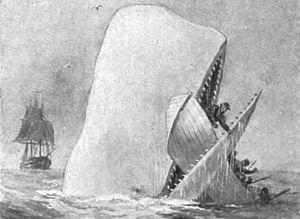
Herman Melville published Moby-Dick in 1851 to critical and commercial disappointment. Reviews were mixed to negative: the London Athenaeum called it "an ill-compounded mixture of romance and matter-of-fact," and the New York Day Book described it as "sad stuff." It sold approximately 3,200 copies in its first year — modest for the era — and went out of print during Melville's lifetime. Melville died in 1891 in near-total obscurity, working as a customs inspector, his literary reputation essentially finished.
The rehabilitation of Moby-Dick began in the 1920s, led primarily by scholars including Carl Van Doren and D.H. Lawrence, who identified it as the great American novel that a previous generation had entirely missed. By 1930, the critical consensus had reversed completely. By the mid-20th century, it was required reading in American high schools and universities and was being taught as one of the foundational texts of American literature. It is now consistently ranked among the greatest novels in the English language.
The specific irony: the novel's qualities that made it difficult for its original audience — its digressions on whaling, its philosophical density, its refusal of conventional narrative closure — are precisely the qualities that make it important to its later admirers. The original reviewers were not wrong to find it unusual; they were wrong to find unusual bad.
Olympia Press / Wikimedia Commons
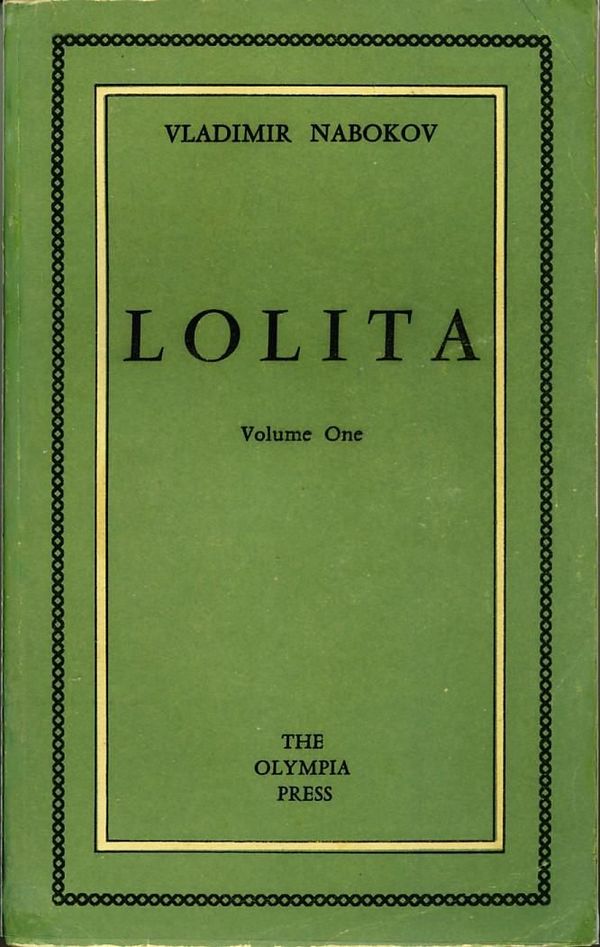
Vladimir Nabokov's Lolita was rejected by four American publishers — including Simon & Schuster, New Directions, Farrar Straus, and Viking — before Nabokov published it through the Olympia Press in Paris in 1955, a publisher known primarily for erotic fiction. The novel was subsequently banned by the British Home Office, which pressured France to ban it as well, and it remained unavailable in the United Kingdom until 1959.
The Putnam edition published in the United States in 1958, after the novel's reputation had been established in France, became an immediate bestseller. The American publication prompted Time magazine to list it among the greatest novels of the 20th century. Graham Greene had named it one of the best books of 1955 in The Times, a comment that sparked the controversy that ultimately drove the novel's fame.
Lolita is now considered one of the finest examples of English prose style in the 20th century — a conclusion that produces the specific discomfort of recognizing that a novel whose narrator is a self-justifying pedophile is also a work of extraordinary linguistic beauty. The original publishers' discomfort was not simply prudishness; the novel genuinely posed difficult questions about what literature was permitted to do. The answer that subsequent generations arrived at — that literature is permitted to render any consciousness with technical brilliance — was not obvious in 1955.

Claude Monet / Wikimedia Commons
The Impressionists — Monet, Renoir, Degas, Pissarro, Sisley, Morisot — were systematically rejected by the Paris Salon, the official exhibition that determined artistic reputation in 19th-century France, throughout the late 1860s and 1870s. The 1863 rejections were so numerous that Napoleon III ordered the creation of the Salon des Refusés (Exhibition of the Rejected) to allow the public to judge the jury's decisions.
The specific qualities that the Salon jury found objectionable were the visible brushwork (which violated the smooth finish of academic painting), the focus on contemporary everyday subjects rather than historical or mythological scenes, and the treatment of light as the primary subject of a painting rather than as a vehicle for representing objects. These were genuine departures from the standards of academic painting — the jury was applying real criteria that Impressionist work genuinely violated.
The rehabilitation was gradual and is now complete to a degree that makes the original rejection seem almost impossible to credit: Monet's series paintings sell for hundreds of millions of dollars, Renoir's work fills the world's greatest museums, and Impressionism is the most immediately accessible and most widely loved movement in the history of Western painting. The specific paintings that were rejected from the Salon in the 1860s and 1870s are now among the most valuable objects in human civilization.
James Joyce / Wikimedia Commons
James Joyce's Ulysses was serialized in The Little Review magazine beginning in 1918 and was prosecuted for obscenity by the United States Post Office in 1920 after complaints about an episode depicting masturbation. The Little Review's editors Margaret Anderson and Jane Heap were convicted of obscenity and fined $100. The novel was subsequently banned for import into the United States and the United Kingdom, and the ban on US importation remained in force until Judge John Woolsey's landmark 1933 ruling found it not obscene.
The 1933 ruling — which found that Ulysses, though dealing with frankly sexual content, was "not pornographic" but rather "a sincere and honest book" whose author attempted "to show exactly how the screen of consciousness presents to us at any time a continuous procession of fact, supposition, memory, and imagination" — is considered a foundational document in the legal history of literary freedom. It was a significant turning point in the relationship between the law and literary modernism.
Ulysses is now routinely listed as the greatest novel of the 20th century. The episode that prompted the obscenity prosecution — the Nausicaa episode — is taught in university literature courses as a study in narrative technique. The prosecution that attempted to suppress it guaranteed its fame and positioned it as a test case for the proposition that literary merit and moral safety are not the same thing.
Édouard Manet / Wikimedia Commons
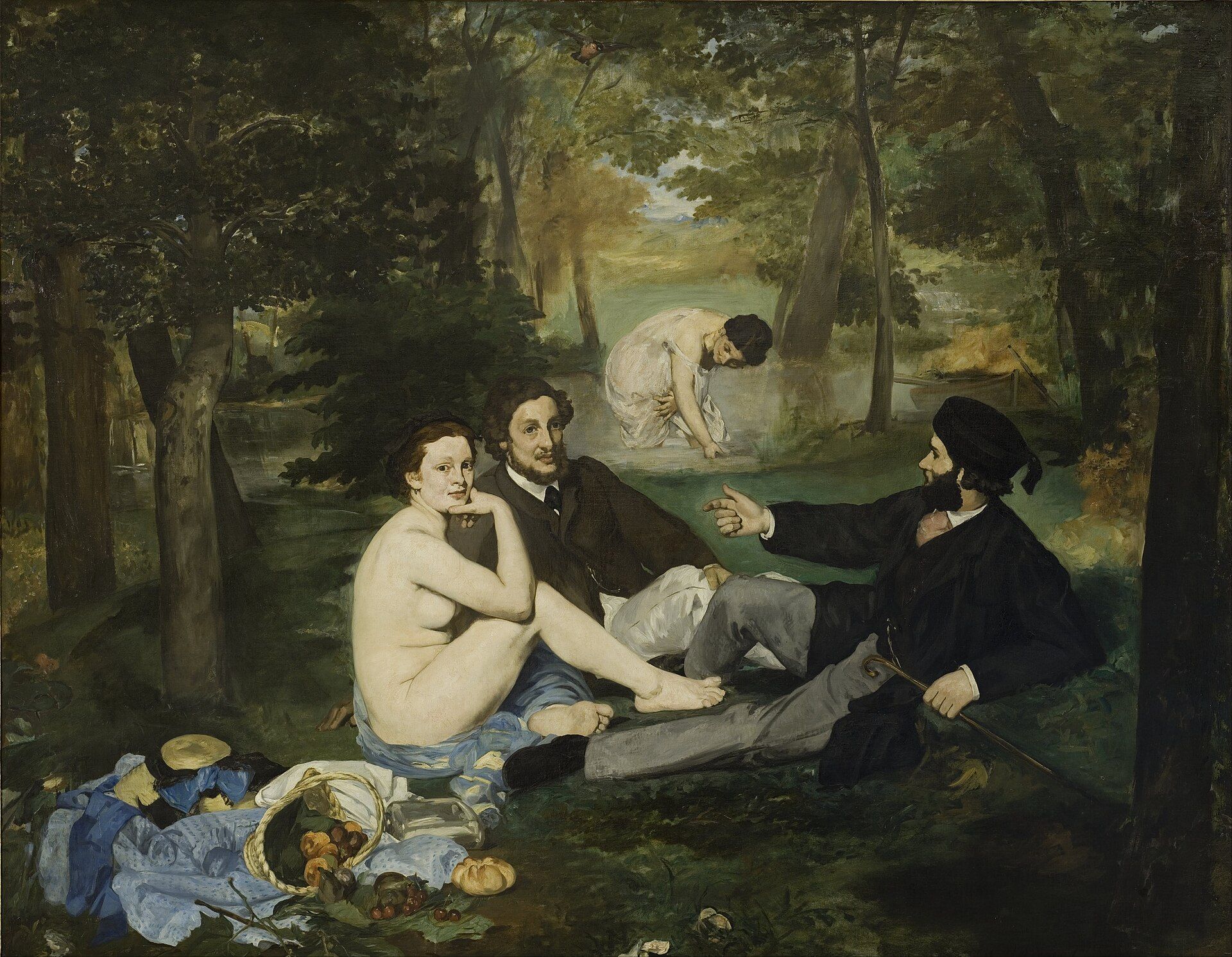
Édouard Manet's Le Déjeuner sur l'herbe was rejected by the Paris Salon in 1863 and shown instead at the Salon des Refusés, where it generated more scandal than any other work on display. The painting depicted two fully clothed men picnicking with a nude woman who looks directly at the viewer — a combination that critics found morally offensive not because nudity in art was new but because the nude was contemporary and unidealized rather than mythological and allegorical.
The Emperor Napoleon III reportedly found it offensive. Critics described it as indecent and technically deficient. The public reaction was a mixture of outrage and derision. The painting was treated as a provocation rather than as a serious work of art by the majority of its first audience.
Manet's painting is now recognized as one of the pivotal works in the history of Western art — the work that most clearly marked the transition from academic painting to modernism. Its direct gaze from the nude figure to the viewer, its flattened perspective, and its refusal of the mythological framing that made similar subjects acceptable are precisely the features that the 1863 audience found objectionable and that art historians now identify as revolutionary. It hangs in the Musée d'Orsay, which is among the most visited museums in the world.

Eugène Decisy / After Charles Lucien Léandre via Wikimedia Commons
Gustave Flaubert's Madame Bovary was prosecuted for immorality by the French government in 1857, following its serial publication in the Revue de Paris. The prosecutor Pinard argued that the novel glorified adultery and offended public morality. Flaubert was acquitted — the court found that the novel, taken as a whole, was a moral work whose depiction of adultery was ultimately punitive — but the prosecution generated enormous publicity that made the novel an immediate success.
The prosecution's argument that Madame Bovary was immoral requires explaining to modern readers, because the novel's moral structure — Emma Bovary's romantic fantasies lead to debt, adultery, and suicide — seems more punitive than permissive by contemporary standards. The prosecutor's concern was the specificity and sympathy with which the novel depicted Emma's inner life: not that adultery was depicted, but that it was depicted from the inside, with a psychological intimacy that was felt to be an implicit endorsement.
Madame Bovary is now considered the first modern novel — the work that established the psychological interiority and the free indirect discourse technique that became the primary tools of 20th-century fiction. Flaubert's famous comment "Madame Bovary, c'est moi" — I am Emma Bovary — is the specific identification that the prosecutor found most threatening and that literary history has found most important.
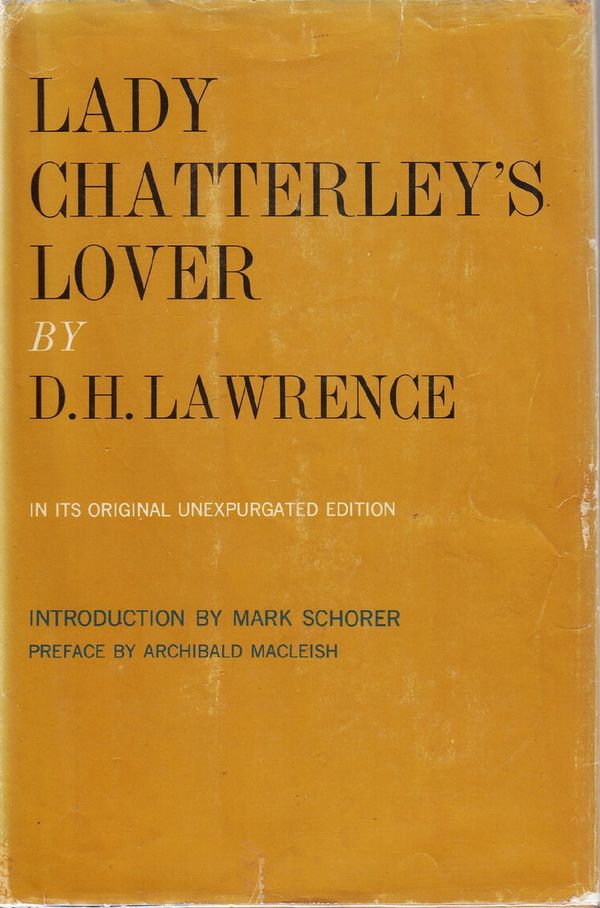
Credit: Wikimedia Commons
D.H. Lawrence's Lady Chatterley's Lover was privately printed in Florence in 1928 in a limited edition because no British or American publisher would publish the unexpurgated text, which included explicit sexual descriptions and extensive use of words that could not legally be published in either country. The full text remained banned in the United Kingdom for 32 years, until the landmark 1960 obscenity trial in which Penguin Books was prosecuted for publishing it.
The 1960 trial — Regina v. Penguin Books Ltd — became a defining moment in British cultural history. The prosecutor's question to the jury — "Is it a book that you would even wish your wife or your servants to read?" — became the most quoted expression of the paternalistic assumptions that the trial's outcome dismantled. Penguin was acquitted, and the novel sold 3 million copies in its first year of legal publication.
The specific legal and cultural significance of the trial: it established that literary merit was a defense against obscenity prosecution in UK law, creating the framework within which subsequent publishers could defend serious literary work. The novel that caused the trial is less widely read now than its cultural significance suggests — Lawrence's prose has not aged as well as the trial's significance has — but its role in establishing the legal freedom of literary expression in the UK is permanently important.
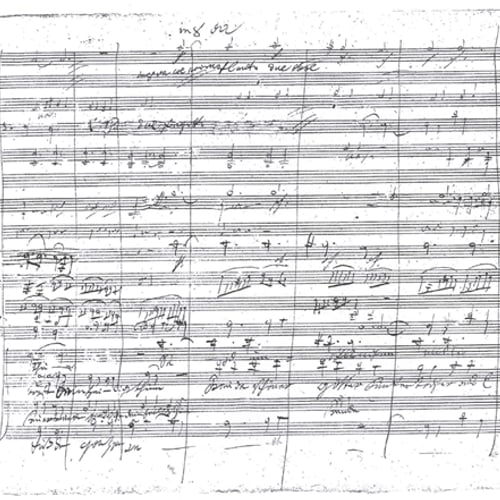
Beethoven, Ludwig van / Wikimedia Commons
Beethoven's Ninth Symphony — which concludes with the choral setting of Schiller's "Ode to Joy" that has become one of the most recognized pieces of music in the world — was not rejected at its premiere; it was received with extraordinary enthusiasm. The specific story of its initial reception is more complicated and more interesting than the simple rejection narrative: the premiere audience gave Beethoven five standing ovations, and Beethoven — who was completely deaf by this point — had to be turned around by the contralto soloist to see the applause he could not hear.
The work that was rejected was not the Ninth Symphony at reception but at composition: Beethoven's patrons and publishers expressed significant skepticism about the commercial and artistic viability of a symphony that included vocal soloists and a full choir, departed radically from the symphonic conventions Beethoven himself had established, and ran to over an hour in performance — longer than any symphony previously written. The work existed against the resistance of conventional expectation rather than against its audience's response.
The Ninth Symphony's subsequent history demonstrates the opposite of rejection: it has been adopted as the anthem of the European Union, performed at the Berlin Wall's fall in 1989 under Leonard Bernstein's direction, and has never left the core orchestral repertoire since its premiere. Its "Ode to Joy" theme is among the most universally recognized melodies in existence.
Dejan Dragosavac Ruta / Wikimedia Commons (CC BY-SA 4.0)
Herman Melville published "Bartleby, the Scrivener: A Story of Wall Street" in Putnam's Monthly Magazine in 1853, two years after the commercial failure of Moby-Dick and the moderate success of Pierre. The story received little critical attention and was essentially forgotten for decades along with most of Melville's work following the Moby-Dick failure.
The rehabilitation of "Bartleby" followed the rehabilitation of Melville generally, beginning in the 1920s, but the story's specific elevation to canonical status came later and was driven by different readers than those who recovered Moby-Dick. "Bartleby" — the story of a copyist who responds to all requests with "I would prefer not to" — became a touchstone for existentialist, absurdist, and Marxist literary critics in the mid-20th century, each reading it as an allegory for different aspects of modern alienation.
It is now one of the most frequently anthologized and most widely taught short stories in American literature, studied as much for its philosophical implications as for its narrative technique. The specific phrase "I would prefer not to" has entered the English language as a cultural reference. The story that was ignored for 70 years is now sometimes described as the first great American short story.
Credit: Wikimedia Commons (CC BY-SA 3.0)
J.K. Rowling's Harry Potter and the Philosopher's Stone was rejected by twelve publishers before Bloomsbury acquired it in 1996 for an advance of £1,500. The acquisitions editor who championed it at Bloomsbury, Barry Cunningham, reportedly advised Rowling to get a day job because there was no money in children's books. The first print run was 500 copies, half of which went to libraries.
The specific reasons for the rejections are not all documented, but publishers have subsequently acknowledged concerns about the book's length (it was considered too long for a children's book), the British setting (which was thought to limit American market potential), and the mixed fantasy-contemporary setting that was considered difficult to market. None of these concerns survived contact with the actual readership.
The Harry Potter series became the best-selling book series in history, with over 500 million copies sold, spawning a film franchise that grossed over $9 billion globally, theme parks, merchandise, and a cultural phenomenon whose scale has not been replicated in children's publishing. The 12 publishers who rejected it are among the most cited examples in publishing history of what editors later acknowledged as collective misjudgment. The acquisitions editor Barry Cunningham went on to found Chicken House, a successful children's publishing imprint.
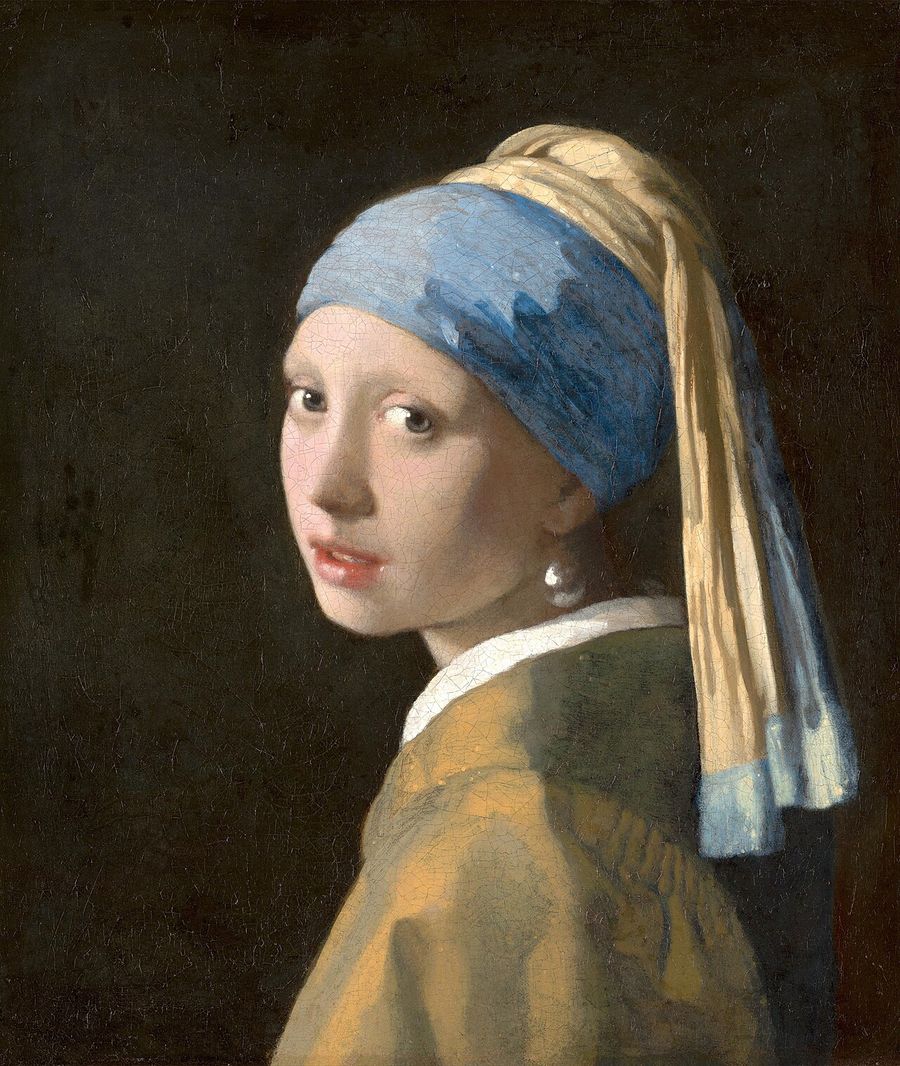
Johannes Vermeer / Wikimedia Commons
Johannes Vermeer — whose 34 or 35 surviving paintings are among the most admired works in Western art, whose Girl with a Pearl Earring has generated a bestselling novel and a major motion picture, and whose domestic interior scenes command prices exceeding $100 million — died in 1675 deeply in debt, leaving his widow to sell his paintings at auction to pay his creditors. He was essentially unknown outside Delft during his lifetime and remained obscure for two centuries after his death.
Vermeer was rediscovered in the 1860s, primarily by the French critic Théophile Thoré-Bürger, who identified 66 paintings as Vermeer's work (subsequent scholarship has reduced this to 34 to 35 confirmed works) and wrote the critical essays that established his reputation. Before Thoré-Bürger's intervention, Vermeer's paintings were occasionally sold under other artists' names because no one knew who had painted them.
The specific irony of Vermeer's case: the paintings themselves did not change. What changed was the critical framework — the move toward valuing intimate domestic subject matter, careful observation of light, and psychological interiority in painting — that made Vermeer's specific qualities legible as virtues rather than as limitations. The paintings that sold at auction for a few guilders in 1676 now hang in the Rijksmuseum, the Frick, the National Gallery of Art, and the Mauritshuis, where the Girl with a Pearl Earring alone draws millions of visitors annually.
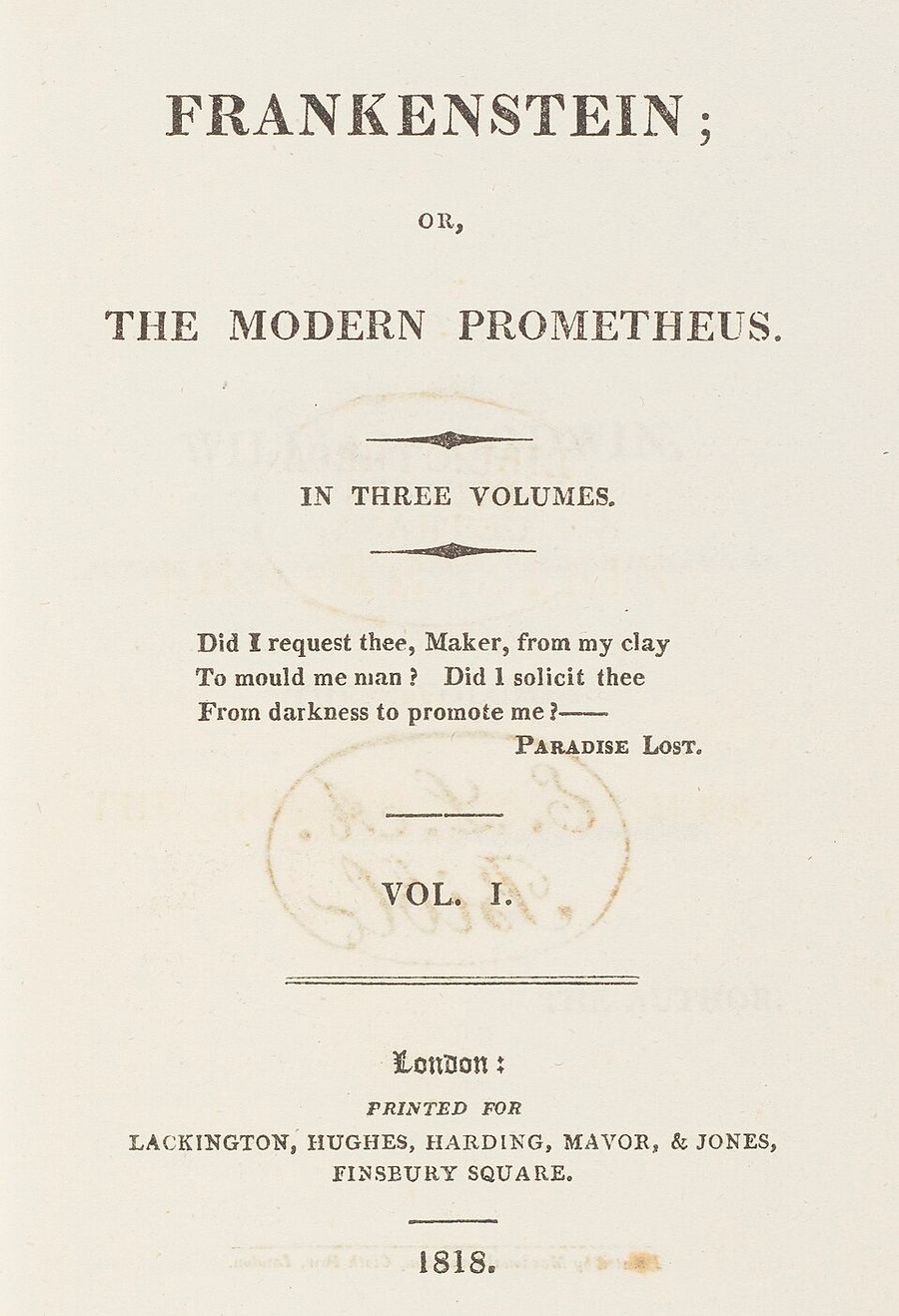
Mary Shelley / Wikimedia Commons
Mary Shelley's Frankenstein; or, The Modern Prometheus was published anonymously in 1818 and was assumed by many reviewers to have been written by Percy Bysshe Shelley. When the novel was reprinted in 1823 under Mary Shelley's name, the critical response was condescending: the Quarterly Review described it as a work "conceived and executed without taste or judgment." The novel was considered crude, philosophically confused, and morally dubious.
The novel's reputation in the 19th century was primarily as a popular entertainment — it was adapted for the stage within years of publication and attracted large working-class audiences for its theatrical versions — rather than as a serious literary work. Its status as serious literature is a 20th-century reassessment driven partly by feminist literary criticism, which identified it as a foundational text about female creativity, authorship, and the relationship between creation and responsibility.
Frankenstein is now studied as a foundational text of science fiction, of Gothic literature, of Romantic-period philosophy of science, and of feminist literary theory. The Quarterly Review that dismissed it as lacking taste and judgment is itself remembered primarily because it dismissed Frankenstein.
Boris Fernbacher / Wikimedia Commons (CC BY-SA 3.0)
Beethoven's Fifth Symphony — whose four-note opening motif is among the most recognized in Western music, whose first movement is analyzed in virtually every music theory curriculum globally, and whose power and formal coherence have made it the most-performed symphony in the orchestral repertoire — received mixed reviews at its premiere in December 1808.
The December 1808 concert — one of the longest and most poorly organized in concert history, running for over four hours in a freezing hall — was not ideal conditions for reception. Critics noted technical imperfections in the performance. The Allgemeine musikalische Zeitung, the leading music journal of the period, described the symphony as "straining after originality" and found it uneven. The positive reception of the Sixth Symphony (premiered the same evening) was, in some reviews, contrasted favorably with the Fifth's perceived excesses.
The Fifth's rehabilitation was swift by the standards of this list: E.T.A. Hoffmann's influential 1810 review in the Allgemeine musikalische Zeitung described it as "one of the most important works of the time" and established the interpretive framework — the Fifth as an expression of heroic struggle — that has defined its reception ever since. Within a generation it had become the central work of the orchestral canon, a position it has never left.
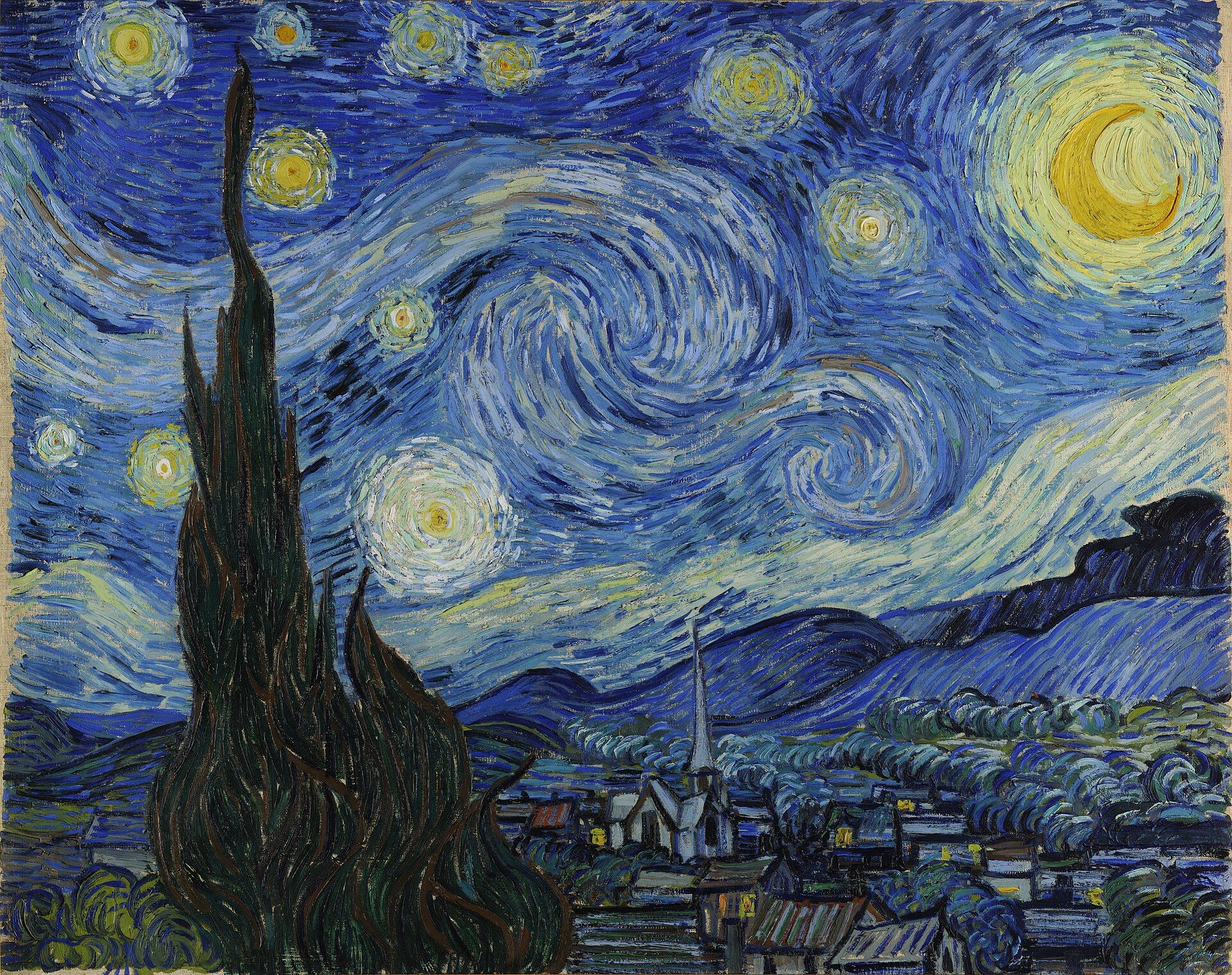
Vincent van Gogh / Wikimedia Commons
Vincent van Gogh sold one painting during his lifetime — The Red Vineyard, sold in February 1890 for 400 francs, approximately four months before his death. He produced approximately 900 paintings and 1,100 drawings in a decade of extraordinarily productive work, none of which was commercially successful. His dealer brother Theo supported him financially throughout his career, and Vincent's letters to Theo — among the most important documents in the history of art — record his awareness that his work was not finding an audience.
Van Gogh's posthumous rehabilitation was rapid: his sister-in-law Jo van Gogh-Bonger organized his estate after Theo's death in 1891, promoted his work persistently, and saw his reputation grow throughout the 1890s. By 1905, major retrospectives were confirming his status as one of the great Post-Impressionist painters. By the late 20th century, his paintings were selling for record prices: Portrait of Dr. Gachet sold for $82.5 million in 1990 (the highest price ever paid at auction at the time), and subsequent works have sold for comparable or higher amounts.
The specific quality of van Gogh's case: he was aware during his lifetime that his work would eventually be recognized, expressing this belief in letters to Theo while also experiencing the daily reality of producing work that no one would buy. The gap between his knowledge of his own work's value and the market's contemporary assessment was one of the defining conditions of his life.

Credit: Wikimedia Commons
George Orwell's Animal Farm was rejected by four publishers — including Victor Gollancz, Jonathan Cape, and T.S. Eliot at Faber and Faber — before Secker & Warburg published it in 1945. The rejections were almost uniformly political rather than literary: with the Soviet Union as a wartime ally of Britain, publishers were reluctant to publish a satirical allegory that was transparently critical of Stalinist communism.
T.S. Eliot's rejection letter — subsequently published and widely discussed — praised the writing and acknowledged the book's power while arguing that the world did not need more "Trotskyite" politics at the present moment. Eliot's letter is notable for its candor about the political calculation: he was not saying the book was bad; he was saying it was politically inconvenient.
Animal Farm became an immediate success after publication, selling out its first print run within days. It has since been translated into more than 70 languages, sold tens of millions of copies, and is routinely cited as one of the most influential political satires in the English language. Its political inconvenience in 1944 became its permanent cultural relevance: it arrived precisely when the political reality it described was becoming impossible to ignore.
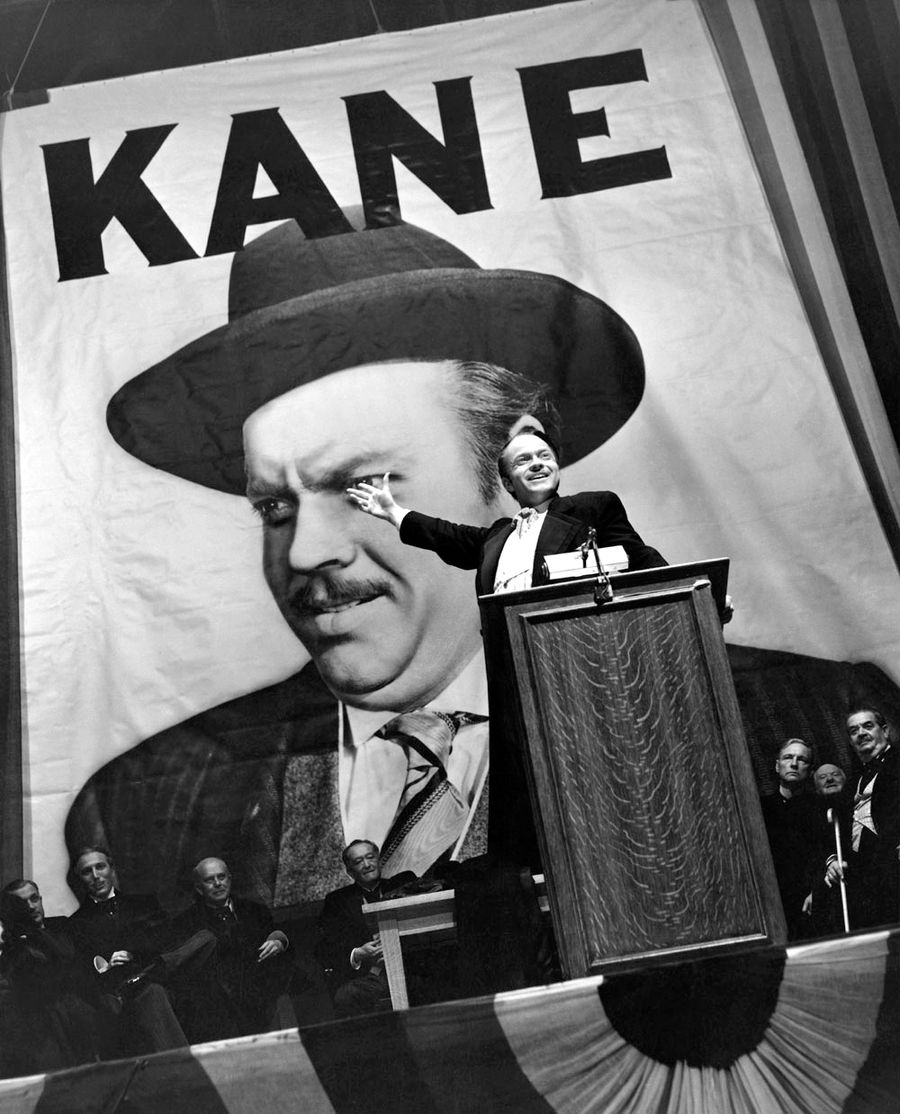
RKO Radio Pictures, still photographer Alexander Kahle / Wikimedia Commons
Orson Welles's Citizen Kane — consistently ranked as the greatest film ever made in Sight & Sound's decennial critics' poll from 1962 through 2002, and still in the top three in every major critical ranking — was a commercial failure at its release in 1941 and was effectively suppressed by William Randolph Hearst, the newspaper magnate whose life it loosely depicted. Hearst banned advertising for the film in his newspapers, urged theater owners not to show it, and campaigned against it at the Academy Awards, where it was nominated for nine Oscars and won only one (Best Original Screenplay).
The film grossed approximately $1.6 million against a budget of $839,000 — technically profitable, but RKO Pictures considered it a disappointment relative to expectations for a film with as much advance publicity as Citizen Kane had received. Welles never again had the creative freedom that RKO had granted him for this film.
The rehabilitation was gradual, driven primarily by French New Wave critics including François Truffaut and André Bazin, who identified Citizen Kane as the foundational work of modern cinema in the pages of Cahiers du Cinéma in the 1950s. By 1962, when Sight & Sound first ranked it number one, this French critical intervention had reshaped the anglophone reception of the film. The specific irony: the film's canonical status is inseparable from the French critical tradition that elevated it, and it was a French reading of an American film that determined how Americans subsequently understood their own cinema.
-900x1394.jpg)
E. McKnight Kauffer / Random House via Wikimedia Commons
Ralph Ellison's Invisible Man was published in 1952 after more than seven years of work, and while it received a generally positive critical reception and won the National Book Award in 1953, it was also met with significant resistance from the Black literary and political community of the period. Richard Wright — whose Native Son (1940) was the dominant model of Black American literature at the time — reportedly dismissed it. Some Black critics found its protagonist's political disengagement from collective struggle irresponsible.
The political criticism came from both sides: white conservative critics found its depiction of American racism too radical; some Black nationalist critics found its resistance to programmatic political commitment too accommodating of the white literary mainstream. The novel existed in a contested space that made it difficult for any single critical community to claim as its own.
Invisible Man is now the novel most consistently cited by American literary scholars as the great American novel of the post-World War II era. Its opening line — "I am an invisible man" — is among the most analyzed first sentences in American fiction. The political criticisms that were leveled at it in 1952 have not disappeared, but they coexist with an acknowledgment of its literary achievement that is essentially universal.
_front_jacket,_first_edition-900x1292.jpg)
Credit: Wikimedia Commons
Madeleine L'Engle's A Wrinkle in Time was rejected by 26 publishers over two years before Farrar Straus and Giroux published it in 1962. The rejections cited the book's mixture of science fiction, fantasy, and Christian symbolism as commercially and categorically confusing — publishers did not know how to sell a book that combined quantum physics with explicit theological content for children.
The book won the Newbery Medal in 1963 and has never gone out of print. It has sold over 14 million copies and has been challenged or banned in some school districts and libraries for its religious content — the specific irony that the book was too Christian for some publishers and too heterodox for some Christian communities. Madeleine L'Engle, who was a deeply committed Christian, found the challenges from Christian groups particularly bewildering.
The 26 rejections are now cited in almost every discussion of publishing misjudgment in children's literature. The book's combination of science and faith, which confused publishers in 1960, is now identified as its distinguishing characteristic — the feature that has made it enduringly meaningful to readers who find most children's fantasy either scientifically dismissive or theologically evasive.
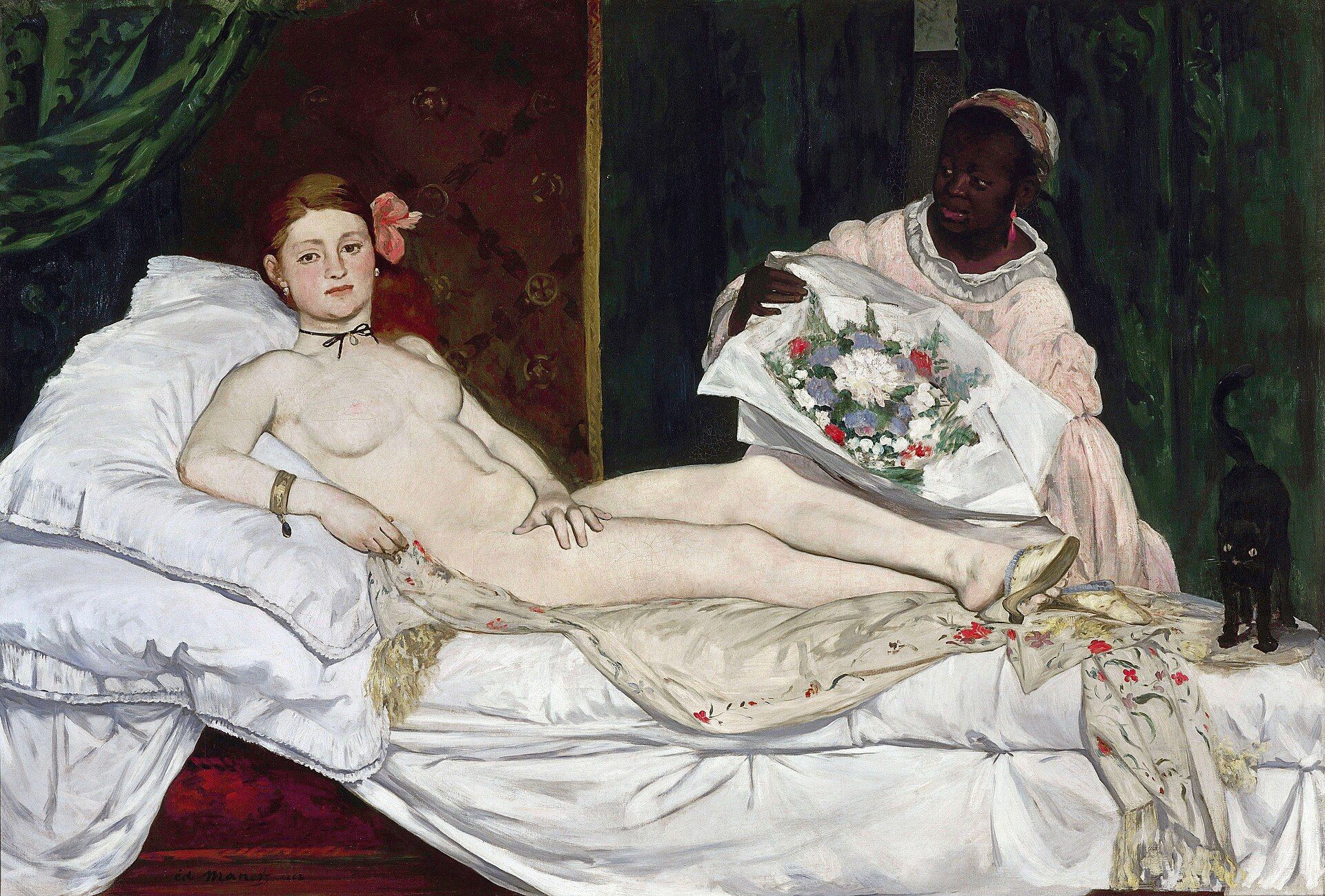
Édouard Manet / Wikimedia Commons
Édouard Manet's Olympia — exhibited at the Paris Salon of 1865 after the earlier Le Déjeuner sur l'herbe scandal — produced an even more intense public reaction. Crowds gathered in front of it not to admire it but to mock it; critics described it as grotesque and immoral. The painting depicted a nude woman — clearly a contemporary Parisian prostitute rather than a mythological Venus — receiving flowers from a Black maid, looking at the viewer with an expression that critics described as "shameless."
The public mockery was so intense that the Salon's administration moved the painting to a position high on the wall, out of the reach of visitors who were attempting to damage it. Critics compared the figure's body to a decomposing corpse. The reaction was personal and physical in a way that went beyond aesthetic disagreement — the painting provoked a response more like an attack than a critique.
Olympia is now in the Musée d'Orsay and is recognized as one of the most important paintings in Western art — the work most frequently cited as the specific moment at which modern art began. Its current status requires explaining to new viewers why its subject matter caused a riot, because the elements that made it scandalous in 1865 — the direct gaze, the contemporary setting, the unapologetic acknowledgment of commercial sex — are precisely the elements that make it historically legible as revolutionary.
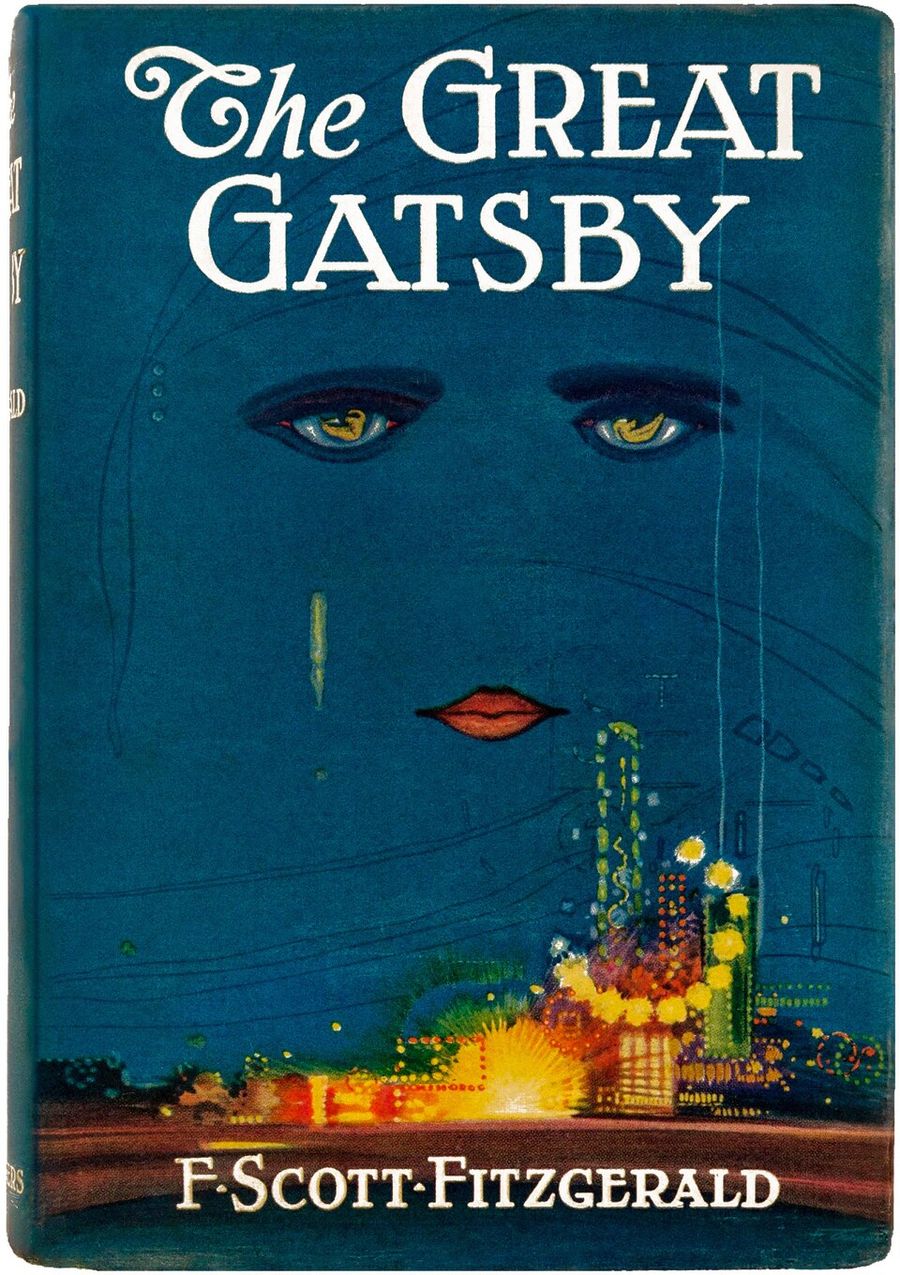
Francis Cugat / Charles Scribner's Sons via Wikimedia Commons
The Great Gatsby sold approximately 20,000 copies in its first year — a significant disappointment for Fitzgerald, who had expected it to be his breakthrough commercial success and who was deeply in debt. Contemporary reviews were mixed: H.L. Mencken called it "no more than a glorified anecdote," and some reviewers found it thin. Fitzgerald died in 1940 believing himself a failure, his greatest novel effectively out of print.
The rehabilitation of The Great Gatsby was substantially a product of World War II: the Council on Books in Wartime distributed 155,000 copies to American servicemen as part of an effort to provide reading material to troops, and the exposure of millions of American soldiers to the novel in the early 1940s created the readership whose enthusiasm became the basis for its postwar canonical status.
It is now the most taught novel in American high schools and is frequently cited as the great American novel of the 20th century. Fitzgerald's own assessment of its failure — which was accurate in its original context — was reversed by a distribution decision made after his death. The novel's canonical status is partly an accident of wartime logistics.

H.-P. Haack / Wikimedia Commons
Hermann Hesse's Steppenwolf was published in Germany in 1927 to hostile reviews from German critics who found it nihilistic, morally confused, and dangerously individualistic. Hesse himself wrote a note for later editions explaining that the novel had been comprehensively misread — that its despair was not the novel's conclusion but its starting point, and that readers who found only darkness in it were missing the book's actual argument about transformation.
The novel's second life came in the United States in the 1960s, when it was adopted by the counterculture as a foundational text of alienation, nonconformity, and spiritual searching. The paperback edition sold millions of copies; the novel became standard reading for a generation of young Americans who identified with Harry Haller's sense of being caught between bourgeois conformity and transcendence. A Canadian rock band named themselves Steppenwolf after the novel.
The irony of Steppenwolf's reception history is that it found its most enthusiastic audience among people whom Hesse himself might have found somewhat alarming — the 1960s American counterculture was not quite what Hesse had in mind — but the novel's capacity to generate that reading was itself a demonstration of its richness. A book that can be both condemned as nihilistic and celebrated as spiritually liberating by different generations is doing something formally interesting.
-900x1303.jpg)
Heritage Auctions / Wikimedia Commons
Thomas Pynchon's Gravity's Rainbow won the National Book Award in 1974 but was famously denied the Pulitzer Prize after the Pulitzer fiction jury recommended it: the Pulitzer board overruled the jury, describing the novel as "obscene," "unreadable," and "turgid." The board declined to award any fiction prize that year rather than give it to Pynchon's novel.
The specific charge of unreadability has some descriptive accuracy — Gravity's Rainbow is genuinely difficult, spanning hundreds of named characters, multiple narrative voices, and dense allusions to mathematics, chemistry, film history, and Calvinist theology, all organized around a paranoid conspiracy narrative set in the final months of World War II. The Pulitzer board's rejection was not entirely without cause; they were accurately describing a quality of the novel. Their error was treating unreadability as disqualifying rather than as a feature.
Gravity's Rainbow is now considered one of the two or three most important American novels of the 20th century. The Pulitzer board's refusal to award it is cited regularly as an example of institutional timidity in the face of formally ambitious work. Pynchon's response to the controversy was to send comedian Irwin Corey to accept the National Book Award in his place — a comment on literary prize culture that was itself as complex and as funny as anything in the novel.
-900x1145.jpg)
Lawrence Ferlinghetti / Wikimedia Commons
Allen Ginsberg's Howl, published by City Lights Books in San Francisco in 1956, was seized by US Customs and the San Francisco police in 1957 on obscenity grounds, and City Lights publisher Lawrence Ferlinghetti was arrested and tried for publishing obscene material. The trial — in which literary critics testified to the poem's serious artistic merit — resulted in Ferlinghetti's acquittal and established the principle that literary merit was a defense against obscenity charges in California.
The poem's opening lines — which the prosecutor found obscene and which Ginsberg had written in a single session of inspired composition — are now among the most quoted in 20th-century American poetry. The trial generated enormous publicity for the poem, for the Beat Generation, and for the specific question of what American literature was permitted to say about homosexuality, drug use, and the experience of mental illness.
Howl is now taught in university literature courses as a foundational text of American poetry, the Beat Generation, and the countercultural tradition. The obscenity trial that attempted to suppress it is now studied alongside the poem itself as a cultural document. Ferlinghetti's acquittal is credited as a turning point in the legal history of literary freedom in the United States.

Marcin Wichary / Wikimedia Commons (CC BY 2.0)
Ridley Scott's Blade Runner was a commercial and critical disappointment at its 1982 release. It grossed approximately $27 million against a production budget of $28 million in its initial theatrical run. Reviews were mixed: some critics found it visually extraordinary but narratively cold and confusing; the studio had imposed a voice-over narration and an alternate ending over Scott's objections, producing a version that satisfied neither Scott nor most viewers.
The film's rehabilitation began through cable television and home video in the mid-1980s, where it found the audience that theatrical distribution had not delivered. When the Director's Cut was released in 1992 — removing the voice-over and the alternate ending, restoring the original vision — it was received as a revelation: the film that critics had called cold and confusing was revealed as a precisely controlled vision of atmospheric density and philosophical seriousness. The Final Cut, released in 2007, has become the definitive version.
Blade Runner is now the most influential science fiction film ever made by the measurement of the number of subsequent films, television series, video games, and visual artists who have cited it as a primary influence. Its depiction of a rainy, neon-lit, multicultural dystopian future has become so prevalent in science fiction that it is now a cliché — a specific irony for a film that was itself criticized for being cold and inaccessible at its release.