Holiday Extras / Unsplash
Airport dining has improved considerably over the past decade. Terminals that once offered a choice between a soggy sandwich and a lukewarm hot dog now house full-service restaurants, and some airports have attracted Michelin-recognized chefs to their concourses. The range of food available between security and the gate has expanded enough that most travelers can find something genuinely worth eating before a flight.
But the improvement in options does not eliminate the difference between what tastes appealing in an airport and what serves a traveler well at 35,000 feet. The combination of altitude, pressurized cabin air, limited mobility, and the physiological effects of flying creates conditions in which certain foods cause problems that ground-level eating does not predict. A salad that poses no meaningful risk at a restaurant table becomes a different proposition at an airport salad bar with high turnover and variable food-handling standards. A large coffee that starts a productive morning on the ground can guarantee a miserable few hours in a middle seat.
The seven items below appear in Travel + Leisure and are drawn from guidance from the Centers for Disease Control and Prevention, the Federal Aviation Administration, the Mayo Clinic, and nutrition experts. Each represents a category that most travelers instinctively consider a reasonable airport choice, and each offers a specific reason to reconsider before boarding.
1 / 7
engin akyurt / Unsplash
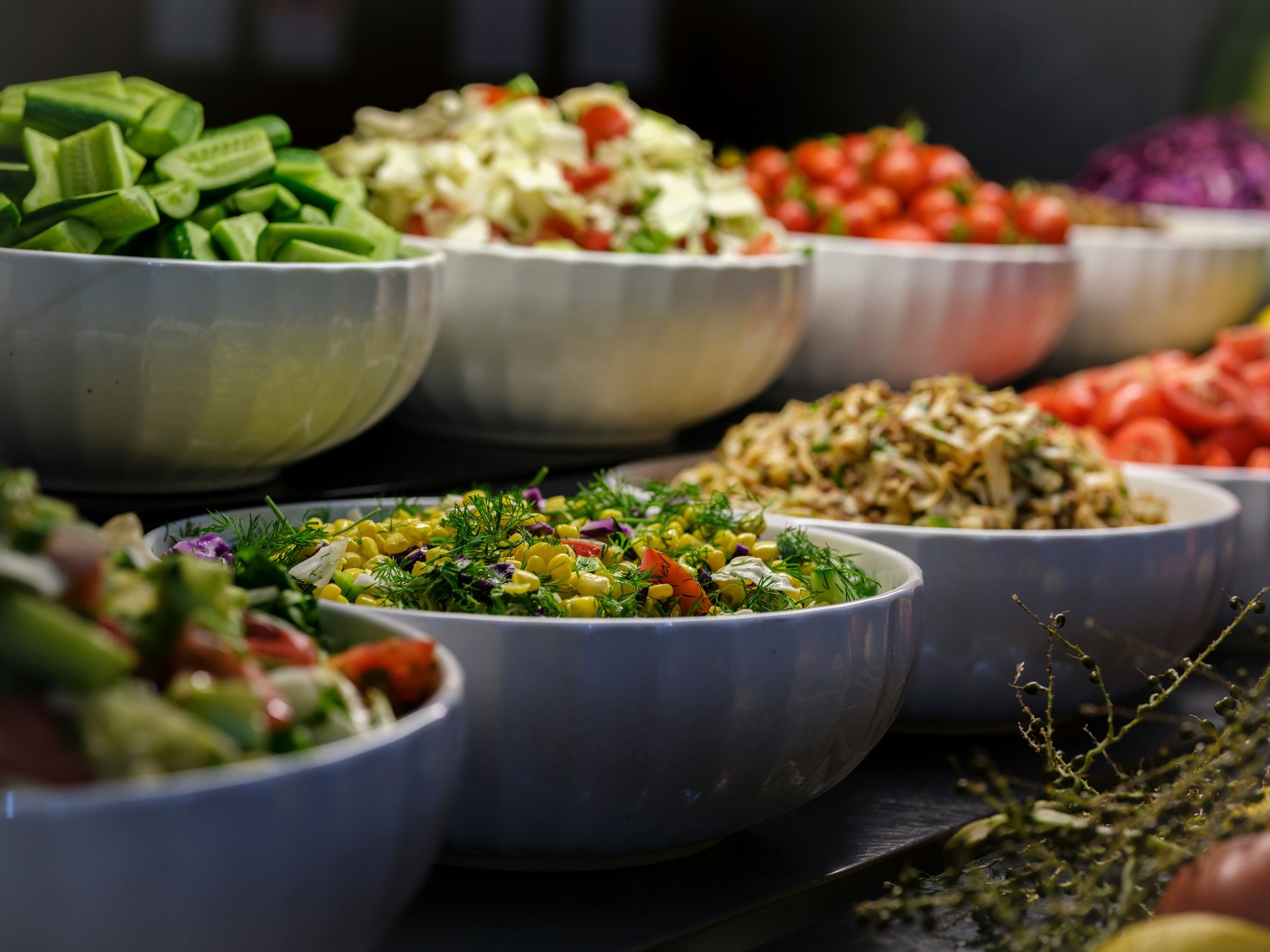
The salad bar presents itself as the traveler’s virtuous choice, and the logic is understandable: a bowl of greens feels like a corrective to the rest of the airport’s food landscape. The problem is structural. The CDC classifies leafy vegetables as a risky category precisely because the bacteria that contaminate them — including E. coli O157 — cannot be eliminated by washing alone. The agency identifies germs on raw produce as a major source of U.S. foodborne illnesses, making the produce itself the concern rather than the preparation environment.
An airport salad bar amplifies that baseline risk through the conditions the format creates. High customer volume, variable food-handling standards, and the exposure time of produce sitting in an open bar all increase the likelihood that contamination present at any point in the supply chain reaches the consumer. A restaurant that prepares salads to order controls more of those variables than a self-serve bar serving hundreds of customers per hour.
The timing of food poisoning compounds the problem for air travelers specifically. Symptoms from foodborne illness typically develop hours after consumption, which means a contaminated salad eaten at the gate produces its effects in the air rather than in a setting where a traveler can manage them comfortably. Choosing a cooked alternative eliminates the risk of contamination from raw produce entirely, which is the most reliable way to avoid the specific illness category that airport salad bars pose.
2 / 7

Dogu Tuncer / Unsplash
The pre-flight coffee is a reflex for early-morning travelers, and in modest quantities it does not necessarily cause problems. A large coffee, however, introduces a quantity of caffeine whose effects the Mayo Clinic specifically documents: caffeine increases urine production, making it a diuretic, and the more commonly reported side effects of caffeinated drinks include loose stools and upset stomach. Both consequences are inconvenient at altitude, where the aisle to the lavatory requires unbuckling, waiting, and navigating a narrow cabin.
The sleep dimension adds a second consideration. Many travelers use long flights to sleep, and caffeine’s interference with sleep quality is well established. The quantity of caffeine in a large airport coffee can extend its stimulant effects well into a flight, reducing the quality of any sleep attempted and increasing the likelihood of arriving at a destination in a state of fatigue that the flight’s duration was supposed to address.
The alternative is not abstinence but proportion. A small coffee, consumed well before boarding, allows the caffeine’s peak effects to pass before the flight begins and reduces the diuretic load that the body processes in the air. Travelers $TRV who need a substantial caffeine intake to function in the morning are better served by having it earlier in the airport arrival process rather than immediately before boarding, which gives the body more time to process it before the flight’s conditions take over.
3 / 7
Mitchell Luo / Unsplash
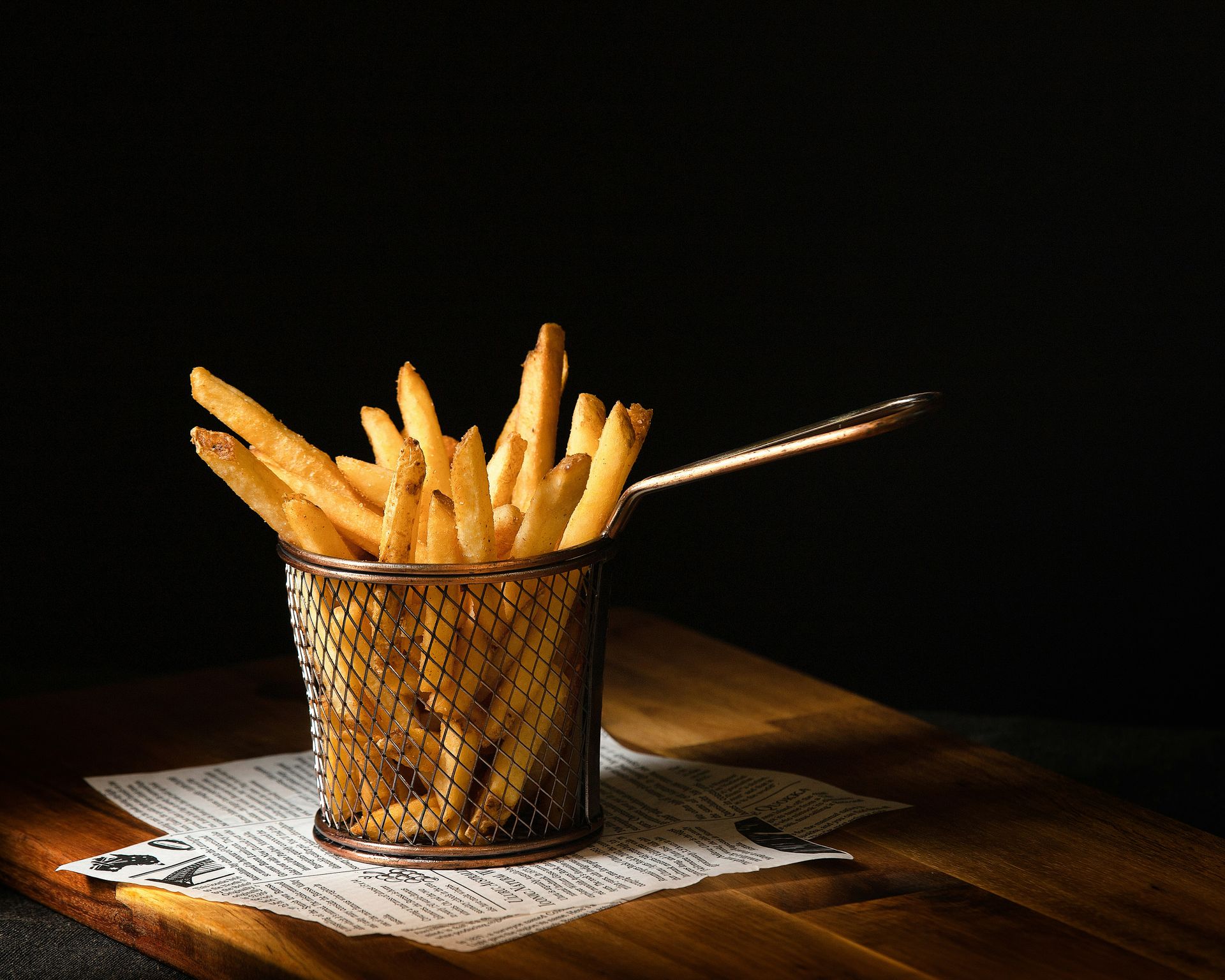
French fries and pretzels reliably cause bloating at ground level, making the effect familiar to most people who eat them regularly. At 35,000 feet, the same bloating occurs under conditions the FAA clearly explains: the gastrointestinal tract contains gas at a pressure equivalent to the ambient atmosphere, and as cabin pressure decreases with altitude, that gas expands. Salty foods and carbonated beverages both contribute to gas production during digestion, which means the bloating caused by a large order of fries at the gate becomes more pronounced and more persistent during the flight.
The discomfort this creates is not trivial. Gas expansion at altitude can cause abdominal pressure ranging from mild discomfort to genuine pain, depending on the individual and the amount of gas-producing food consumed before or during the flight. The enclosed environment of a cabin, where relieving that pressure directly affects fellow passengers, makes the social dimension of the problem as significant as the physical one.
Avoiding salty snacks before and during a flight does not require replacing them with nothing. Foods low in sodium and low in gas-producing fiber — plain crackers, nuts without heavy seasoning, or fruit — provide satiety without the altitude-amplified consequences that salty and carbonated options create. The difference in how a traveler feels during and after a flight that avoids these foods is significant enough that the airport’s pervasive availability of fries and pretzels does not justify choosing them by default.
4 / 7
Jainath Ponnala / Unsplash
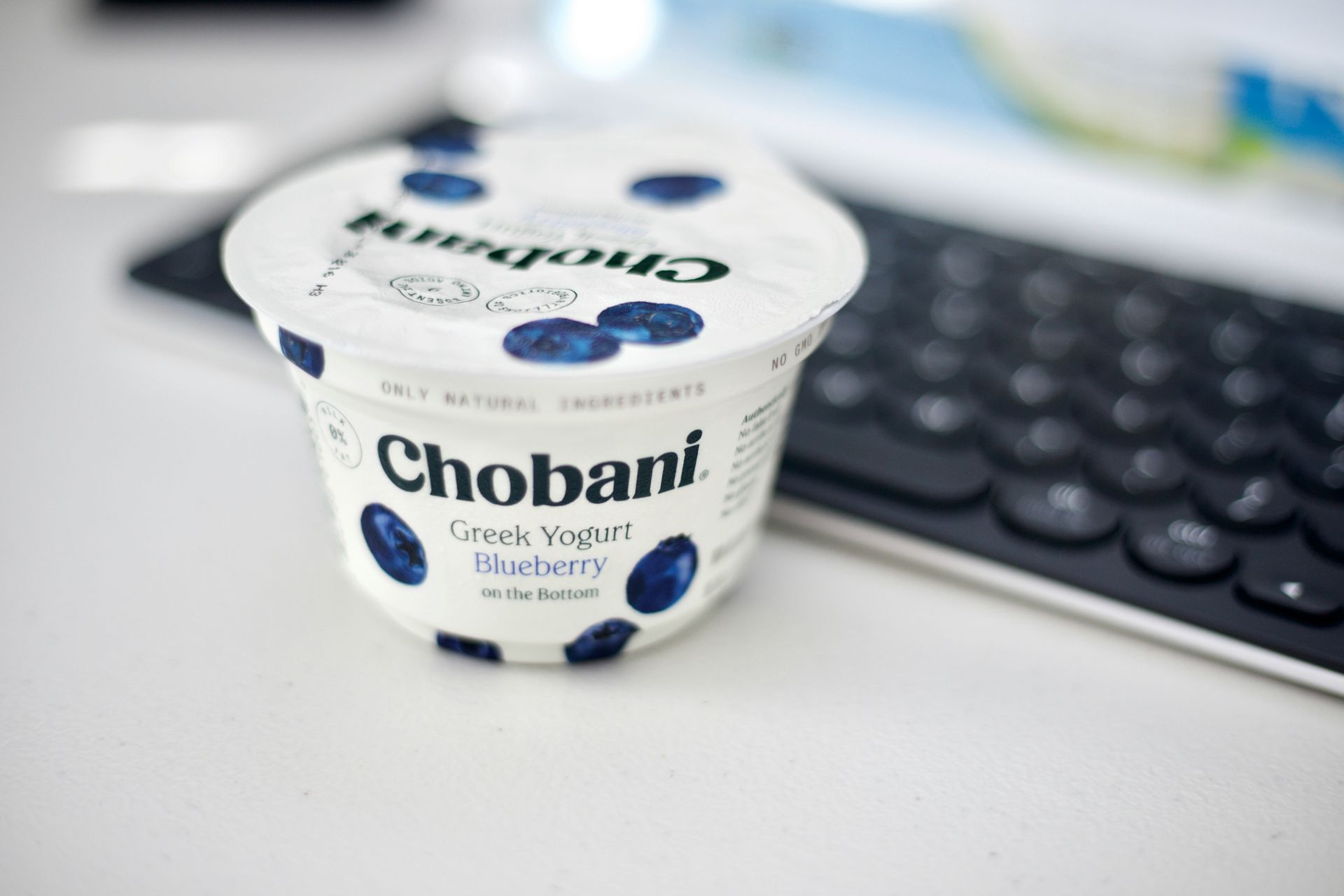
The individual yogurt cup reads as a healthy grab-and-go option, and the category’s health associations make it a default choice for travelers trying to eat reasonably at the airport. The actual sugar content of many commercially available flavored yogurts contradicts that positioning significantly. According to USDA data, even a low-fat fruit yogurt can contain more than 30 grams of sugar, a quantity that exceeds the sugar in an average milk chocolate bar and doubles the sugar in three chocolate sandwich cookies.
The sugar crash that follows a high-sugar snack — a period of fatigue and reduced focus that typically arrives an hour or two after consumption — is poorly timed for air travel. Boarding a flight in a sugar crash, or entering one during the early hours of a long-haul journey, affects alertness, mood, and sleep quality in ways that the yogurt’s apparent health credentials did not advertise. A traveler who wants something sweet before a flight and reaches for a flavored yogurt because it seems like the responsible choice may end up consuming more sugar than a straightforward dessert would have delivered.
Plain yogurt without added fruit flavoring or sweeteners is nutritionally different from the flavored varieties and does not carry the same sugar load. Travelers $TRV who want the protein and probiotics that yogurt provides can find them without the sugar if they read labels rather than relying on the category’s healthy reputation. Alternatively, the article’s logic here is straightforward: if the sugar content of a flavored yogurt is comparable to that of a chocolate bar, the traveler might as well eat what they actually want and honestly account for the consequences.
5 / 7
Louis Hansel / Unsplash
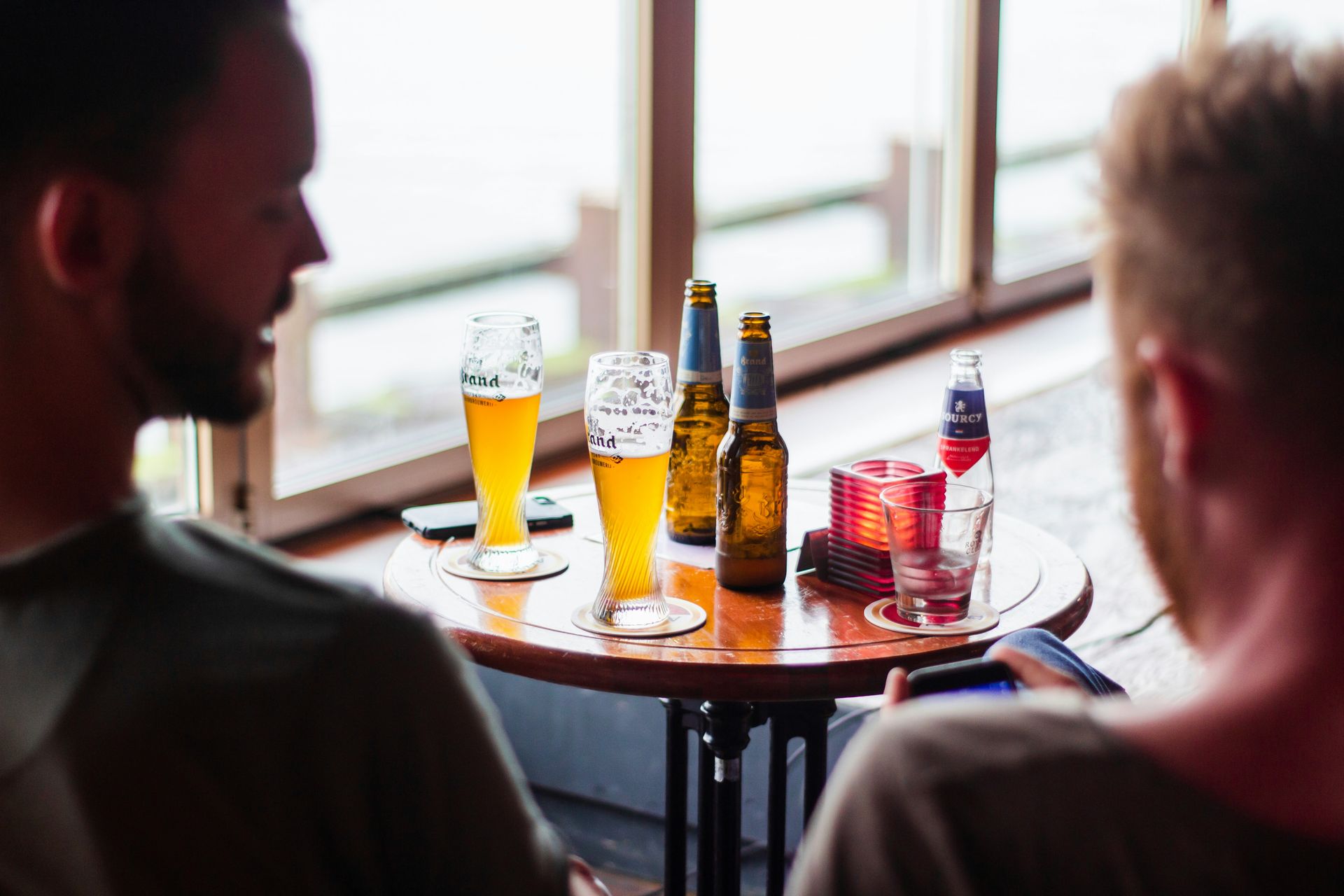
The pre-flight drink is a travel ritual for many people, and the psychology of it is straightforward: alcohol marks the beginning of vacation, reduces pre-flight anxiety, and feels like a celebration of departure. The physiological effects of drinking before and during a flight, however, operate differently at altitude than on the ground, and the risks are specific enough that they warrant consideration beyond the standard advice to drink moderately.
Nutritionist Lindsay Malone, a professor at the School of Medicine at Case Western Reserve University, states directly that drinking on airplanes sets the stage for poor sleep and cardiac events by lowering oxygen saturation and increasing heart rate. A study published by the DLR Institute of Aerospace Medicine reinforces this assessment, finding that the combination of alcohol and sleep at reduced atmospheric pressure in a cabin places significant strain on the heart, including in young, healthy individuals. The reduced oxygen availability at altitude amplifies alcohol’s cardiovascular effects beyond what the same quantity would produce at ground level.
The sleep disruption compounds the cardiac concern. Many travelers drink on flights specifically because they believe it helps them sleep, but alcohol’s interference with sleep architecture — reducing time spent in restorative sleep phases — means that drinking to fall asleep produces lower-quality rest than the same duration of sleep would deliver without alcohol. Arriving at a destination after a flight spent drinking and sleeping poorly represents the opposite outcome from what the pre-flight drink was intended to produce.
6 / 7
amirali mirhashemain / Unsplash
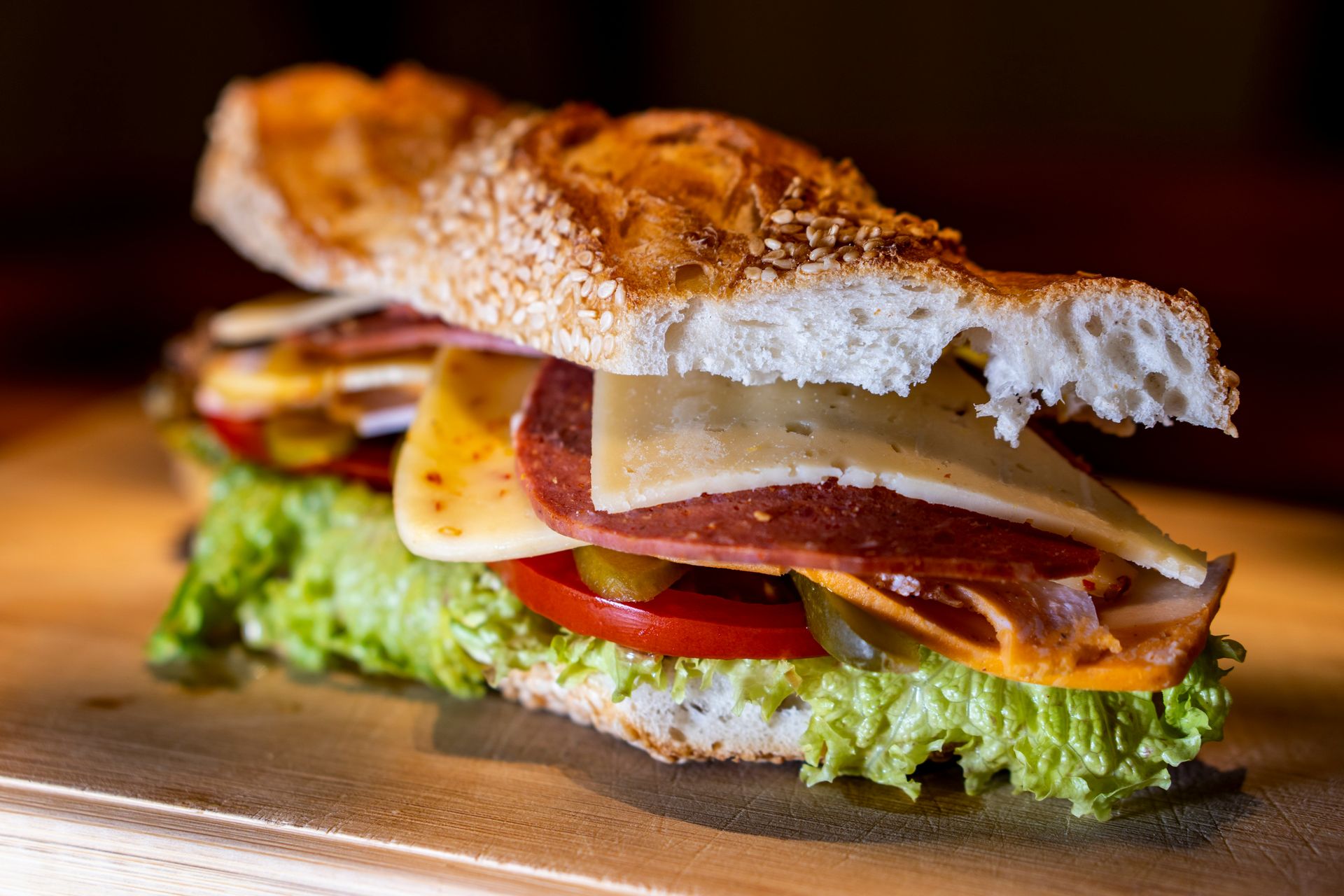
The deli sandwich is an airport staple, filling and familiar enough that most travelers reach for it without much consideration. The CDC’s guidance on cured meats identifies a specific risk that the airport format does not address: deli meats, including lunch meats, cold cuts, and fermented or dry sausages, are unsuspecting sources of listeria, particularly when they have been sitting out. The agency recommends avoiding these meats unless heated to an internal temperature of 165 degrees Fahrenheit or until visibly steaming.
Grab-and-go deli sandwiches, which are prepared in advance and held at refrigerated temperatures rather than served fresh or heated, do not meet this standard. The cold meats in a pre-made sandwich from a refrigerated case have not been heated, and the time between preparation and purchase introduces the sitting-out variable on which listeria risk depends. The case that holds them is refrigerated, but refrigeration slows bacterial growth rather than eliminating it.
The practical alternative is a toasted sandwich from a cafe or restaurant that prepares food to order, where the heat applied during preparation addresses the listeria risk that cold preparation does not. Most airport food courts contain at least one option that prepares sandwiches to order with applied heat. Paying slightly more for a freshly made, toasted sandwich eliminates the specific risk that the grab-and-go format creates without requiring the traveler to abandon the sandwich format entirely.
7 / 7
Vinicius Benedit / Unsplash
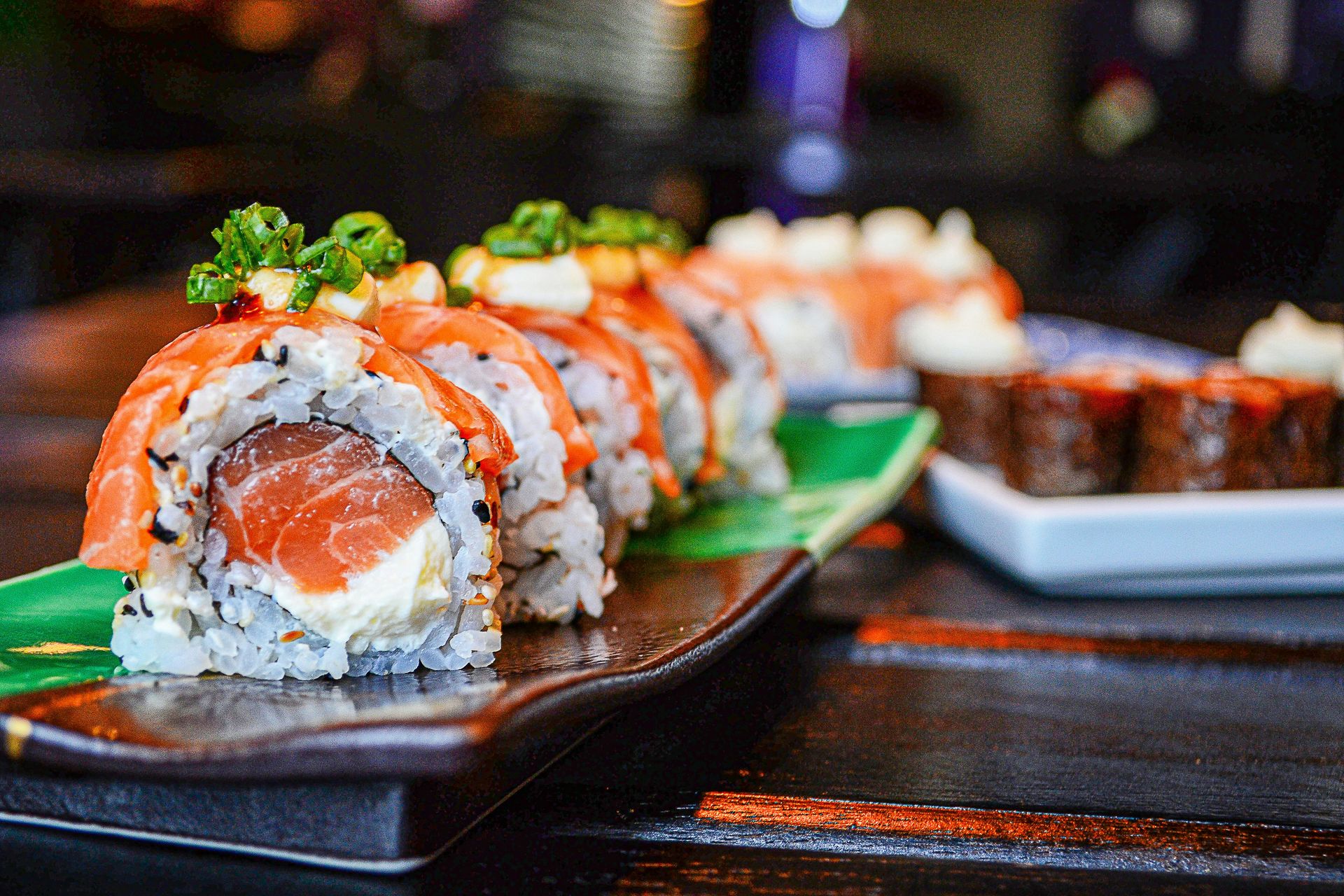
Sushi concentrates two separate problems into a single airport meal. The first is the raw fish risk that the CDC identifies specifically: raw or undercooked fish and shellfish, including sashimi, sushi, and ceviche, are more frequently associated with foodborne illness than cooked alternatives, and the risk increases when the product has been left out for extended periods. Airport sushi, which typically sits in a display case for a period the traveler cannot verify, meets this left-out condition more reliably than sushi served immediately after preparation at a dedicated restaurant.
The second problem is sodium. Soy sauce, the standard condiment for sushi consumption, contains nearly 40% of a day’s recommended sodium intake in a single tablespoon, according to WebMD. Travelers $TRV who apply soy sauce generously — a common behavior that portion guidance for soy sauce does not naturally discourage — can consume a substantial fraction of their daily sodium limit from a single airport meal, triggering bloating and fluid retention that altitude then amplifies.
The combination of raw fish foodborne illness risk and high sodium intake makes airport sushi a category that delivers two separate problems simultaneously. Neither risk is eliminated by choosing a more reputable-looking airport sushi vendor: the raw fish concern is intrinsic to the product rather than a function of vendor quality, and the soy sauce sodium problem depends on individual consumption behavior rather than the sushi’s provenance. A cooked alternative with lower sodium content addresses both concerns without requiring the traveler to go hungry before the flight.
