From a botched invasion to a codebreaker's quiet triumph, these 25 lesser-known moments shaped the outcome of the deadliest conflict in human history
Credit: RIA Novosti archive, image #607025 / Ustinov / Wikimedia Commons (CC BY-SA 3.0)
The Second World War is often told through a handful of monuments: D-Day, Pearl Harbor, the fall of Berlin. These are real and consequential, but they crowd out the dozens of smaller pivots that, had they gone differently, might have rewritten everything. Wars are not decided by a single day. They turn on miscalculations made in the middle of the night, on supply chains no one thought to protect, on weather reports that arrived too late, on individual decisions made under conditions of near-total uncertainty.
The conflict that killed an estimated 70 to 85 million people between 1939 and 1945 was shaped as much by logistics, signals intelligence, and bureaucratic failure as it was by heroism on the front line. Adolf Hitler overruled his generals at least twice at moments when those generals were right. The Soviet Union nearly collapsed in the winter of 1941 and was saved partly by troops transferred from Siberia on the basis of a single spy's intelligence. Japan made a strategic choice at Midway that left its aircraft carriers exposed for just long enough. Britain held on in the summer of 1940 by margins so thin that historians still debate whether they were margins at all.
The turning points collected here are not obscure for the sake of being obscure. They were chosen because they genuinely altered the war's direction — and because understanding them changes how you understand the conflict as a whole. Some involve military operations that went wrong or right at the worst or best possible moment. Others involve intelligence coups, diplomatic failures, or the consequences of a single commander's personality. A few involve decisions that seemed sensible at the time and proved catastrophic.
The standard narrative of the Second World War tends to present its outcome as inevitable — the Allies were always going to win, the Axis powers always going to overextend. That story is comforting and largely false. The war's outcome was not determined. It was fought, argued, and improvised into existence, one turning point at a time.
Credit: U.S. National Archives / Public Domain / Picryl
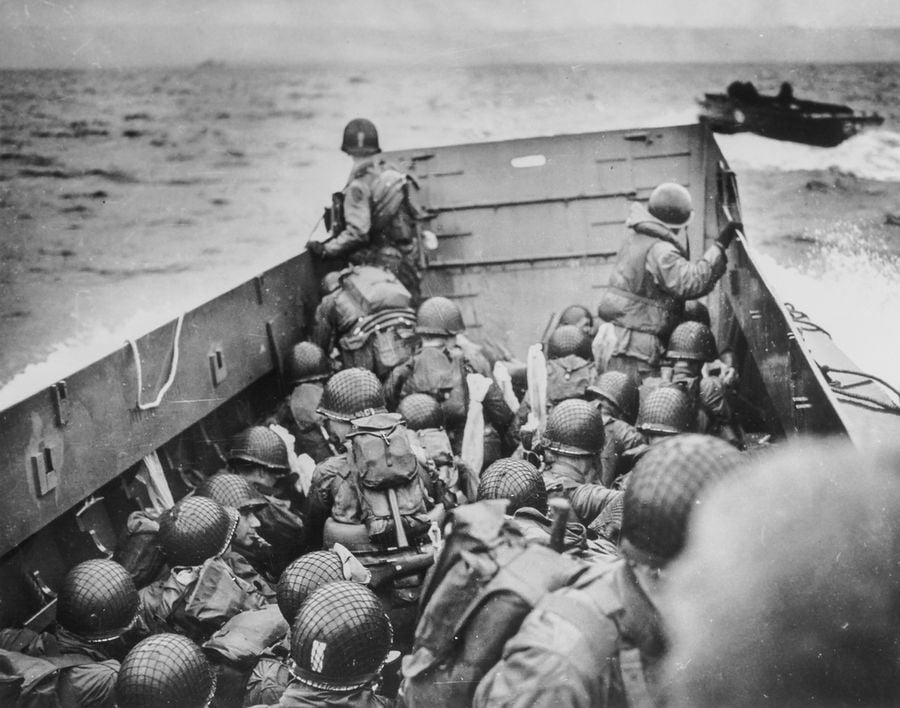
In late May 1940, the German army had the British Expeditionary Force and a large portion of the French and Belgian armies cornered at Dunkirk on the northern coast of France. The encirclement was nearly complete. German armored columns were within striking distance of the port. Then Hitler issued a halt order.
On May 24, 1940, German armored forces were ordered to stop their advance for roughly two days, a decision that allowed the Allied forces to consolidate defenses around the Dunkirk perimeter. The precise reasons for the halt remain debated by historians. Contributing factors included concerns about bogging down the panzers in the marshy Flemish terrain, a belief that the Luftwaffe could finish the job from the air, and the desires of some senior German commanders — including General Gerd von Rundstedt — to preserve armor for future operations.
The Luftwaffe did not finish the job. Bad weather limited air operations during critical periods. The Royal Air Force, despite being outnumbered, fought hard over the beaches. And the British launched Operation Dynamo, the naval evacuation that, between May 26 and June 4, 1940, pulled approximately 338,000 Allied troops off the beaches using a fleet of military vessels and civilian boats.
The significance of this cannot be overstated. Those 338,000 men were not immediately ready to fight — they had left most of their equipment behind — but they were alive, and they formed the core of the army that would eventually return to the Continent. If they had been captured or destroyed, Britain would have lost a substantial portion of its trained professional military. The political pressure to negotiate a settlement with Germany would have been vastly greater.
Winston Churchill, who had only become Prime Minister on May 10, needed a story to tell the British public about why the war could still be won. Dunkirk gave him one, however thinly it rested on actual military success. "Wars are not won by evacuations," he said in his famous Commons speech on June 4 — but the evacuation of Dunkirk kept Britain in the war long enough for it to eventually win.
The halt order remains one of the most analyzed decisions in military history. Some German commanders believed it was Hitler's first serious operational blunder. Whether that is precisely true, the consequences were real: the British army survived, and the war continued.
Credit: Imperial War Museum / UK Government artistic works via Wikimedia Commons / Picryl
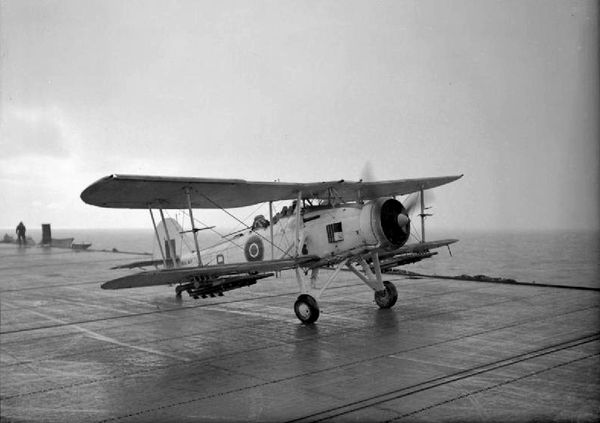
On the night of November 11, 1940, 21 Swordfish biplane torpedo bombers launched from the British aircraft carrier HMS Illustrious and attacked the Italian fleet at anchor in the harbor of Taranto, on the southern coast of Italy. The raid lasted less than two hours. When it was over, three Italian battleships had been put out of action — half of Italy's battleship force — for the loss of two British aircraft.
The Taranto raid was not just a tactical victory. It demonstrated, in the most direct possible terms, that a battle fleet could be devastated from the air while sitting in harbor, without the attacker ever having to engage in the kind of surface engagement that had dominated naval thinking for decades. The battleship, which had been the premier symbol of naval power since the 19th century, was suddenly exposed as vulnerable in an entirely new way.
Japan's Combined Fleet studied the Taranto operation closely. Admiral Isoroku Yamamoto and his planners noted the shallow harbor, the torpedo modifications the British had used to prevent the weapons from sinking to the bottom in confined waters, and the use of carrier-launched aircraft to execute an attack that shore-based aircraft could not have achieved with the same element of surprise. Thirteen months after Taranto, Japan launched a similar attack — at vastly greater scale and with much larger forces — against the U.S. Pacific Fleet at Pearl Harbor.
The influence of Taranto on Pearl Harbor is well documented. A Japanese naval observer had watched the attack, and the Imperial Japanese Navy subsequently revised its own harbor-attack protocols. The parallels in approach — shallow-running torpedoes, nighttime surprise, aircraft carriers launching at distance — are direct.
Taranto also had immediate consequences for the Mediterranean balance of power. With Italy's battleship fleet reduced, the Royal Navy gained room to maneuver and supply Malta more effectively. The raid emboldened British naval operations in waters where Italian surface power had previously constrained them.
For a raid executed with biplanes that were already considered obsolete, its strategic and doctrinal legacy was substantial. It ushered in the age of carrier-centric naval warfare a year before Pearl Harbor made that lesson undeniable to the rest of the world.
Credit: RIA Novosti archive, image #62126 / Wikimedia Commons (CC BY-SA 3.0)
In October 1941, German forces were advancing on Moscow. Operation Typhoon, the German drive on the Soviet capital, had begun on September 30, and by mid-October German armored spearheads were within 65 miles of the city. The Soviet government partially evacuated. Stalin briefly considered flight. The situation appeared close to catastrophic.
What saved Moscow was partly General Winter, partly the extraordinary Soviet capacity to absorb catastrophic losses and continue fighting, and partly the intelligence delivered by a German journalist named Richard Sorge.
Sorge was a Soviet spy embedded in Tokyo, where he had cultivated relationships with senior Japanese officials and the German ambassador. In the autumn of 1941 he provided Moscow with intelligence — confirmed by other sources — that Japan intended to expand its war southward and eastward, toward Southeast Asia and the Pacific, rather than northward against the Soviet Union's exposed Far Eastern territories. Japan would not attack Siberia.
This was the answer to a question that had been consuming Stalin for months. The Soviet Union maintained large forces along its Far Eastern frontier specifically to guard against a Japanese attack. If those forces could be redeployed west, they could reinforce the defense of Moscow. But the risk of stripping the east was that Japan might attack while the defenses were down.
Sorge's intelligence, along with other confirming signals, gave Stalin enough confidence to order the transfer of roughly 15 Siberian divisions and associated armor to the Western Front. These were not raw troops. They were battle-hardened, winter-equipped, and experienced. They arrived in time to participate in the Soviet counteroffensive that began on December 5, 1941, which pushed German forces back from Moscow and ended any serious German prospect of capturing the city before the end of 1941.
Sorge was arrested by Japanese authorities on October 18, 1941, before he could know whether his intelligence had made a difference. He was executed in 1944. The Soviet government did not publicly acknowledge him as a hero until 1964.
Credit: Turag Photography / Pexels
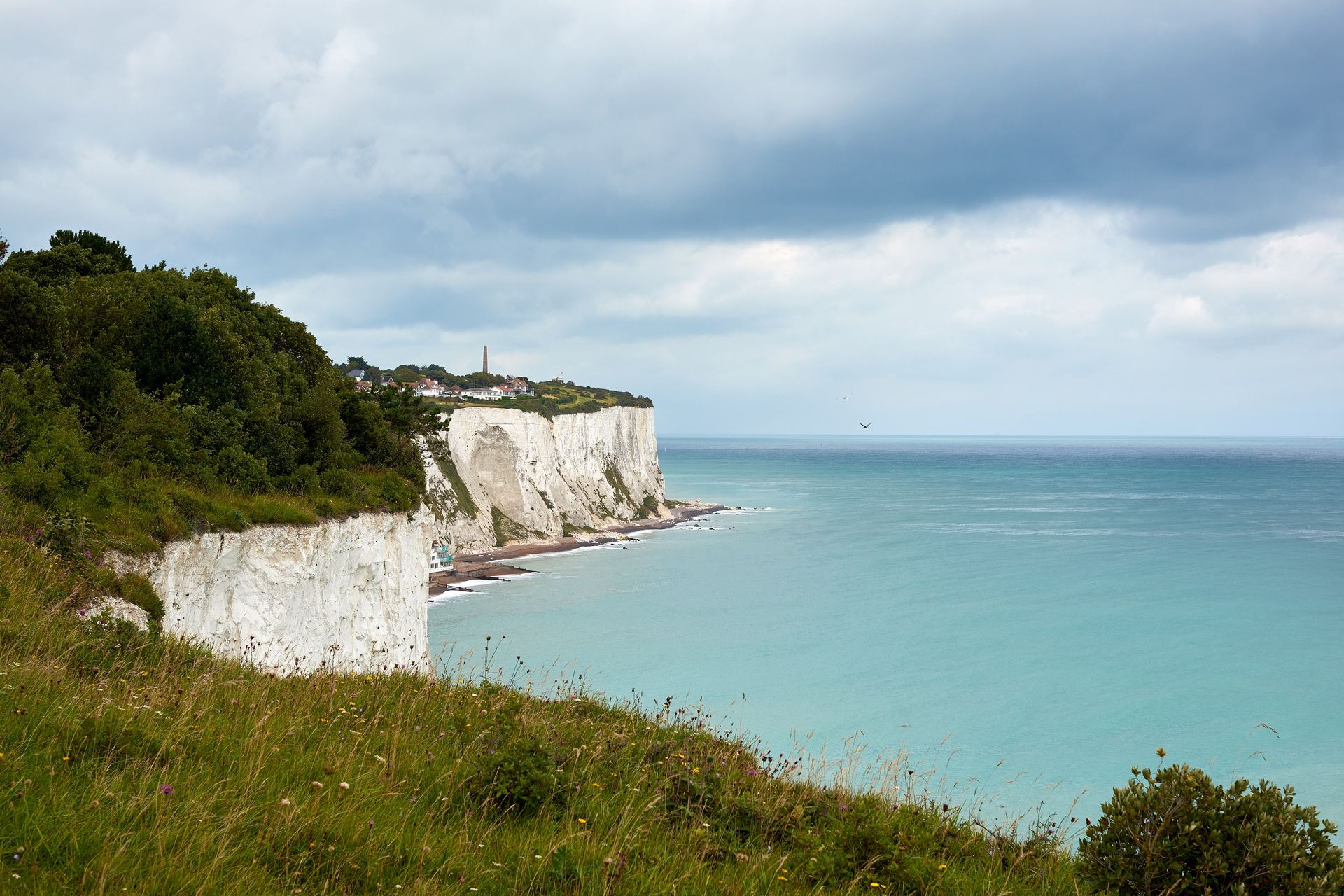
In the summer of 1940, after France fell, Germany's path to defeating Britain seemed to require crossing the English Channel. Hitler issued Directive No. 16 on July 16, 1940, ordering preparations for a landing operation against England, which was given the code name Sea Lion. The operation was never launched.
The decision not to attempt a seaborne invasion of Britain — and the reasons why — amounts to a turning point in the negative sense: something that could have happened, might have worked or failed, and instead became a perpetual question mark in the history of the war.
Germany's reasons for not proceeding were real. The Kriegsmarine, Germany's navy, was badly damaged from the Norwegian campaign in April and May 1940 and was far smaller than the Royal Navy. A Channel crossing would have required the Luftwaffe to establish air superiority first, both to protect transport vessels and to suppress British naval forces. The Battle of Britain, fought between July and October 1940, ended without the Luftwaffe achieving that superiority.
The Royal Air Force's Fighter Command, under Air Chief Marshal Hugh Dowding, held on by maintaining a defensive posture, rotating exhausted squadrons, and benefiting from radar and the Observer Corps network that gave advance warning of German raids. The British aircraft production rate also outpaced Germany's during this period, replacing losses faster than the Luftwaffe could inflict them.
Historians differ on whether a successful Sea Lion was ever plausible. British defenses on the ground were weak in 1940 — the army had lost most of its equipment at Dunkirk — and a German landing force that got ashore in sufficient strength might have achieved a great deal. But crossing the Channel against an intact Royal Navy would have required a level of German naval capability that simply did not exist.
What is clear is that Hitler shifted his strategic attention eastward, toward the Soviet Union, without having resolved the Britain problem. That decision — to fight a two-front war — eventually consumed the Third Reich.
Credit: Carl Kadelke, National Library of Latvia / Wikimedia Commons (CC BY 4.0)
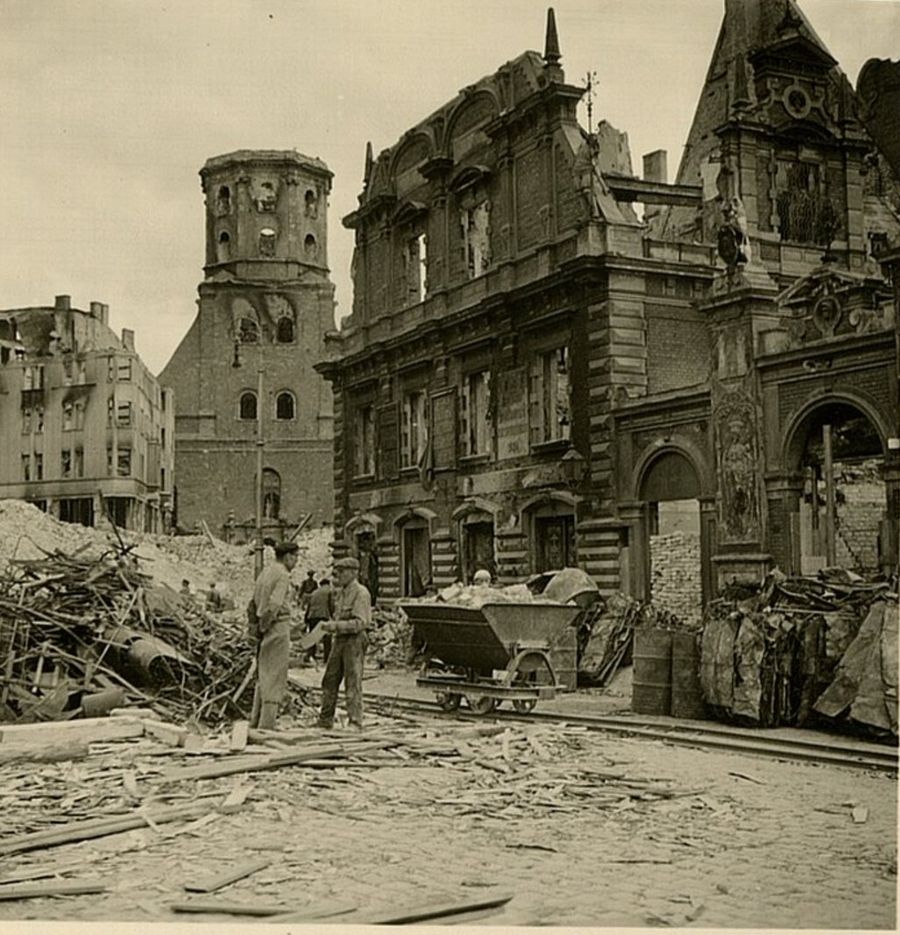
On the night of November 14 to 15, 1940, German bombers using the Knickebein radio navigation system devastated the English city of Coventry. The raid killed approximately 568 people and destroyed much of the city center, including its medieval cathedral. It has been alleged — and repeatedly disputed — that the British government knew the raid was coming and chose not to act, to protect the secret that the Germans' Enigma cipher machine traffic was being read.
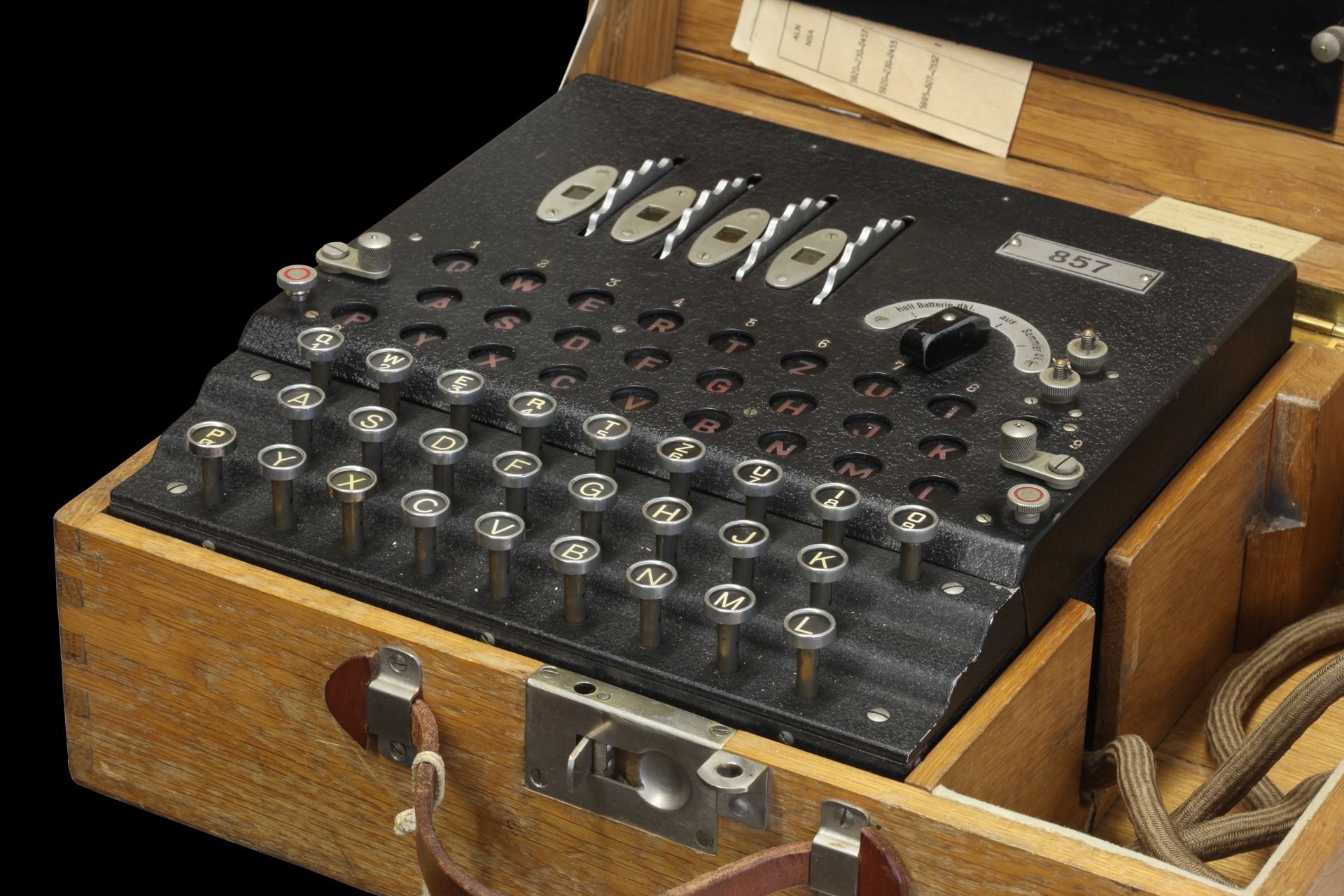
The claim that Winston Churchill deliberately sacrificed Coventry to preserve Ultra — the code name for intelligence derived from breaking Enigma — has circulated widely enough to become near-mythology. The actual history is more complicated and, in some ways, more interesting.
British codebreakers at Bletchley Park had indeed broken much of the Luftwaffe's Enigma traffic. But the intelligence system of 1940 was imperfect. The intercepts had suggested a major attack was coming, with target indicators pointing toward the English Midlands. The precise target was not established with certainty in time to mount a comprehensive defense, partly because German radio beams were not decoded with sufficient clarity, and partly because countermeasures that were supposed to bend the navigation beams failed on the night in question.
Churchill did not, on the evidence available to historians, make a deliberate choice to let Coventry burn to protect the secret. What the Coventry raid does illustrate — and this is the genuine turning-point element — is how the British managed Ultra throughout the war: with extreme caution, constructing plausible alternative explanations for action taken on secret intelligence, and sometimes accepting tactical loss to preserve strategic advantage.
The Ultra secret was maintained until 1974, when F.H. Hinsley began publishing official histories that revealed its existence. For three decades, veterans who had lived through decisions shaped by Enigma intelligence had no way to explain those decisions to their families or historians. The full account of how intelligence from Bletchley Park shaped the war — from the Battle of the Atlantic to El Alamein to the Normandy landings — is still being revised.
Credit: Library of Congress / Public domain / Picryl
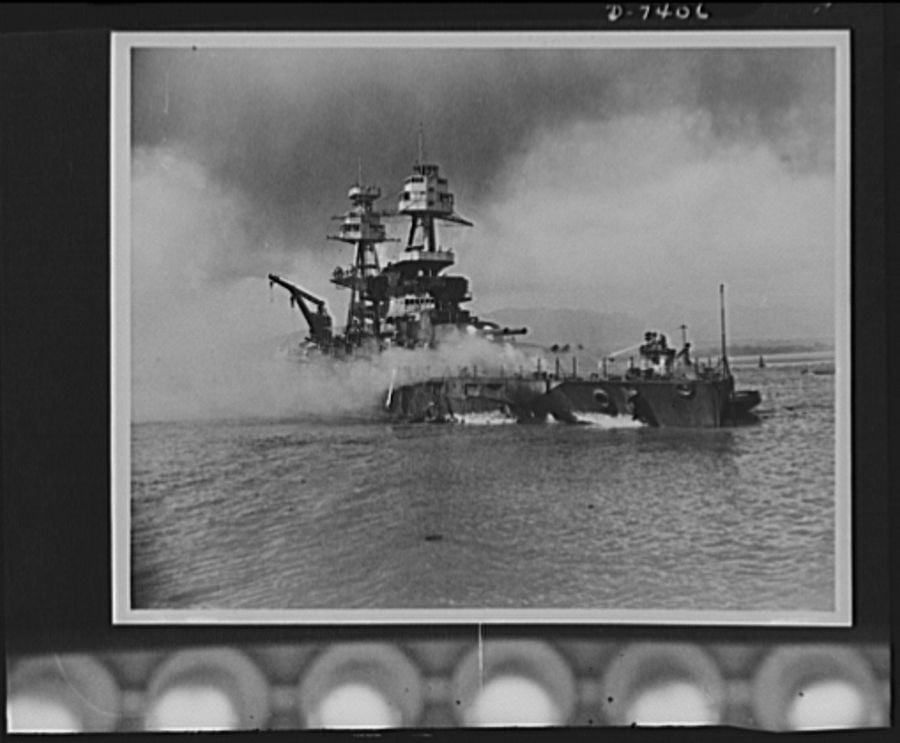
The Japanese attack on Pearl Harbor on December 7, 1941 was operationally successful. It sank or damaged eight U.S. battleships, destroyed nearly 200 aircraft, and killed 2,403 Americans. It was also, as many historians and several Japanese commanders subsequently acknowledged, strategically incomplete in a way that proved decisive.
The attack was launched in two waves. A third wave was discussed and not ordered. The third wave, had it been launched, would have targeted Pearl Harbor's shore installations — including fuel storage tanks, maintenance facilities, and the submarine base. Admiral Chuichi Nagumo, the commander of the strike force, chose to withdraw rather than risk a third wave against an alerted defense and with the location of the U.S. Pacific Fleet's three aircraft carriers still unknown.
The decision to forgo the third wave left intact approximately 4.5 million barrels of fuel oil stored in above-ground tanks at Pearl Harbor. This fuel was essential to Pacific Fleet operations. Admiral Chester Nimitz, who took command of the Pacific Fleet after the attack, later said that if the fuel had been destroyed, the Pacific Fleet would have been forced to withdraw to the U.S. West Coast. Pacific operations would have been set back by years, not months.
The submarine base was also left undamaged. U.S. submarine operations in the Pacific, which eventually choked Japan's merchant shipping and cut off raw material supplies critical to the war economy, were launched from Pearl Harbor. Had the base been destroyed, the submarine campaign — one of the most consequential strategic efforts of the entire war — would have required entirely different basing.
The Japanese did not destroy the U.S. aircraft carriers, which were at sea that day. Combined with the undamaged fuel and submarine base, this meant that the Pacific Fleet retained the core of what it needed to fight back. Within six months, at the Battle of Midway, it did.
Credit: Rama / Wikimedia Commons (CC BY-SA 2.0 FR)
One of the most consequential Allied intelligence operations of the war is also one of the least commonly known: the systematic turning of virtually every German spy operating in Britain. The Double Cross System, run by MI5, transformed the German intelligence network in the U.K. into an instrument of Allied deception.
By the early 1940s, British intelligence had identified and either captured or turned the German agents who had been sent to operate in Britain. Rather than simply arresting them, MI5 used them to feed false information to German intelligence — a program overseen by the Twenty Committee (named for the Roman numeral XX, a double cross).
The Double Cross agents sent authentic-seeming but false intelligence back to Germany for years. Their most important work came in support of Operation Overlord, the Allied invasion of France. The deception plan, called Operation Bodyguard, included a major component called Fortitude, which used Double Cross agents to convince German command that the main invasion would come not at Normandy but at the Pas-de-Calais, the shortest crossing point of the Channel.
The fictional First U.S. Army Group, supposedly commanded by General George Patton, was built around Double Cross reports and genuine radio traffic, feeding German intelligence the picture of a large force preparing to strike the Pas-de-Calais. Germany kept substantial armored forces in reserve to meet this expected second landing even after the Normandy landings began on June 6, 1944.
The delay in releasing those reserves — particularly the SS Panzer divisions held back for weeks in expectation of a Pas-de-Calais landing — gave the Allied beachhead time to consolidate. The Normandy landings were not a certain success in their first days. German armored counterattacks in the first 48 hours might have pushed the beachhead into the sea. The Double Cross-driven delay in deploying reserves was a major reason they did not.
The system worked because the Germans never discovered it. They trusted agents who had, in some cases, been working for the British for years.
Credit: National Museum of the U.S. Navy / Library of Congress / Picryl
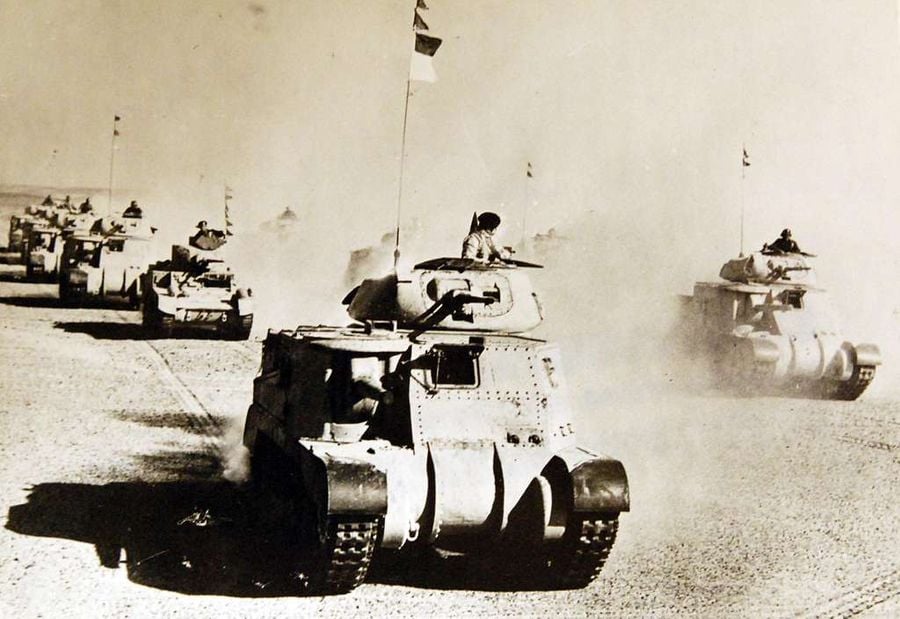
The Second Battle of El Alamein, fought in October and November 1942, is often presented as the moment when Britain's Eighth Army finally defeated Erwin Rommel's Axis forces in North Africa, ending the German threat to Egypt and the Suez Canal. The battle itself was a grueling attritional slog in which General Bernard Montgomery applied superior resources and planning against a German force that was already exhausted. Less often told is why Rommel's forces were so depleted.
Rommel's Afrika Korps was at the end of a supply line that crossed the Mediterranean from Italy, and the Royal Navy and Royal Air Force — guided in part by Ultra intelligence — had been systematically sinking ships carrying fuel, ammunition, and reinforcements. By the time El Alamein began, the Axis forces in North Africa were critically short of fuel. Rommel could not maneuver freely. His tanks often could not move to counterattack Allied breakthroughs because there was not enough petrol.
The island of Malta sits in the center of the Mediterranean, roughly midway between Sicily and the North African coast, directly astride the Axis supply route. The British garrison on Malta, heavily bombed and at times close to starvation and surrender, continued to operate submarines and aircraft against Axis shipping throughout 1942. The effort to sustain Malta cost the Royal Navy significant losses of its own. But the cost imposed on Axis shipping was greater.
Rommel knew this. He repeatedly requested that the capture of Malta be prioritized. The operation was planned — it was called Operation Hercules — but was repeatedly deferred. Hitler was skeptical of amphibious operations after the losses in Crete in 1941. Mussolini's government never delivered the assault.
Malta held. Axis supply lines were strangled. El Alamein was thus as much a logistics victory as a battlefield one, and the logistics outcome was shaped by a garrison holding an island under sustained bombardment, largely out of the headlines.
Credit: Wafa Haris / Pexels
The Allied invasion of Normandy on June 6, 1944 is rightly called one of the most complex military operations ever mounted. What is less commonly noted is how close it came to being postponed indefinitely, and how it was saved by a single meteorological forecast.
The original date for Operation Overlord was June 5. In the preceding days, a severe low-pressure system moved into the English Channel, producing heavy cloud cover, high winds, and rough seas. General Dwight Eisenhower, the Supreme Allied Commander, met with his staff on the evening of June 4 to decide whether to launch, postpone by one day, or delay by two weeks until tidal conditions were again favorable.
The pivotal figure in that room was Group Captain James Stagg, the Allied Expeditionary Force's chief meteorological officer. Stagg had been coordinating forecasts from multiple meteorological teams, including a British team and an American team that were not always in agreement. On the evening of June 4, Stagg presented his assessment: there was a narrow window of acceptable weather approaching, roughly 36 hours of manageable conditions beginning late on June 5.
Eisenhower made the decision to proceed. The forecast was correct. June 6 saw rough seas and low clouds, but conditions were within the limits that the operation had been planned to tolerate.
The Germans, meanwhile, were using their own meteorological services, which did not have access to weather reports from the North Atlantic — a gap in their network created by Allied control of the sea and air. German forecasters predicted no break in the bad weather and concluded that no landing was imminent. Rommel, who had returned to Germany for his wife's birthday, was not at his headquarters when the landings began.
A two-week postponement would have pushed the invasion to late June. That delay might have cost the element of surprise, allowed German defensive preparations to continue, and potentially exposed the entire operational plan to greater risk of discovery or leak.
Credit: Thea Cintia Paixão da Silva / Pexels
In February 1943, a small team of Norwegian commandos, trained by the British Special Operations Executive, sabotaged the Vemork heavy water production plant in occupied Norway. The operation, known as Gunnerside, destroyed the plant's output and set back German nuclear research by an unknown but significant margin.
Heavy water — water in which hydrogen atoms have been replaced by deuterium — was understood in the early 1940s as a potential moderator for a nuclear chain reaction. Germany's atomic bomb program, which did exist though it was less advanced than the Allies feared, required heavy water. The Vemork plant at Rjukan, in the Telemark region of Norway, was the world's largest producer.
The commandos had been preceded by a failed British glider operation in November 1942, which had resulted in the deaths of the saboteurs and the capture and execution of some of their number by the Germans. The Gunnerside team skied in from Sweden, linked up with agents who had been waiting since the earlier failure, descended a near-vertical gorge, and reached the target building. They placed their charges and escaped without firing a shot.
German production was delayed and eventually reduced. A subsequent Allied bombing raid in November 1943, though imprecise, damaged the facility further. In February 1944, the Germans attempted to transport their remaining heavy water stocks out of Norway by ferry, to continue the program elsewhere. Norwegian saboteurs sank the ferry in the deepest section of Lake Tinnsjå. The heavy water went to the bottom.
Whether the German atomic program could ever have produced a weapon in time to affect the war's outcome is a question historians have debated extensively. What is clear is that the Vemork sabotage operation imposed real costs and real delays — and that a handful of men on skis, operating in winter conditions, made it happen.
Credit: Getsy Aguayo / Pexels
In May 1942, Japan and the United States fought the Battle of the Coral Sea. It was the first naval battle in history in which the opposing fleets never came within sight of each other — all the fighting was done by carrier aircraft. It was also, by the traditional metric of ships lost, a tactical defeat for the U.S.: the carrier Lexington was sunk, the carrier Yorktown was heavily damaged, and American aircraft losses were higher than Japan's.
Japan's strategic objective was the capture of Port Moresby, on the southern coast of New Guinea. Port Moresby would have given Japan a base from which to threaten northern Australia and from which land-based aircraft could have contested the Torres Strait. Its capture would have completed a defensive perimeter that would make any Allied counteroffensive vastly more difficult to mount.
The Japanese invasion fleet was turned back. The carrier Shōhō was sunk, the fleet carrier Shōkaku was damaged, and the Zuikaku's air group suffered severe losses. More importantly, the Port Moresby invasion fleet's commanders assessed that proceeding without air cover was too dangerous, and reversed course.
Port Moresby was never captured. Japan subsequently attempted to take it overland, via the Kokoda Track over the Owen Stanley Range in New Guinea — one of the most brutal land campaigns of the Pacific war — and failed at that too. Australia was never directly threatened with invasion in the way that the capture of Port Moresby might have enabled.
The Yorktown, damaged at Coral Sea, was repaired in 72 hours at Pearl Harbor in a feat of engineering that became part of naval legend. It sailed to fight at Midway three weeks later, where its presence proved crucial. Had the Coral Sea been a more complete Japanese victory — had the Yorktown been sunk rather than damaged — the Battle of Midway might have turned out differently.
Credit: Maël BALLAND / Pexels
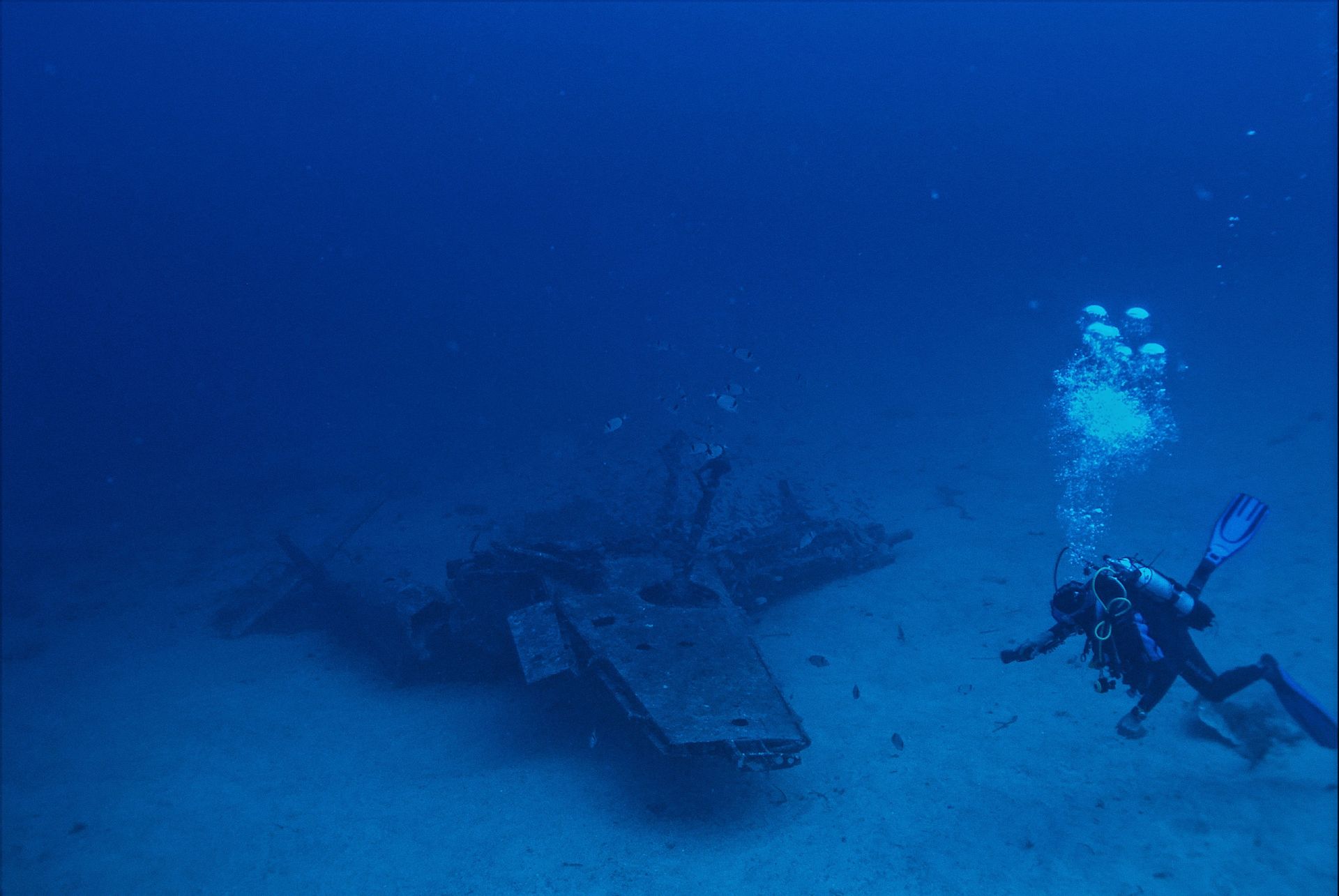
The Battle of Midway, fought from June 4 to 7, 1942, is widely described as the turning point of the Pacific war. What is less commonly understood is how narrow the margin was, and how the decisive moment lasted only a few minutes.
Japan's plan was to lure the U.S. Pacific Fleet into a trap, destroy the American carrier force, and extend Japan's defensive perimeter eastward. The plan was complex, relied on assumptions about American behavior that proved wrong, and was partly compromised because U.S. naval intelligence — led by Commander Joseph Rochefort at Station HYPO in Pearl Harbor — had broken enough of the Japanese naval code to deduce the target and timing of the operation.
On the morning of June 4, American aircraft launched multiple attacks on the Japanese carrier fleet and suffered severe losses without inflicting significant damage. The Japanese carriers were in the process of rearming aircraft for a strike against the American carriers when U.S. Navy dive bombers arrived overhead. In approximately five minutes, three Japanese carriers — Akagi, Kaga, and Sōryū — were set ablaze by dive-bombing strikes. A fourth, the Hiryū, was sunk later that day.
The timing was the product of multiple coincidences: a search aircraft that delayed its report of finding the American carriers, the timing of combat air patrol cycles over the Japanese fleet, and the moment chosen by Lieutenant Commander Wade McClusky to push south and find the Japanese fleet after failing to locate it at its expected position.
Four carriers lost represented approximately a third of Japan's total carrier strength and an irreplaceable loss of experienced naval aviators. Japan built more carriers during the war, but never replaced the quality of the aircrews lost at Midway and in the preceding months of campaigning. The strategic initiative in the Pacific passed to the United States after Midway and never returned to Japan.
Credit: RIA Novosti archive, image #5634 / David Trahtenberg / Wikimedia Commons (CC BY-SA 3.0)
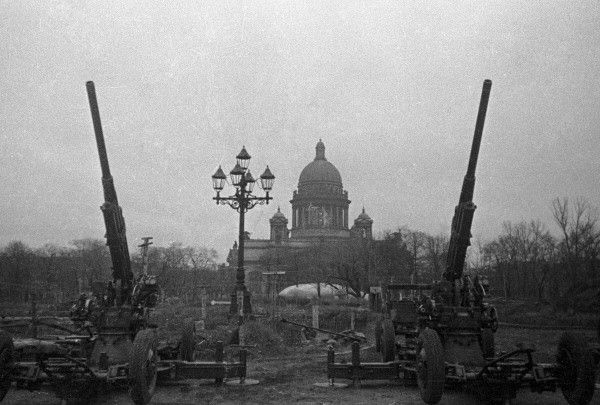
In September 1941, German Army Group North reached the outskirts of Leningrad, the Soviet Union's second-largest city and the birthplace of the Russian Revolution. The city was encircled, cutting off its supply lines to the rest of the Soviet Union. Hitler then made a decision that puzzled many of his own commanders: instead of ordering an assault to take the city, he chose to starve it out.
Hitler's stated rationale was that he did not want the problems of occupying and feeding a large urban population. He intended to raze Leningrad entirely — to destroy it rather than capture it. A direct assault, in his view, would cost German lives that were better conserved for other operations. The siege would accomplish the same end more cheaply.
The siege of Leningrad lasted 872 days, from September 1941 to January 1944. Somewhere between 800,000 and one million civilians died during the siege, primarily from starvation, exposure, and disease. It was one of the most catastrophic events of the 20th century.
But Leningrad did not fall. Soviet forces maintained a tenuous supply route — the "Road of Life," across frozen Lake Ladoga in winter — that kept the city alive and supplied, barely. The city's factories continued operating, producing weapons and munitions. The garrison tied down substantial German and Finnish forces for the duration of the siege.
Had Army Group North taken Leningrad by assault in autumn 1941, it would have freed those forces for redeployment elsewhere — potentially to the Moscow front, where the German advance was stalling. The men and materiel spent on the siege's perimeter were unavailable for other operations. The decision to encircle rather than capture Leningrad, while it produced a humanitarian catastrophe of extraordinary proportions, also allowed the city's defenders to continue fighting.
Credit: IWM / U.K. Ministry of Information / Picryl
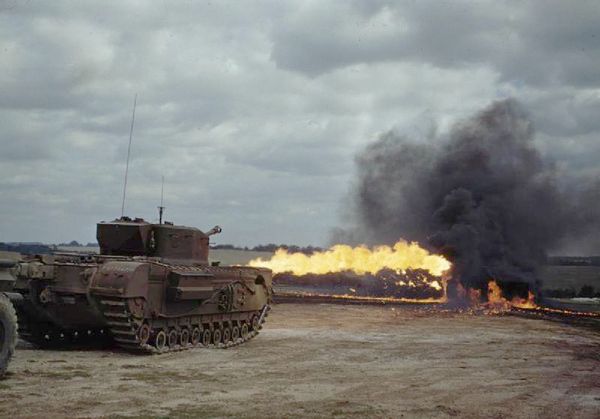
When German forces first encountered the Soviet T-34 tank in significant numbers in 1941, the reaction among German tank crews and commanders was close to panic. The T-34 was protected by sloped armor that deflected shells that would have penetrated a British or French tank. It was armed with a 76mm gun that outranged the standard German anti-tank weapons of 1941. It had wide tracks that performed better in mud and snow than German tanks.
German tanks in 1941 were not poorly designed. The Panzer III and IV were capable vehicles. But they had been optimized against the threat they were expected to face — French and British armor, the tanks they had already defeated in Western Europe — and those design choices left them badly outmatched against the T-34 when it appeared in large numbers.
The 88mm anti-aircraft gun, adapted as an anti-tank weapon, could destroy T-34s, and German commanders quickly discovered that coordinated infantry-tank tactics could neutralize individual vehicles. But the shock of the T-34 forced Germany into an armored development program it had not expected to need so urgently. The Panzer IV was upgraded with a longer-barreled, higher-velocity gun. The Panzer V Panther, specifically designed as a response to the T-34, was rushed into service in time for the Battle of Kursk in 1943.
The Soviet Union produced approximately 35,000 T-34s and 84,000 total tanks of all types during the war. Germany could not match these numbers. The T-34 was not an invincible weapon — it had significant flaws, including poor crew conditions, limited visibility for the commander, and early reliability issues — but it was produced in quantities that overwhelmed German industrial capacity to counter it.
The first encounters with the T-34 in 1941 forced Germany to fight a different war than the one it had planned for. That adjustment consumed time, resources, and planning bandwidth that were never fully recovered.
Credit: National Archives / Public domain / Picryl
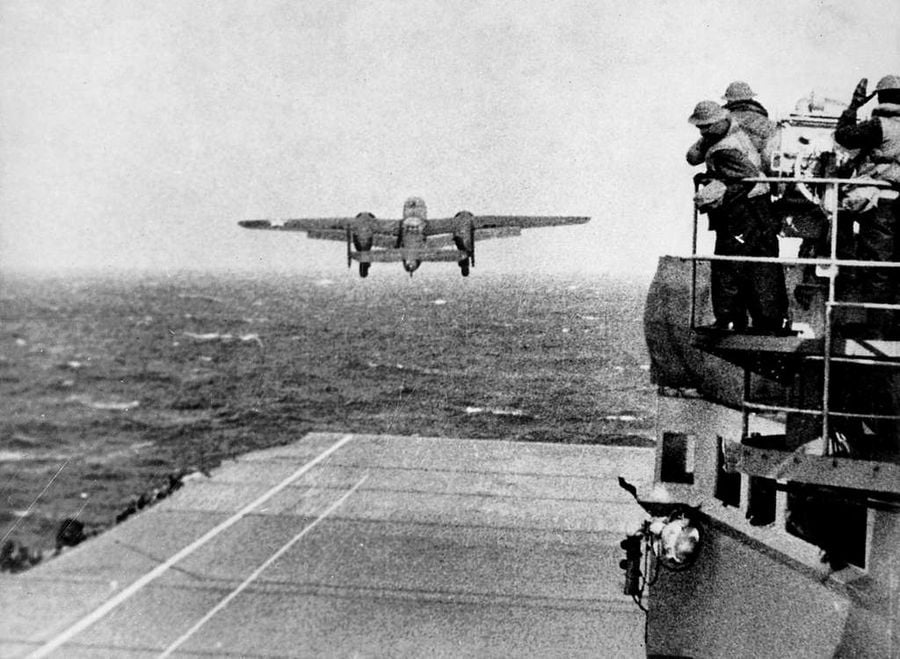
On April 18, 1942, 16 B-25 Mitchell bombers, modified for carrier launch, took off from the USS Hornet and bombed Tokyo and several other Japanese cities. The physical damage was minor. The psychological and strategic consequences were substantial.
The raid, commanded by Lieutenant Colonel James Doolittle, was designed to demonstrate that Japan's home islands were not invulnerable to American air attack. It was intended to reassure an American public still absorbing the shock of Pearl Harbor. It achieved those goals. But it also triggered a chain of decisions in Tokyo that would prove to be among Japan's most consequential strategic errors.
Japanese military planners were shaken by the raid, not because of the damage but because of the implication: American carriers were capable of approaching the Japanese home islands close enough to launch an attack. The raid had actually launched from farther out than planned — the Hornet was spotted by a Japanese picket vessel — but this did not change the fundamental security concern.
Admiral Yamamoto pressed for an operation to extend Japan's defensive perimeter eastward and bring the U.S. carrier fleet to battle. The result was the Midway operation. Japan committed its four best fleet carriers to an operation whose plan was not fully coordinated, against an enemy that had partially broken the operational code and was waiting.
The Doolittle Raid inflicted very little direct damage on Japan. Its indirect cost was four irreplaceable fleet carriers lost at Midway, the destruction of Japan's most experienced naval aviator corps, and the loss of strategic initiative in the Pacific. The provocation of a reaction was, from the American perspective, precisely the intended effect — even if the specific consequences exceeded anyone's expectations.
Credit: White Noiise / Pexels
Operation Uranus, launched on November 19, 1942, is not entirely unknown — the Battle of Stalingrad is one of the most famous of the war. What is less understood is the scale of Soviet deception that made the encirclement possible, and how close Germany came to breaking the ring.
The Soviet plan, developed by Generals Georgy Zhukov and Alexander Vasilevsky, identified a key vulnerability: the northern and southern flanks of the German forces fighting in Stalingrad were held not by German divisions but by Romanian armies, which were less well armed and less experienced. Operation Uranus called for simultaneous strikes through those flanks, deep into the German rear, linking up to encircle the entire German Sixth Army.
The Soviet buildup for the operation was conducted under strict secrecy — movement at night, strict radio silence, meticulous camouflage. German intelligence detected some signs of a coming Soviet offensive but badly misjudged its scale and objectives. When the strikes came, the Romanian flanks collapsed within days.
The Sixth Army — approximately 300,000 men under Field Marshal Friedrich Paulus — was trapped. Hitler refused to allow a breakout, ordering Paulus to hold and promising that Luftwaffe airlift would sustain the encircled forces. The Luftwaffe could not supply what Paulus needed. A relief operation, Operation Winter Storm, came within approximately 30 miles of the encirclement before being halted and reversed.
The surrender of Paulus's army on February 2, 1943, was the largest German defeat of the war to that point. It destroyed the myth of German invincibility on the Eastern Front. Soviet confidence, operational capability, and industrial production were all growing. German capacity to mount large-scale offensive operations in the East was essentially ended after Stalingrad, though the war in the East would continue for two more years.
Credit: dabatepatfotos / Pexels
In the spring and summer of 1942, British bombers attacking Germany were suffering catastrophic losses to German night fighters guided by a sophisticated radar and radio control system called Kammhuber Line. The network of radar stations, searchlight zones, and fighter control boxes formed a layered defensive barrier across northwestern Europe. British Bomber Command was losing aircraft and crews at a rate that raised serious questions about whether strategic bombing could continue.
The answer came partly from a scientific effort to understand and counter the German system. British intelligence, including a daring raid on a German radar installation at Bruneval in February 1942 — in which paratroopers captured components of a Würzburg radar set — provided crucial technical understanding of how the network operated.
The broader countermeasure was developed by RAF scientist R.V. Jones and others who analyzed the electronic signature of the German system. In July 1943, Operation Gomorrah — the firebombing of Hamburg — was accompanied by the first operational use of Window, strips of aluminum foil dropped in clouds that created false radar returns and saturated the German radar screens with phantom targets. German night fighter control became ineffective. Hamburg burned.
The Germans adapted, shifting to a more autonomous freelance-fighter system called Wilde Sau, which did not depend on ground-based radar guidance in the same way. The radar war continued, with both sides developing countermeasures and counter-countermeasures throughout 1943 and 1944.
But the initial deployment of Window at Hamburg in July 1943 was a significant shift. It demonstrated that the Kammhuber Line's radar network, which the Germans had invested years and enormous resources in building, could be defeated by dropping strips of tinfoil. The electronic war over Germany was as technically sophisticated, and as consequential, as any aspect of the air campaign.
Credit: Alex Fu / Pexels
Operation Shingle, the Allied amphibious landing at Anzio on January 22, 1944, was intended to outflank the German defensive line south of Rome, draw German reserves away from the main front, and speed the liberation of the Italian capital. Instead, the landing force sat on the beaches for months while the Germans sealed it in.
The landings themselves succeeded tactically. The American and British force that went ashore encountered limited initial resistance — the German reaction was slower than it might have been — and at several points in the first days there was an opportunity to push inland, cut the Via Casilina (the main German supply route), and threaten the German position on the Winter Line.
The commander of the landing force, Major General John P. Lucas, chose to consolidate the beachhead rather than exploit the moment. He was cautious by temperament, uncertain of his orders, and mindful of what he believed was an insufficiently strong force for a deep push into the Alban Hills. His superior, General Mark Clark, gave orders that are still debated for whether they authorized a more aggressive move.
The Germans responded rapidly under Field Marshal Albert Kesselring, who proved to be one of the most capable defensive commanders of the war. Within days, the Anzio beachhead was surrounded by German forces, and the trapped Allied force endured months of attritional fighting before a breakout became possible in May 1944. Lucas was relieved in February.
The Anzio operation cost more than 7,000 Allied dead and delayed the fall of Rome by several months. It did not draw German reserves away from the Gustav Line in the decisive way that had been hoped. Rome fell on June 4, 1944 — two days before the Normandy landings, which immediately displaced it from the headlines. The Italian campaign remains one of the most debated strategic commitments of the European war.
Credit: Josh Withers / Pexels
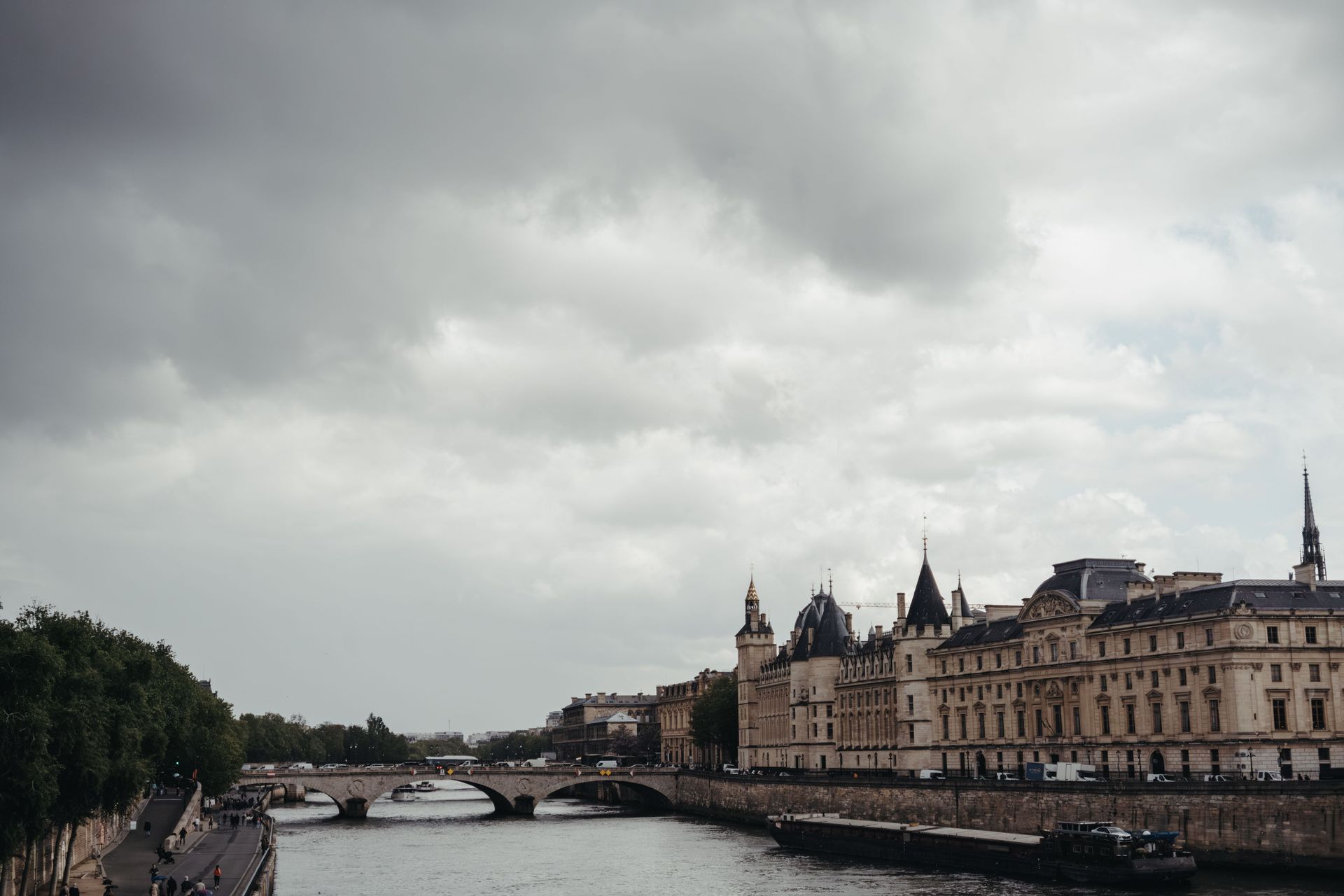
In August 1944, as Allied forces closed on Paris and the city's population rose in insurrection, the German military governor of Paris, General Dietrich von Choltitz, received explicit orders from Hitler to destroy the city. Notre-Dame, the Louvre, the bridges over the Seine — all were to be demolished. Paris was not to fall intact into Allied hands.
Von Choltitz did not comply. He was in contact with Swedish consul-general Raoul Nordling and with members of the French Resistance. He effectively allowed the liberation of Paris to proceed without triggering the destruction orders, surrendering to French and Allied forces on August 25, 1944.
His reasons have been debated. Von Choltitz later wrote that he was unwilling to destroy one of the great cities of the world for what he understood to be a lost cause. He has been described in his own postwar account as a humane figure making a moral choice under extreme pressure. Other historians have noted that he was also a calculating officer who understood that Germany had already lost the war and that sparing Paris might serve his own interests.
Whatever his precise motivations, the practical result was that Paris survived the war essentially intact. The city's architectural heritage — built over centuries and including structures of global importance — was not destroyed. The infrastructure of the French capital was preserved for the reconstruction period.
Historians have noted that Hitler's order to destroy cities rather than surrender them was applied inconsistently, and that the regime's capacity to enforce such orders was diminishing as the war approached its end. But Paris was a specific, high-profile case, and the city's survival was in significant part the result of one German general's refusal.
Credit: SHOX ART / Pexels
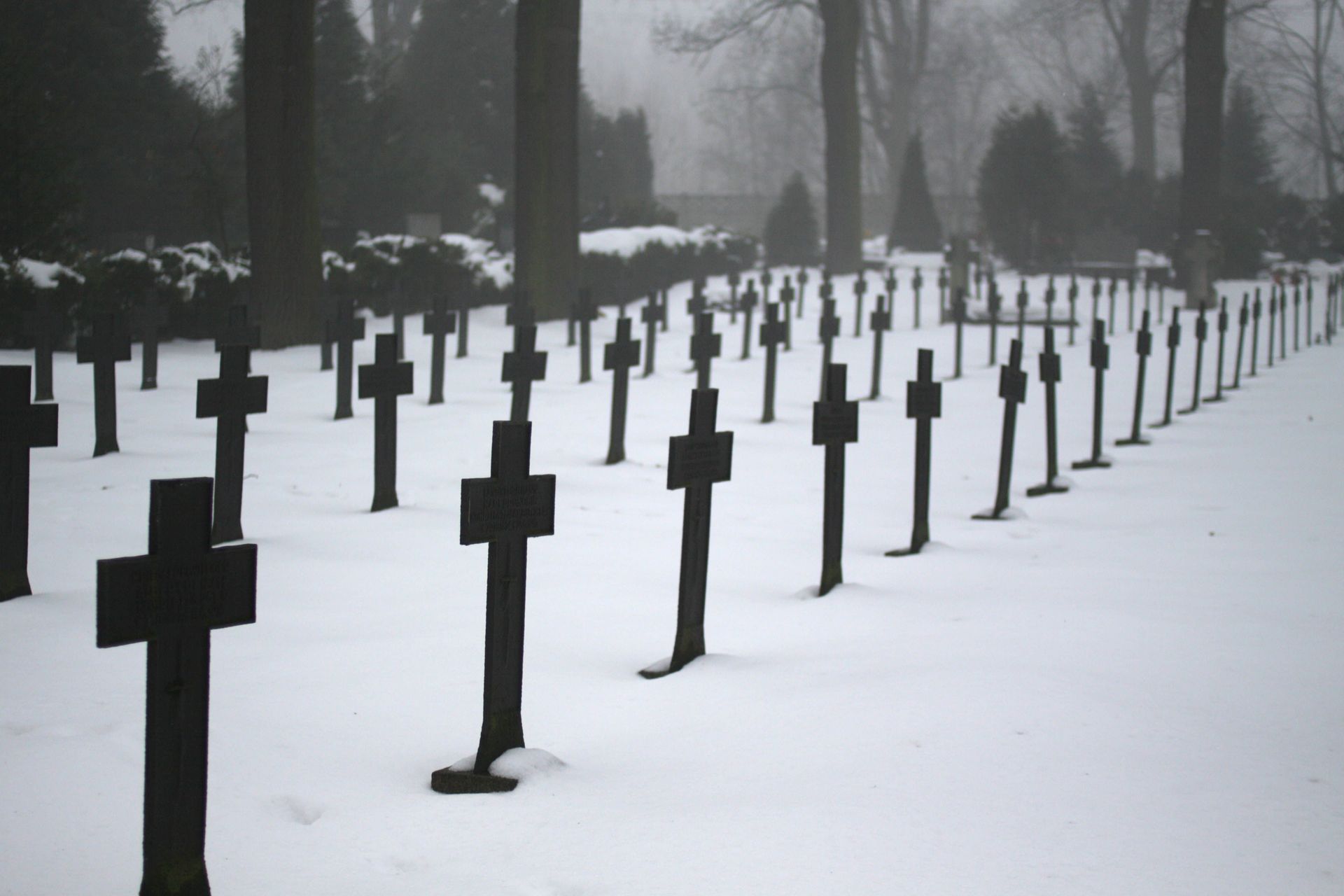
In April 1943, Germany announced the discovery of mass graves in the Katyn Forest in occupied Soviet territory, containing the bodies of approximately 22,000 Polish officers, intellectuals, and professionals who had been killed in 1940. Germany blamed the Soviet Union. The Soviet Union blamed Germany. The Polish government-in-exile in London requested an investigation by the International Red Cross.
Stalin used the Polish request as a pretext to sever relations with the Polish government-in-exile. The Soviet Union was at this point an essential Allied partner, and the Western Allies — Britain and the United States — pressured the Polish government not to press the matter and declined to associate themselves with the request for an investigation. Winston Churchill privately expressed few doubts about Soviet responsibility but concluded that maintaining the alliance was more important than justice for the Polish victims.
The massacre was in fact carried out by the Soviet NKVD on Stalin's orders in spring 1940. This was confirmed definitively after the end of the Cold War, when Soviet and then Russian archives were opened. The cover-up was maintained by the Soviet government until 1990, when Mikhail Gorbachev acknowledged Soviet responsibility.
The immediate strategic consequence of the Katyn crisis was a fracture in the relationship between the Soviet Union and the Polish government-in-exile that was never repaired. When the Soviet army liberated Poland from German occupation in 1944 and 1945, the government-in-exile had no standing to return. Stalin installed a communist-aligned provisional government. The postwar settlement that placed Poland within the Soviet sphere was shaped in part by the poisoned relationship that Katyn — and the Allied decision to suppress it — had produced.
Credit: Magda Ehlers / Pexels
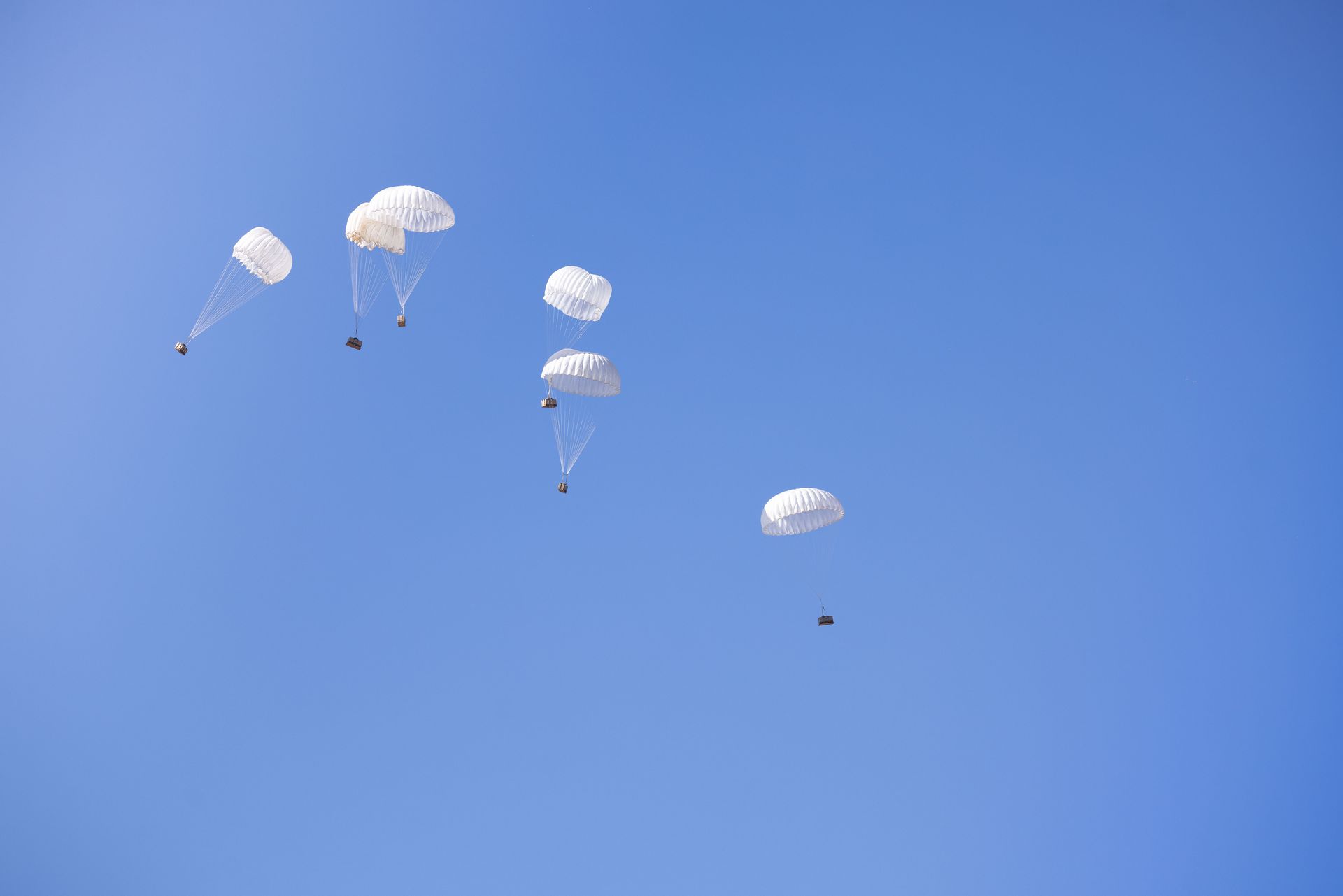
Operation Market Garden, in September 1944, was Field Marshal Bernard Montgomery's audacious plan to end the war in Europe by Christmas. Allied airborne forces would seize a series of bridges across the Rhine and its tributaries in the Netherlands, and armored ground forces would race north along a single road to relieve them, cross the Rhine at Arnhem, and outflank the German defenses in the West.
The plan required many things to go right simultaneously. Several did not. The most consequential failure was an intelligence one.
Before the landings, British intelligence received reports, including aerial photography, indicating that German SS Panzer divisions were refitting near Arnhem. The 9th and 10th SS Panzer Divisions — veteran armored units — were in exactly the area where the British 1st Airborne Division was to land and hold the bridge. Major Brian Urquhart, the airborne corps' intelligence officer, raised the alarm and was told the photographs were being taken as evidence of local defense preparations, not of a serious armored threat.
Urquhart persisted and was eventually removed from his post, on the grounds that he was suffering from stress. His assessment was correct. When the British paratroopers landed at Arnhem, they encountered not the light opposition expected but the two SS Panzer divisions. The airborne force was overwhelmed. Only a small part of the force held one end of the Arnhem bridge for four days before being forced to surrender or withdraw.
Operation Market Garden was not the catastrophic Allied defeat that some popular accounts suggest — the southern bridges were taken and held, and the Allied position in the Netherlands was improved. But the hope of crossing the Rhine in 1944 and ending the war that year was ended. The war in the West continued through the winter of 1944 to 1945, at enormous additional cost.
Credit: RIA Novosti archive, image #284 / Knorring / Wikimedia Commons (CC BY-SA 3.0)
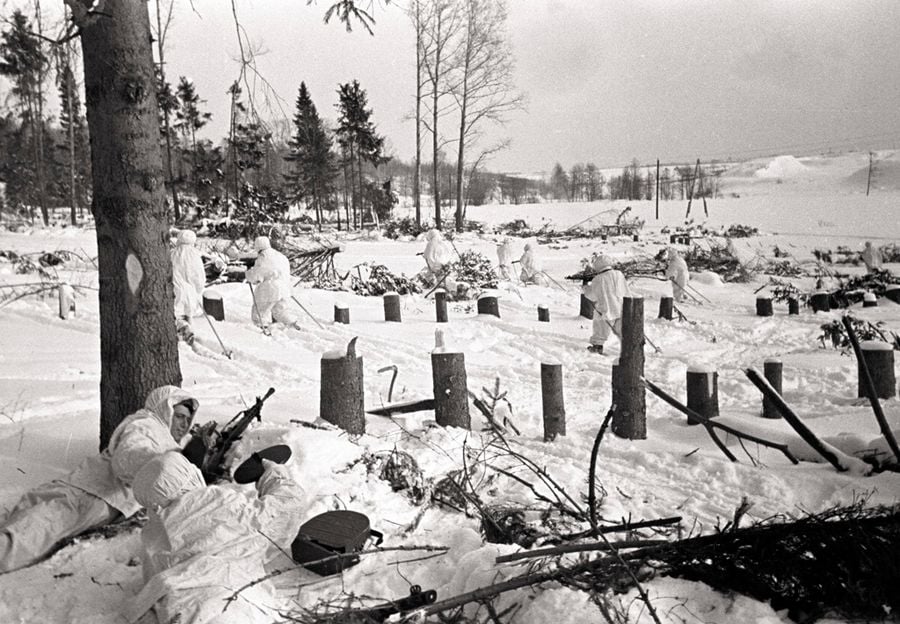
The German Ardennes offensive of December 1944, known as the Battle of the Bulge, was Hitler's last major offensive on the Western Front. It achieved surprise, drove a large salient into Allied lines, and for a period raised genuine concern that the German breakthrough might reach the Meuse River. What ultimately stopped it was as much a failure of German logistics as anything the Allies did.
The offensive was designed to capture the Belgian port of Antwerp and split the Allied armies. Its success depended on capturing Allied fuel supplies intact — German fuel stocks were already insufficient for a sustained campaign at the distances required. The plan assumed that the German advance would be fast enough to overrun American supply depots before they could be moved or destroyed.
At the crossroads town of Bastogne, the American 101st Airborne Division and other units were surrounded and refused to surrender, holding a position the Germans needed to pass through to meet their timetable. The American commander at Bastogne, Brigadier General Anthony McAuliffe, famously responded to a German surrender demand with a single word: "Nuts."
The German failure at Bastogne — which General George Patton's Third Army later relieved — was part of a larger fuel crisis. German armored columns ran out of petrol and were stranded, unable to exploit breakthroughs or maneuver effectively. The intended capture of Allied fuel dumps mostly did not materialize. The offensive stalled not primarily because of Allied counterattacks, though those were real, but because Germany no longer had the logistical capacity to sustain large-scale offensive operations.
The Battle of the Bulge also triggered a war crimes incident that resonated through the campaign. Members of Kampfgruppe Peiper, a German SS unit, massacred approximately 84 American prisoners of war at Malmedy on December 17, 1944. News of the massacre spread rapidly through American forces and significantly hardened the fighting spirit of troops who might otherwise have been demoralized by the German breakthrough.
Credit: U.S. Air Force / Public Domain / Picryl
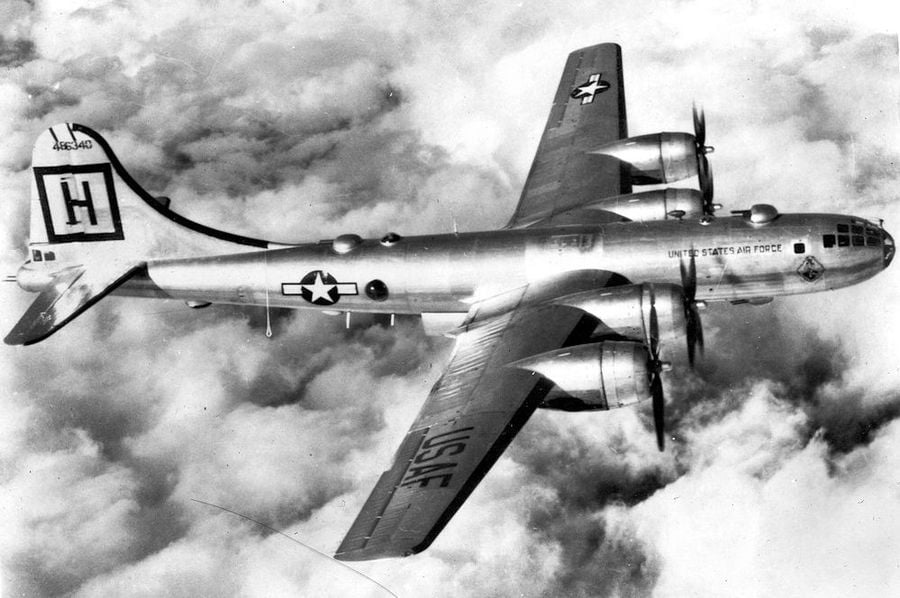
In March 1945, the U.S. Army Air Forces changed its approach to the strategic bombing of Japan. Earlier high-altitude precision bombing raids had been largely ineffective due to jet stream winds over Japan that scattered bomb patterns and made accurate targeting impossible. General Curtis LeMay made a decision that was controversial at the time and remains so: he stripped the B-29 Superfortresses of most of their defensive armament, loaded them with incendiary bombs, and sent them in at low altitude at night.
On the night of March 9 to 10, 1945, 279 B-29s bombed Tokyo with incendiaries. The raid destroyed approximately 16 square miles of the city, killed an estimated 80,000 to 100,000 people — though some estimates are higher — and left more than a million homeless. It was the single most destructive air raid in history by most measures, including casualties, exceeding the immediate death toll of either atomic bomb.
The firebombing campaign continued through the spring and summer of 1945, hitting dozens of Japanese cities. Japan's urban industrial base, much of which consisted of small workshops and factories scattered through residential neighborhoods, was systematically destroyed. By the summer of 1945, Japan was importing almost no oil, its merchant fleet had been sunk, and many of its cities were in ruins.
The conventional bombing campaign, combined with the submarine blockade and the mining of Japanese harbors by B-29s, had already reduced Japan's ability to continue the war before the atomic bombs were used. The relationship between the conventional campaign and the decision to use atomic weapons — and whether the atomic bombs were necessary given the existing damage — is one of the most contested historical questions of the 20th century. The March firebombing stands as a turning point in its own right, representing the full application of American industrial and air power against an enemy's civilian and industrial infrastructure in a way that had no precedent.
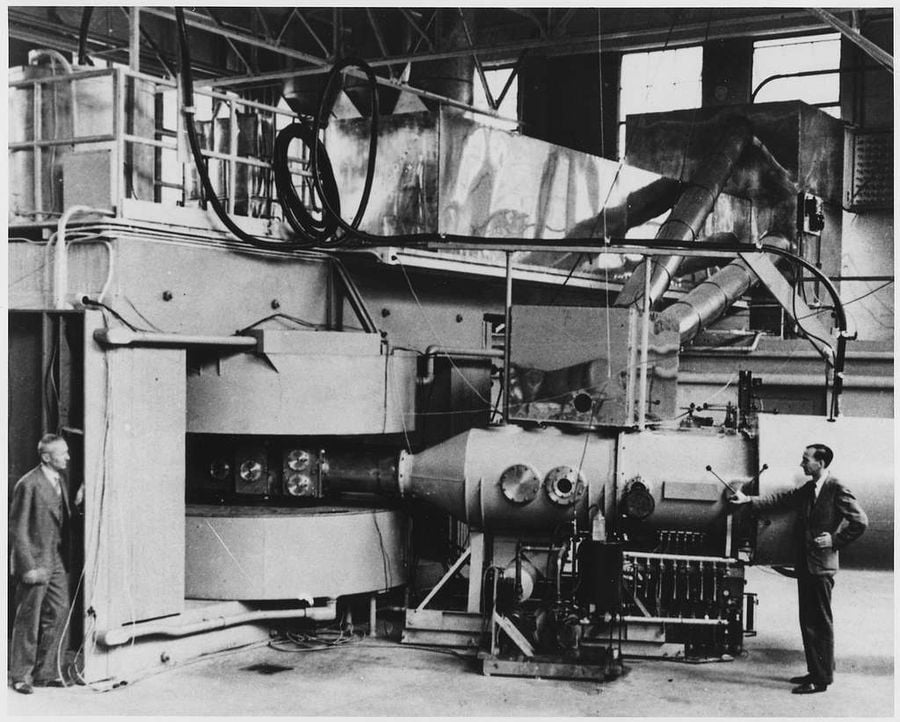
Credit: U.S. National Archives (NARA-558594) / Public domain / Picryl
The atomic bomb was not the product of a single inspired decision. It emerged from a series of scientific and administrative turning points, the most consequential of which was probably a letter.
In August 1939, Albert Einstein and Leo Szilard co-wrote a letter to President Franklin D. Roosevelt warning that recent advances in nuclear fission meant it might be possible to construct extremely powerful bombs using uranium, and that Germany might be pursuing such research. The letter was delivered to Roosevelt in October 1939. He responded by creating an advisory committee on uranium research.
That committee's work was limited in early years, and the American program did not take on its later urgency until 1941, when a British assessment — the MAUD Report — concluded that a fission bomb of practical size was feasible and could potentially be built within two years. The MAUD Report's conclusions, conveyed to American scientists through Vannevar Bush, provided the scientific and political impetus for escalating the U.S. program from tentative inquiry to massive industrial undertaking.
The Manhattan Project, at its peak, employed approximately 130,000 people and cost roughly $2 billion in 1940s dollars. It was run with a degree of secrecy that kept it hidden not only from the public but from most of Congress. Vice President Harry Truman did not know it existed until he became President on April 12, 1945, after Roosevelt's death.
The scientific turning point at the core of the project came on December 2, 1942, when Enrico Fermi's team at the University of Chicago achieved the first artificial nuclear chain reaction, under the stands of an abandoned football stadium. Chicago Pile-1 proved that controlled fission was possible. The path from there to a usable weapon required three more years and extraordinary engineering, but the physics had been confirmed.
The bombs dropped on Hiroshima on August 6 and Nagasaki on August 9, 1945, were the operational endpoint of a scientific and industrial chain that traced directly to the Einstein-Szilard letter, the MAUD Report, and the Chicago experiment.
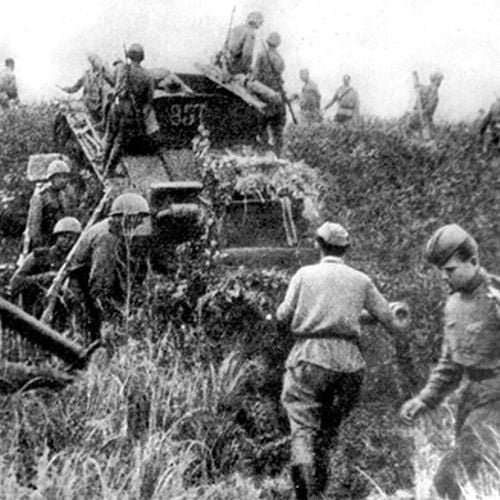
Credit: Mil.ru / Wikimedia Commons (CC BY 4.0)
On August 8, 1945 — two days after Hiroshima and one day before Nagasaki — the Soviet Union declared war on Japan and launched Operation August Storm, an invasion of Japanese-held Manchuria. The operation is among the most underreported events of the Second World War in Western accounts, yet it played a significant role in Japan's decision to surrender.
The Soviet attack had been agreed upon at the Yalta Conference in February 1945, where Stalin promised Roosevelt that the Soviet Union would enter the war against Japan within three months of Germany's defeat. Germany surrendered on May 8; the Soviet declaration came on August 8, precisely three months later.
The Kwantung Army, Japan's main force in Manchuria, had been stripped of its best units to defend the Japanese home islands. What remained was a large but weakened force facing a Soviet military at the peak of its operational competence. Soviet forces, using combined arms tactics refined on the Eastern Front against Germany, broke through Japanese defenses rapidly. The Kwantung Army effectively ceased to exist as an organized force within days.
The significance for Japan's decision to surrender is debated. Some historians argue that the Soviet entry was as important as, or more important than, the atomic bombs in compelling the Japanese government to accept the Potsdam Declaration. Japan's war leadership had been hoping to use the Soviet Union as a potential intermediary for a negotiated end to the war — a hope that became untenable the moment the Soviet Union became a belligerent.
The loss of Manchuria also meant losing the resource base and industrial capacity that Japan's military planners had identified as essential for continued resistance. Whatever weight one assigns to the atomic bombs versus the Soviet intervention, the combination of events in the first two weeks of August 1945 ended the war within days.
