
The fight over private home listings between Zillow and Compass has sparked a lawsuit that could fragment the market — with buyers and sellers in the crossfire
Gabby Jones/Bloomberg via Getty Images
Two real estate titans are facing off in a legal battle that could completely change how you buy or sell a home.
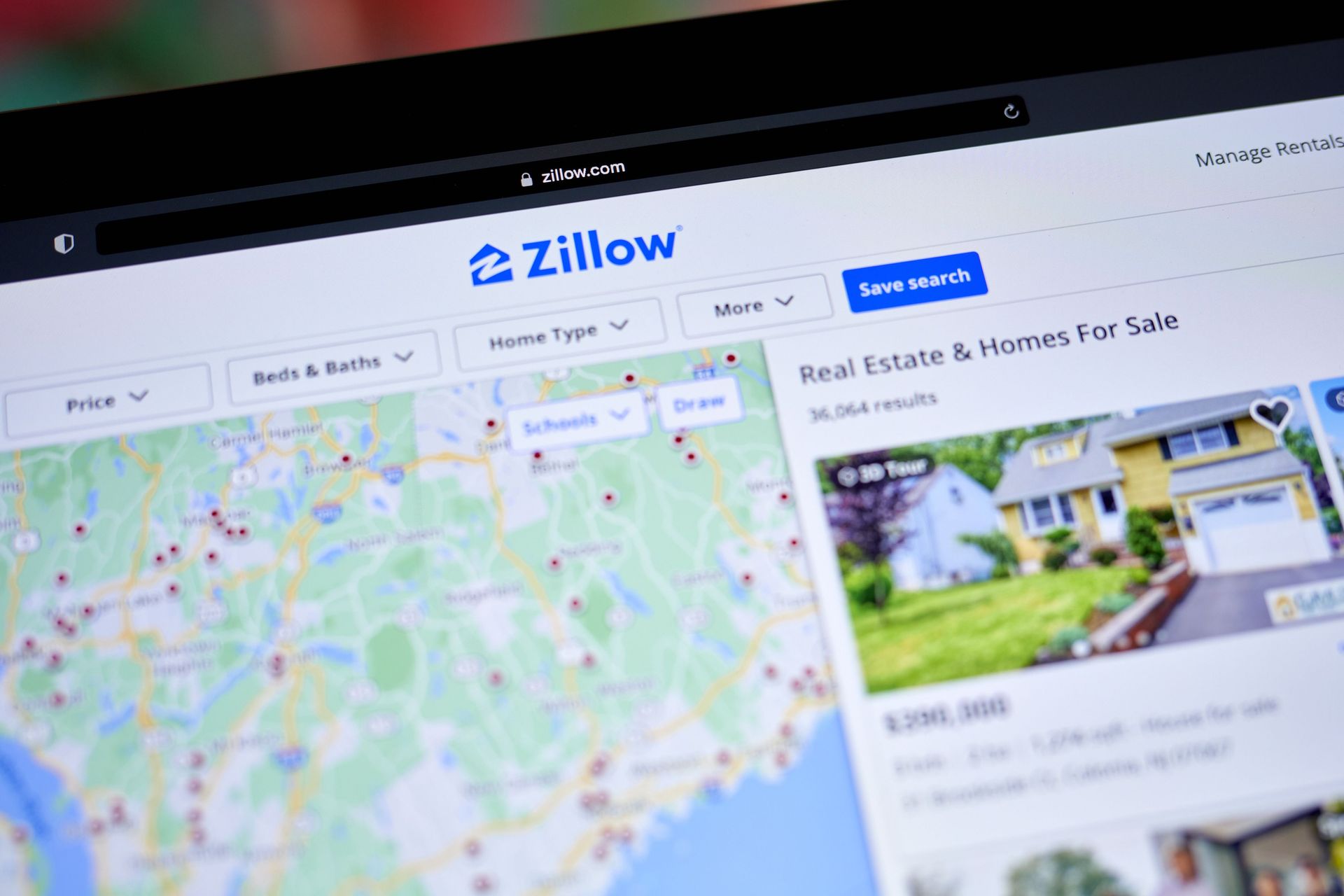
In May, Zillow, which averages 227 million site visits per month, started banning any home listing that doesn’t appear on the Multiple Listing Service (MLS) and on syndicated search platforms like Zillow within one business day of being publicly marketed.
The policy takes aim squarely at Compass, the largest real estate brokerage in the country by sales volume, according to RealTrends. Compass has built its business around letting sellers test the waters privately through its own network of agents before sharing it broadly.
Join 500,000+ readers who start their day with Quartz.
By subscribing, you agree to our Terms of Service and Privacy Policy.
Compass escalated the fight last month, filing a federal antitrust lawsuit against Zillow. While both sides claim they’re protecting consumers, experts say it’s more about who controls the almost $50 trillion U.S. housing market.
Critics of Compass and other brokerages that use private listing networks prominently within their business models argue that it limits transparency and hurts sellers from getting top dollar.
Here’s how private listings generally work: An agent first shows a home exclusively to other agents within their brokerage (and their buyers) for a set period. This option affords the seller more privacy and control over who sees their property. It also lets them test their asking price without creating a public record of how long it sits on the market and price reductions — both data points that appear on the MLS and Zillow.
However, if the home doesn't sell, it’s listed publicly on the MLS, a cooperative database where real estate agents from local brokerages share for-sale properties with each other. There are more than 500 MLSs in the U.S., according to the Real Estate Standards Organization (RESO).
So why is Zillow bringing the hammer down now on homes that are publicly marketed but don’t appear on its platform right away? The company says its new rules comply with the National Association of Realtors’ (NAR) Clear Cooperation Policy (CCP). The policy was put into place to encourage cooperative, efficient marketplace practices that benefit consumers, NAR has said. But in March 2025, NAR made an exception in CCP for "delayed marketing exempt listings." This allows a seller the option to instruct their agent to delay marketing their home for a period of time, based on local MLS rules.
"An agent can have a Private Exclusive listing that follows all CCP and MLS rules, yet nonetheless violates the Zillow ban — an incredibly precarious and confusing scenario for home sellers and their agents," Compass argues in its lawsuit.
A Compass spokesperson said Zillow’s policy is more restrictive than CCP.
“Based on that, it's clear to us that Zillow’s goal is to ban listings that are not on Zillow — not ban private listings, nor ban listings that are not on an MLS,” the spokesperson said. When Zillow has access to more listings inventory, “they're able to sell more leads, because that's the system they've created,” the spokesperson added.
Still, Zillow doesn’t appear willing to budge from its ban. Other real estate brokerages, including eXp and Redfin, have rallied in support of Zillow’s stand on transparency and committed to following the platform’s listing rule.
In a new twist, Compass announced on Friday that it will share its private listings with rival brokerages and MLSs — but with two caveats. First, the listings cannot be altered or monetized through third-parties that sell listings data and listing agents must be prominently featured. Also, MLSs and brokerages must ensure agents won’t be fined or banned for sharing listings.
While Zillow’s ban might seem well-meaning for consumers, industry experts say it’s purely a business play.
"Zillow's new policy is not about transparency but rather marketing-funnel control,” said Ken Johnson, a real estate and finance professor at the University of Mississippi. “Zillow is trying to push its weight around. This is a marketing strategy by Zillow to grab more market share from the likes of Homes.com, Realtor.com and Redfin, not to mention local MLSs. These mass-housing platforms generate income primarily by selling leads to real estate brokers.”
According to critics, Compass’s more exclusive listings approach might actually hurt the very sellers it claims to help and decrease agent cooperation.
In one industry study, researchers found that homes marketed on the MLS sold for 17.5% more than comparable properties that weren’t, according to a 2023 report from Bright MLS.
“In 2022, a typical on-MLS seller received $53,890 over what they would have gotten by selling off-MLS,” the report said. This lends credence to Zillow’s own research, which shows that home sellers who didn’t put their listing on the MLS left more than $1 billion on the table in 2023 and 2024. That study, released in February, found that off-MLS homes sold for almost $5,000 less on average than those marketed on the MLS, and more than $30,000 less in California.
"Encouraging the vast majority of sellers to not list their property publicly or broadly, right off the bat, and establishing that as a practice and advising clients to do that, I think, is moving us backwards," said Lindsay Barton Barrett, an associate broker at Douglas Elliman in New York City.
Barrett has seen this play out before. Decades ago in New York, brokers didn’t cooperate and only showed their own listings.
"The end result of that was that it was really difficult for buyers to know that they were seeing things,” Barrett said. “It isn't beneficial for sellers because they're not getting maximum exposure, and they don't know that the person who is willing to pay the highest price is going to see the property."
She said it also wastes sellers’ time and limits the buyer pool. And while a private listing might make sense in some situations — a unique luxury home or a high-profile seller seeking discretion — it’s the exception rather than the rule.
“It's my opinion that the best way to sell something is to prepare it properly, price it properly and expose it to the highest number of people,” Barrett said.
If Compass wins its case and private listing networks are allowed to proliferate, most sellers won’t benefit, said Stephen Brobeck, a senior fellow with the Consumer Policy Center.
“Overall, the residential real estate market will become less transparent and less fair, not just to consumers but also to the thousands of small and medium size brokers who cannot and do not privately list,” Brobeck said. “These brokers will also have a strong incentive to be taken over by large firms, increasing market concentration.”
Zillow and its allies argue that if buyers aren’t seeing homes tied up in a private listing network, the market loses transparency and buyers lose choice.
“It's a bad consumer experience to hold listings back and tell people that they have to work with a certain brokerage in order to see them; that's what we're against,” a Zillow spokesperson said.
With typical U.S. households now spending an average of about 40% of their income on housing payments — well above the usual rule of thumb of 28% — the last thing buyers need is artificial scarcity.
Brobeck warns this could get much worse for buyers. That’s especially true in markets where there are already inventory shortages.
"If courts allow Compass to do so, many other large companies are also likely to privately list, balkanizing the market,” Brobeck said. “Buyers will then increasingly lose access to information about all properties being sold."
Most consumers are unlikely to fully get the nuances of the legal beef between Compass and Zillow. “But if they did, they'd likely side with the consumer-industry group and also increasingly avoid Compass agents and brokers who are being pressed to push private listings,” Brobeck said.
On the other hand, Johnson said that if Zillow emerges the victor, brokers will simply shift their property listings to other platforms which allow for alternative marketing strategies.
“Actions like this, if successful, will only drive these alternative listing strategies deeper underground as they can be quite successful in certain markets,” Johnson said.
For Barrett and other agents watching from the sidelines, there’s a real concern that this latest public spat not only harms buyers’ access to properties but also hurts buyer agents.
“It makes it very hard for buyers to feel good about the system and know that they have a reason to have a relationship with a buyer's broker who, a year ago, could always show them every listing, and now can’t,” she said.