Since the end of World War II, plastics have proliferated, becoming a part of nearly everything we use in nearly every aspect of daily life. Yearly production has grown from 2 million metric tons of plastic in 1950 to 380 million metric tons in 2015.
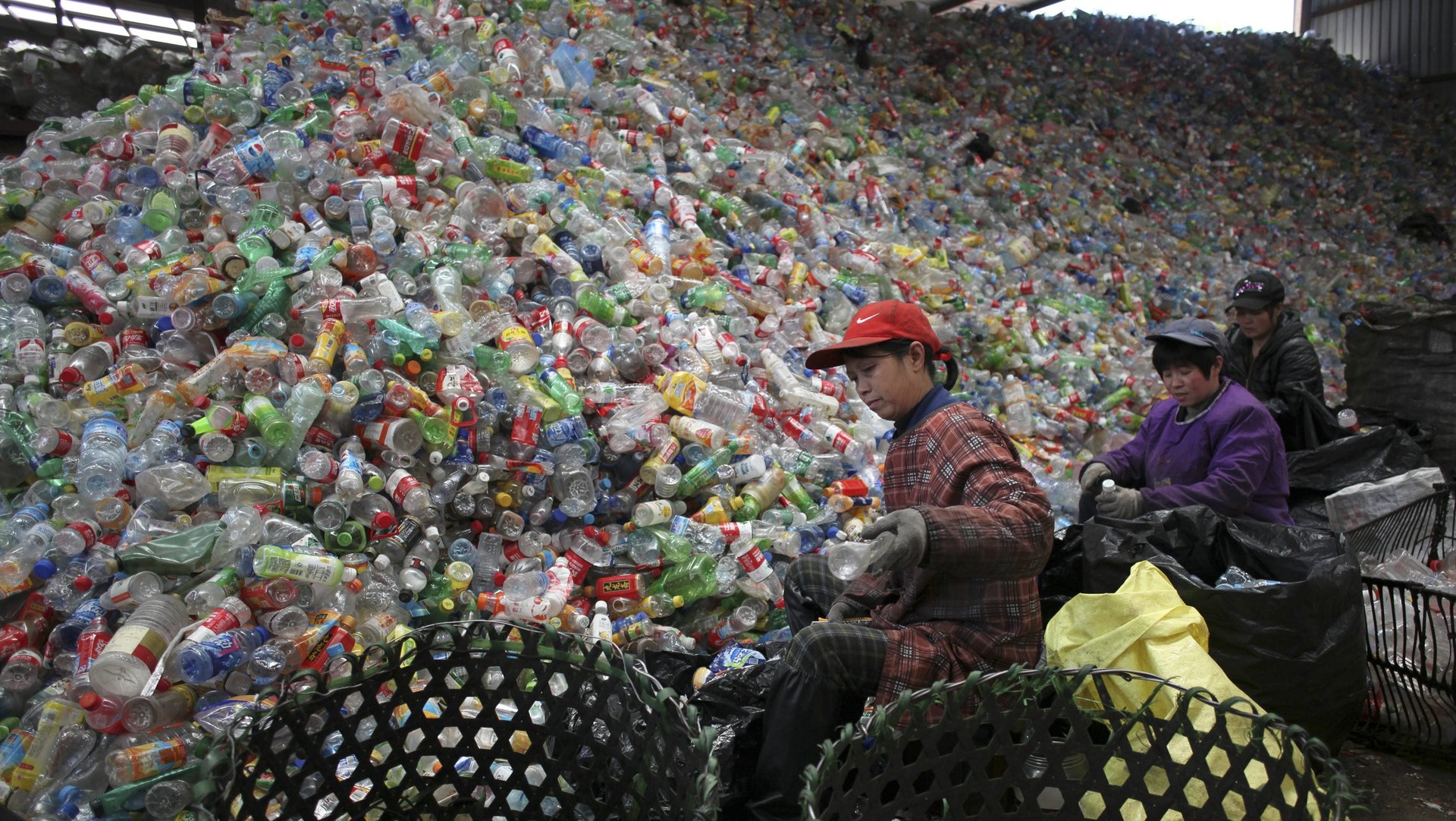
Since the end of World War II, plastics have proliferated, becoming a part of nearly everything we use in nearly every aspect of daily life. Yearly production has grown from 2 million metric tons of plastic in 1950 to 380 million metric tons in 2015.
In total, according to a paper published today (July 19) in Science Advances, humans have made 8.3 billion metric tons of new plastics since 1950. And, thanks in large part to the global popularity of single-use plastic packaging, half that total was made in just the last decade.
Join 500,000+ readers who start their day with Quartz.
By subscribing, you agree to our Terms of Service and Privacy Policy.
The problem is plastic doesn’t ever really disappear—at least not on any timescale that would be relevant to humans. Recycling plastic helps some, but it doesn’t make it go away, it just delays the date at which it ultimately ends up in a landfill. So each year, the plastic we make piles onto the plastic we made the year before, and the year before that, and so on. Consider the data from 2015, the latest year for which we have good numbers:
As of 2015, people have already thrown out 6.3 billion metric tons of plastic, or more than 75% of the total made. Of the plastic we’ve thrown out, about 9% has been recycled, and 12% has been incinerated. That means the vast majority—nearly 5 billion metric tons—it is sitting someplace on the planet right now, be it in a dump or that massive plastic patch in the middle of the ocean.
“Most plastics don’t biodegrade in any meaningful sense, so the plastic waste humans have generated could be with us for hundreds or even thousands of years,” Jenna Jambeck, an associate professor at the University of Georgia who coauthored the paper, said in a statement.
Jambeck and her coauthors found that although rates of recycling and incineration will likely increase steadily over the next decades, based on current rates of plastic manufacturing and waste, 12 billion metric tons of plastic waste will be lying around on the planet by 2050. That’s 1.6 metric tons, or roughly the weight of a midsize car, for every single person alive today.
