How much cheaper will it be to hail a driverless taxi than to own a car in the future? A lot, according to the financial services firm UBS.
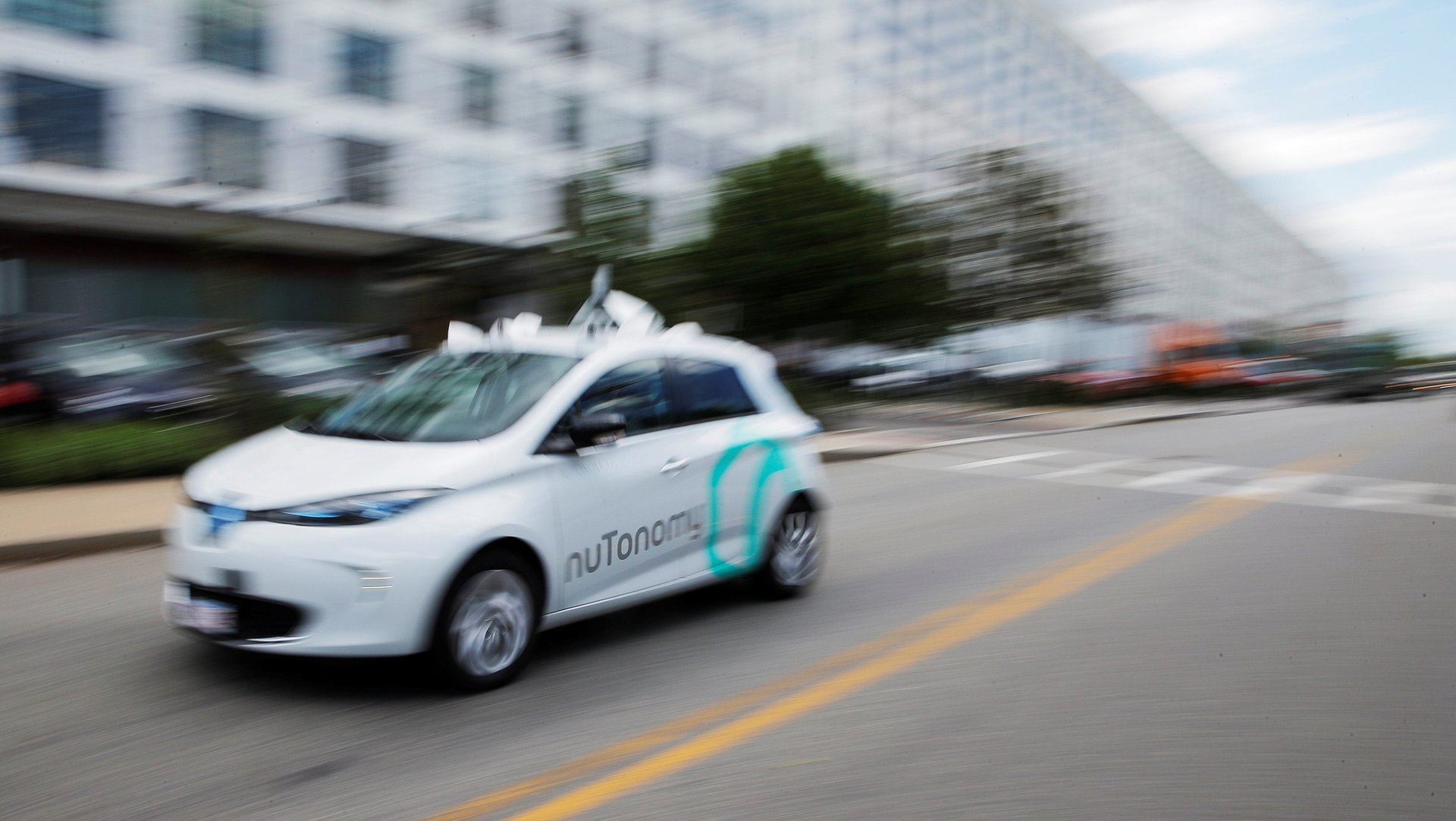
How much cheaper will it be to hail a driverless taxi than to own a car in the future? A lot, according to the financial services firm UBS.
UBS forecasts that taking “robotaxis”—i.e., self-driving taxis—will be half as expensive per kilometer as owning a car in the future. The firm expects to see widespread adoption of robotaxis in urban areas starting around 2030. It estimates that the typical household could save €5,000 a year (about $5,875) by switching to robotaxis in the future.
Join 500,000+ readers who start their day with Quartz.
By subscribing, you agree to our Terms of Service and Privacy Policy.
UBS thinks the shift toward electric vehicles alone will reduce the fees robotaxi companies charge by 15%-20%. It expects the “robo” part—aka, getting rid of human drivers—to cut user costs by another 25%. UBS is also counting on competition to drive down prices.
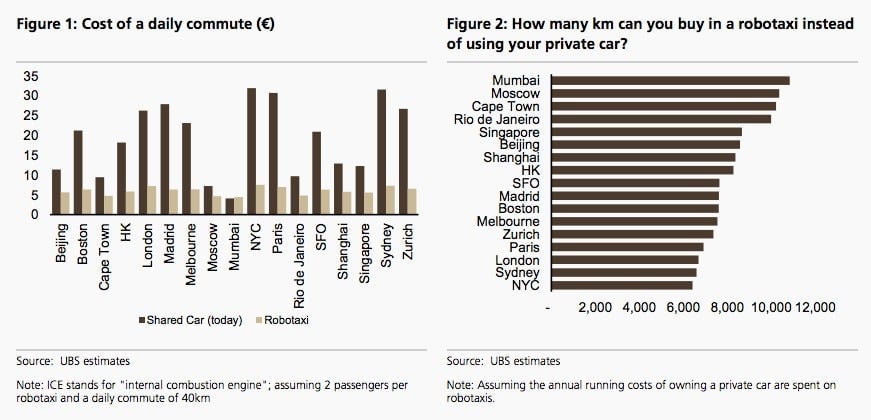
An interesting side note in this report is that UBS remains unconvinced that “shared mobility,” i.e., taking mostly Uber $UBER and Lyft $LYFT, is cheaper than owning your own car today. That contradicts the notion, promoted by ride-hailing companies, that ride-sharing plus public transit can be a more affordable option than traditional car ownership.
UBS finds that the cost of “shared mobility” today is two to three times higher than owning a non-electric car. It modeled those estimates on a total commute of 40 kilometers, or about 25 miles, per day. The firm also notes that Uber has raised prices on its private UberX service in nearly a third of markets over the last year, based on the 600 it tracks, and lowered fares in only 3% of markets. Cities with the greatest UberX price increases include Bali, Indonesia; Cairo, Egypt; Iowa City, Iowa; and Ahmedabad, India, which all saw fare increases of 40% or more.

