The financial crisis of 2008 and the miserable performance of the US economy since then made the Federal Reserve look bad. And almost everything the Federal Reserve has done since then to try to get the economy back on track—from the role it took in the Wall Street bailouts (detailed in David Wessel’s book In Fed We Trust), to dramatically increasing the money supply, to quantitative easing—has also made the Fed look bad.
The financial crisis of 2008 and the miserable performance of the US economy since then made the Federal Reserve look bad. And almost everything the Federal Reserve has done since then to try to get the economy back on track—from the role it took in the Wall Street bailouts (detailed in David Wessel’s book In Fed We Trust), to dramatically increasing the money supply, to quantitative easing—has also made the Fed look bad.
Despite how bad the Fed’s performance looks, things could have been worse—much worse—and I have argued that Ben Bernanke, who led the Fed through this difficult time, should be given a third term as head of the Fed. But as President Obama has made very clear, that is not going to happen.
Join 500,000+ readers who start their day with Quartz.
By subscribing, you agree to our Terms of Service and Privacy Policy.
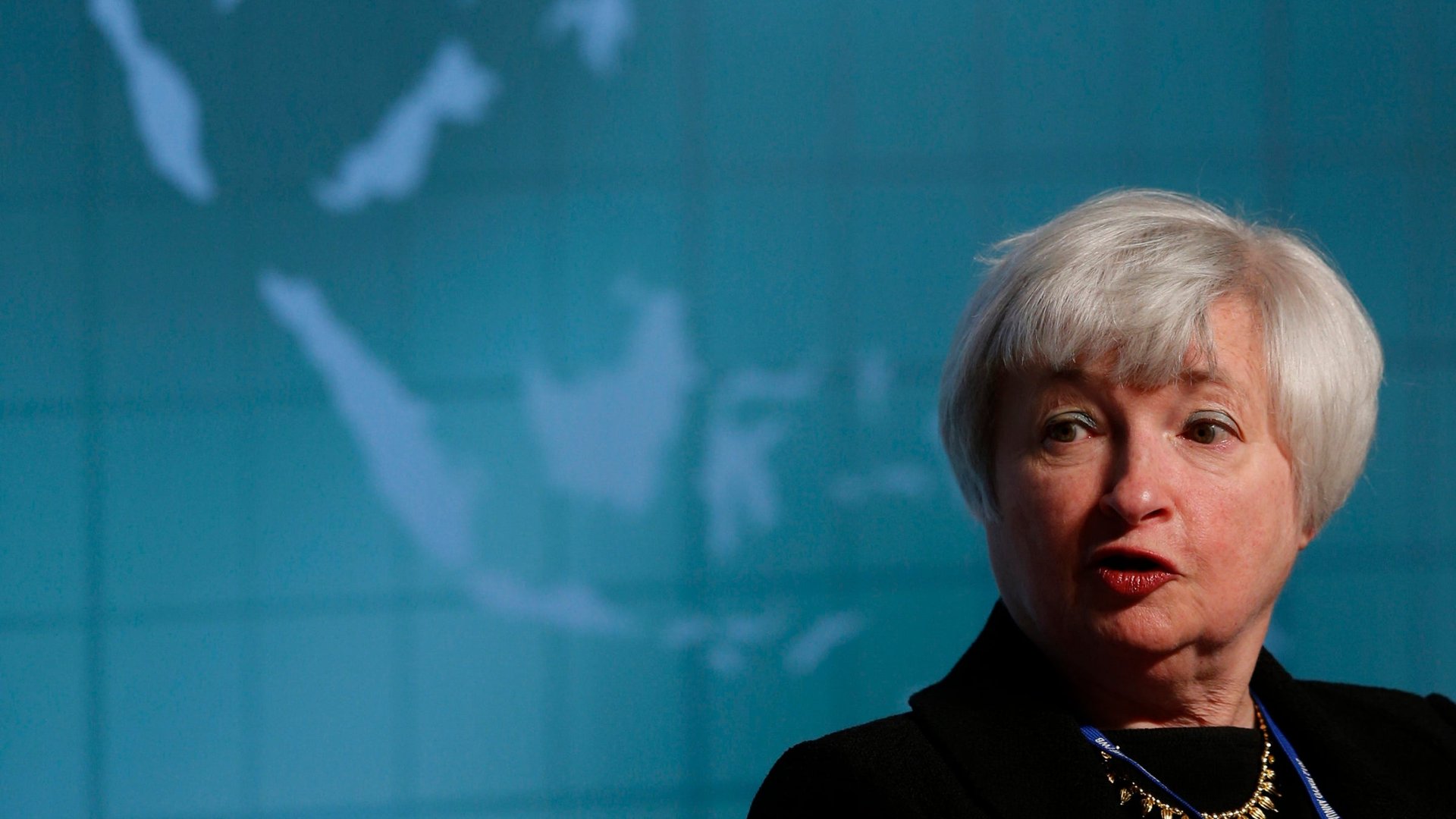
Now there are rival campaigns for who will follow Bernanke as Fed chief, with former Treasury Secretary Larry Summers and Fed Vice Chairman Janet Yellen as the leading candidates. Ezra Klein has repeatedly written on Wonkblog that Obama’s inner circle favors Summers, and Senate Democrats were galvanized by the prospect to write a letter favoring Yellen, followed a few days later by a New York Times editorial board weighing in strongly for Yellen. Much of the discussion has focused on personality differences that I can verify: Larry Summers was one of my professors in economics graduate school and I had a memorable dinner talking about the economics of happiness with Janet Yellen and her Nobel-laureate-to-be husband George Akerlof when I gave a talk at Berkeley in 2006.
I distilled my own observations into tweets saying on the one hand that “Larry Summers can dominate a room full of very smart economists” while “Janet Yellen, like her husband George Akerlof, is one of the nicest economists I have ever met.” Despite that personal knowledge, and the same publicly available information as everyone else, I had to confess on a HuffPost Live segment on July 25, 2013, that my own views on the relative merits of Summers and Yellen go back and forth on an hourly basis. The source of my trouble is this: there are many questions Larry Summers has studiously avoided addressing about monetary policy (Neil Irwin in Wonkblog thinks this is a deliberate, but flawed strategy) and even Yellen, who has an extensive and laudable record on past and current monetary policy and financial stability policy, hasn’t answered all the questions I have about the future of monetary policy and policy to enhance financial stability. On financial stability, Summers has made mistakes in the past (helpfully listed by Erika Eichelberger at motherjones.com), so I especially want to know where he would go in the future in this important function of the Fed.
The questions I would like to ask Larry Summers and Janet Yellen are many, but let’s focus on three big ones:
Any serious candidate for the Fed who gives positive answers to these three questions will have my enthusiastic support, and I hope, the enthusiastic support of all those who have a deep understanding of monetary policy and financial stability. But any candidate for the Fed who gives negative answers to these three questions will be indicating a monetary policy and financial stability philosophy that would leave the economy in continued danger of slow growth (with little room for error) and high unemployment in the short run, and the virtual certainty of another serious financial crisis a decade or two down the road.
