Kleptropredation isn’t a crime, though the newly-coined term has a criminal ring, and the act is kind of like theft-meets-murder-in-a-meal. Technically, it’s when a predator eats prey that has just hunted and has a full belly—such that the predator ends up eating its prey’s prey as well.
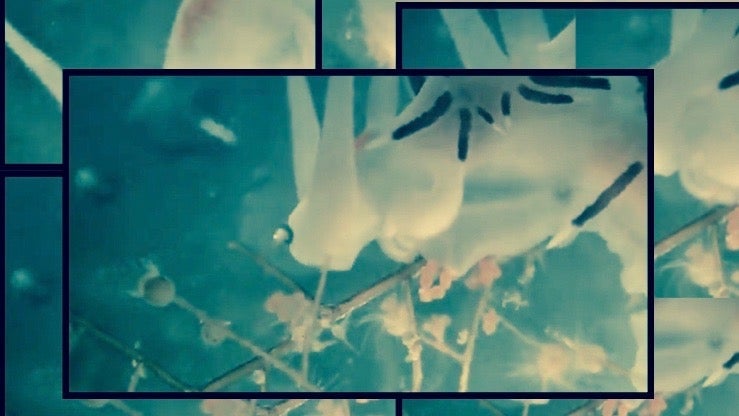
Kleptropredation isn’t a crime, though the newly-coined term has a criminal ring, and the act is kind of like theft-meets-murder-in-a-meal. Technically, it’s when a predator eats prey that has just hunted and has a full belly—such that the predator ends up eating its prey’s prey as well.
The term “kleptopredation” was introduced to the world by marine biologists from the Institute of Marine Sciences at the University of Portsmouth in the UK, writing in the journal Biology Letters on Nov. 1. They published a study on the feeding preferences of nudibranches, a kind of sea slug that might be targeting prey with full bellies.
Join 500,000+ readers who start their day with Quartz.
By subscribing, you agree to our Terms of Service and Privacy Policy.
Food theft, also known as kleptoparasitism, is well documented in the animal world, but selecting stuffed prey is a new twist.
The researchers captured nudibranches in Sicily, Italy, along with their prey, hydroid polyps and the hydroid’s prey, zooplankton. All were transported to a lab where the sea slugs were tempted and tested on their food preferences. Slugs could choose between hydroids that had just feasted on plankton or those that ate earlier and digested their food. In 14 out of 25 cases, the sea slugs chose prey that had just eaten and was full of undigested plankton.
Although those numbers hardly prove the nudibranch’s preferences conclusively, researchers believe that some slugs were trying to get the most bang for their buck, two hunts in one. “This previously unknown case of kleptopredation combines both kleptoparasitic competition and direct predation,” they write. It’s food theft and hunting taken to a whole new level scientists had not considered.
Perhaps spicing dishes with viciousness makes for the most delicious seafood. More likely, kleptopredation serves nutritional needs. This way of catching prey boosts nudibranch intake substantially and is so clever that it seems likely sea slugs aren’t the only kleptopredators, the researchers say. The cunning hunting shown by slugs from Sicily could be happening elsewhere. Certainly, the biologists say, their findings suggest marine food webs are more complex than previously believed.
