In China, sometimes everything is political—even an emoji.
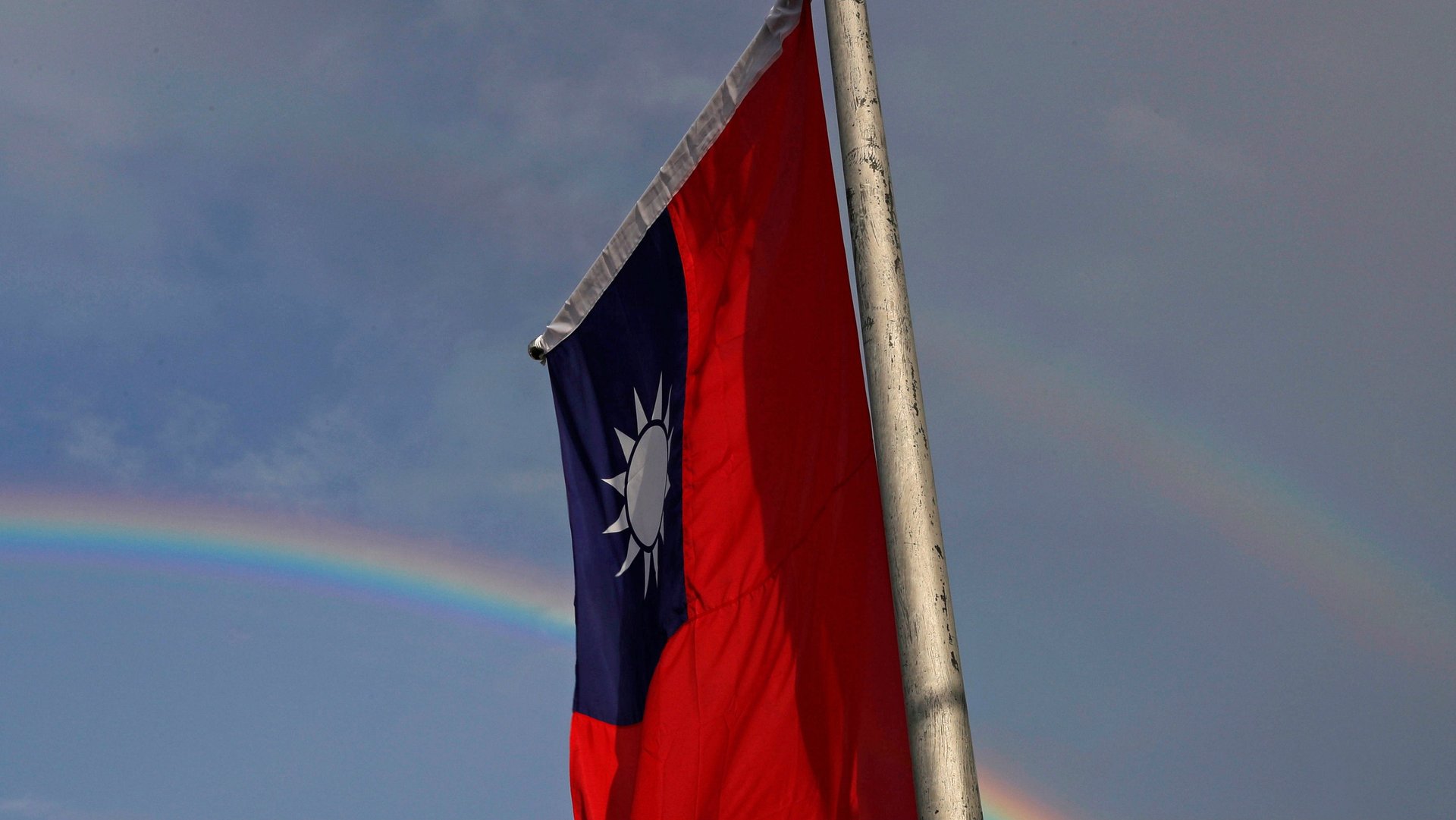
In China, sometimes everything is political—even an emoji.
Emojipedia, a reference website that tracks the use and evolution of emoji, notes iOS users in China aren’t shown the emoji for Taiwan’s flag on Apple $AAPL’s default keyboard. Usually the flag appears in iOS. But within mainland China, it’s completely absent.
Join 500,000+ readers who start their day with Quartz.
By subscribing, you agree to our Terms of Service and Privacy Policy.
Apple first introduced Taiwan to its emoji keyboard in 2015 as part of a beta iOS 9 update. The flags for Chad, Greenland, and Vatican City came along with it.
It’s not clear when specifically Taiwan’s flag was removed, or, indeed, if it was ever introduced on iOS for China at all. Users on forums at MacRumors, a popular site for Apple-related news, spotted the absence in early 2017. Apple did not respond to Quartz’s questions on the matter.
Beijing views Taiwan as a part of the People’s Republic of China. Yet the island has operated as a de facto sovereign nation since 1945, and has its own currency, multi-party governance system, and, of course, flag.
China takes a hard line on cultural references to Taiwan’s sovereignty. Earlier this year, Marriott $MAR issued an apology for listing Taiwan as a “country” in a customer survey. Months before that, news surfaced that Katy Perry had abruptly canceled an appearance at a fashion show for Victoria’s Secret in Shanghai. Many speculated Chinese authorities denied her a visa due to her support for Taiwan’s Sunflower Movement, a series of protests against a trade pact with China, during a 2015 concert.
Apple, meanwhile, has made several concessions to Beijing in recent years. To comply with new regulations it recently began moving all its Chinese user data to local servers run by a government-affiliated company. It said the change would “improve the speed and reliability” of iCloud, but privacy advocates argued the company applies a double standard to its users inside and outside China. Before that the company also removed VPN apps, which let users jump China’s Great Firewall to access Google $GOOGL, Facebook $META, and other banned sites, from its app store.
Censoring an emoji has fewer repercussions than those concessions—but it nevertheless shows the pressures Beijing will place on foreign companies committed to doing business in China
