Elon Musk’s commercial space company, SpaceX, has just launched a Falcon 9 rocket into orbit carrying a Canadian Space Agency satellite, CASSIOPE. Part of the satellite’s payload is Cascade, a prototype for a super-fast space-borne file-transfer system—a kind of digital courier service.
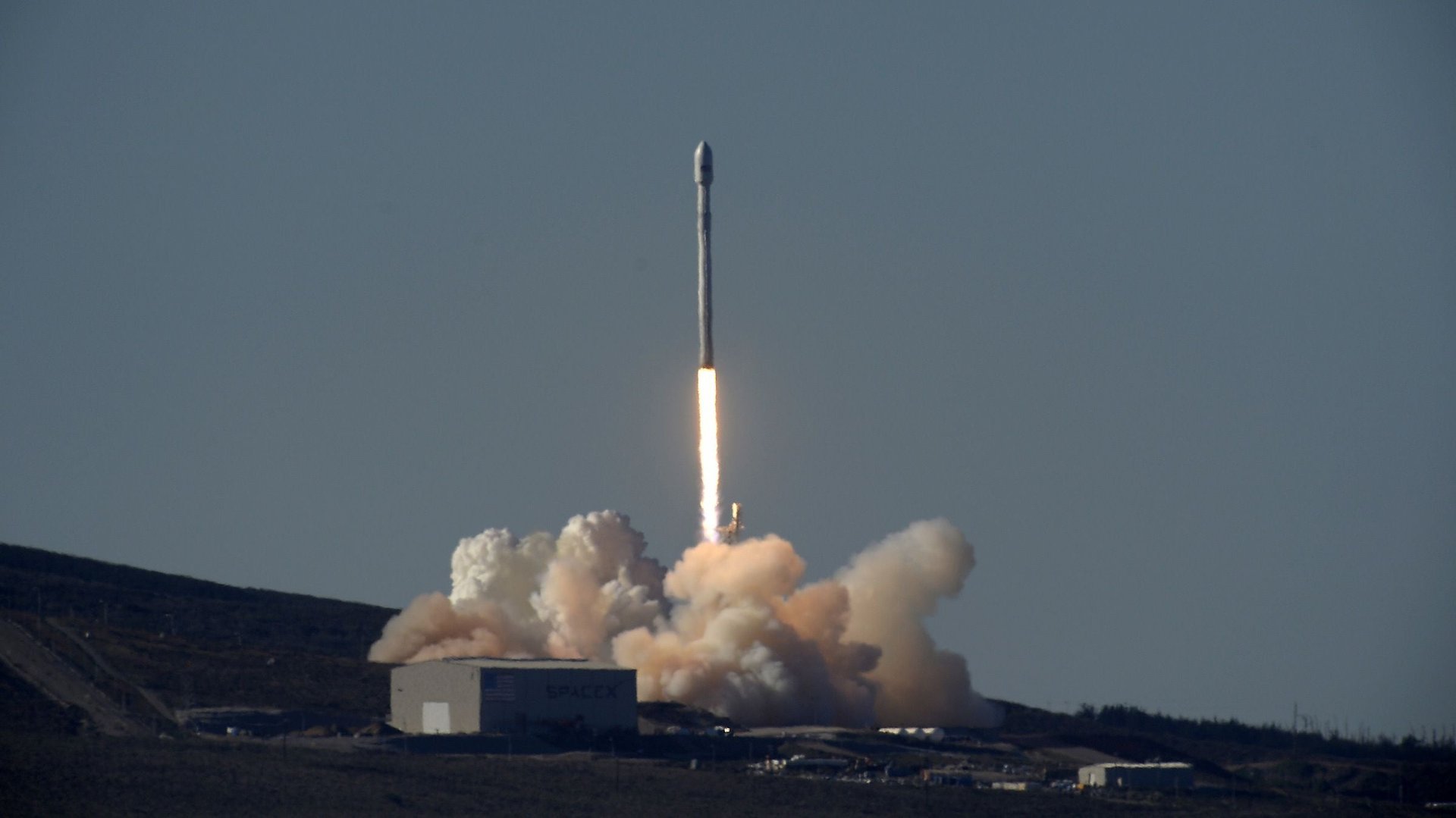
Elon Musk’s commercial space company, SpaceX, has just launched a Falcon 9 rocket into orbit carrying a Canadian Space Agency satellite, CASSIOPE. Part of the satellite’s payload is Cascade, a prototype for a super-fast space-borne file-transfer system—a kind of digital courier service.
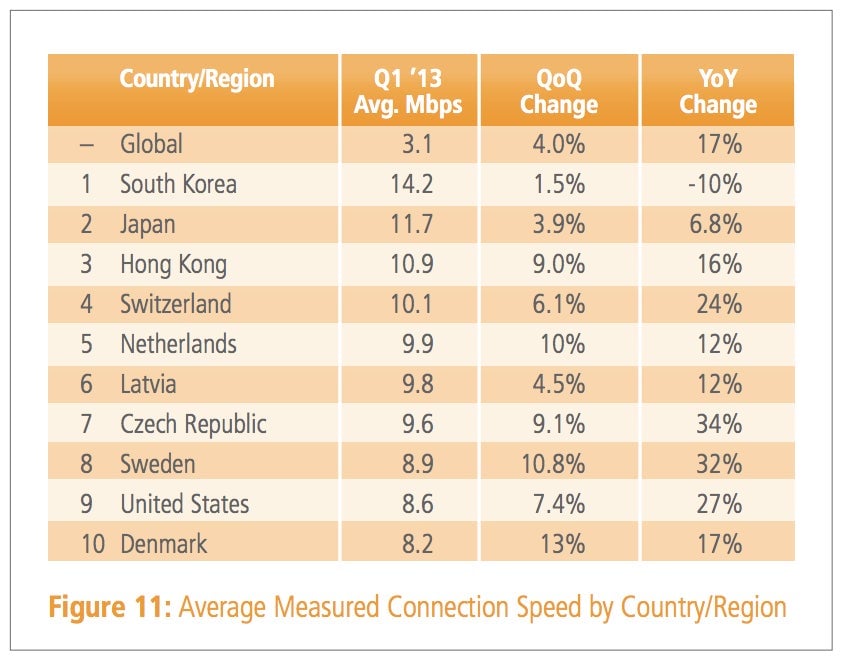
The idea behind Cascade is that companies, governments and agencies increasingly need to get very large digital data packages, weighing several tens of gigabytes, across the world fast—and the internet isn’t up to the task. In the first quarter of this year, according to Akamai $AKAM (pdf, p. 4), the global average internet connection speed was 3.1 megabits per second (Mbps). At that rate a 100-gigabyte (GB) file would take nearly 72 hours to transfer. The highest average speed was 14.2 Mbps in South Korea.
Join 500,000+ readers who start their day with Quartz.
By subscribing, you agree to our Terms of Service and Privacy Policy.
Businesses can of course pay for much higher speeds, and so can some consumers. Google $GOOGL Fiber, which is piloting in a handful of smaller US cities, claims to offer upload and download speeds of up to 1,000 Mbps, over a hundred times faster than the US average, while a service available in Tokyo and a few surrounding areas claims to go even faster. But a fast connection is of no use for exchanging massive files if whoever you’re exchanging them with doesn’t have it too.
Cascade, built by a Canadian company, MDA, promises upload and download speeds of up to 2,100 Mbps. The company gives little detail about the data transmission technology, so it’s impossible to tell how many simultaneous uploads it could handle. But the theory is that because low-Earth-orbit satellites circle the globe about once every 90 minutes, customers could send files to the satellite when it’s passing overhead (via small dishes on land or at sea) which it would store and then send on to the recipient when it’s in the right place.
A 90-minute delivery delay might not be much of a draw, but the service, MDA suggests, would be especially useful for organizations that need to send a lot of data to and from remote places, such as oil companies, armies, and disaster-relief operations. A lot, of course, depends on how soon it can launch a commercial version of the service, how much faster it can make it—CASSIOPE’s launch came several years behind schedule, so there may be an upgraded form of Cascade in the works—and how far ground-based internet connections have caught up by then.
