Editor’s note: We asked North Korea experts what outcomes of the Trump-Kim summit might leave them feeling a tiny bit relieved. The answer below came in longer than expected, so we’re running it separately. Note that ROK stands for the Republic of Korea, aka South Korea.
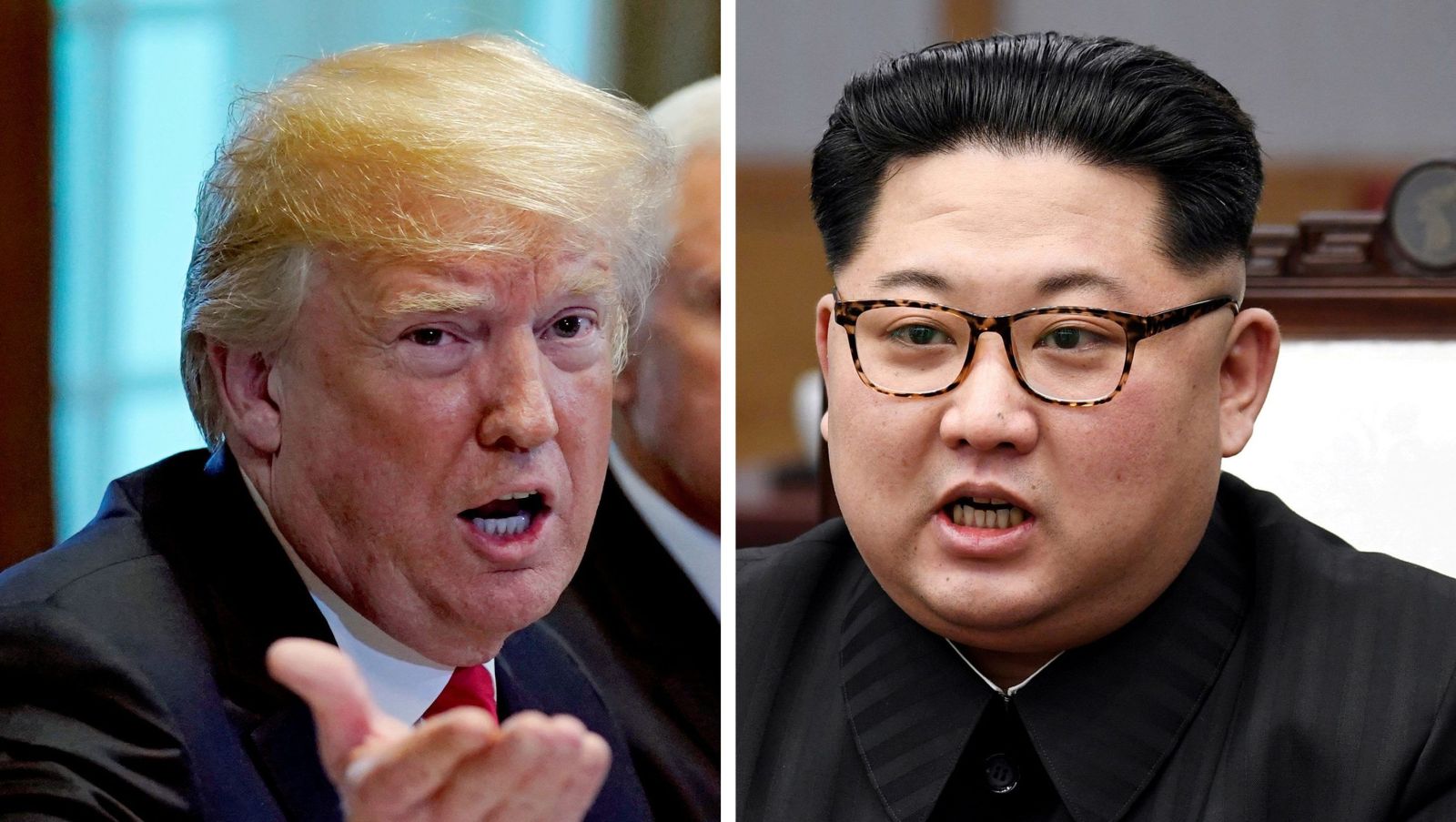
Editor’s note: We asked North Korea experts what outcomes of the Trump-Kim summit might leave them feeling a tiny bit relieved. The answer below came in longer than expected, so we’re running it separately. Note that ROK stands for the Republic of Korea, aka South Korea.
In short, as long as there is no damage to the ROK/US alliance and no agreement that results in an order for immediate or near-term withdrawal (or significant reduction) of US troops on the Korean peninsula, I will breathe a sigh of relief. Another way to say it is I will breathe a sigh of relief if the US (and the ROK) does not fall prey to North Korea’s charm offensive and give concessions with no substantive action in return.
Join 500,000+ readers who start their day with Quartz.
By subscribing, you agree to our Terms of Service and Privacy Policy.
There are two sets of questions we should be asking going into the summit:
First, we need to think deeply about this: Has Kim Jong Un given up the foundational strategy of unification of the peninsula under the north’s control through subversion, coercion, and use of force in order to ensure regime survival? Has he given up the key supporting objective to split the ROK/US alliance to get US forces off the peninsula so that the north can achieve unification? The answer to these questions should guide our strategy.
Second, what do we want to achieve in Korea? What is the acceptable durable political arrangement on the Korean peninsula and in Northeast Asia that will serve and protect US and ROK/US alliance interests? Again the answer to these questions should guide our strategy.
Personally, I have seen no evidence that Kim has given up on the Kim family regime strategy. Therefore my personal assessment remains this:
The only way we are going to see an end to the nuclear program and threats—and to the crimes against humanity being committed against the Korean people living in the north by the mafia-like crime family cult in charge—is through unification and the establishment of a United Republic of Korea that is secure, stable, non-nuclear, economically vibrant, and unified under a liberal constitutional form of government determined by the Korean people.
The only way we are going to achieve that is through an ROK-led effort with the full support of the United States. And for every scenario short of unification—addressing provocations, deterring North Korean attack, defeating an attack, dealing with the myriad contingencies that will arise from North Korean instability and regime collapse—a strong ROK/US alliance is necessary for a successful outcome.
Therefore while we pursue diplomacy, which I believe must be the priority, we must keep in mind that the “Big Five” will always be looming in the background and we cannot take our eyes of the ball in regards to security:
The challenge for South Korea, the US, regional powers, and the international community is how to get to unification from our current state of armistice and the temporary cessation of hostilities. The ROK and its allies face an extraordinary security challenge because of the “Big Five.” War, regime collapse, and the nuclear and missile programs pose an existential threat. It is a moral imperative to work to relieve the suffering of the Korean people who live in the worst sustained human rights conditions in modern history. While unification is the desired and necessary “end state,” or better yet the acceptable durable political arrangement, achieving it will be costly in treasure for sure and blood as well. There is likely no path to unification without some form of conflict—it may only be a question of scale.
However, despite the above, I think the summit will likely occur and that success is a low bar. Here are three simple objectives:
Lastly, based on recent reporting in Washington and Seoul—as well as the results of the Panmunjom Declaration signed at the inter-Korean summit in late April—I think it is possible that we will see a declaration to end the Korean War. As long as we do not fall victim to the euphoria such a declaration will bring and keep the question of the north’s foundational strategy in mind, I will breathe a sigh of relief.
If such a declaration is made, there will need to be a parallel effort by the ROK, US, and the north to develop and implement a peace mechanism that will ensure the security of the peninsula. A declaration of the end of the Korean War will be simple. Developing a peace mechanism and ensuring security and stability on the peninsula while the Kim family regime remains in power will remain the most pressing, complex, and difficult challenge.
