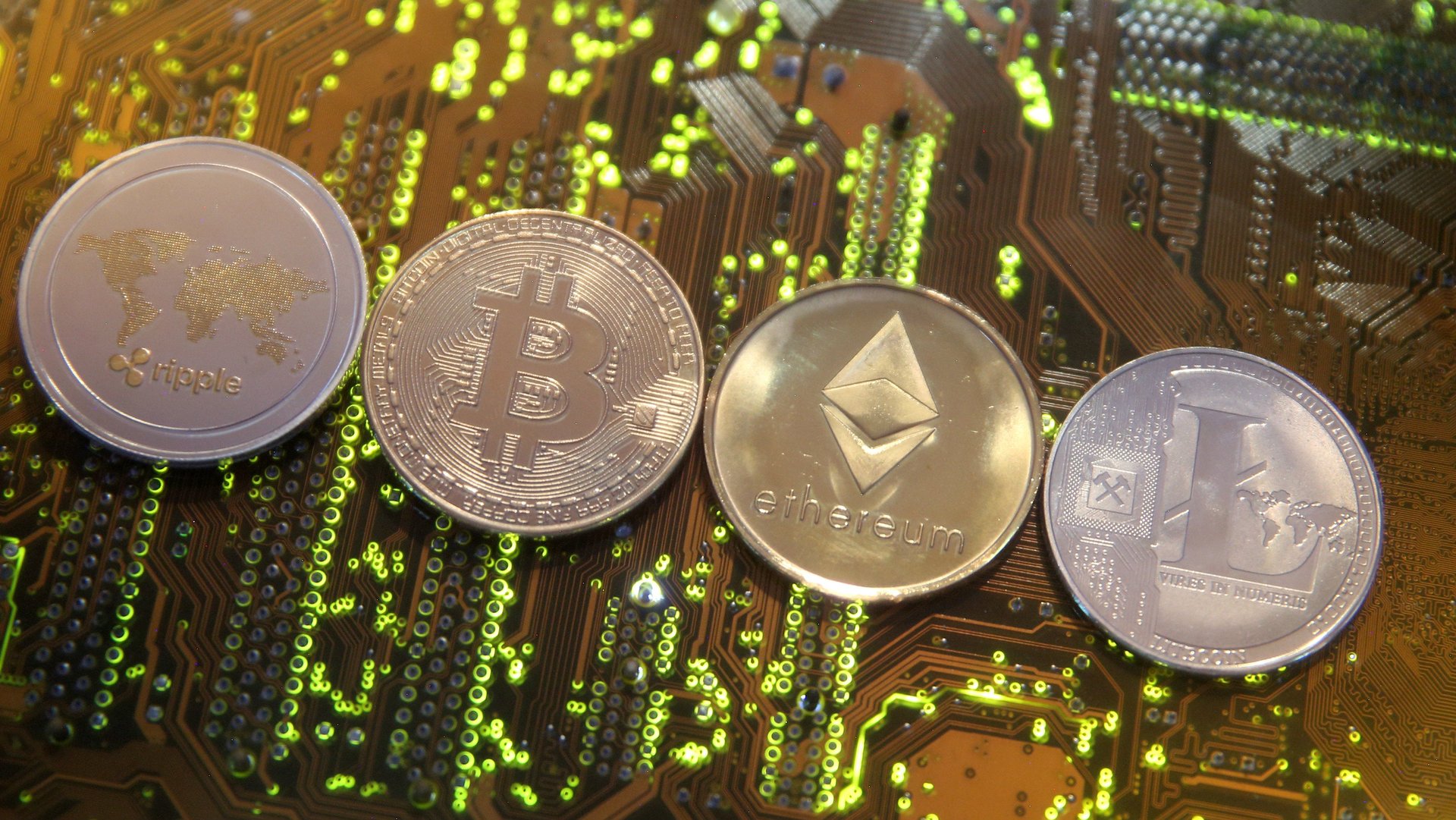
A top US official has provided some clarity about how crypto assets should be regulated. Bitcoin and ether are not securities, according to a senior Security and Exchange Commission official, meaning they don’t have to comply with strict US requirements on registration, disclosure, and accreditation of investors. The regulator made no direct mention of XRP, a crypto token that money-transfer company Ripple has promoted.
Digital assets have been in a bear market this year—bitcoin has fallen some 50%—but ether and bitcoin jumped yesterday (June 14) around the time reports emerged (paywall) on the SEC’s stance. XRP, which like all virtual assets tends to be highly volatile, diverged from bitcoin and ether, according to CoinDesk prices.
“Today is going to be looked back at as somewhat of a momentous day,” said Adam White, general manager at crypto exchange Coinbase, in an interview with podcast host Laura Shin. Guidance that ether isn’t a security gives the crypto industry the confidence to move forward on projects, he said.
One of those projects could be ether futures at Chicago-based derivatives exchange Cboe. The exchange has been considering futures—which give traders a way to speculate or hedge prices of an asset at some later date—for the crypto asset since it started a contract for bitcoin last year, according to president Chris Concannon. “This announcement clears a key stumbling block,” he said.
As for XRP, Ripple CEO Brad Garlinghouse said in an interview earlier this month that “it’s very clear XRP is not a security.” He argued that it exists independently of Ripple the company, which has built technology that uses XRP to facilitate cross-border payments. He said owning XRP doesn’t provide ownership or equity in his firm, which itself it sitting on a large amount of the crypto asset. “It’s quite different than what a security looks like,” Garlinghouse said.
The SEC may feel differently. An important consideration is whether a third-party—a person, entity, or group–is driving the expectation for a return, according to a speech yesterday by William Hinman, director of the corporation finance division at the SEC. For some investors, the rationale for buying the XRP crypto token is the hope that the company Ripple will succeed at convincing banks and other financial institutions to use Ripple, and the crypto token, as a transmission mechanism for payments.
Here are six factors that the SEC suggests considering when determining whether a digital asset is an investment contract, and therefore a security:
There are ways to structure virtual tokens so that they function more like consumer items rather than a security, Hinman said. For analysis, he suggested this list of considerations:
Hinman pointed out that the US Securities Act is meant to give investors essential information known by promoters of assets, so that people buying into projects can make informed decisions. This is why promoters can be held liable for misstatements.
Factors such as a project’s financing and background are vital for an investor to be able to make sound decisions. While ether and bitcoin don’t qualify as securities in Hinman’s view, initial coin offerings (ICOs)—a kind of crowdfunding that’s been turbocharged by crypto-token speculation—often do qualify and may be better off adhering to those regulations.
