This week Chinese president Xi Jinping ordered the Southern Theatre Command, responsible for monitoring the South China Sea and Taiwan, to boost its military capabilities to prepare for a possible conflict, according to a Hong Kong newspaper.
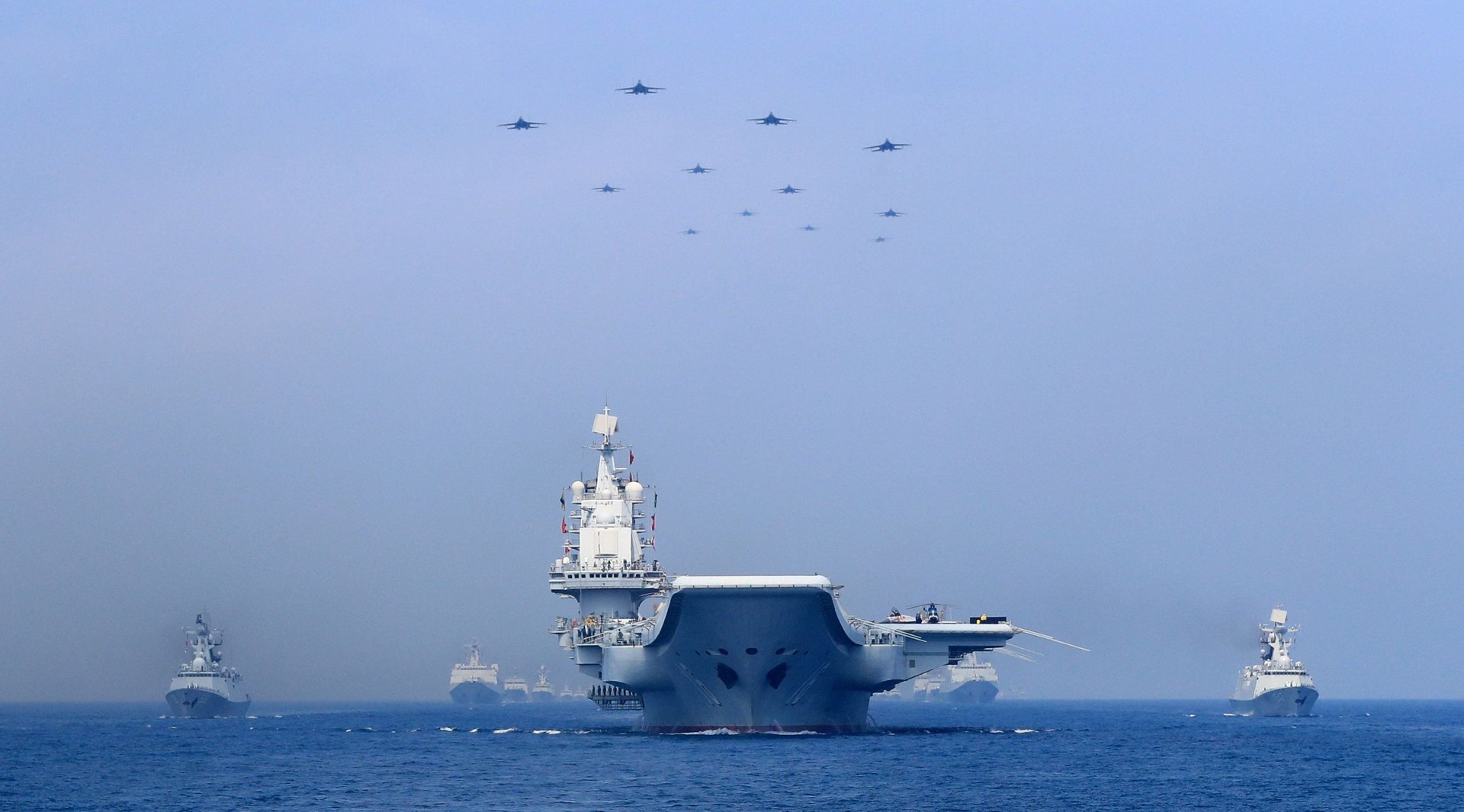
This week Chinese president Xi Jinping ordered the Southern Theatre Command, responsible for monitoring the South China Sea and Taiwan, to boost its military capabilities to prepare for a possible conflict, according to a Hong Kong newspaper.
During a visit to the region on Thursday (Oct. 25), Xi said it was necessary to “concentrate preparations for fighting a war,” reported the South China Morning Post, citing a transcript of Xi’s speech from state broadcaster China Central Television. “We need to take all complex situations into consideration and make emergency plans accordingly.”
Join 500,000+ readers who start their day with Quartz.
By subscribing, you agree to our Terms of Service and Privacy Policy.
State news wire Xinhua also noted the speech, saying Xi “underlined the importance of preparing for war and combat.”
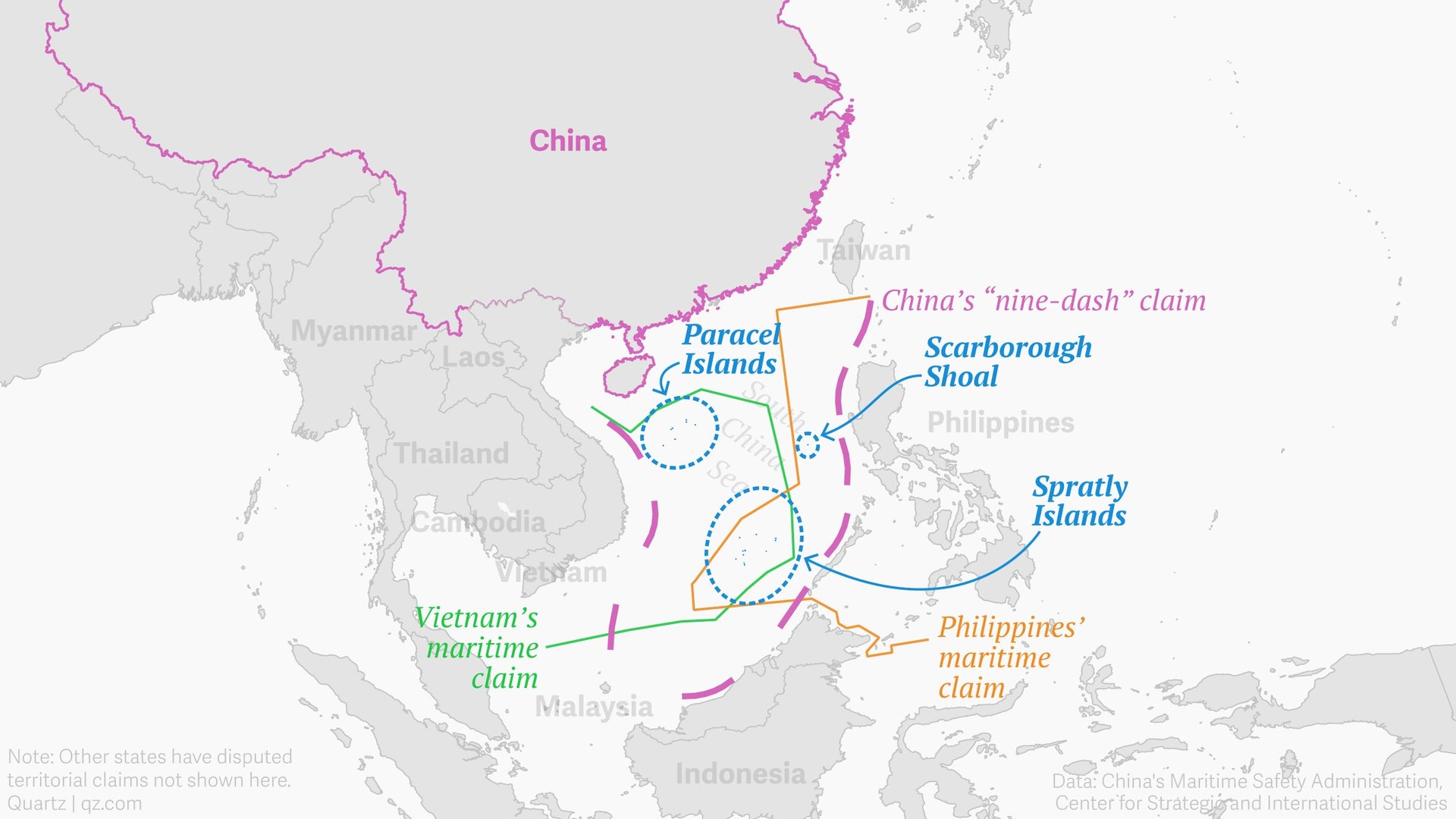
In recent years China has increasingly asserted itself in the South China Sea, building militarized islands atop reefs and fortifying other specks of land it occupies. China claims nearly the entire sea, using as justification its “nine-dash line,” which encircles most of the waterway. An international tribunal invalidated that claim in July 2016, but China disregarded its findings.
China has rapidly modernized and expanded its navy (paywall), which last year became the world’s largest, with more warships and submarines than the United States. Though the US Navy remains more advanced, admiral Philip Davidson, who leads the US’s Indo-Pacific Command, said in his Senate confirmation process (pdf) earlier this year that China “is now capable of controlling the South China Sea in all scenarios short of war with the United States.”
On the same day of Xi’s speech, Chinese defense minister Wei Fenghe said his country would not give up “one single piece” of its territory and warned that “repeated challenges” to its sovereignty over Taiwan would result in direct military action.
Such rhetoric isn’t entirely new: In November 2017, for example, Xi told the military it should be ready to “fight and win wars.” But it does add to an already tense situation in one of the world’s geopolitical hotspots. On Sept. 30, a Chinese destroyer almost collided with a US warship in the South China Sea, after making what American military officials described as an “unsafe and unprofessional” maneuver.
Such incidents will likely continue.
