Donald Trump’s presidency is notable for breaking the rules: he refuses to release his tax returns, regularly insults his own intelligence agencies, and stymies attempts at congressional oversight of the White House.
In Japan today, Trump and the first lady attended the final day of a major sumo tournament in Tokyo, as guests of Japanese prime minister Shinzo Abe. Earlier, Trump played golf with Abe, who arranged a lunch of cheeseburgers made with American beef, the subject of ongoing trade negotiations between the US and Japan.
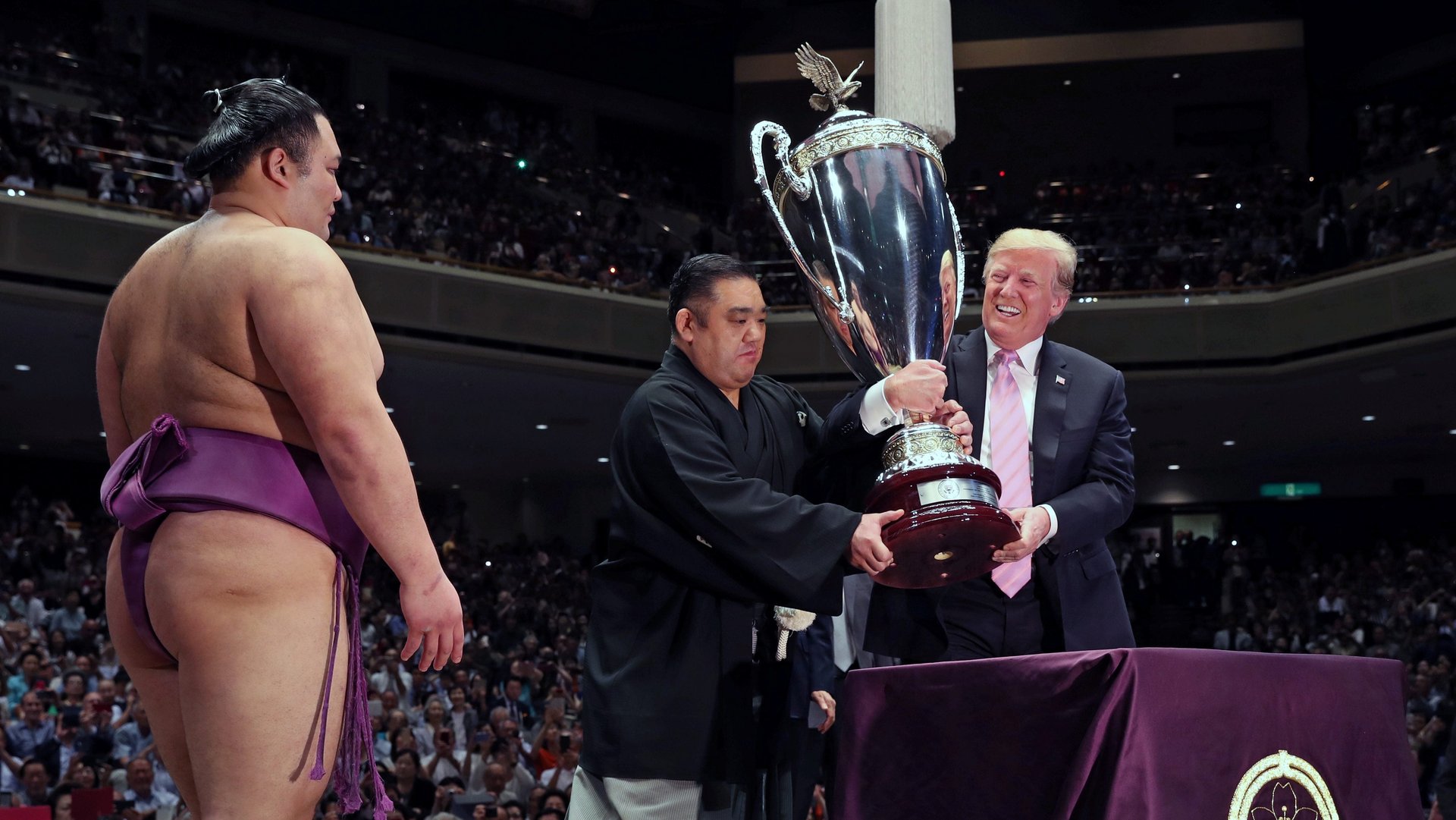
The sport of sumo can be traced back to early Shinto rites and ceremonies conducted in eighth-century imperial courts. It is wedded to long-held traditions, but at a delicate moment of diplomacy between the US and Japan some of its practices were altered to accommodate Trump at a showpiece tournament for the sport. These included:
Some sumo fans were not pleased with Trump’s special treatment. Masaru Tomamoto, 73, told Reuters he wished the president would follow tradition: “I think that it would be much better for him to sit cross-legged with the cushion on the floor, rather than on chair.” Added another fan, Izumi Chiba, “As we say, when you are in Rome, do as the Romans do.”
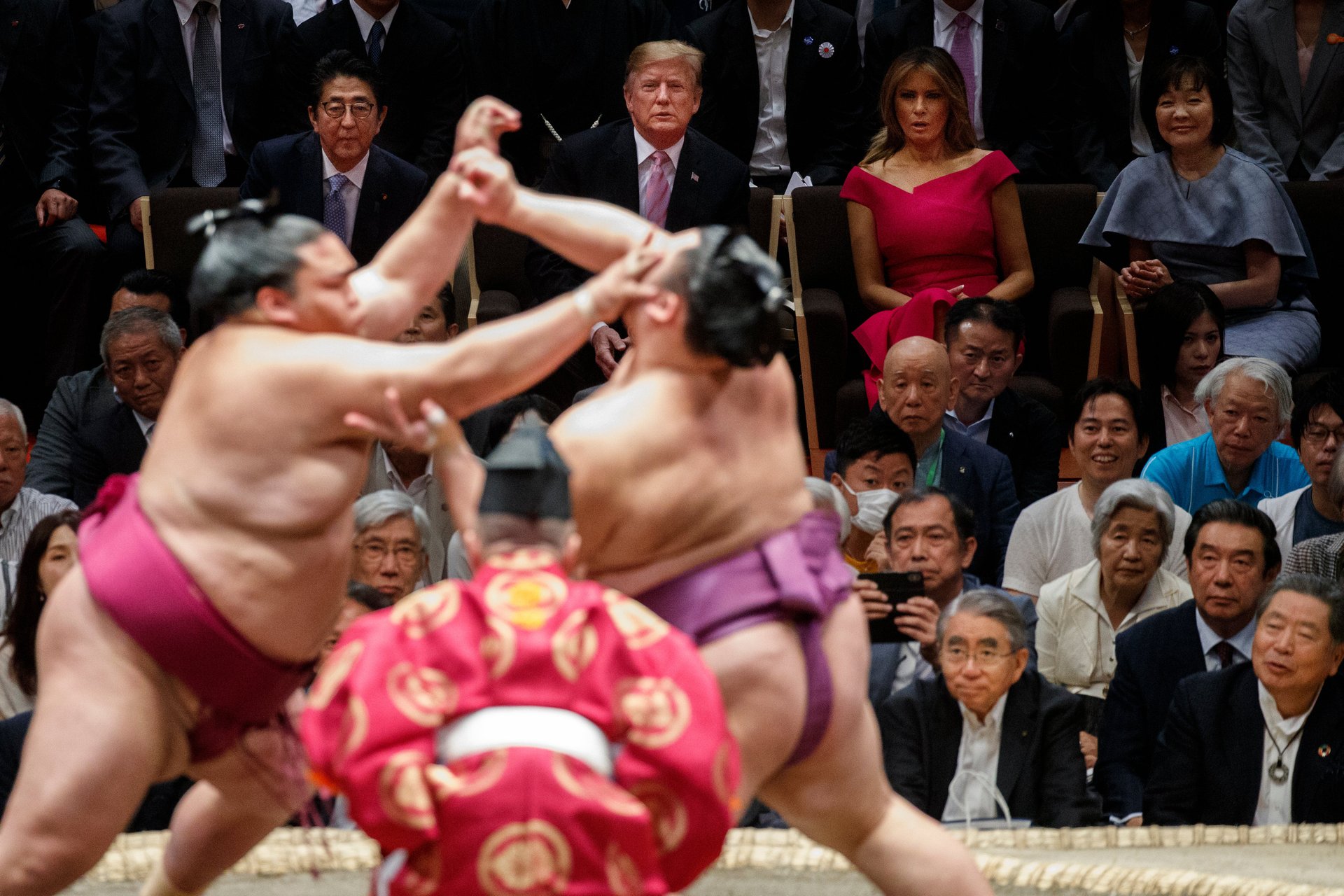
Around 11,500 people attended the tournament. Victory went to Asanoyama, whose real name is Hiroki Ishibashi and who weighs 390 pounds. He called the honor of receiving the special trophy from Trump “almost too much to say in words.” Trump’s interest in sumo is not surprising; he has been connected to World Wrestling Entertainment for decades, including taking part in a 2007 bout dubbed the “Battle of the Billionaires.”
Japan’s charm offensive for Trump, which will include a visit with the new emperor, comes as the country tries to avoid the US imposing tariffs on imported cars, which would hit the export-driven Japanese economy hard. Japan also looks to the US for support in containing North Korea. Before he met Abe for golf, Trump dismissed recent North Korean missile tests as “small” and said he was confident that Kim Jong Un would “keep his promise” on getting rid of nuclear weapons, contradicting the stance taken by his national security adviser.
