Dolce & Gabbana found itself mired in a PR nightmare last November when it was accused of racism in China. The situation started with a marketing campaign that many felt repeated outdated Chinese stereotypes. But the gaffe turned into a full-blown crisis because of derogatory comments about Chinese people posted on the Instagram account of brand cofounder Stefano Gabbana during an argument with another Instagram user. (Gabbana claimed his account was hacked and he didn’t make the comments, and the brand apologized.)
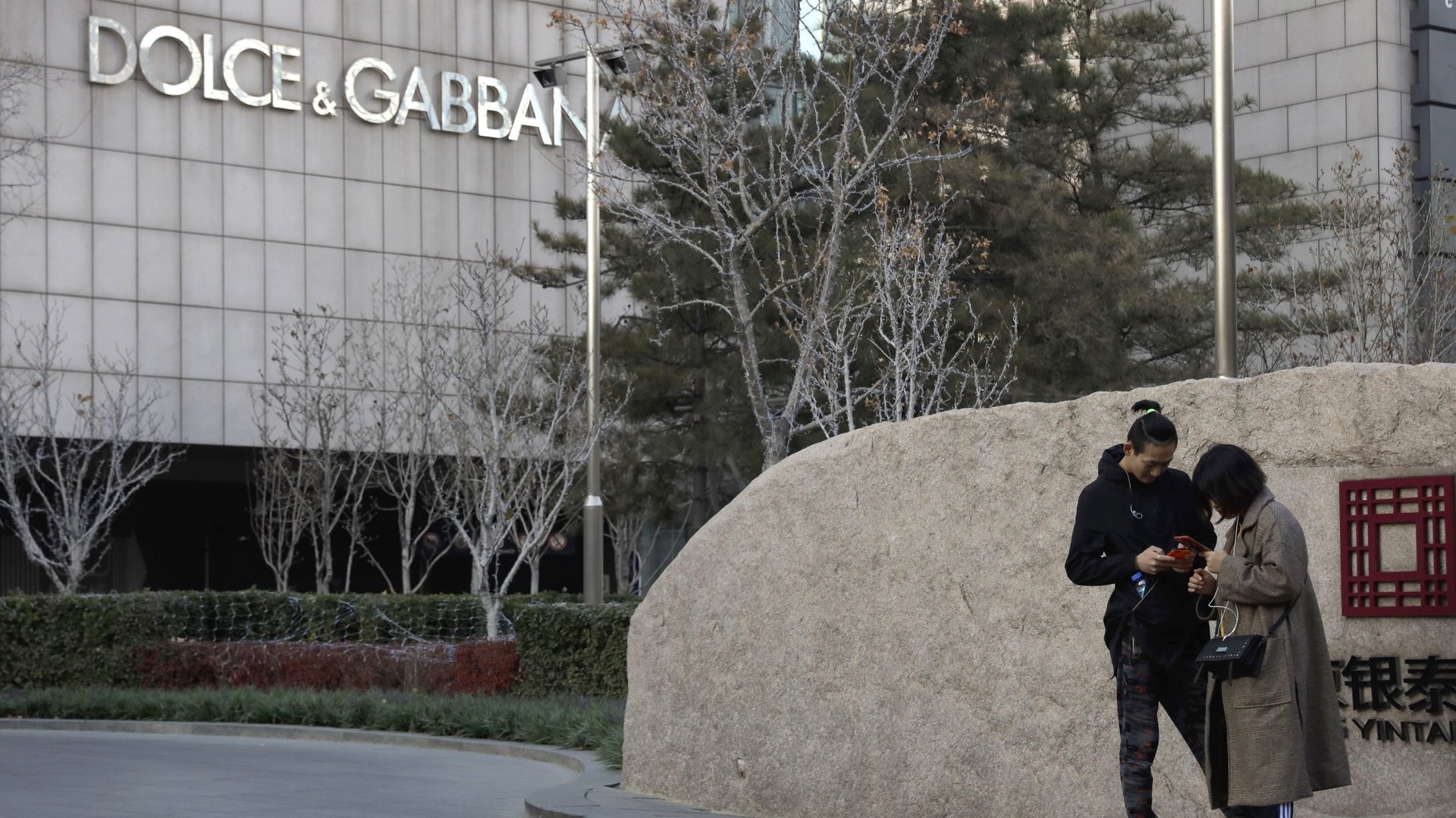
Dolce & Gabbana found itself mired in a PR nightmare last November when it was accused of racism in China. The situation started with a marketing campaign that many felt repeated outdated Chinese stereotypes. But the gaffe turned into a full-blown crisis because of derogatory comments about Chinese people posted on the Instagram account of brand cofounder Stefano Gabbana during an argument with another Instagram user. (Gabbana claimed his account was hacked and he didn’t make the comments, and the brand apologized.)
As the New York Times has reported, many Western celebrities since seem to have forgotten the incident and embraced the brand again. But the same does not appear to be happening in China, according to a new report by L2, a digital intelligence firm. That’s significant because Chinese shoppers are presently the world’s biggest buyers of luxury, and China is a key part of the for Dolce & Gabbana. Whether or not it has been able to recover Chinese shoppers’ esteem has real consequences for its business.
Join 500,000+ readers who start their day with Quartz.
By subscribing, you agree to our Terms of Service and Privacy Policy.
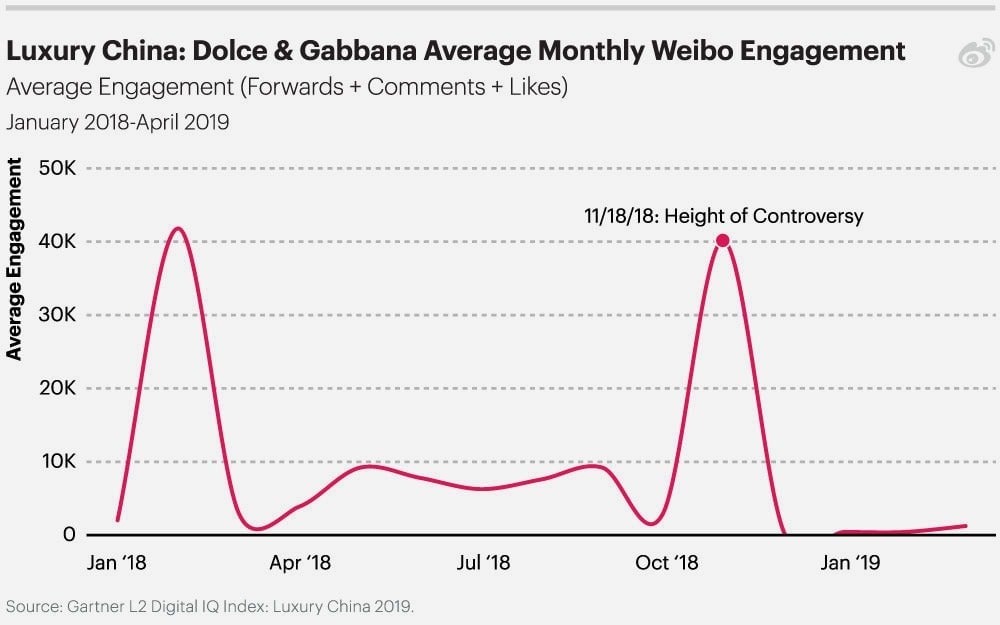
L2 found that in the first quarter of 2019, Dolce & Gabbana’s Chinese social-media engagement—measured as a mix of likes, comments, and shares—was down 98% from the same period last year. The firm looked at Weibo in particular, the largest microblogging site in the country with more than 460 million active users. It’s a top place for people such as influencers, or KOLs as they’re known in China (meaning key opinion leaders), to build and reach a large audience, and it’s an important channel for brands.
The data comes with one caveat: Dolce & Gabbana stopped posting on Weibo for a time, so engagement would naturally fall during that period. But even since it resumed posting occasionally in March, it’s been unable to get China’s web users as engaged as before the racism controversy, and the comments it receives are generally not positive. “The top upvoted comment on their most recent post is ‘Haven’t you died yet?'” notes Liz Flora, L2’s editor for Asia-Pacific research.
Dolce & Gabbana has lost the Chinese brand ambassadors who once spread its name but now either don’t want to work with it or fear the criticism they might face if they did. The country has a powerful online cancel culture. When actress Charmaine Sheh simply liked a Dolce & Gabbana post on Instagram, which isn’t even available in China, it added fuel to a social-media backlash against her. Dolce & Gabbana’s lone post featuring a celebrity since the crisis was for a Hong Kong store opening that featured Hong Kong model Gaile Lok, who L2 notes has only about 150,000 Weibo followers.
“Being shunned by Chinese celebrities is a kiss of death for a brand’s social media presence in China,” Flora says. “If a luxury brand can’t get celebrities to work with it in the market, it’s almost like it doesn’t exist.” She points out that her firm, in its recent report on luxury in China, found that content featuring celebrities drove 94% of all engagement in the fashion and watches and jewelry categories.
Online engagement isn’t the same as sales, but it’s hard to sell when online shops won’t carry your products. After the incident last year, numerous online retailers in China dropped the label. It appears they still haven’t brought it back. “Searches for the brand on Tmall, JD.com, and VIP.com bring up error messages, and the China sites for Yoox and Net-a-Porter do the same for its Chinese name,” L2 said.
We have reached out to Dolce & Gabbana for comment and will update this story with any reply.
