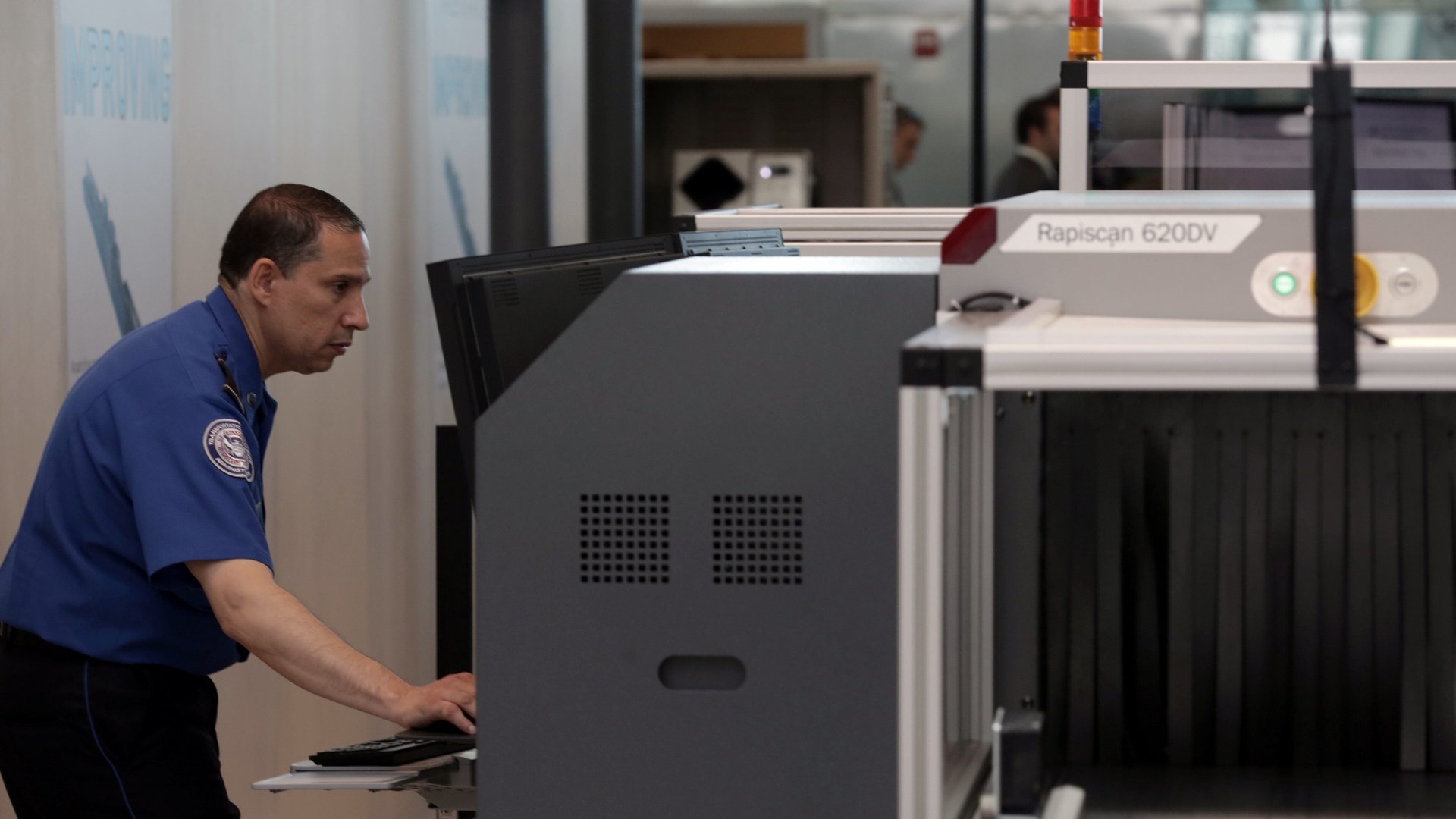
The US Transportation Security Administration (TSA) is concerned about its employees’ emotional well-being following the suicide of a 40-year-old officer who jumped to his death from a balcony inside the Orlando International Airport earlier this year.
The incident “shocked the agency,” and the “accompanying media coverage alerted [it] to the growing, disturbing national public-health crisis.” Now, the TSA is seeking “gatekeeper intervention suicide prevention training” for employees, according to a request for proposals reviewed by Quartz.
The so-called gatekeepers—presumably TSA supervisors—are identified as “individuals…who have face-to-face contact with large numbers of community members as part of their usual routine.” The program, it explains, is meant to impart the “knowledge, attitudes and skills to identify [those] at risk, determine levels of risk, and make referrals when necessary.”
“In addition to the suicidal employee’s well-being, an employee considering suicide is not likely focused on their security screening responsibilities,” the TSA solicitation continues. “If work or job performance issues are involved, the employee presents an increased risk of workplace violence or malevolent action using their access to public and secured areas of the airport.”
The TSA, which is responsible for screening travelers at the nation’s airports, averages between five and 15 documented employee suicides per year, says a statement of work attached to the request. The agency, which has 43,000 transportation security officers on its roster, believes employee suicide attempts could number 500 or more annually. It has become an issue urgent enough for TSA leadership to include suicide prevention training as a priority in the as-yet unreleased 2019-2020 “Administrator’s Intent” directive—something that wasn’t in last year’s version (pdf).
To be sure, the problem goes beyond the TSA. As Quartz recently reported, Customs and Border Protection (CBP) requested an additional $2.1 million for the agency’s Employee Assistance Program in part to respond to officer suicides. On a broader level, law enforcement suicides in the United States have surpassed line-of-duty deaths for the past three years.
Jenny Burke, a TSA spokesperson, said she was prohibited by federal procurement laws from discussing the initiative until the contract is awarded. The one-year period of performance is scheduled to begin Oct. 1.
TSA’s suicide intervention training will consist of two components:
According to the TSA tender, the hour-long webinar will cover the following:
The classroom course will cover topics including:
All contractor staff will be subject to a “Public Trust” background check, which looks at a person’s credit and criminal histories. Bad debt, along with past criminality, are grounds for disqualification.
The TSA is currently evaluating vendor submissions.
This article has been updated with comment from TSA.
