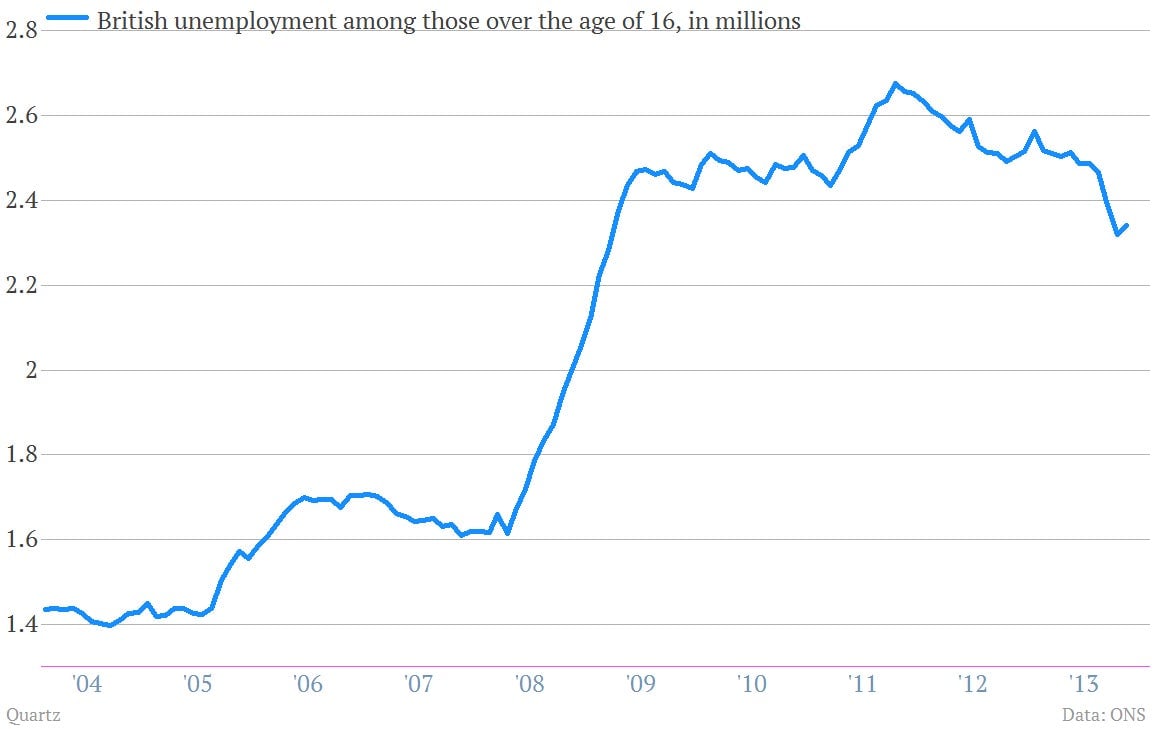
Although it should be noted that the UK’s unemployment rate is produced on a rolling three-month basis. Officials at the the Office of National Statistics argue that the 7.2% rate for the period from October through December should be compared to the 7.6% rate notched between July and September, which would be a decline in unemployment, not an increase. There’s a good explanation here.

That’s down 125,000 from the period between July and Sept. 2013. But it’s up slightly from the September t0 November period published last month.
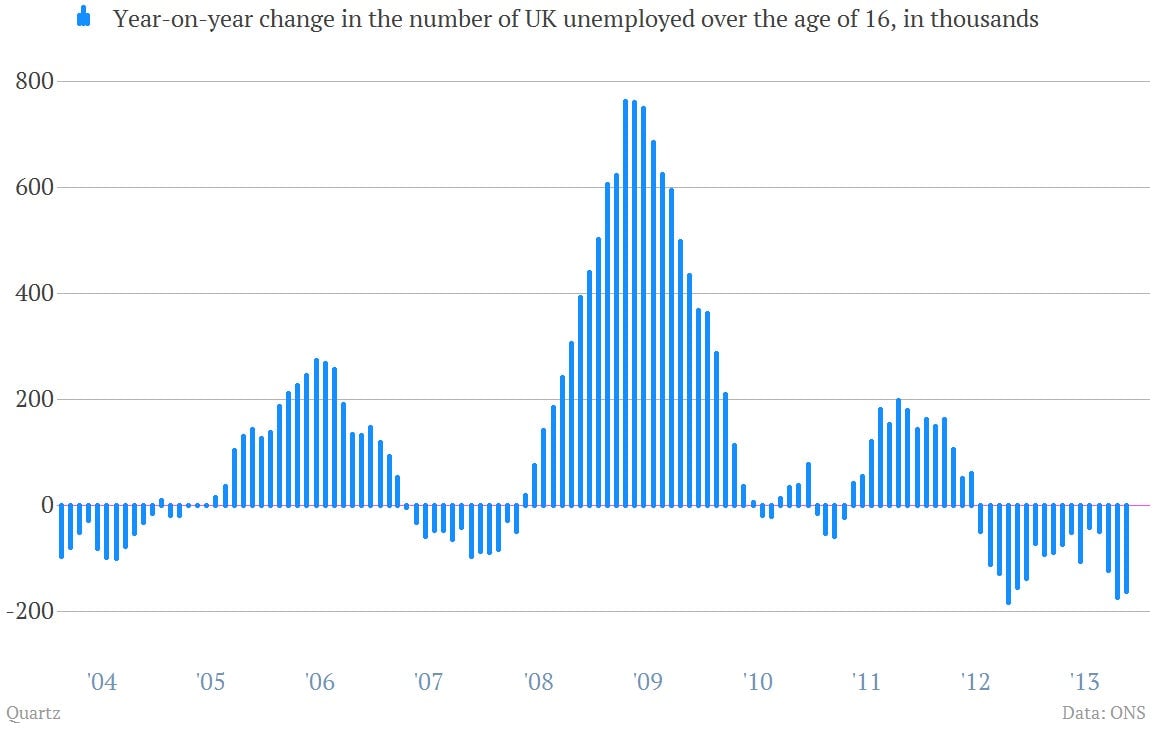
A total of 30.2 million British subjects over the age of 16 were employed, an increase of 396,000 over the prior year.
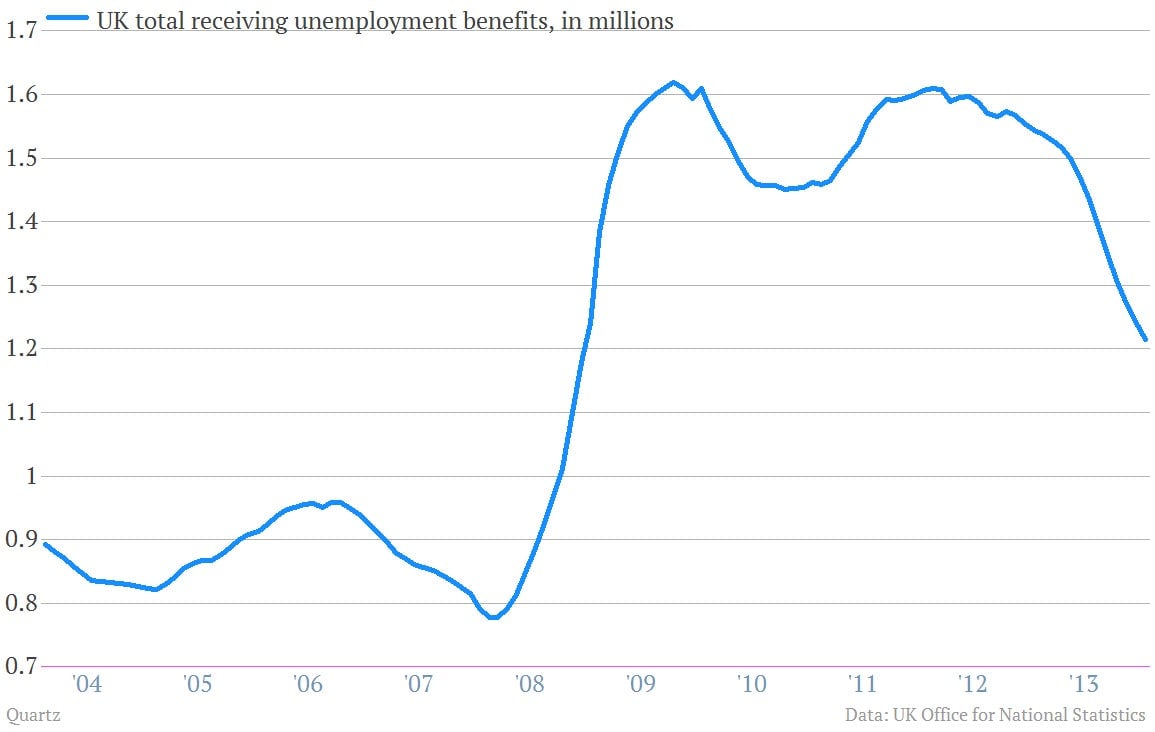
The number of Brits receiving unemployment benefits fell by 27,600 in January, to 1.22 million.
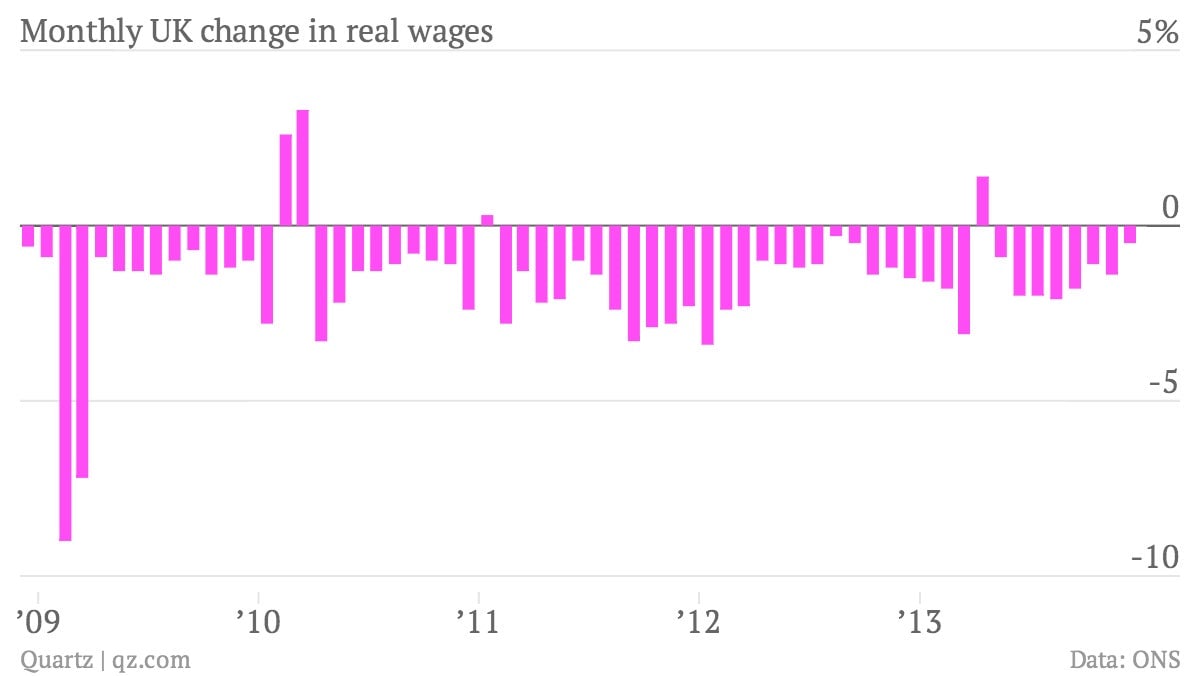
That’s something wages have been doing pretty much relentlessly over the last few years, resulting in a punishing decline in living standards for many in the UK. In December, real wages were down another 0.5% compared to the year-ago period.