Consumers have gotten more wary of artificial sweeteners amid an ongoing scientific debate about their possible connection to health problems. That’s hurting sales of diet soda, which use these sorts of sugar substitutes to deliver sweetness without adding calories. But rather than doing away with the artificial sweeteners, food manufacturers appear to be slipping them in under other names consumers are less likely to recognize.
Consumers have gotten more wary of artificial sweeteners amid an ongoing scientific debate about their possible connection to health problems. That’s hurting sales of diet soda, which use these sorts of sugar substitutes to deliver sweetness without adding calories. But rather than doing away with the artificial sweeteners, food manufacturers appear to be slipping them in under other names consumers are less likely to recognize.
As CBS detailed a few years ago, products including Quaker Instant Oatmeal, Pillsbury Toaster Strudels, and V-8 Splash juice appeared coy about the fact that they included the artificial sweetener sucralose. Meanwhile, diet and reduced-calorie sodas often don’t highlight the fact that at least some of the sugar is replaced with other ingredients that provide similar sweetness. Seagram’s appears to have done that last year , adding sucralose and touting lower calories. And the issue .
Join 500,000+ readers who start their day with Quartz.
By subscribing, you agree to our Terms of Service and Privacy Policy.
The artificial sweeteners appear in the list of ingredients on food packaging, but consumers don’t always notice them or know all of the names the sweeteners can go by.
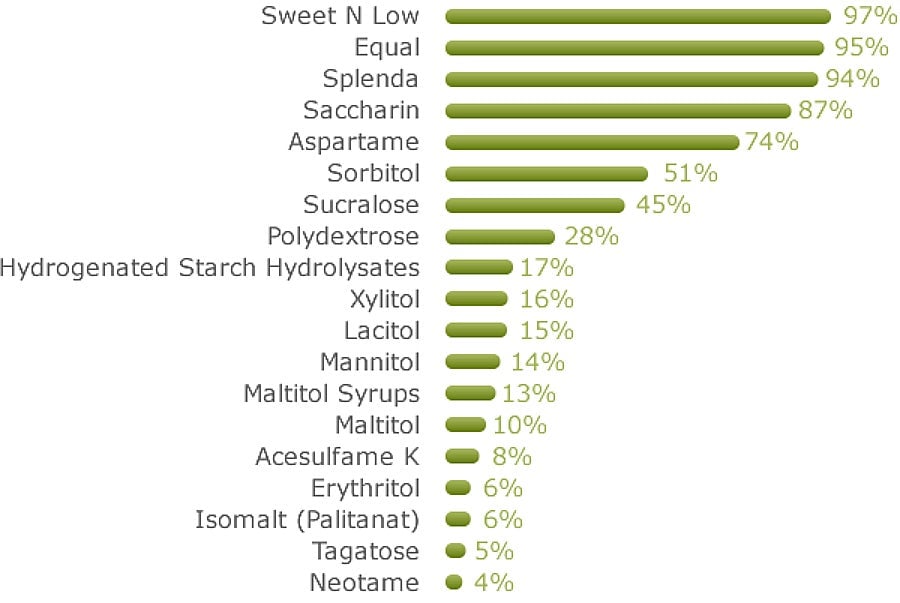
The Sugar Association trade group, which represents the US sugar industry and has a clear interest in this issue, launched an initiative aimed at forcing products to carry explicit labeling on the front of the package when they contain artificial sweeteners. The association published the chart below showing American consumer familiarity with a range of artificial sweeteners. Almost everyone can point out brand names, like Equal. Almost no one recognizes others not used as brands, like neotame.
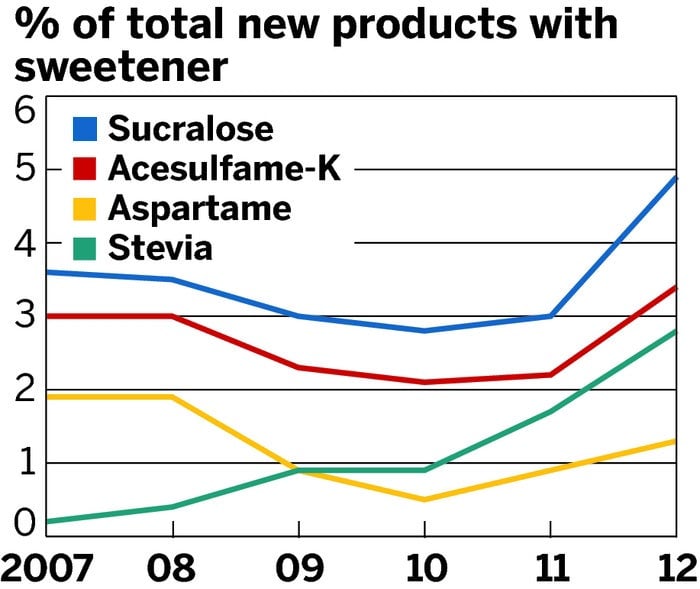
Whether consumers know it or not, food and beverage companies are increasingly relying on artificial sweeteners. The market for artificial sugar substitutes is forecast to grow from $1.2 billion in 2012 to $1.7 billion in 2017, according to BCC Research. This chart, published by Chemical & Engineering News, shows ones showing up in a greater percentage of food projects in recent years: