NASA scientists say they have found perhaps the most Earth-like planet ever discovered.
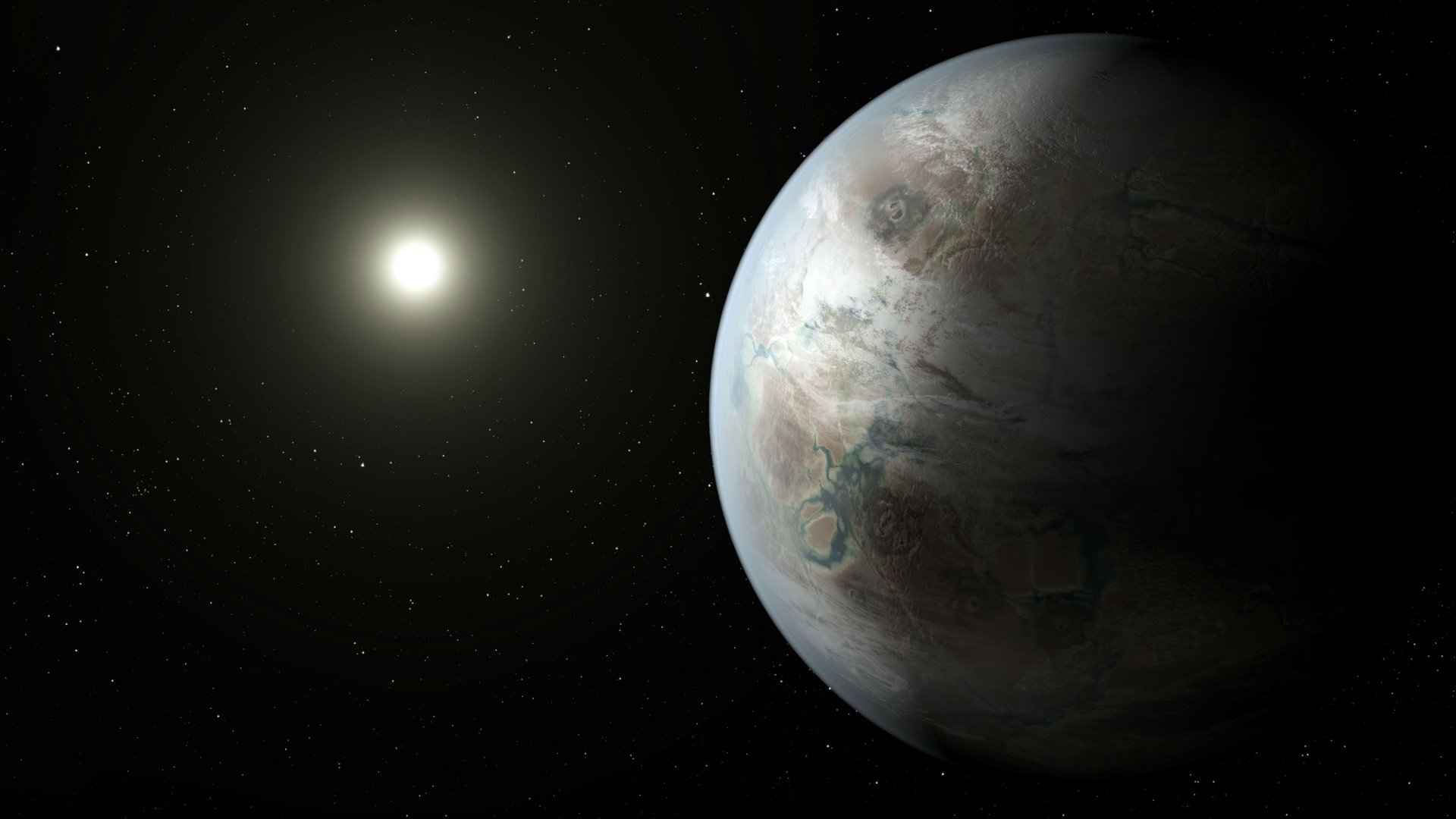
NASA scientists say they have found perhaps the most Earth-like planet ever discovered.
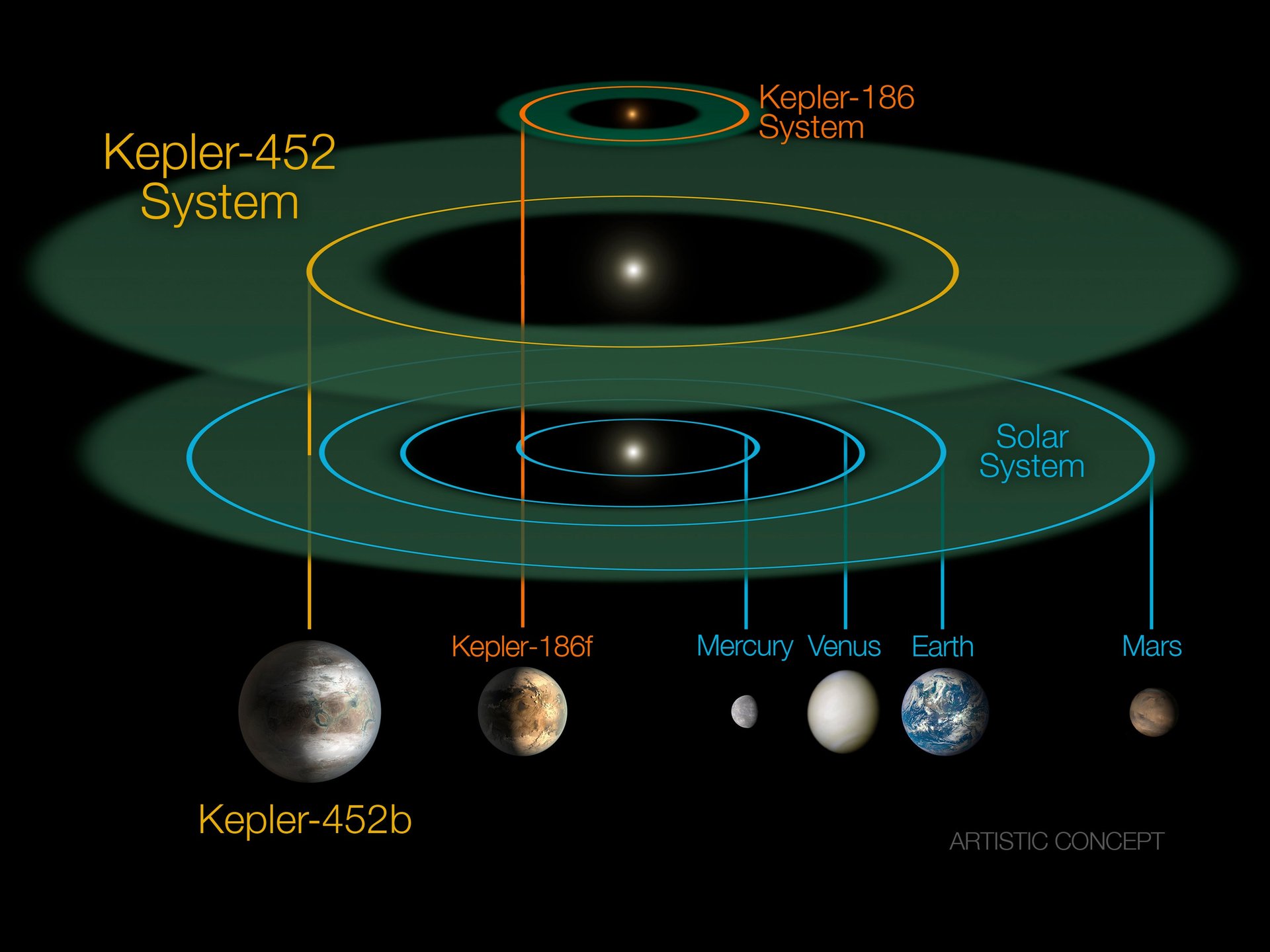
The planet, Kepler-452b, is 1,400 lightyears away from Earth, but its orbit is strikingly similar to our own planet’s. It is roughly as far from the star that it orbits as the Earth is from the Sun. That puts Kepler 452b within its star’s ”habitable zone,” the distance at which a planet could contain liquid water—and, thus, life.
Join 500,000+ readers who start their day with Quartz.
By subscribing, you agree to our Terms of Service and Privacy Policy.
“On the 20th anniversary year of the discovery that proved other suns host planets, the Kepler exoplanet explorer has discovered a planet and star which most closely resemble the Earth and our Sun,” said John Grunsfeld, head of NASA’s Science Mission Directorate, in a press release. “This exciting result brings us one step closer to finding an Earth 2.0.”
The sun that 452b orbits is the same temperature as our own sun. The planet’s orbit takes 385 days. Essentially, it’s as close to an Earth twin as astronomers have ever discovered.
“It’s awe-inspiring to consider that this planet has spent 6 billion years in the habitable zone of its star; longer than Earth,” said Jon Jenkins, lead author on the paper describing the planet’s discovery. “That’s substantial opportunity for life to arise, should all the necessary ingredients and conditions for life exist on this planet.”
The first confirmed exoplanet was discovered in 1995, when scientists found a massive gas planet orbiting closely around 51 Pegasi, a nearby Sun-like star. Since then, astronomers have confirmed over 1,000 more planets outside our solar system, many of them believed to be somewhat similar to Earth.
Six years ago, NASA launched the Kepler Space Telescope to survey the Milky Way for other Earth-like planets. Kepler finds planets by observing stars in a fixed view. Then, analysts on Earth look at the data it transmits to see when an object crosses in front of a star, causing its brightness to dim. Once they confirm the object is indeed a planet, scientists can learn its size, the shape of its orbit, its distance from the star, and can make educated guesses about its composition. In addition to the 1,000 confirmed exoplanets, Kepler has found over 3,000 planet candidates that have yet to be verified.
And that’s just in a small portion of our own galaxy. There are an unthinkable number of planets elsewhere in the universe, but those are, for now, too far away to observe. Even the planets in the Milky Way, which are our next-door neighbors in universe terms, are extraordinarily far away. Kepler 438b is 475 lightyears away. For comparison: Pluto, which took a spacecraft traveling 30,000 miles per hour 10 years to reach, is less than one-thousandth of 1 lightyear away from Earth.
The search for more Earth-like planets will be greatly boosted by the Transiting Exoplanet Survey Satellite (TESS), set to launch in 2017. TESS will be able to survey a much larger portion of the sky than Kepler can.
