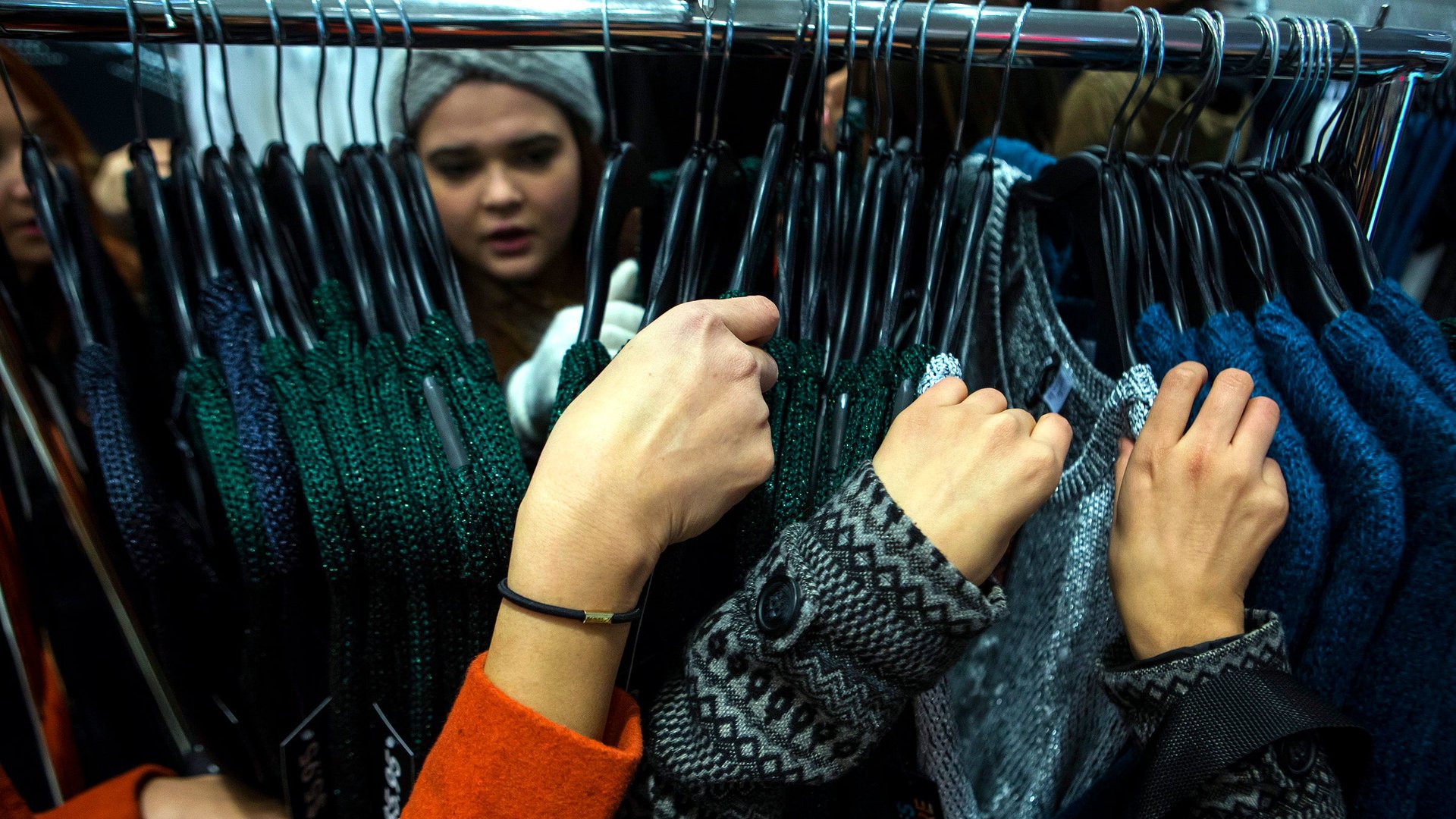
This week, Actuality slips into some fast fashion and learns how it pushes your brain’s buttons to make you buy. But the trick means hiding the true cost of the clothes—including some surprisingly bad news for the environment.
Plus, bitter cats.
You can also listen to the podcast on iTunes or use this RSS feed with any podcast application. If you enjoy this episode, please subscribe so you don’t miss the next one.
This episode is based on Marc Bain’s reporting on the neuroscience of fast fashion, its environmental consequences, and the importance of buying expensive goods. We talk to Scott Rick, a professor of management at the University of Michigan, about his research on what our brains do when we shop. We also speak to Linda Greer, a senior scientist at the Natural Resources Defense Council, about her efforts to clean up the fashion industry in China. Our surprising discovery—about why cats are such fussy eaters—was unearthed by Akshat Rathi.
Actuality is a podcast jointly produced by Quartz and Marketplace, hosted by Tim Fernholz and Sabri Ben-Achour. Follow Actuality on Twitter $TWTR, and let us know what you think of the show!
