FBI director James Comey told a US congressional hearing yesterday (Feb. 25) he believed the technology of the iPhone belonging to an assailant in the San Bernardino, California shootings is uncommon enough that a ruling on a federal court order to unlock the phone won’t create a “trailblazer” case.
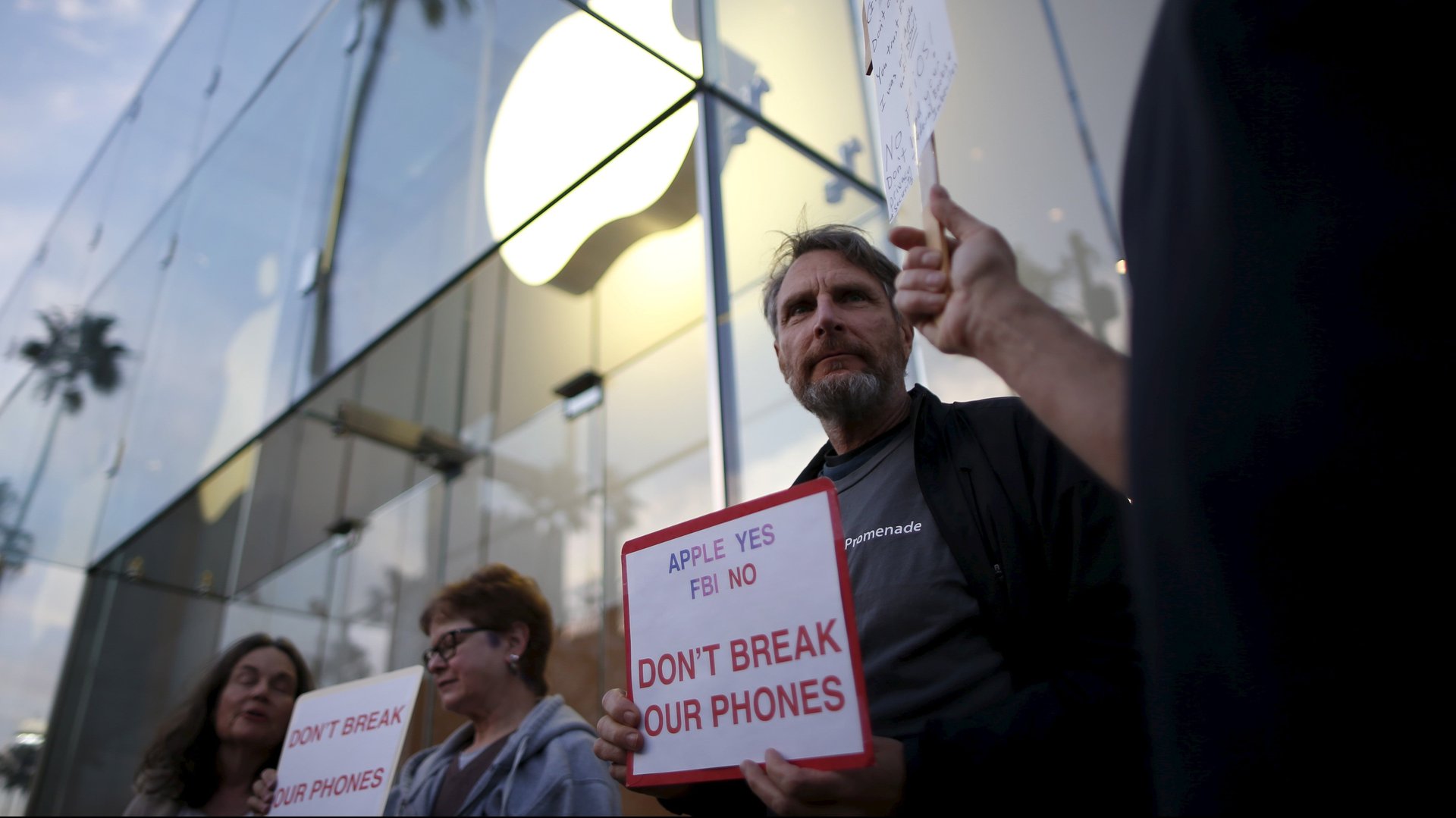
FBI director James Comey told a US congressional hearing yesterday (Feb. 25) he believed the technology of the iPhone belonging to an assailant in the San Bernardino, California shootings is uncommon enough that a ruling on a federal court order to unlock the phone won’t create a “trailblazer” case.
Comey said the phone’s model (an iPhone 5C), and operating system make the technology the “limiting principle,” in the government’s case against Apple $AAPL. “What the experts have told me is that the combination … is sufficiently unusual that it’s unlikely to be a trailblazer because of technology being the limiting principle,” he told the US House of Representatives Permanent Select Committee on Intelligence (video, 37:52).
Join 500,000+ readers who start their day with Quartz.
By subscribing, you agree to our Terms of Service and Privacy Policy.
Nevertheless, Comey conceded that the case would have an impact on future government requests to technology companies. “I do think, whatever the judge’s decision in California … will be instructive for other courts,” he said. But Comey stopped short of saying the case would set a precedent, noting that it would have an influence on future cases involving the same hardware and software combination.
He also said all court decisions would, in general, have an impact on future interpretations of the law. “Sure, a decision by a judge–there’s a judge weighing a decision in Brooklyn right now–all of those decisions will guide how other courts handle similar requests,” he said.
The FBI director was referring to a case before James Orenstein, a federal judge in Brooklyn, who will make a decision on a case from 2015 involving the government’s ability to compel Apple to cooperate with efforts to unlock a device. Comey was responding to a question from Adam Schiff, a Democrat congressman from California, who noted that he didn’t see a limiting principle at work in the FBI’s request to Apple. “While the result may only affect this phone, the precedent may be there for many others,” Schiff said during questioning.
Apple has argued that the FBI’s request would violate its First Amendment rights and set a troubling precedent. It has said that the FBI’s request is the equivalent of asking it to hack its one of its own devices.
Comey said the struggle with Apple laid bare larger questions. Calling it “the hardest question” he has seen in government, he said he believed the issue would ultimately not be settled by courts, but by Congress.
