About a dozen trucks from major manufacturers like Volvo and Daimler just completed a week of largely autonomous driving across Europe, the first such major exercise on the continent.
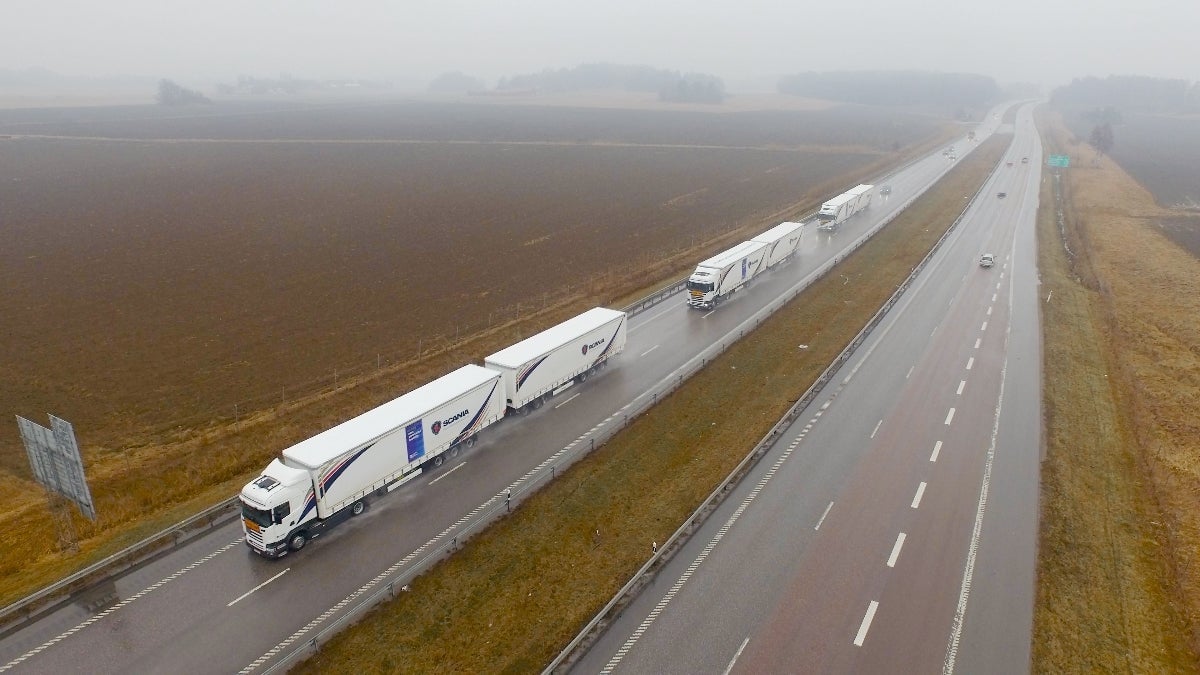
About a dozen trucks from major manufacturers like Volvo and Daimler just completed a week of largely autonomous driving across Europe, the first such major exercise on the continent.
The trucks set off from their bases in three European countries and completed their journeys in Rotterdam in the Netherlands today (Apr. 6). One set of trucks, made by the Volkswagen subsidiary Scania, traveled more than 2,000 km and crossed four borders to get there.
Join 500,000+ readers who start their day with Quartz.
By subscribing, you agree to our Terms of Service and Privacy Policy.
The trucks were taking part in the European Truck Platooning Challenge, organized by the Dutch government as one of the big events for its 2016 presidency of the European Union. While self-driving cars from Google $GOOGL or Ford $F get most of the credit for capturing the public imagination, commercial uses for autonomous or nearly autonomous vehicles, like tractors from John Deere $DE, have been quietly putting the concept to work in a business setting.
Here’s a video of the trucks in action:
When trucks autonomously follow one another, it’s called “platooning.” They’re connected by wifi and can leave a much smaller gap between vehicles than when humans are at the wheel. Platooning can reduce fuel use by up to 15%, prevent human error from causing accidents, and reduce congestion, according to a study by research firm TNO. It also can reduce expenses. Two trucks clocking 100,000 miles annually can save €6,000 on fuel by platooning, compared to driving on cruise control, according to TNO.
That’s why the Dutch set up the elaborate truck-driving event, to pull together everyone with a stake in getting self-driving trucks on the road. That includes transportation officials, truck makers, executives of companies with significant logistics needs (including Unilever and DHL), and academics and researchers.
“We now have huge energy in the network and the idea is that we will go to real-life cases. Companies like Unilever are planning to start these cases in 2017,” says Dirk-Jan de Bruijn, the platooning challenge’s program director.
If all goes to plan, self-driving trucks will pick up goods from the port of Rotterdam and deliver them across Europe in a trial by Unilever and other companies.
But the convoys must first successfully navigate Europe’s bureaucracies. Bruijn’s next goal is to get everyone to sign off on a roadmap for the next five years. This would address the technical problems, such as the inability for trucks from different brands to platoon together (they all use different wifi systems); as well as regulatory problems, like requiring platooning trucks to meet different standards in each European country.
“The challenge is of course not an end point, but a starting point. It’s a new kick-off,” Bruijn said.
