College sports in America are broken.
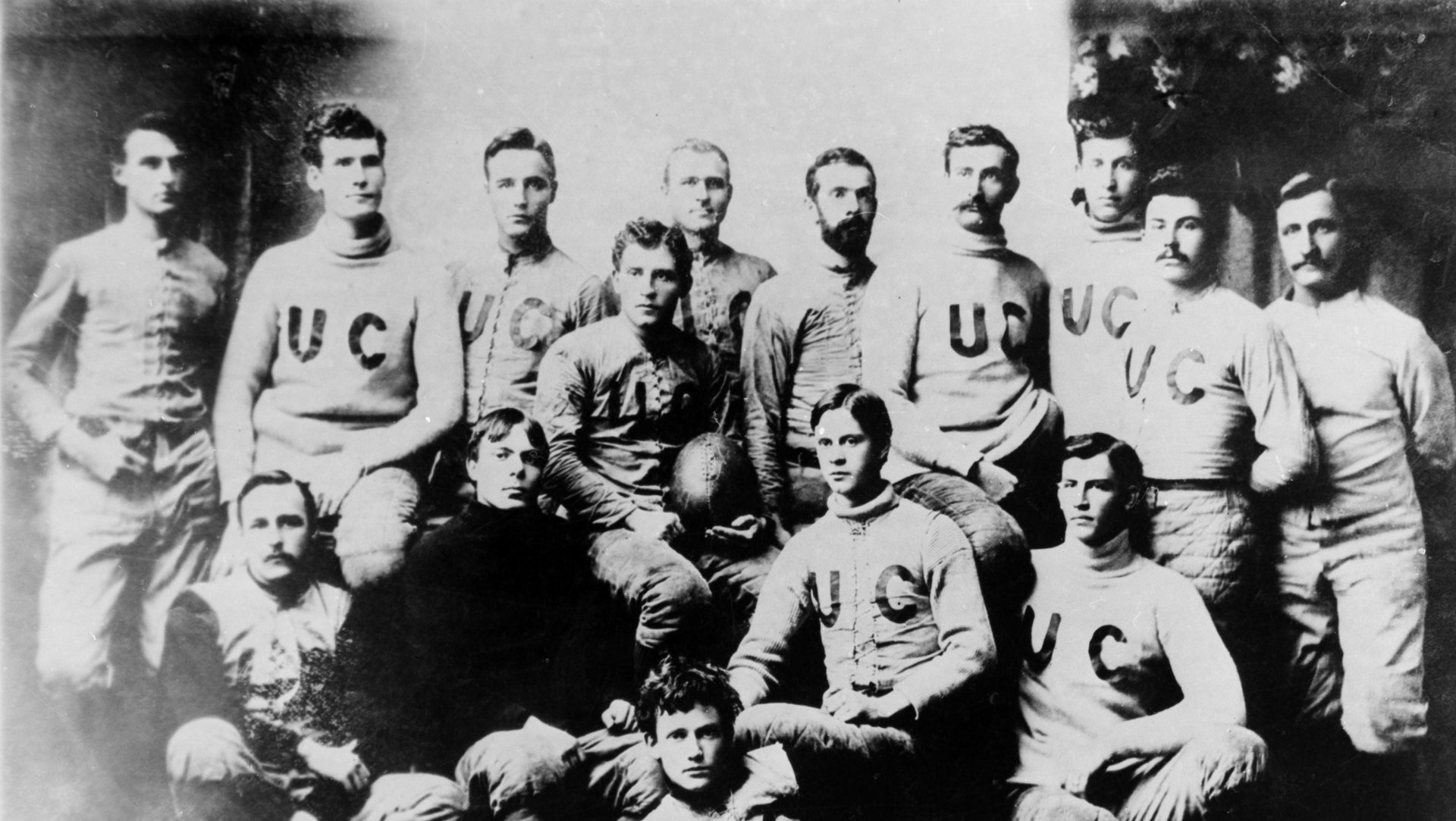
College sports in America are broken.
Consider, for example, the events at Baylor University, where members of the football team treated the school as a “hunting ground” for sexual assault, according to one of the eight law suits filed by female students against the school. Since 2009, at least eight players have faced rape charges at the Baptist school that purports to hold students to “high moral standards of the Christian faith.”
Join 500,000+ readers who start their day with Quartz.
By subscribing, you agree to our Terms of Service and Privacy Policy.
Then there’s the sordid story coming out of the University of Louisville, where an assistant coach allegedly used strippers and escorts to recruit basketball players, according to NCAA allegations released Oct. 17. “I knew they weren’t college girls,” one recruit told ESPN.
These cases are among the more appalling incidents of how athletic programs are tarnishing universities, but they’re far from isolated incidents. Further evidence of the outsized influence of college sports on campus, and the perverse relationship between academics and athletics, is easy to find:
There are universities that knowingly recruit criminals, local police who turn a blind eye to athlete misdeeds, college exams that include questions like ”how many halves are in a basketball game,” and coaches who command almost-obscene salaries. College sports have become a corrupting presence at the heart of universities more and more beholden to their money and prestige. The tail is not wagging the dog; it’s killing it.
Fortunately, there is a solution. It’s radical, and radically simple. And it preserves much of what there is to love about college sports — the pageantry, the traditions, the intense competition — while eliminating much of what is rotten.
Football and men’s basketball teams must become professional franchises owned by the university, and the athletes its employees.
Under this new model, teams would continue to play in the same facilities on college campuses, wear the same uniforms and the same school colors. But athletes would also draw wages and be eligible for the same tuition benefits as other employees. Some would likely pursue degrees, and others wouldn’t. They can take jobs in the off season, and earn money in whatever legal way they see fit. The NCAA would no longer have jurisdiction as there would be no need for recruiting rules or for minimum academic standards. Misbehavior would be dealt with by law enforcement, not coaches or deans.
Of course, not all athletic departments can afford to pay their athletes wages. This plan would probably be limited to the “Power Five” football conferences and their basketball equivalents. Those schools that couldn’t pay would opt out, and their programs would become part of Football Championship Subdivision (FCS, or Division I-AA). Since most athletic programs run at a deficit, that’s where they belong, anyway.
Athletes could unionize, a movement that’s already begun at Northwestern, and universities could sign collective bargaining agreements with mechanisms like salary caps and drafts to maintain competitive parity. Part of the bargaining could include evergreen tuition benefits athletes could use after their playing careers end.
Non-marquee sports would remain under the current system, although ideally athletic scholarships would be eliminated and replaced with four-year grants based on financial need. Eventually, other revenue-generating sports — women’s basketball, hockey etc. — might also choose to professionalize.
Owning what would essentially be minor-league franchises would be a departure for universities, but it’s not unusual for colleges to run profit-oriented businesses. Dartmouth College owns a hotel, Stanford operates a public driving range and North Carolina formed a joint venture with a pharmaceutical company to develop an AIDS cure.
By making that change, much of what is odious about college sports disappears. It’s not perfect, but it addresses the four main points any solution must:
To check my math, I ran my plan past Andrew Zimbalist, an economist at Smith College who has written extensively about sports for years. He’s also the author of the forthcoming Unwinding Madness: How College Sports Lost Its Way and How to Find It.
One flaw Zimbalist identified is that gifts from athletic boosters would no longer be tax-deductible, which could dry up a major source of income. Boosters could still, of course, contribute to the rest of the university. On the other hand, a lot of these contributions will become unnecessary, since players will be lured by the most lucrative contracts and not the shiniest facilities. And boosters could still play a role in luring players by offering them off-season jobs, which would be perfectly legal and preferable to handing them wads of cash.
Zimbalist also noted that very few collegiate athletic programs operate in the black, which might constrain their ability to pay players real wages. But I view that as a feature, not a bug: If teams operated like actual businesses concerned about the bottom line, they might rein in their lavish spending on coaches and facilities.
Ultimately, the biggest obstacle to this kind of plan might be the reluctance of universities to abandon the fantasy of the student-athlete. After all, professionalizing colleges sports would be akin to admitting the hypocrisy inherent in the system.
At a recent conference, I cornered Donna Shalala, former president of both the University of Miami and University of Wisconsin. She reacted to my plan with a mix of pity and scorn. Colleges would never give up on student athletes, she said, and the examples of rot and corruption I brought up were merely isolated incidents. She mentioned Miami’s graduation rate for football players, which, at 86%, is admirably high. She didn’t dwell on the NCAA sanctions following its investigation of a Miami booster who claimed he funnel $2 million to 72 football and basketball players during Shalala’s tenure at the school
Given the delusion most university presidents operate under, this proposal is more of a thought experiment than an action plan. But the current path is unsustainable, and it may be courts or lawmakers that force a solution on universities if they fail to adopt one themselves.
