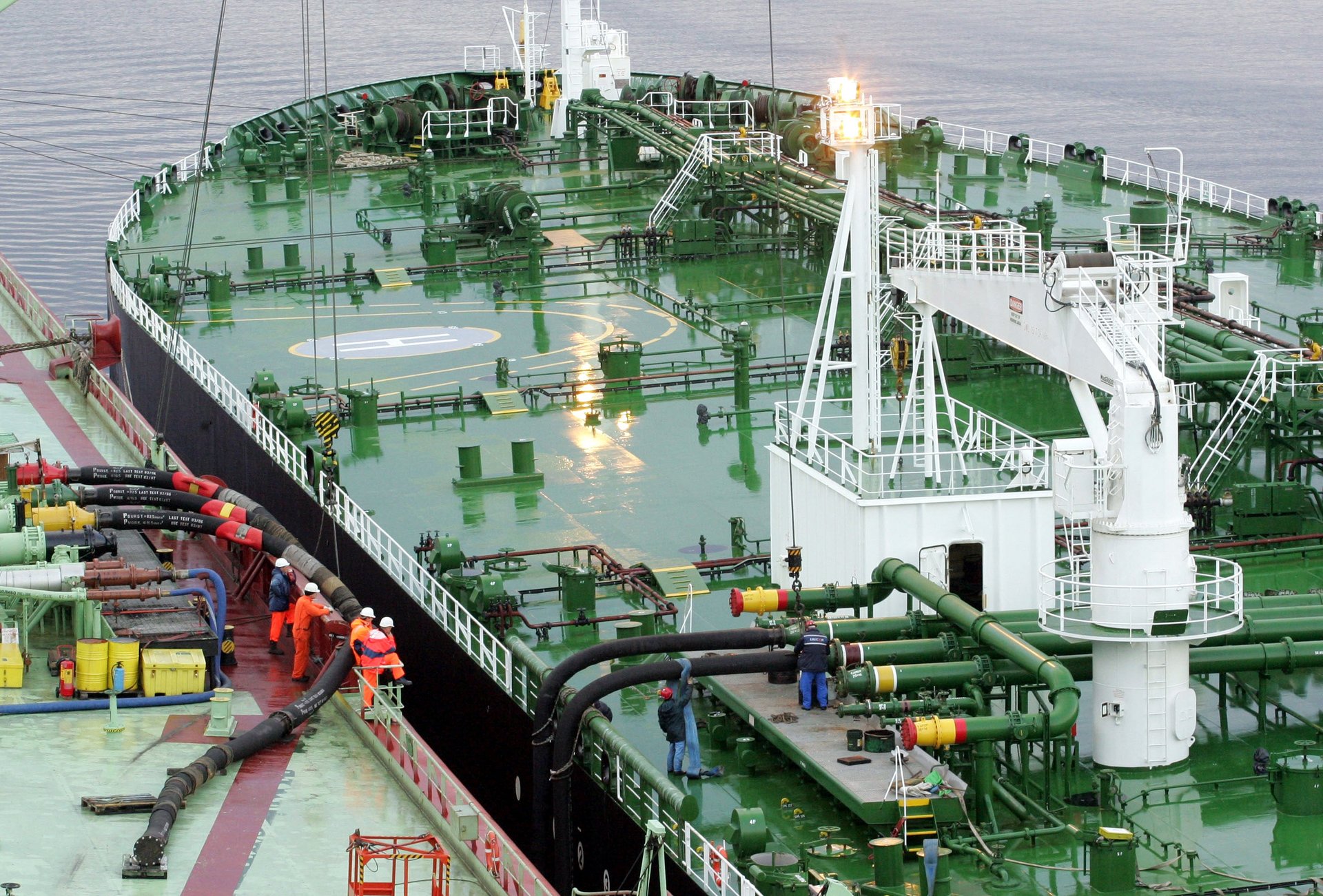
As the EU cut its demand for Russian crude delivered by pipeline, trade moved to sea. Rebuffed from its previous ship-to-ship transfer hub off Denmark’s Skaw, Russia shifted operations to the mid-North Atlantic, until high winter swells and rough tides made it too unruly to pour crude oil from one ship to another. Ceuta’s Mediterranean waters are calm, and according to Vortexa, a consultancy that tracks Russian tankers, fleets of Aframax tankers loaded with oil at Russian ports on the Black Sea arrive at Ceuta and transfer their loads to very large crude carriers, or VLCCs, which continue the 40-day sea journey, looping below the Cape of Good Hope to China.