US secretary of State Rex Tillerson has criticized China’s model of economic development in Africa, saying it encouraged dependency and denied governments long-term democratic growth.
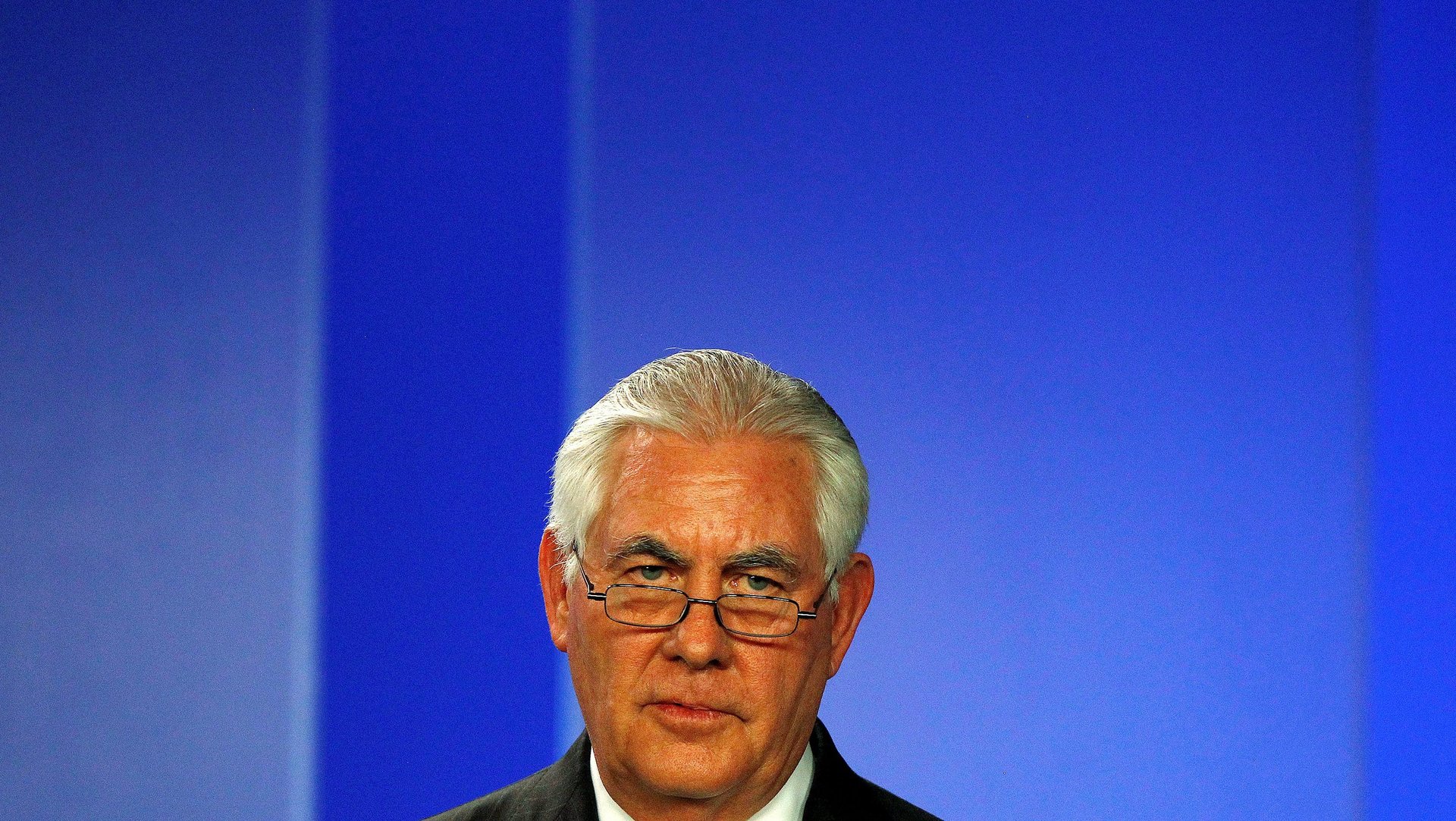
US secretary of State Rex Tillerson has criticized China’s model of economic development in Africa, saying it encouraged dependency and denied governments long-term democratic growth.
Tillerson said China used corruption and predatory loan practices to undermine African governments and mire them in debt. That was in contrast, he added, to US efforts to bolster democratic institutions, strengthen the rule of law, and improve governance and long-term security goals. He was speaking at George Mason University in Virginia on the eve of his first official trip to Africa.
Join 500,000+ readers who start their day with Quartz.
By subscribing, you agree to our Terms of Service and Privacy Policy.
Tillerson’s speech was an apparent takedown of China’s deepening engagement across Africa in the last decade. The country has financed mega infrastructural projects, building railways in countries like Kenya, and establishing factories in Lesotho, Namibia, and Ethiopia. Africa is also where China is exercising its first major moves as a global power, opening up a base in Djibouti and deploying peacekeepers in South Sudan, Mali, Liberia, and the Democratic Republic of Congo.
Beijing is also bringing thousands of African leaders, bureaucrats, students, and business people to China, in the hopes of cultivating the next generation of African leaders.
Yet Chinese aid has also been blamed for propping up authoritarian regimes, building shoddy roads and infrastructure built by imported Chinese workers, and focusing mainly on countries home to oil, minerals, and other resources that China needs. In January, China was accused of bugging the African Union headquarters in Ethiopia which it “gifted” to the continental body in 2012.
“Chinese investment does have the potential to address Africa’s infrastructure gap, but its approach has led to mounting debt and few, if any, jobs in most countries,” Tillerson said. “When coupled with the political and fiscal pressure, this endangers Africa’s natural resources and its long-term economic political stability.”
After repeatedly demonstrating indifference and skepticism about Africa’s place in US foreign policy, Tillerson’s speech ahead of his five-nation tour was the first to offer some sense of the Trump administration’s Africa policy. During his meetings in Ethiopia, Djibouti, Kenya, Chad, and Nigeria, Tillerson said he will engage leaders on issues ranging from counter-terrorism and governance to trade and investment. He also lauded the success of signature George W. Bush and Barack Obama programs like Power Africa to provide electricity, the Young African Leaders Initiative to support upcoming leaders, and the PEPFAR initiative to fight HIV/Aids.
Tillerson also announced $533 million in food and health aid to Somalia, South Sudan, Ethiopia, and west and central African nations bordering the Lake Chad.
