The Central African Republic has overtaken regional cryptocurrency front-runners such as Kenya and Nigeria to become the continent’s first nation to officially adopt bitcoin as legal tender.
The Central African Republic has overtaken regional cryptocurrency front-runners such as Kenya and Nigeria to become the continent’s first nation to officially adopt bitcoin as legal tender.
El Salvador is the only other country that officially uses bitcoin as legal tender in the world. Uptake of the currency since its introduction in the country in September 2021 has been modest.
Join 500,000+ readers who start their day with Quartz.
By subscribing, you agree to our Terms of Service and Privacy Policy.
The CAR parliament unanimously passed a law in favor of the adoption of bitcoin, driven by the need to solve currency and exchange rate challenges.
The BBC quoted Yann Daworo, an economist in the CAR capital Bangui saying, “Businessmen will no longer have to walk around with suitcases of CFA francs that will have to be converted into dollars or any other currency to make purchases abroad.”
A recent report by Chainalysis, a blockchain data platform, found that in the height of the pandemic from—mid 2020 to mid 2021—Africans received $105.6 billion in payments, a 1200% increase from the year before.
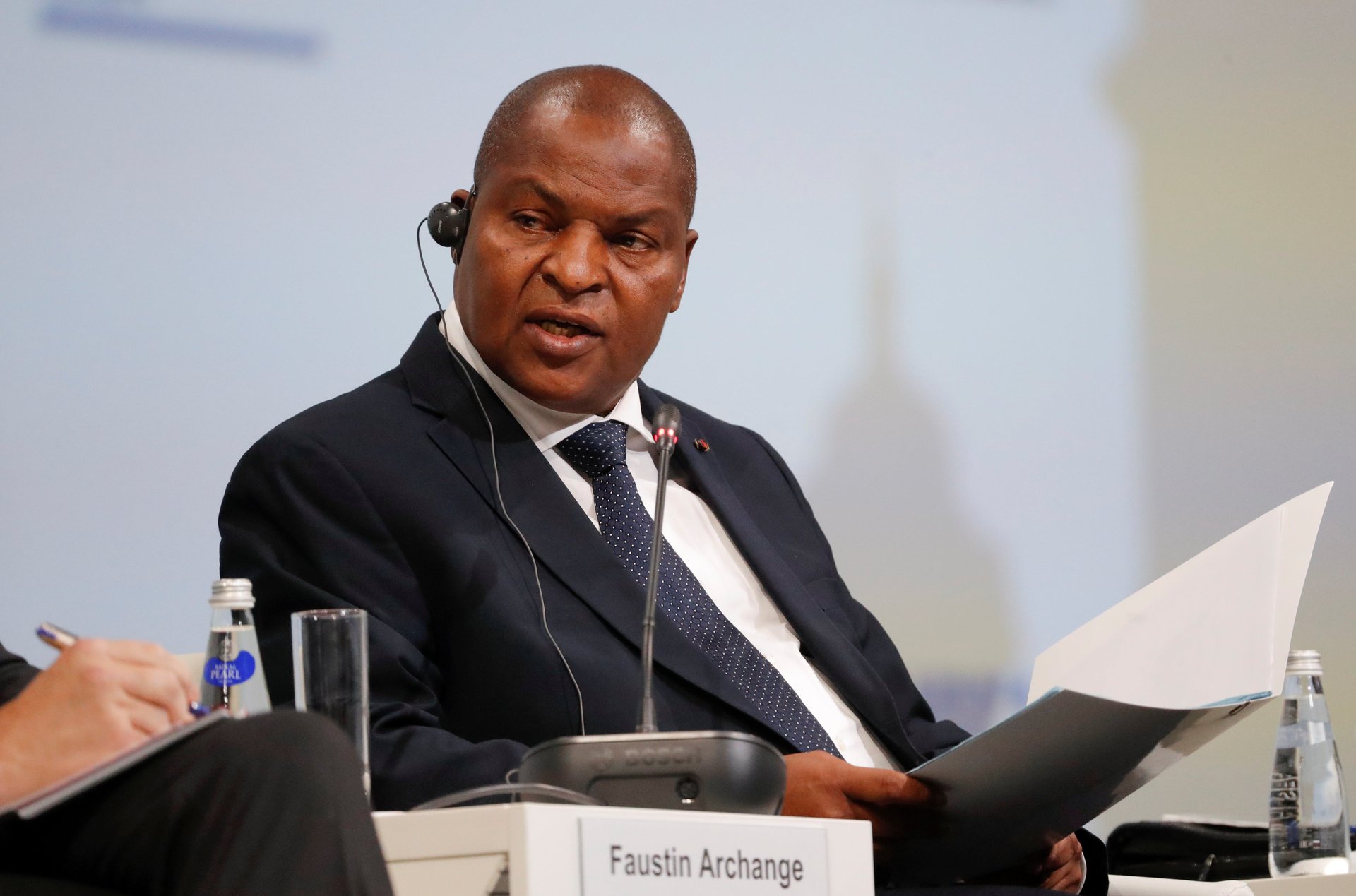
CAR President Faustin-Archange Touadera’s office said Wednesday that “adoption of bitcoin as an official currency represents a decisive step towards opening up new opportunities” for the African country.
Plagued by a security situation that the IMF describes as fragile, CAR’s adoption of the most popular cryptocurrency is likely a result of wanting to try something different to try and address long-standing fiscal challenges.
CAR is among about six central African nations—Cameroon, Chad, Republic of Congo, Gabon, and Equatorial Guinea—that use the Central African CFA franc unit of exchange, “a regional currency backed by France,” according to legal practice, Baker Mckenzie.
The adoption of bitcoin as legal tender by CAR has however not been without its critics though, with some even pointing out that bitcoin works into the hands of Russian warlords in the country.
“CAR remains a failed state, with most of its territory controlled by various rebel groups, although the government will retain key cities, including the capital, Bangui, with support from Russian mercenaries,” says the Economist Intelligence Unit.
One such critic, Didier J Mary, a cryptocurrency skeptic but fintech and digital transformation consultant, told Quartz that bitcoin “will not work” in CAR as it is not a currency, but will instead fuel money laundering in the crisis ravaged African nation.
“It can’t work, won’t work, but it surely pleases the Russian overlords over there, to show that USD domination is dead. So it will fail and probably help the country dig its grave deeper.”
Most central banks in Africa prevent banks from processing transactions involving cryptocurrencies. However, this has only pushed cryptocurrency transactions under-ground, with peer-to-peer trading platforms such as LocalBitcoins pushing volumes in Kenya as well as in Zimbabwe among others.
While South Africa is the other regional country that taxes and regulates cryptocurrencies, it falls short of CAR’s bold decision to embrace bitcoin as legal tender.
Other African countries have been more inclined to Central Bank Digital Currencies, which however, according to the Kenyan Central Bank are being held back from full adoption by limited smartphone penetration. Nigeria was the first African country to adopt a CBDC when the eNaira went live last year while Ghana is also forging ahead with plans for the eCedi.
