
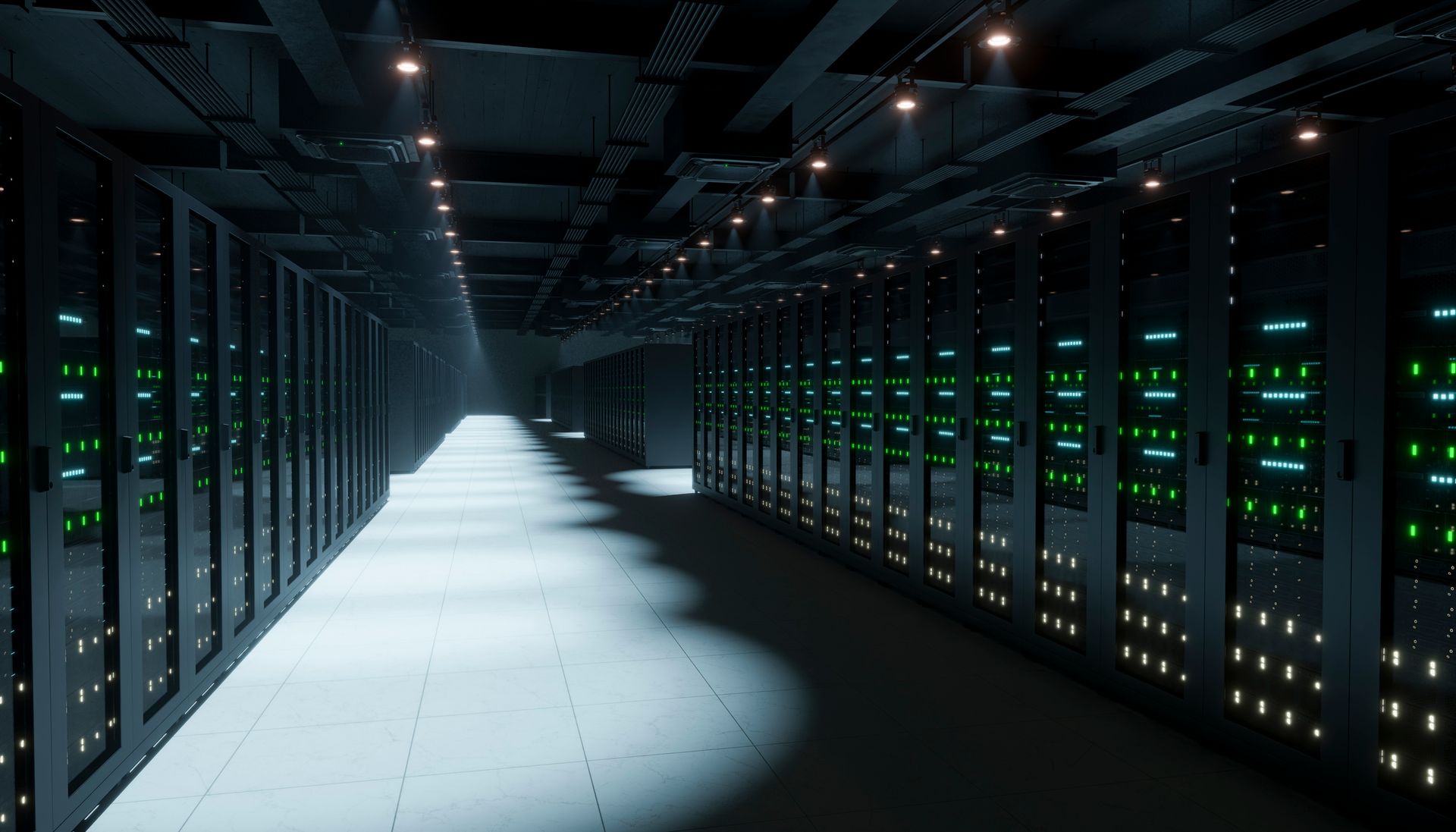
The first gigawatt-scale AI data centers are arriving this year, and there are five of them. According to research by Epoch AI, five data centers at a scale of one gigawatt or more are expected to come online in 2026, each operated by a different hyperscaler. xAI's Colossus 2 in Memphis is projected to have the fastest buildout, targeting 12 months to reach gigawatt-scale.
One gigawatt is the output of a large nuclear power plant. These are single campuses consuming that much electricity to run AI training and inference. And behind the five coming this year is a pipeline that dwarfs them.
The numbers behind the buildout
The scale of what is being planned has no historical parallel in data center development. Meta $META CEO Mark Zuckerberg has said the company is "planning to build tens of gigawatts this decade, and hundreds of gigawatts or more over time." Meta's Hyperion data center in Louisiana is designed for five gigawatts, with a two-gigawatt first phase to be completed by 2030, according to IEEE Spectrum. OpenAI's Stargate program, a joint venture with Oracle $ORCL and SoftBank, has reached about seven gigawatts of planned capacity, with a cumulative investment estimate topping $400 billion on the way to a 10-gigawatt target, according to Data Center Frontier.
The spending to match is staggering. The four largest hyperscalers — Amazon $AMZN, Google $GOOGL, Meta, and Microsoft $MSFT — combined for $413 billion in capital expenditures in 2025, an 84% increase from $224 billion in 2024, and are projected to spend $600 billion to $700 billion in 2026, according to The Motley Fool, drawing on company guidance. McKinsey has estimated that companies across the compute power value chain will need to invest $5.2 trillion into data centers by 2030 to meet worldwide demand for AI alone, based on a projected 156 gigawatts of AI-related capacity, according to a McKinsey analysis.
What drives the power figures at these facilities is rack density. A single rack of NVIDIA's AI training chips draws 120 to 140 kilowatts, with next-generation systems projected to exceed 200 kilowatts. A hyperscale AI campus runs tens of thousands of such racks. The International Energy Agency has noted that an individual server rack in an advanced data center could have peak power demand equivalent to 65 households by 2027, and that AI server power density increased 11-fold between 2020 and 2025, according to the IEA's Key Questions on Energy and AI report.
What the grid has to absorb
The aggregate demand figures are large enough to reshape U.S. electricity markets. According to the Electric Power Research Institute's 2026 "Powering Intelligence" analysis, data centers could consume 9% to 17% of U.S. electricity generation by 2030, more than double current levels, the EPRI announcement said. That range is 60% higher than the estimate in EPRI's 2024 report, driven by a wave of newly announced projects.
451 Research, part of S&P Global $SPGI, forecasts that U.S. data center grid-power demand would rise 22% in 2025 to 61.8 gigawatts, climbing further to 75.8 gigawatts in 2026 and 134.4 gigawatts by 2030, according to S&P Global. At the global level, the IEA projected data center electricity demand would more than double to 945 terawatt-hours by 2030, roughly equal to Japan's total consumption.
The concentration of that demand in specific regions makes the grid impact acute. In 2023, data centers consumed about 26% of Virginia's total electricity supply, according to the Pew Research Center, drawing on EPRI data. EPRI's updated analysis projects Virginia could reach 41% to 59% of its electricity going to data centers by 2030, according to E&E News.
The infrastructure gap
The central problem is a timing mismatch. Hyperscale data centers can be sited, built, and commissioned in 18 to 36 months, according to POWER Magazine. The transmission infrastructure needed to power them takes five to 10 years to plan, permit, and energize, and this timeline mismatch is a primary driver of power availability bottlenecks.
The hardware to connect these facilities to the grid is itself in short supply. Large power transformers now average 128 weeks of lead time, with generator step-up units at 144 weeks, according to POWER Magazine's analysis of Wood Mackenzie data. Wood Mackenzie estimated a 30% shortfall for power transformers in the U.S. in 2025. Demand for gas turbines is so intense that wait times have stretched to seven years, according to IEEE Spectrum, with some data centers turning to refurbished jet engines.
The result is that many planned facilities cannot proceed on schedule. According to a 2024 Grid Strategies report cited by Camus Energy, the pace of high-voltage transmission construction in the U.S. has declined from 1,700 miles per year between 2010 and 2014 to just 180 miles over the past two years.
Who pays
The cost of building out grid infrastructure to serve data centers is already being passed on to household electricity bills. The Open Energy Outlook Initiative, a collaboration between Carnegie Mellon University and North Carolina State University, found that electricity demand from data centers and cryptocurrency mining is projected to grow by 350% by 2030. Their research estimates that data centers and cryptocurrency mining could raise the average U.S. electricity bill by 8% by 2030, with increases exceeding 25% in the highest-demand markets of central and northern Virginia, according to Pew Research Center.
In the PJM electricity market stretching from Illinois to North Carolina, data centers accounted for an estimated $9.3 billion price increase in the 2025-2026 capacity market, with average residential bills expected to rise by $18 a month in western Maryland and $16 a month in Ohio, according to Pew's analysis of market data. States are beginning to respond. Virginia's State Corporation Commission approved a new electricity rate class for large-scale customers in November 2025, requiring affected customers to pay for at least 85% of contracted distribution and transmission demand, according to the American Action Forum.
The data centers are coming regardless. Developers are designing projects that begin at 100 to 300 megawatts but are engineered for long-term expansion far beyond that, with some campuses already discussed in terms of future gigawatt capacity, according to Datacenters.com. Planned projects entering 2026 could add more than 20 gigawatts of new capacity to the global market. The question is not whether the power demand will arrive. It is whether the wires, transformers, and generation capacity will be there to meet it.